
Can a deep tissue massage make my pain worse?
Yes, temporarily. In trials, 1.5 to 25 percent of people felt more pain after massage, usually for a day or two. Pain that sharpens or spreads needs a call.
By The Renu lymphatic and massage team · 6 min read
Yes, temporarily. In the Cochrane review of massage for low back pain, increased pain intensity was the most common side effect, reported by 1.5 to 25 percent of participants, with no serious harm in any trial. A flare after firm work usually feels like a spread-out ache that peaks within a day and clears within two. Pain that is sharper than before, spreading, or paired with numbness, tingling or weakness is a different thing and needs a doctor.
Yes, temporarily. In the Cochrane review of massage for low back pain, increased pain intensity was the most common side effect, reported by 1.5 to 25 percent of participants, with no serious harm in any trial. A flare after firm work usually feels like a spread-out ache that peaks within a day and clears within two. Pain that is sharper than before, spreading, or paired with numbness, tingling or weakness is a different thing and needs a doctor.
How common a flare is
The honest number comes from the largest systematic review on the subject. Cochrane’s 2015 update on massage for low back pain pooled 25 trials with 3,096 participants. Across those trials there were no reports of serious adverse events, and the most common side effect was increased pain intensity, reported by between 1.5 percent and 25 percent of participants depending on the study. Put another way, somewhere between one in sixty and one in four people felt worse for a while after massage, and none were harmed in a lasting way.
The same review found that massage improved pain in the short term for acute, subacute and chronic low back pain compared with doing nothing, but it graded the quality of the evidence low or very low. Short-term benefit with a meaningful chance of a short-term flare is the realistic picture of firm massage for a sore back.
What a normal flare feels like
A flare after deep tissue work is a cousin of the soreness after a new or hard workout. Healthline describes it as a delayed-onset response, a physical reaction to inflammation as the body heals from muscle being worked in ways it is not used to, and says it usually subsides within a day or so. Runner’s World’s sports massage guide allows up to 48 hours for post-massage tightness to dissipate.
Typical features:
- A dull, spread-out ache over the area that was treated, not a single sharp point.
- Worse the morning after, better by the second day.
- Stiff on first movement, easier once you are moving.
- Tender to touch over the muscle, not along a line down a limb.
- Your original pain is still recognizable underneath; it has not changed character.
If that describes you, the treatment has not injured anything. Gentle movement, heat and time are enough, and should I use heat or ice after a massage? sets out which to reach for.
Four reasons deep work can make things worse
The pressure went past useful
Paul Ingraham, on PainScience, separates good pain (strong but welcome) from bad pain (sharp or burning, with no obvious benefit) and ugly pain (never acceptable, including pressure beyond tolerance or disturbing inflamed tissue). He names sensitization as a specific risk of overly intense massage: a painful session can dial up pain sensitivity for a long time, which is the opposite of what someone with chronic pain booked for. A flare that outlasts 48 hours after a session you had to brace through is often this.
The position aggravated the condition
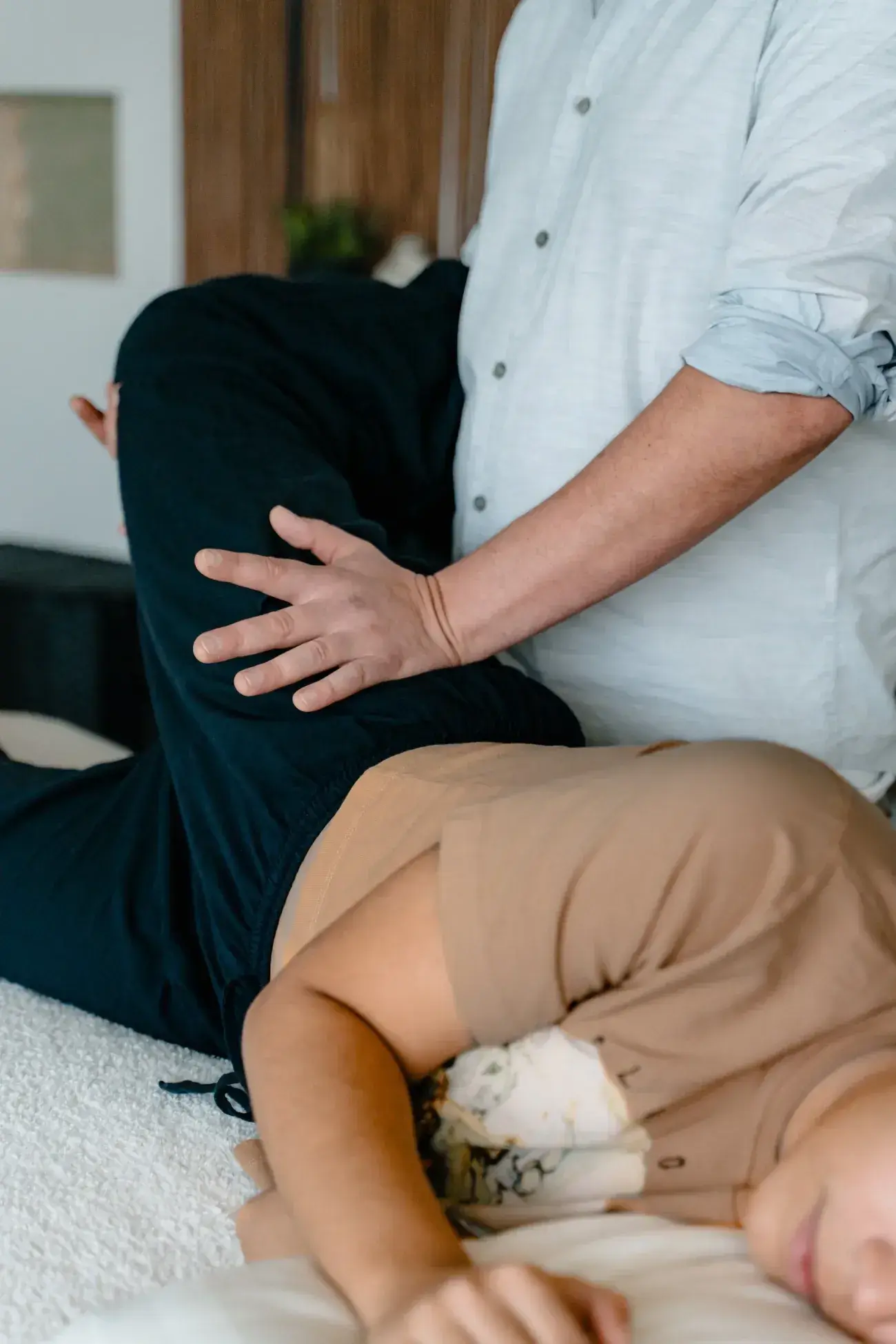
Pressure is not the only variable. Mark Liskey, writing in Massage and Bodywork magazine on how not to make sciatica worse, describes lying face down as the position that can most often aggravate a sciatica condition, because it can further irritate already angry nerves. He notes that clients often report more pain afterwards when standing or turning, and that in an acute phase even clothing touching the low back can hurt, so deep lumbar pressure is counterproductive. His alternatives are simple: ask the client how they sleep, use side-lying where that is the comfortable position, and if deep pressure is wanted, apply it to the compensating muscles of the upper back, hamstrings and calves rather than the lumbar and sacral area. If your flare came with a low back or leg component, can massage make sciatica worse? goes further.
A nerve was irritated
Nerves near the surface at the front of the neck, the armpit, the inner elbow, the buttock and the back of the knee are what Ingraham calls endangerment sites. Healthy nerves announce themselves with electrical, zappy, funny-bone-like sensations before damage occurs, which is why a therapist should move off a spot that zings. Nerve irritation from massage is rare and usually minor, settling over days to a few weeks, but it is a different kind of pain from a muscular flare and is covered in can a massage damage a nerve?
The problem was never muscular
Massage therapists do not diagnose. Runner’s World’s guide is direct about it: for serious injuries, see a sports doctor, and if symptoms have not improved within three days of a massage, see a doctor. A back that hurts more after firm work may have a disc, joint or other source that pressure cannot reach and can irritate.
Flare or injury: a side-by-side
| Normal flare | Needs assessment |
|---|---|
| Diffuse ache over the treated muscles | Sharp pain at one point, or pain running down an arm or leg |
| Peaks within 24 hours, fading by 48 | Worse on day two or three than on day one |
| Original pain unchanged in character | New numbness, tingling, pins and needles or weakness |
| Eases with gentle movement and heat | Eases with nothing, or wakes you at night |
| No other symptoms | Severe, unusual muscle pain with a general feeling of being unwell |
The right-hand column reflects the rare serious events the United States National Center for Complementary and Integrative Health lists for massage: blood clots, nerve injuries and bone fractures, which it notes have more often involved vigorous techniques such as deep tissue massage or people at higher risk, such as the elderly.
What to do in the first 48 hours
- Keep moving gently. Short walks and easy range-of-motion beat lying still.
- Use heat on the achy area, or ice if it feels hot and inflamed, in short intervals.
- Drink normally and rest; you do not need to flush anything.
- Do not book another firm session until the flare has cleared, and do not add a hard workout on top of it.
- Write down when the pain started, where it is and what it feels like. If you do need to see someone, that record is useful.
When to call your doctor
Call your physician, or go to urgent care, if after a massage you notice any of the following: pain that is sharper or more intense on day two or three than on day one; new numbness, tingling or weakness in an arm or leg; pain running down a limb that was not there before; severe muscle pain with a general feeling of being unwell; or an electrical, zinging sensation that is still present days later. Healthline advises seeing a doctor for neck or back pain that begins after a massage or does not settle, and for any severe or long-lasting pain. If you are unsure, ask. We would rather hear from you through the contact page than have you wait.
Telling your therapist
A flare is information, and the next session should be built around it. Tell your therapist what happened, when it peaked and how long it lasted. Ask for lighter work on the area that reacted, a different position if lying prone was part of the problem, and more time on the surrounding muscles rather than the sore centre. Our massage therapy sessions are adjusted throughout, and the clinic FAQ covers what to expect on a first visit. Most people who flare once do not flare again once the pressure and position are matched to them.
Questions people ask
How long should a pain flare after a deep tissue massage last?
A normal flare behaves like the soreness after a hard workout: it builds over the first day, is at its worst around 24 hours, and has faded by 48 hours. Runner's World's sports massage guide advises seeing a doctor if symptoms have not improved within three days. If you are worse at day three than at day one, stop waiting it out.
Why did my back hurt more after lying face down?
Lying on your front arches the low back and can irritate some conditions on its own, before any pressure is applied. A massage therapist writing in Massage and Bodywork magazine describes prone as the position that most often aggravates sciatica. Ask for side-lying or extra bolstering next time; both are easy to arrange.
Can deep tissue massage injure me rather than just flare things?
Serious injury is rare but documented. The NCCIH lists blood clots, nerve injuries and bone fractures among the rare serious events, more often with vigorous styles or in people at higher risk. These present differently from a flare: new numbness, weakness, calf swelling, or sharp pain that worsens day on day rather than fading.
Should I book another massage if the last one made me worse?
Usually yes, with changes. Tell the therapist exactly what happened and when, ask for lighter work on the area that flared, and request a different position if lying prone was uncomfortable. If a second, gentler session also leaves you worse, pause and see your physician before trying again.
Sources
- Cochrane: Massage for low-back pain (plain language summary, 2015)
- NCCIH: Massage therapy, what you need to know
- ABMP, Massage and Bodywork magazine: How not to make sciatica worse (Mark Liskey, 2016)
- PainScience: The pressure question in massage therapy (Paul Ingraham, 2025)
- PainScience: Can massage damage nerves? (Paul Ingraham, 2023)
- Runner's World Australia: 14 things to know before you get a sports massage
- Healthline: Why you feel sore after a massage and what to do
Page reviewed October 3, 2026. This page is education, not a diagnosis. For your own situation, talk to your doctor, surgeon or care team, or ask us.
Keep reading
Related pages