
Is massage safe with a pinched nerve in the neck?
Massage is generally safe with a pinched nerve in the neck if the therapist works the muscles around it rather than pressing on the tingling spot.
By The Renu lymphatic and massage team · 6 min read
Generally, yes, provided the work goes around the nerve rather than onto it. An irritated nerve root in the neck feels pain more readily, so direct pressure where the tingling starts is unwise, but the muscles of the neck, shoulders and upper back that tighten around it can be treated gently. Most cases settle on their own: Cleveland Clinic reports that over 85 percent resolve without specific treatment within 8 to 12 weeks. Weakness in the arm or hand, worsening numbness, or symptoms after an accident mean a doctor first.
Pins and needles down one arm, a dull ache in the shoulder blade, a neck that does not want to turn: that cluster is what most people mean by a pinched nerve, and the medical name is cervical radiculopathy. People often arrive at Renu with it and a worry that massage might make the nerve worse. The reassurance is real, but it comes with a condition about where the hands go.
What is actually pinched
OrthoInfo, the patient site of the American Academy of Orthopaedic Surgeons, describes cervical radiculopathy as a nerve in the neck being compressed or irritated where it branches away from the spinal cord. In older adults the usual cause is wear: discs lose height and water, bone spurs form and narrow the openings the nerves pass through. OrthoInfo is careful to say these changes are normal and occur in everyone. In younger people the trigger is more often a herniated disc after lifting, pulling, bending or twisting.
Cleveland Clinic adds some scale. The condition affects roughly 85 people per 100,000, the C7 nerve root is involved in more than half of cases, and symptoms (pain, numbness, tingling, weakness and weakened reflexes) run from the neck into the shoulder, arm, chest or upper back, almost always on one side.
The point for massage is simple: the problem is at the spine, inside the bony canal, where no hand can reach. Everything we touch is downstream of it.
Why pressing on the sore spot is the wrong idea
Nerves are tougher than their reputation. PainScience’s review of nerve injury from massage concludes that damage is possible but hard to do, rare, and usually minor, because nerves are well padded and, when threatened, produce ample warning: electrical, zappy, funny-bone-like sensations that stop any sensible person before harm is done.
The same article makes the distinction that matters here. A sensitised nerve is not more fragile, but it does feel pain more readily. So pressure on the point where your arm starts to buzz will reliably reproduce your symptoms and will not help the compression that causes them. We treat those signals as a boundary. If a stroke brings on tingling, numbness or a zap, we move away from it, and you should say so the moment you feel it.
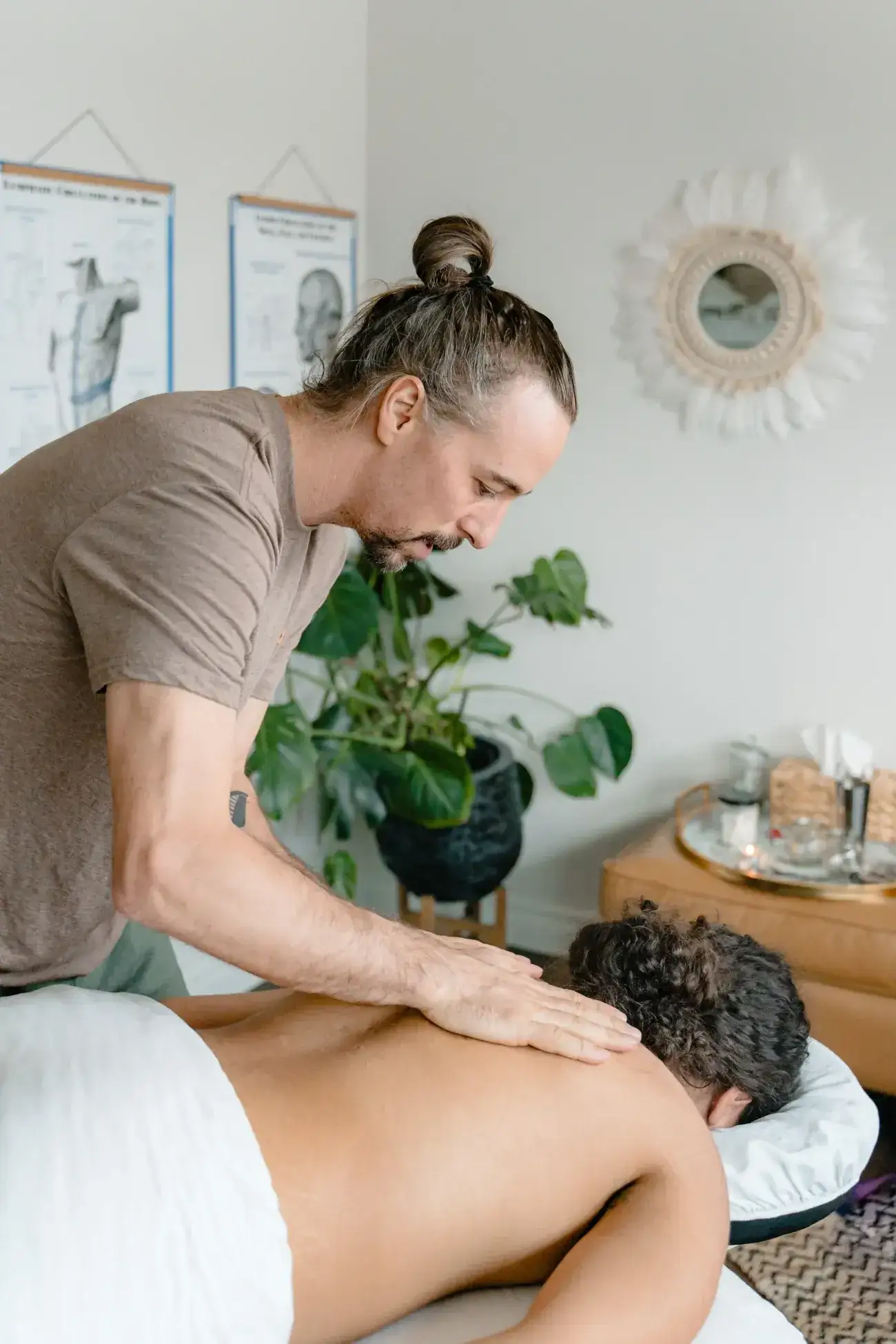
What a session looks like instead
With the nerve left alone, there is still a lot to work with, because a pinched nerve rarely travels alone.
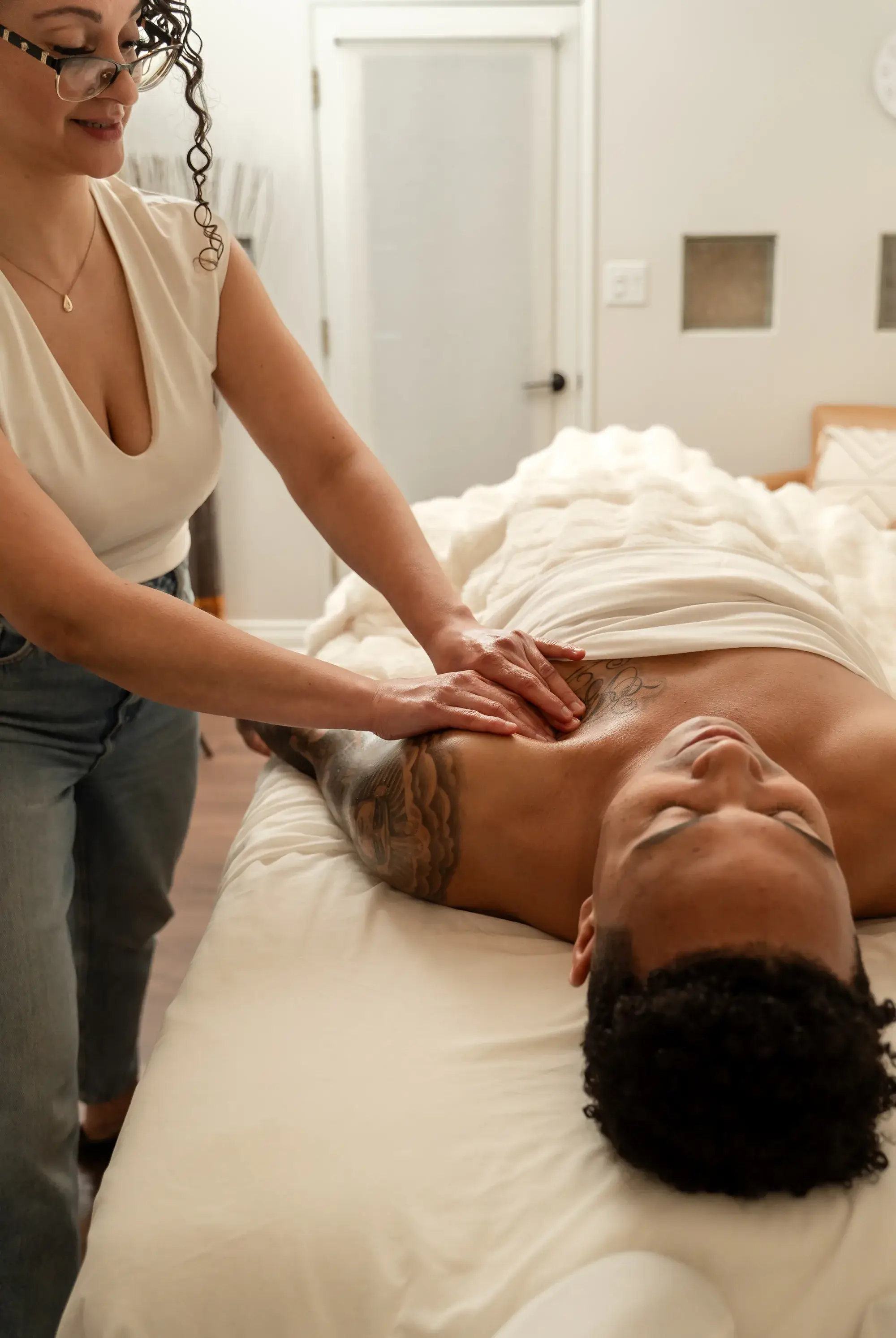
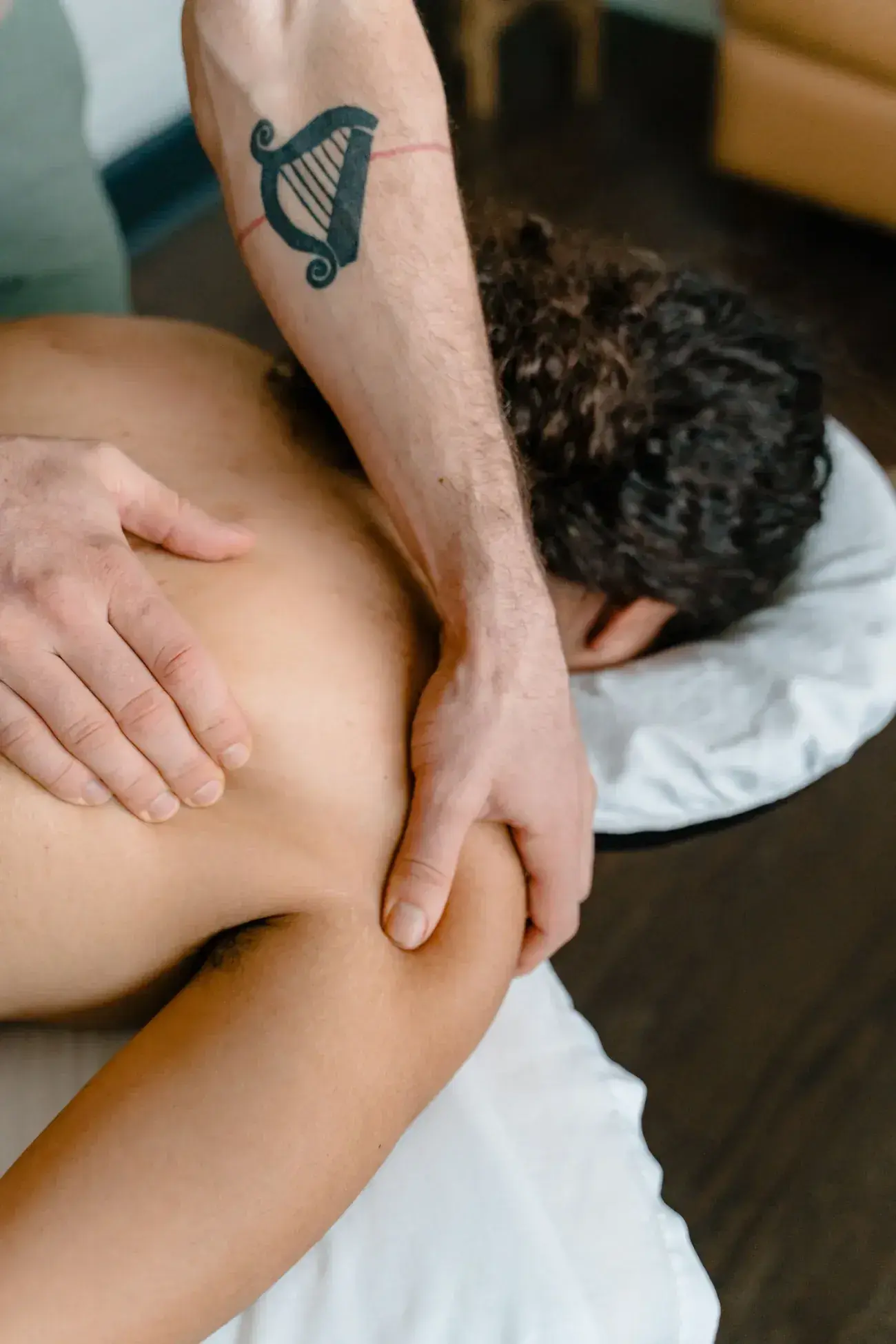
- The muscles of the neck, shoulders and upper back tend to tighten and guard around the painful side. Houston Methodist names the trapezius as the commonest site for knots, and a guarded trapezius adds its own ache on top of the nerve pain. Broad, moderate work there is usually welcome.
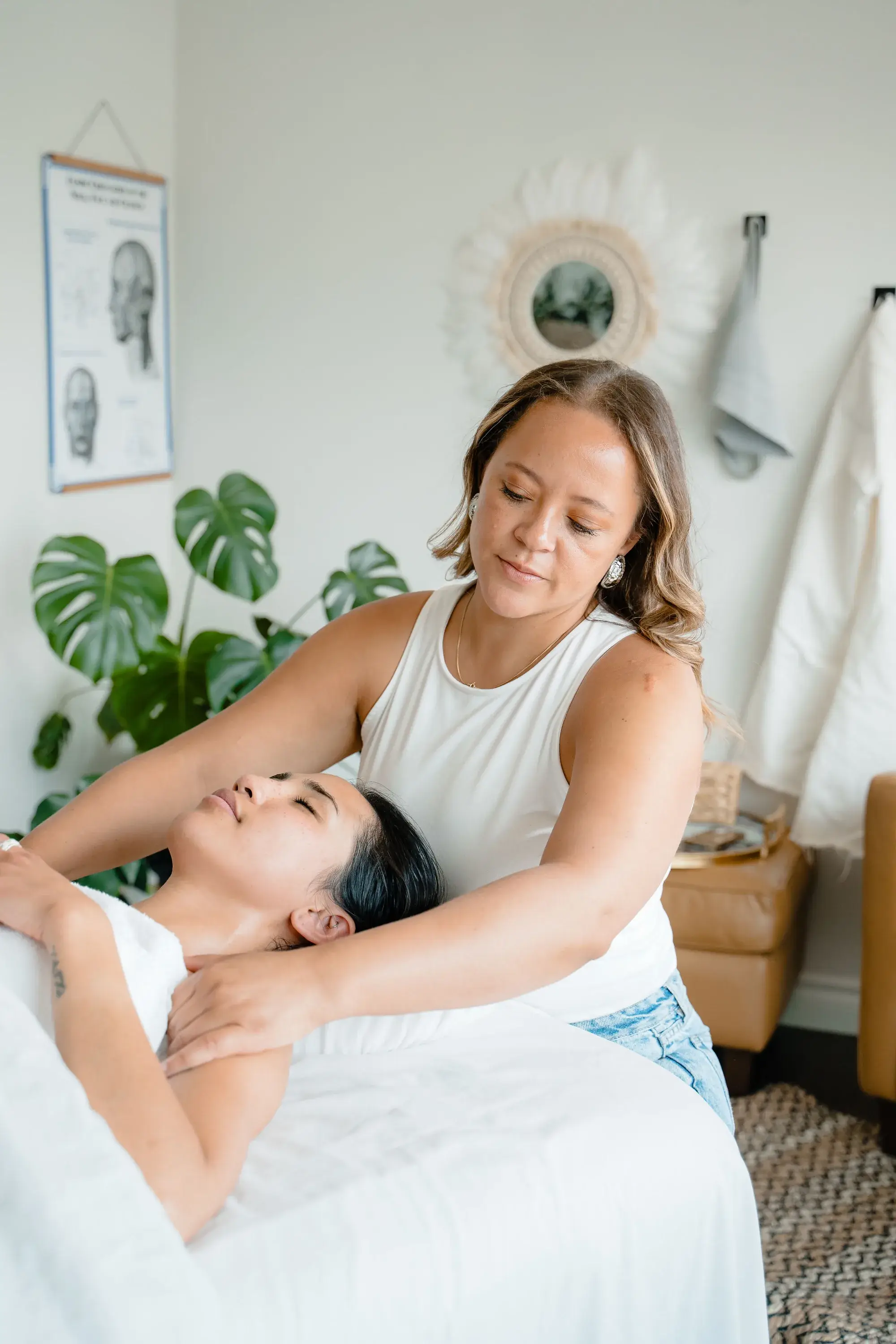
- Positioning is chosen for the nerve, not the convenience of the therapist. OrthoInfo notes that symptoms typically worsen with neck extension, straining or turning the head and ease with a hand placed on top of the head. We avoid any position that reproduces your arm symptoms, support the head and the affected arm, and will happily work with you side-lying or seated if face-down is not tolerable.
- Pressure stays moderate and builds slowly. The NCCIH points out that the rare serious harms reported with massage have involved vigorous techniques, and this is not the week for them.
- Sessions can be shorter. Lying still with a hot arm is tiring, and a focused 30 or 45 minutes often does more than a full hour.
Nothing we do is intended to “release” the nerve. The goal is to make the weeks while it heals more comfortable. For people who find any direct pressure provoking, RAPID NeuroFascial Reset works through movement rather than static pressure and can be a gentler fit.
The honest timeline
This is the part that should reassure you most. OrthoInfo states that the majority of patients with cervical radiculopathy get better over time and do not need treatment; the pain may resolve in days or weeks or take longer, and while recurrence is common, it usually settles without specific treatment too. Cleveland Clinic gives a figure: more than 85 percent resolve without specific treatment within 8 to 12 weeks.
The conservative options both sources list are rest, a soft collar for a short period only (Cleveland Clinic says one to two weeks at most, because longer weakens the neck muscles), anti-inflammatory medication, physical therapy with stretching and strengthening, and injections if those fail. Massage does not appear in either list, and we would not pretend otherwise. It sits beside that plan, not instead of it.
Things to skip at home
Houston Methodist’s advice on massage guns applies with extra force when a nerve is already irritated: keep them off the neck entirely, because of the risk to blood vessels and the sensitive neurovascular structures there, and away from the back of the neck and bony prominences. PainScience adds that tools remove the feedback your hands give you, so it is easy to apply too much pressure too fast.
Cleveland Clinic’s home measures for a pinched nerve are rest, ice or heat, over-the-counter pain relief, and physiotherapy; Houston Methodist adds hydration and gentle movement for the muscle component. If sleeping is the problem, a position that keeps your arm quiet matters more than any pillow brand.
When to see a doctor first
Please see your doctor before booking if any of these apply. They come from Cleveland Clinic’s radiculopathy and neck pain pages and its pinched nerve guidance.
- Muscle weakness in the arm or hand, or a reflex that feels off
- Intense pain, or numbness that is spreading rather than steady
- Symptoms that have lasted more than a week without improving
- Neck pain or arm symptoms that began after a car accident, fall or other injury
- Tingling or weakness in the legs, loss of coordination, or any change in bladder or bowel control
- Fever, chills or unexplained weight loss alongside the neck pain
Cleveland Clinic’s own line is blunt: intense pain or sudden muscle weakness means see a provider as soon as possible. Everything else on this page assumes those have been checked.
Booking with a pinched nerve
Tell us when you book, or when you arrive, that you have arm symptoms, which side, and what makes them worse. Bring whatever your doctor or physiotherapist told you. If you have had imaging, we do not need the report, but it helps to know whether you have been told the cause. From there a massage with one of our RMTs can be shaped around the nerve rather than at it. Contact us if you would like to talk it through first.
Questions people ask
Can massage fix a pinched nerve in the neck?
No. The nerve is usually being narrowed by a disc or by age-related changes in the bones of the spine, and hands cannot change that. What massage can do is ease the muscle guarding and secondary neck and shoulder pain while the nerve settles, which OrthoInfo says happens for the majority of people over time without treatment.
Should the massage therapist press on the spot where the tingling starts?
No. PainScience notes that an already sensitised nerve feels pressure as pain more readily, and that a threatened nerve sends electrical, zappy warnings before harm is done. There is nothing to be gained by provoking those signals, so a sensible therapist works the surrounding muscles and leaves the painful point alone.
What position is best on the table with a pinched nerve?
Whichever one your arm symptoms are quietest in. OrthoInfo notes that symptoms often ease with a hand resting on top of the head and worsen when the neck is extended or turned, so we avoid any position that reproduces your tingling, use extra support under the head and arm, and keep the session shorter if lying still is the hard part.
How long does a pinched nerve in the neck take to get better?
Cleveland Clinic puts recovery at within 8 to 12 weeks for more than 85 percent of people without specific treatment, and Cleveland Clinic's general pinched-nerve guidance says mild cases may ease in days or weeks with rest. Recurrence is common but usually settles the same way. Pain still intense after a week, or any new weakness, is the point to see your doctor.
Sources
- Cleveland Clinic: Cervical Radiculopathy (Pinched Nerve)
- OrthoInfo (American Academy of Orthopaedic Surgeons): Cervical Radiculopathy (Pinched Nerve)
- Cleveland Clinic: Pinched Nerves
- PainScience (Paul Ingraham): Can Massage Damage Nerves?
- Houston Methodist: Muscles in Knots? Here's How to Get Rid of Them
- NCCIH: Massage Therapy: What You Need To Know
- Cleveland Clinic: Neck Pain
Page reviewed October 4, 2026. This page is education, not a diagnosis. For your own situation, talk to your doctor, surgeon or care team, or ask us.
Keep reading
Related pages