

How often should you get lymphatic drainage?
It depends on why. Lymphedema reduction means near-daily sessions for a few weeks, post-surgery two or three a week, general puffiness only as needed.
By The Renu lymphatic and massage team · 5 min read
There is no fixed schedule for lymphatic drainage, because the right frequency depends on the reason you are coming. Reducing diagnosed lymphedema uses an intensive phase of near-daily sessions with bandaging for a few weeks, then maintenance. Recovery after surgery commonly runs two or three sessions a week for the first month. For occasional puffiness or relaxation, single sessions as needed are enough, because clinical sources find no ongoing benefit for a healthy lymphatic system.
Start with the reason, not the calendar
People ask us for a number, and we understand why: it is easier to budget for “every two weeks” than for “it depends”. But the honest answer begins with what the session is for. The same treatment is prescribed at three very different rhythms, and borrowing the schedule from the wrong column wastes money or, worse, under-treats a real condition.
Here is the shape of it before the detail.
| Your situation | Typical rhythm | Who sets it |
|---|---|---|
| Diagnosed lymphedema, reduction phase | Daily or near-daily for roughly two to three weeks, with bandaging | Your lymphedema therapist and doctor |
| Lymphedema, maintenance phase | As needed, alongside daily compression and self-care | You and your therapist |
| Recovery after surgery | Two to three sessions a week in weeks two to four, then weekly | Your surgeon’s protocol |
| Occasional puffiness, travel, a tiring week | Single sessions when you want one | You |
Diagnosed lymphedema: a short intensive, then maintenance
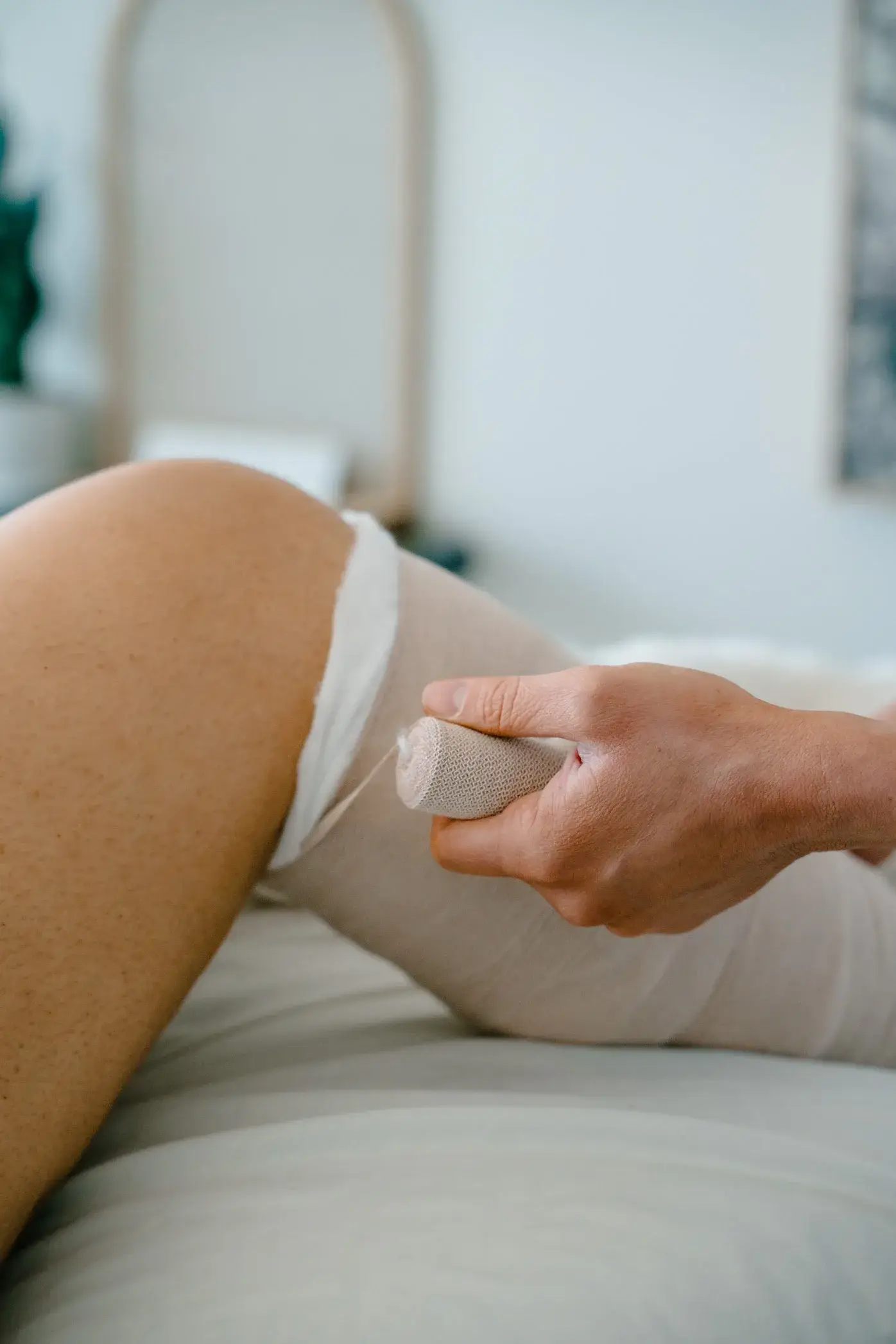
Lymphedema care is the only situation with a formal schedule, and it is front-loaded. The National Cancer Institute describes complete decongestive therapy in two phases. Phase one, reduction, combines skin care, exercise, manual lymphatic drainage and compression bandages, performed daily for an average of 15 days. Phase two, maintenance, continues the skin care and exercise, moves to compression garments, and uses lymphatic drainage as needed.
The dose matters. A 2026 evidence summary on decongestive therapy for breast cancer-related lymphedema concluded that lymphatic drainage requires sufficient dosage, and that 20 or more sessions over more than two weeks is what effectively reduces arm volume. The same summary is clear that lymphatic drainage benefits mild to moderate swelling but does not replace compression in advanced stages. The trial the NCI cites compared 20 daily sessions plus garments against garments alone over six weeks.
In other words, if you have lymphedema, “how often” is really “how many, how close together, and with what”. Once the limb is down, the frequency drops sharply and the garment does most of the holding. Our page on how often you need lymphatic drainage if you have lymphedema walks through both phases, and complete decongestive therapy describes how Meeghan Mackenzie, our Certified Lymphedema Therapist, delivers it.
After surgery: a month of frequent sessions, then tapering
Post-operative schedules are set by the surgeon rather than a treatment standard, and they vary. The clearest published rhythm we read, from a physiotherapy clinic describing care after liposuction, runs like this: gentle sessions may begin in the first week if the surgeon clears it and drains are out, though many practitioners wait until week two; weeks two to four are the intensive period at two to three sessions a week; from the second month, weekly sessions usually suffice, and some people move to monthly. The same source gives a total range of 6 to 20 treatments, with 10 to 12 being typical.
Treat those as a template, not a prescription. Your surgeon’s instructions override any clinic’s general guide, and the start date is always theirs to give. If you are counting sessions for a specific procedure, see how many lymphatic drainage sessions you need after lipo and our post-op lymphatic drainage page.
Puffiness, travel and tired legs: as needed
This is the column most people reading this page belong to, and it is the one with the least structure, for a reason. Cedars-Sinai is direct: if you have a healthy lymphatic system, lymphatic drainage massage is not likely to benefit you beyond simple relaxation, and the trimming effect people notice is temporary, because fluid has been moved rather than removed. The Cleveland Clinic agrees from the other direction: if you do not have lymphedema, you may not see meaningful results, though it is not dangerous in most cases either.
So there is no maintenance interval to protect. A session when your ankles are puffy after a flight, or your face feels heavy after a hard week, is a reasonable thing to book. A standing fortnightly appointment to keep a healthy system “moving” has no evidence behind it, and we would rather tell you that than take the booking.
What does hold between sessions is the ordinary stuff Cedars-Sinai lists: walking, deep breathing, swimming. Those are free and daily.
How to tell if the rhythm is working
Two signals, one from each end.
If you are being treated for a real swelling problem and have had several sessions with no noticeable change, the Cleveland Clinic’s advice is to ask your healthcare provider about alternative treatments. More of the same is not the answer. It may be that compression is missing, that the diagnosis needs another look, or that the swelling is not lymphatic.
If you are coming for comfort and you leave feeling rested and lighter, that is the whole outcome, and you can book the next one whenever you like.
Either way, a Cochrane review of six trials in breast cancer-related lymphedema found lymphatic drainage safe and well tolerated across an intensive course, so frequency itself is not the risk. Spending on sessions you do not need is.
When to see a doctor before deciding
Frequency is a planning question, and planning should wait until the cause of swelling is known. Please see a doctor first, rather than booking a series, if:
- Swelling is in one limb only, or arrived suddenly
- The skin is red, hot or painful, or you have a fever
- You have a known heart, kidney or clotting condition
- Swelling has lasted more than a few weeks without an explanation
The Cleveland Clinic lists blood clots, cellulitis, deep vein thrombosis, fever, heart disease, infection, kidney failure and stroke among the reasons to avoid lymphatic massage altogether. Our Learning Centre page on when to seek medical care has the fuller picture.
Booking at Renu
Classic lymphatic drainage is available in 30, 45 or 60 minute sessions ($95, $105 and $130), post-op sessions at 30, 45 or 60 minutes ($105, $115 and $140), and a 90 minute session for multiple surgeries ($210). We are open seven days, so a short intensive course can be scheduled without waiting for weekdays. If you are unsure which column you belong in, the lymphatic drainage massage page explains the options, and you are welcome to ask before you book.
Questions people ask
Is a monthly lymphatic drainage session worth it if I am healthy?
Only for how it makes you feel. Cedars-Sinai says a healthy lymphatic system is unlikely to benefit beyond relaxation, and any trimming effect is temporary fluid movement. If a monthly hour of quiet is what you want, that is a fine reason, but there is no evidence it keeps anything 'flushed'.
How many sessions does lymphedema treatment actually take?
The intensive phase described by the National Cancer Institute is daily treatment for an average of 15 days, and a 2026 evidence summary found that 20 or more sessions over more than two weeks is the dose that reliably reduces arm volume. After that, maintenance means garments, self-care and lymphatic drainage as needed.
Can I book a block of post-op sessions before my surgery?
Yes, and it helps to have the first few weeks mapped out, but the start date depends on your surgeon's clearance and usually on drains being out. Most protocols run two or three sessions a week in weeks two to four, then weekly. Bring your surgeon's instructions and we will build the plan around them.
What happens if I stop coming?
If your lymphatic system is healthy, nothing: there is no effect to maintain. If you have lymphedema, the swelling will tend to return unless the maintenance pieces, especially compression, carry on. The treatment is not what holds the result; the garment and your daily routine are.
Sources
- Cedars-Sinai: FAQs about lymphatic drainage massage
- Cleveland Clinic: Lymphatic drainage massage
- National Cancer Institute: Lymphedema (PDQ), health professional version
- Zhu et al., Asia Pac J Oncol Nurs 2026: Complete decongestive therapy for breast cancer-related lymphedema, an evidence summary
- HelloPhysio: Lymphatic drainage massage after liposuction
- Cochrane: Manual lymphatic drainage for lymphedema following breast cancer treatment
Page reviewed October 4, 2026. This page is education, not a diagnosis. For your own situation, talk to your doctor, surgeon or care team, or ask us.
Keep reading
Related pages