
How often should I get a deep tissue massage?
Leave at least 48 hours between deep tissue sessions so soreness clears. For a stubborn problem, closer sessions for weeks, then taper; upkeep, monthly.
By The Renu lymphatic and massage team · 6 min read
Leave at least 48 hours between deep tissue sessions so post-massage soreness has cleared before the next one. For a stubborn problem, the research pattern is closer, longer sessions for a few weeks, then a taper to maintenance once things settle. For general upkeep, a session every three to six weeks is a reasonable rhythm for most people, adjusted to how long the benefit lasts for you.
Leave at least 48 hours between deep tissue sessions so post-massage soreness has cleared before the next one. For a stubborn problem, the research pattern is closer, longer sessions for a few weeks, then a taper to maintenance once things settle. For general upkeep, a session every three to six weeks is a reasonable rhythm for most people, adjusted to how long the benefit lasts for you.
This page is about firm, targeted work specifically. If you are asking about massage in general, including relaxation sessions, how often should I get a massage? is the broader answer.
The 48-hour rule
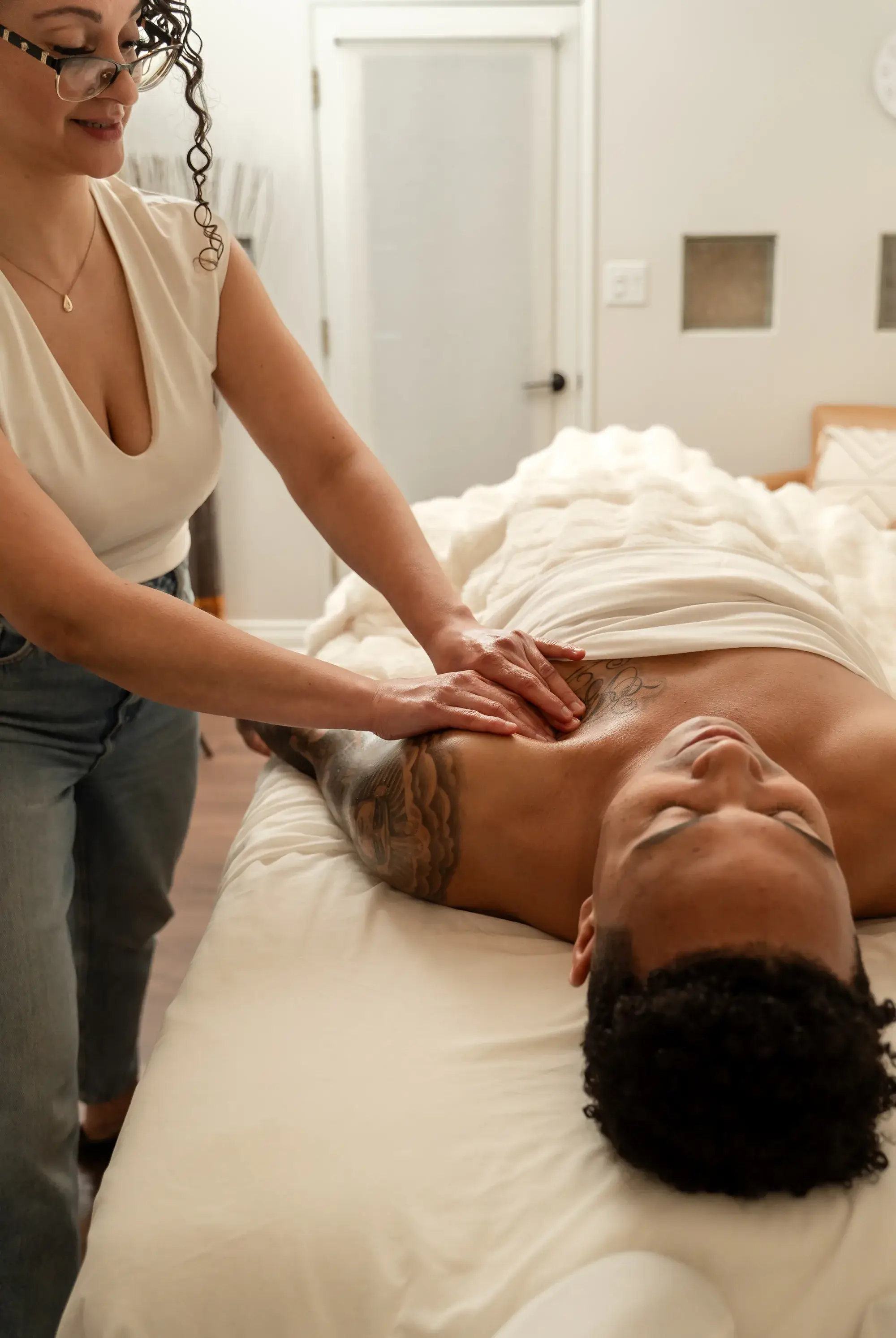
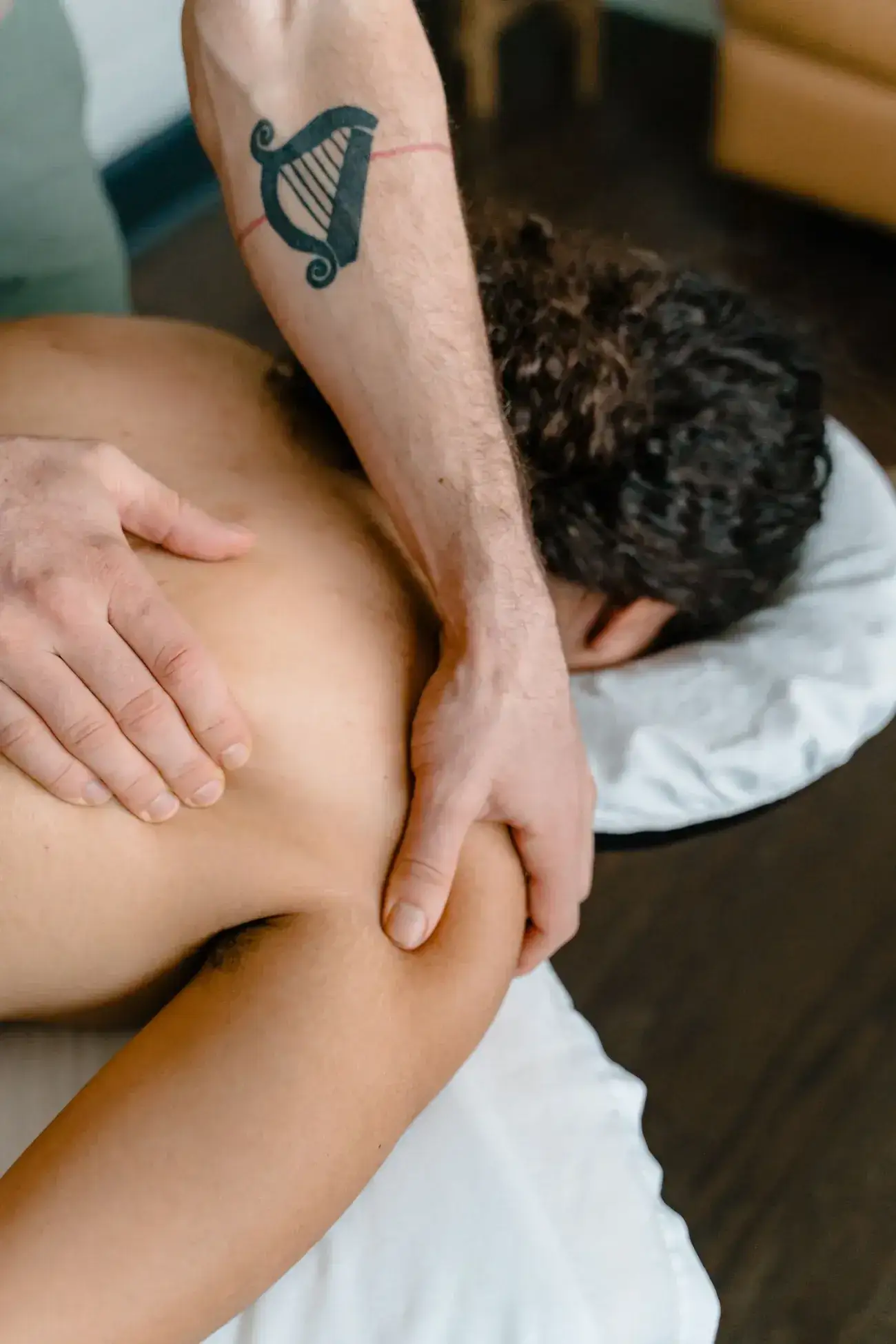
Deep tissue massage is the style most likely to leave you sore. Healthline groups it with trigger point, tuina and sports massage as the techniques that use stronger pressure and carry a higher chance of next-day soreness, compared with Swedish, aromatherapy, shiatsu or hot stone work. That soreness is a delayed-onset response to muscle that has been worked harder than it is used to, much like the day after a new workout.
Runner’s World’s sports massage guide puts the window at 48 hours: post-massage tightness should dissipate within two days, and it often shows you which areas need attention next time. The guide also advises against exercising straight after a session and suggests waiting until the following day.
That window is the floor for spacing. Booking a second firm session while you are still sore from the first means working on tissue that is mid-repair, which tends to produce more soreness rather than more change. Two days between sessions is the minimum; for most people the useful gap is longer.
What the dosing research says
The best evidence on how often massage should happen comes from a trial that was designed to answer exactly that. Sherman and colleagues, in the Annals of Family Medicine in 2014, randomized 228 people with chronic neck pain to one of five schedules for four weeks: 30-minute sessions two or three times a week, or 60-minute sessions one, two or three times a week, against a wait-list control.
The results were clear in one direction. The 30-minute schedules were not significantly better than waiting. The 60-minute sessions given two or three times a week were the ones that made a clinically meaningful difference, with a relative risk of improvement in neck dysfunction of 3.41 and 4.98 respectively, and in pain intensity of 2.30 and 2.73. The authors concluded that multiple 60-minute massages per week were more effective than fewer or shorter sessions.
The Cleveland Clinic summarizes the same pattern for a general audience: in some cases, a 60-minute massage several times a week had better results than fewer or shorter massages. The NCCIH’s review of the neck pain evidence adds the condition that massage could provide short-term relief of neck pain if sessions were long enough and frequent enough.
Two cautions belong beside those numbers. The trial was about chronic neck pain, not every complaint, and it ran for four weeks, not forever. It supports a concentrated block of longer sessions to shift a problem, not a permanent twice-weekly habit.
A practical schedule by situation
| Situation | Suggested rhythm | Why |
|---|---|---|
| New, stubborn tightness or a chronic pain pattern | 60 minutes, once or twice a week for three to four weeks | Matches the dose that produced change in the neck pain trial |
| After that block, once the problem has settled | Stretch to every two weeks, then every three to four | A taper keeps gains while testing how long they hold |
| Ongoing maintenance with no active problem | Every four to six weeks, or a monthly 30-minute session on one region | Runner’s World suggests even a monthly 30-minute session as realistic upkeep |
| Training hard or in a physically heavy season | Every two to three weeks, lighter in the 48 hours before an event | Keeps soreness windows away from the days that matter |
These are starting points, not prescriptions. The right interval is the one at which you arrive still carrying some benefit from the last visit.
Why plans taper rather than stay close
Massage’s effects are real but tend to be short-lived. The Cleveland Clinic notes that pain and tension relief from massage may be short-term rather than long-term, and the NCCIH describes the benefit for shoulder pain as lasting only in the short term. That is the reason for front-loading: closer sessions at the start stack benefit before it fades, and once the pattern has changed, the intervals can lengthen while you watch what holds.
It is also the reason deep tissue sessions are usually paired with something you do between them. Stretching, changing the desk setup that keeps reloading the same muscle, or a walking habit will often do more for the interval than a seventh massage. How long do the effects of a massage last? goes into what the research says about duration.
Signs the interval is wrong
Too close:
- You are still sore when you arrive for the next session.
- Bruising has appeared, or the area feels more sensitive than it did a month ago.
- Each session feels like starting over because the tissue is guarding.
Too far apart:
- The tightness is fully back, and has been for a while, before you return.
- Every session feels like a first session, with no carry-over.
- You have started booking only when something hurts enough to force it.
If you are sore for longer than two days after each visit, that is a pressure question more than a frequency one, and the fix is a lighter session rather than a longer gap. Does deep tissue massage have to hurt to work? explains why.
How this works at Renu
You do not need to pick a style when you book. Our massage therapy sessions run 30, 45, 60, 75 or 90 minutes, and your therapist blends Swedish, deep tissue and sports techniques after a short conversation about what you are feeling that day. For a concentrated block on a specific problem, 60 minutes at $120 is the unit the dosing research supports; for maintenance on a single region, a 30-minute session is $80. Every length is listed on the treatment menu, and is a 60- or 90-minute massage better? helps you choose between the two longer options. The full list of treatments is on the services page.
When frequency is not the answer
If a tight area has not improved after three or four weeks of regular work, more massage is unlikely to be the missing piece. Runner’s World notes that therapists do not diagnose, and advises seeing a doctor if symptoms have not improved within three days of a session. See your physician if pain is worsening rather than settling, if there is numbness, tingling or weakness alongside the tightness, if the pain wakes you at night, or if it followed an injury or accident. A clear diagnosis often changes the plan, and sometimes shows the massage was working on the wrong thing.
Questions people ask
Can I get a deep tissue massage two days in a row?
It is better not to. Soreness from firm work generally peaks and clears within about 48 hours, and a second deep session while that is still present stacks one recovery on top of another. If you need work on back-to-back days, make the second one lighter, or treat a different region.
Is weekly deep tissue massage too much?
Not for a defined problem over a defined period. A dosing trial of massage for chronic neck pain found 60-minute sessions two or three times a week for four weeks were the ones that produced meaningful improvement, while 30-minute sessions did no better than waiting. Weekly firm work for a month is well within that range; the point is to taper once the problem settles rather than stay there indefinitely.
How do I know when to space sessions out?
Use the gap between sessions as the test. When you arrive for the next visit still feeling most of the benefit from the last one, the interval can stretch. When the tightness is fully back before you return, the interval is too long for that stage. Most people find their own maintenance rhythm within a few cycles.
Does a 30-minute deep tissue session count?
It counts for one region. Thirty minutes is enough for a focused treatment of a neck and shoulder, a low back or a pair of calves, and Runner's World suggests a monthly 30-minute session as a realistic maintenance habit. For whole-body firm work, or a problem that involves several areas, 60 minutes is the more useful unit.
Sources
- Runner's World Australia: 14 things to know before you get a sports massage
- Cleveland Clinic: Benefits of massage
- NCCIH: Massage therapy, what you need to know
- Sherman et al., Annals of Family Medicine 2014: Five-week outcomes from a dosing trial of therapeutic massage for chronic neck pain (Europe PMC)
- Healthline: Why you feel sore after a massage and what to do
Page reviewed October 3, 2026. This page is education, not a diagnosis. For your own situation, talk to your doctor, surgeon or care team, or ask us.
Keep reading
Related pages