

Can I ask my massage therapist to stop or change the treatment?
Yes, at any moment and for any reason. Consent in massage therapy is ongoing: you choose the pressure, the areas, what you undress and whether to continue.
By The Renu lymphatic and massage team · 6 min read
Yes. You can ask your massage therapist to stop, change the pressure, skip an area or explain what they are doing at any moment, for any reason, and you do not have to justify it. Consent in massage therapy is ongoing, not a form signed at the door: a professional asks before starting, asks again before changing the plan, and treats a request to stop as the end of the discussion. You also decide what clothing you remove and how you are covered.
Yes, and you never have to explain yourself. Ontario’s massage therapy regulator puts it in one line for the public: you can ask your RMT to stop, modify or explain your treatment at any time, for any reason. Alberta has no college yet, which is exactly why we think clients here should know what the written standard looks like elsewhere and expect the same in any room they lie down in.
If you have had a session somewhere that left you feeling you had no say, this page is for you. The rest of it describes what a well-run appointment looks like, so you can recognise it, and ask for it.
Consent is a conversation, not a signature
The College of Massage Therapists of Ontario’s Standard of Practice on consent describes consent as something obtained before an assessment, before treatment, before any change to the plan, and reverified throughout. The discussion is supposed to cover the nature of the treatment, the alternatives, the likely consequences of not having it, and your right to ask questions and to have the treatment stopped or modified at any point at your request.
In practice that sounds ordinary. On a first visit with us it begins with a short health history. Then the therapist tells you what they propose to do, which areas, roughly how, and asks whether that is all right. If, halfway through, they want to work somewhere that was not discussed, the standard says they ask again. If they want to go deeper, they ask again. You are allowed to say no to any part of it and yes to the rest.
Some areas carry an extra layer. The Ontario standard requires written or electronic consent before treating sensitive areas, which it names as the upper inner thighs, the chest wall muscles and the breasts, and written consent for the gluteal muscles at the first visit in a plan, with verbal consent at each visit after. Intra-oral jaw work, which we offer for TMJ pain, is another case where you should hear exactly what will happen, with gloved hands, before it starts.
Pressure and areas are yours to set
The Ontario college’s public guidance states that you can request your preferred pressure level during treatment, and that you stay in control. Runner’s World’s advice for athletes makes the same point from a different angle: massage does not have to hurt to be beneficial, and the work requires your body to relax rather than brace against the pressure. A muscle that is guarding against pain is not receiving treatment.
So the two most useful sentences in any session are short:
- “A little lighter there, please.”
- “Can we skip that area today?”
Both are complete requests. A good therapist adjusts without a lecture. If the therapist believes a technique matters to your goal, they may explain why and offer an alternative; you can still decline. The Ontario consent standard even addresses the situation where a client has used cannabis or alcohol before a session, because judgement of pressure and of what happened during treatment can be affected, which is one more reason to arrive clear-headed.
Undressing and draping: you decide
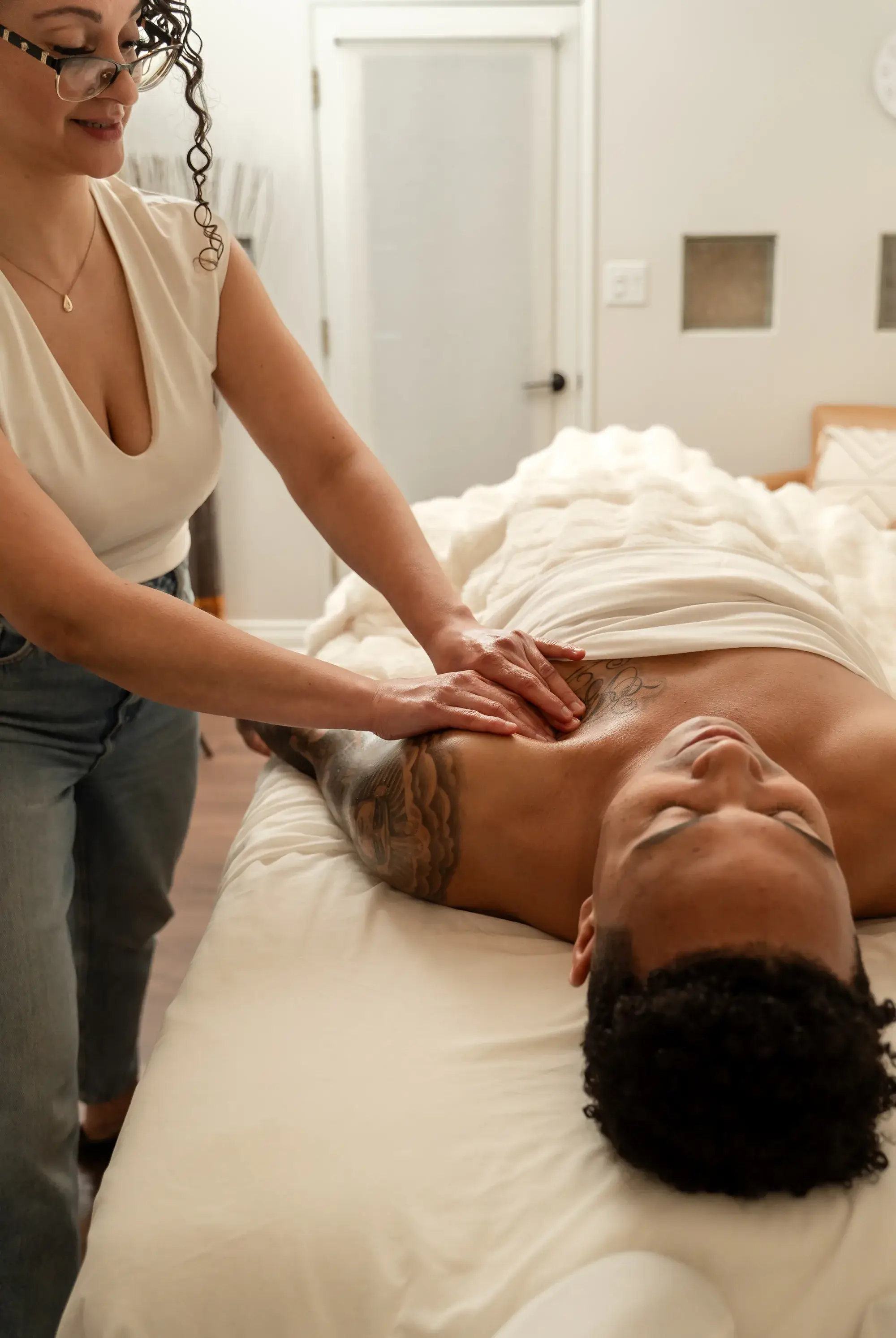
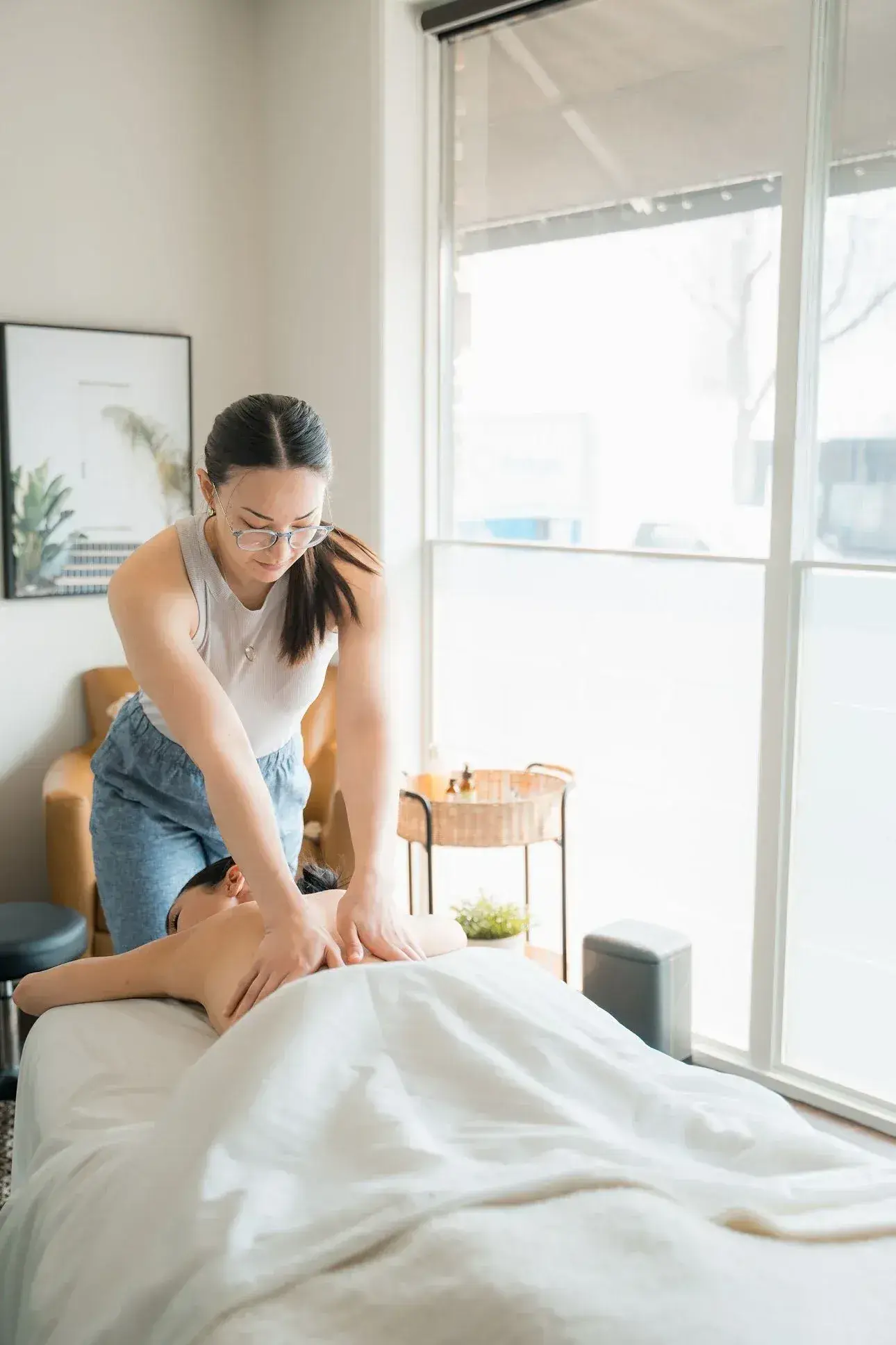
The decision about clothing is yours. The college’s public guidance says you decide how much clothing to remove, and its draping standard goes further than most people expect:
- The therapist must always drape you, unless you arrive in clothing suitable for treatment and prefer to stay dressed.
- They must discuss the options for draping and clothing with you, explain which part of the body they intend to work on, and ask whether you prefer touch directly on skin or through a sheet or your clothing.
- Only the area being treated is uncovered; the standard lists the shoulders, arms, hands, neck, face and head as the exceptions that can stay visible. Everything else stays covered unless you ask otherwise for your own comfort.
- The therapist must not reach under the draping or clothing without your explicit consent, and must offer options that do not require touch, such as guided stretching, or work over clothing, if you would feel better protected that way.
- You may have another person accompany you at the appointment if you ask.
Sarah Ward-Bakken of the Vicars School of Massage Therapy suggested one test to CTV News when asked how Alberta clients can judge a clinic without a regulator: were you covered the entire time, except for the areas being worked on, with the opportunity to adjust? If the answer is no, something was wrong, whatever the explanation offered.
What a good therapist does when you speak up
The response tells you more than the technique ever will. A therapist who takes consent seriously will:
- Stop or change immediately, without finishing “just this bit”.
- Check in, briefly, without pressing for a reason.
- Offer a way forward: lighter work, a different area, a pause, or ending early with no fuss.
- Keep the drape in place while any of that happens.
- Note it in your record, which the Ontario standard requires within 24 hours, so the next session starts from what you said rather than from scratch.
What you should not hear is persuasion. “You need this”, “it has to hurt to work” or “everyone finds that uncomfortable at first” are the sound of a boundary being argued with. Runner’s World is blunt about the pain myth; the Ontario standard is blunt about the rest. Your participation, as the draping standard puts it, is never a justification for a boundary being crossed.
If something felt wrong
Sometimes the discomfort is physical and the fix is easy: a cold room, a headrest at the wrong height, a technique that is simply not for you. Say it next time, or in a message afterward, and a clinic worth returning to will adjust.
Sometimes it is more than that. If you were uncovered when you had not agreed to be, touched somewhere you had not consented to, or ignored when you asked for a change, raise it. In a regulated province the college receives and investigates complaints. In Alberta, where massage therapy is not yet regulated, CTV reported that clients can follow up with the therapist’s association, and the clinic itself should want to hear it. Write down what happened while it is fresh. You do not have to decide what to do with that note straight away.
We would rather you tell us in the room, five seconds after it occurs to you, and we will have asked more than once before then. That is what the appointment is for. Our massage therapy page describes what a session involves, and our team page lists who you will be working with and what each therapist is trained in, so you can walk in already knowing what to expect.
Questions people ask
Will my therapist be offended if I ask them to stop?
A professional will not be. Ontario's regulator writes the right to stop, modify or explain treatment at any time, for any reason, into its public guidance, and a therapist who has been trained well expects to hear it now and then. The only awkward session is the one where you stayed quiet and left unhappy.
Do I have to say why I want to stop?
No. The standard is at any time, for any reason, and the reason can stay with you. Cold hands, a wave of nausea, an area that feels too personal, or simply having had enough are all complete answers, and so is silence.
Can I keep my underwear or clothes on?
Yes. The client decides how much clothing to remove, and treatment through clothing or a sheet is a recognised option. Some techniques work better on skin, and a therapist can tell you what changes if you stay dressed, but the decision remains yours.
What if I only realise afterwards that something was wrong?
Raise it. Start with the clinic, and in a regulated province with the college; in Alberta, where there is no college, the therapist's professional association is the next step. Writing down what happened and when, as soon as you can, helps whichever route you take.
Can I bring someone into the room with me?
Ontario's standard requires therapists to allow a patient to have another person accompany them at an appointment if requested, and we see no reason an Alberta clinic should answer differently. Ask when you book so the room can be set up for two.
Sources
- College of Massage Therapists of Ontario: Five things to know before booking a massage
- College of Massage Therapists of Ontario: Standard of Practice, Consent
- College of Massage Therapists of Ontario: Standard of Practice, Professional Boundaries, Draping and Physical Privacy
- Runner's World Australia: 14 things to know before you get a sports massage
- CTV News Edmonton: Alberta government reviewing application to regulate massage therapists
Page reviewed October 4, 2026. This page is education, not a diagnosis. For your own situation, talk to your doctor, surgeon or care team, or ask us.
Keep reading
Related pages