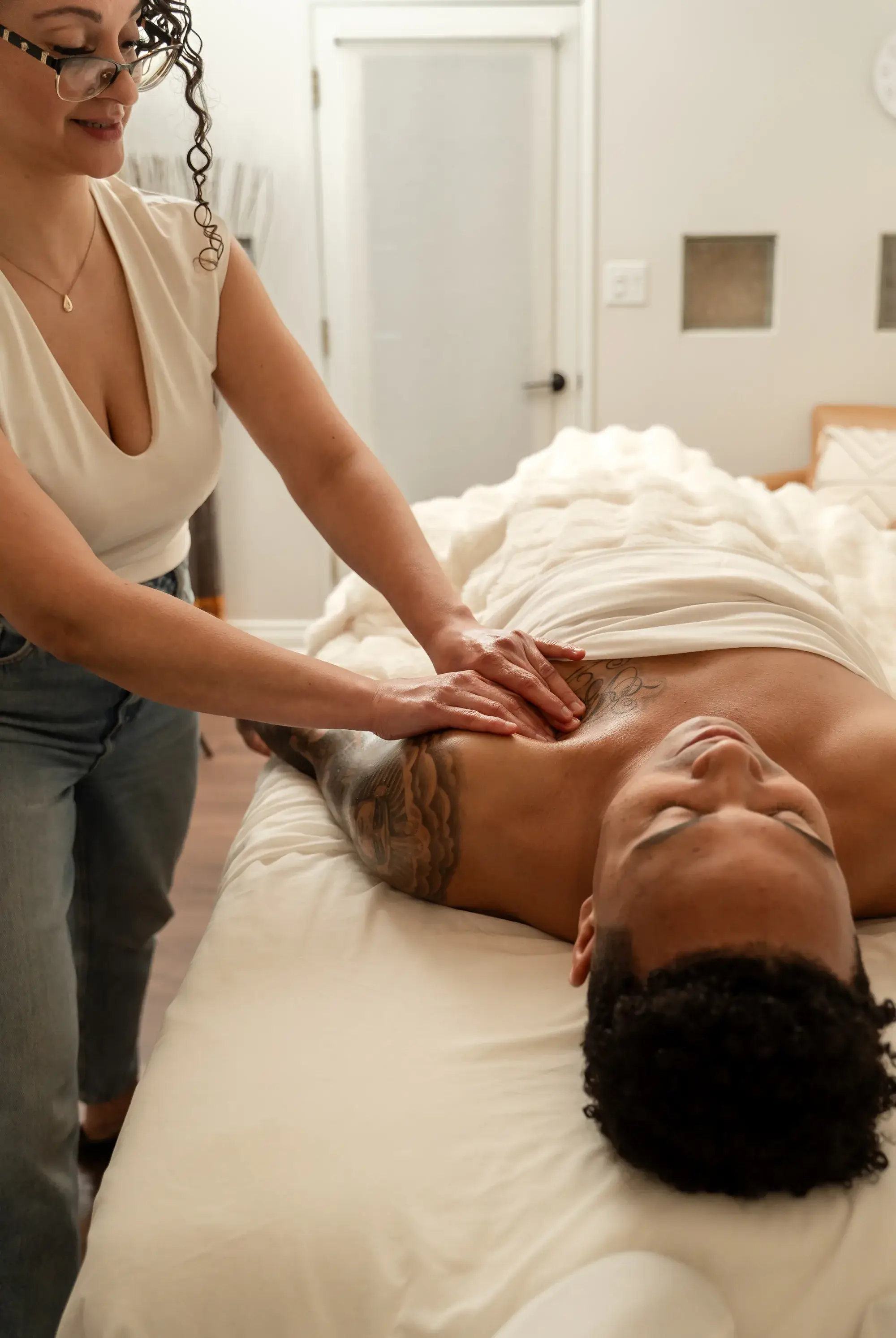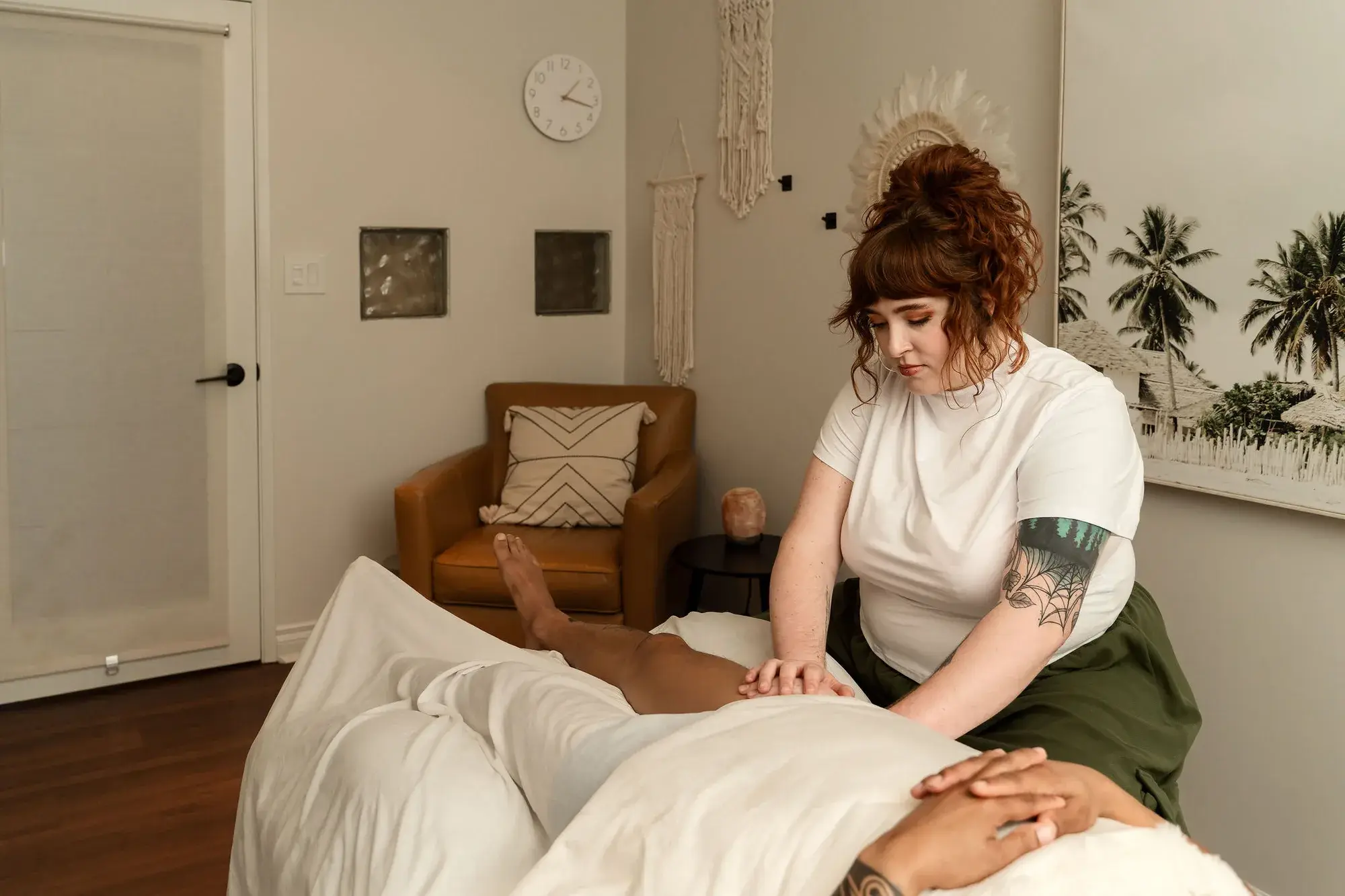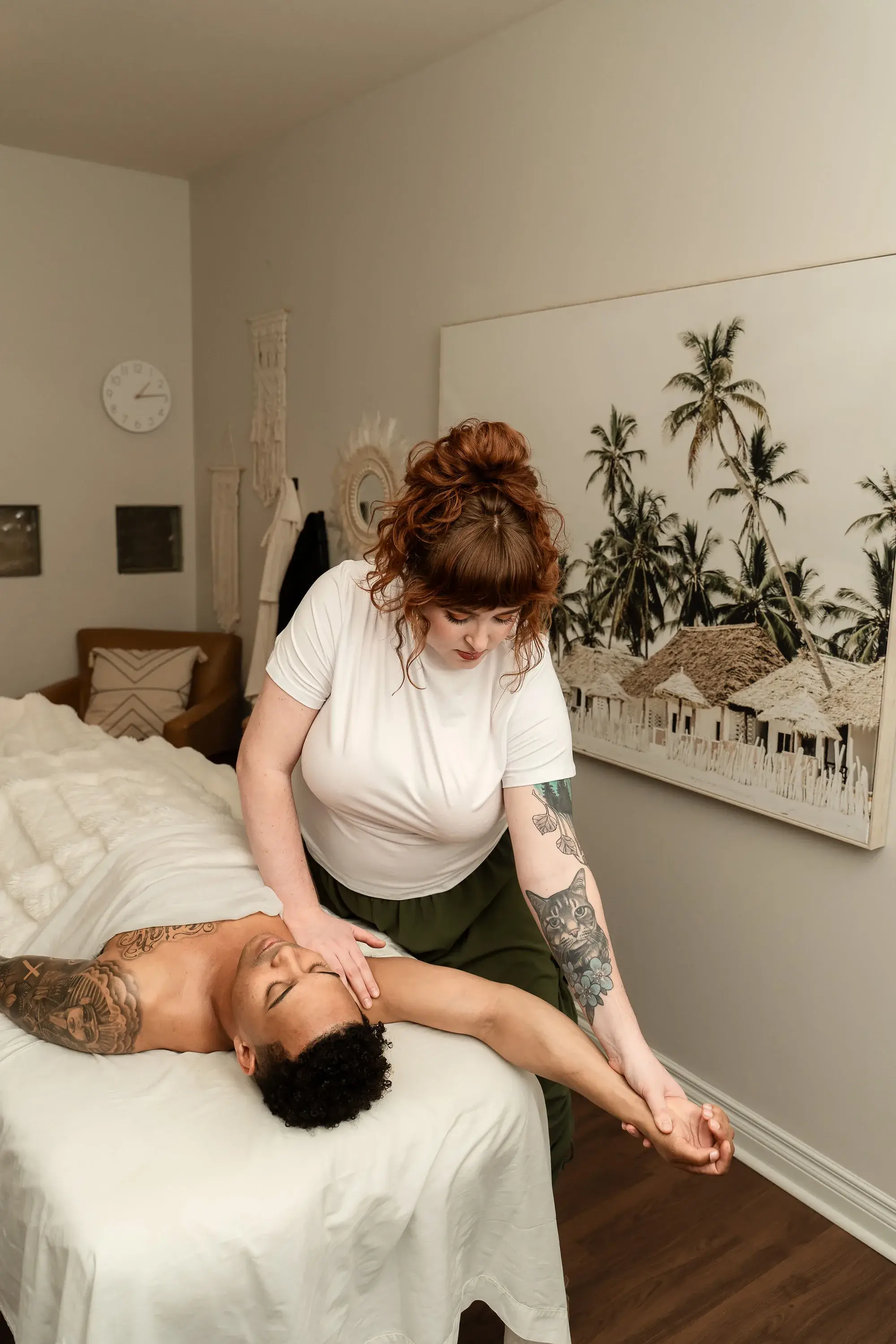

Massage for first responders in Calgary
Massage for first responders in Calgary: how duty belts, body armour, SCBA and stretcher lifts load the back, what massage can help, and booking on days off.
By The Renu lymphatic and massage team · 5 min read
Massage is a sensible way for police officers, firefighters and paramedics to ease the back, neck and shoulder pain that gear and lifting cause, as long as expectations stay realistic. Most people do well starting with a 60- or 90-minute massage on a day off; RAPID NeuroFascial Reset is an option for a stubborn shoulder or upper back. Sudden weakness, numbness or pain after a specific incident on shift should be assessed by a doctor first.
Massage can help police officers, firefighters and paramedics manage the back, neck and shoulder pain that comes from carrying gear and moving people, and it fits well on a day off. A 60- or 90-minute massage is the usual starting point. Keep the expectations realistic: it eases muscle pain and stiffness, it does not undo the load of the job, and anything that started with a specific injury on shift should be seen by a doctor first.
Three jobs, three different loads
First responders share long shifts and broken sleep, but the physical strain differs by role, and so does the focus of a massage.
| Role | Main load | Where it tends to show |
|---|---|---|
| Police | Duty belt, body armour, long hours in a patrol car | Low back, hips, multiple sites at once |
| Firefighters | SCBA and turnout gear, hose and ladder work | Back, shoulders |
| Paramedics | Lifting and moving patients and stretchers | Back |
Police: the duty belt and body armour
For officers, the belt and vest are the clearest culprits in the research.
- Low back pain is the norm, not the exception. In the Quebec Serve and Protect study of 3,589 police officers, 67.7% reported low back pain in the previous 12 months and 28.7% had chronic low back pain. Almost all of those with pain (96.5%) felt it was at least partly linked to police work.
- Equipment discomfort tracks with pain in several places. Among 4,185 Swedish police, 41.3% had pain in more than one body region at least once a week. Officers who found the duty belt uncomfortable had over five times the odds of multi-site pain (odds ratio 5.42); for body armour the figure was 2.69. Long periods sitting in a patrol car were not significantly linked once equipment was accounted for.
- Armour and first onset. An older study comparing two forces found that wearing body armour of about 8.5 kg shortened the time until officers first developed low back trouble.
On the table, that usually means work on the low back, the muscles around the hips where the belt sits, and the upper back and shoulders under the vest.
Firefighters: breathing apparatus and turnout gear
A self-contained breathing apparatus is heavy enough to have its own weight rule. US regulation caps an SCBA system at 16 kg (35.2 lb), and NIOSH-funded biomechanical modelling put the most comfortable weight for static firefighting postures at about 39 lb. Add turnout gear, hose and tools, and the back and shoulders do a great deal of holding.
Stress plays a part as well. In a survey of 430 firefighters, 40% reported musculoskeletal symptoms, back pain most often, and those reporting occupational stress had about 50% higher odds of symptoms (odds ratio 1.52), with more stress linked to more symptoms. That does not mean massage treats stress; it means that a sore back on a firefighter often has more than one cause.
Paramedics: lifting people, not boxes
For paramedics, the back is the body part most often injured. A study of two urban EMS agencies found an injury rate of 34.6 per 100 full-time workers a year, mostly sprains, strains and tears, and 57% of those injuries led to lost workdays. The authors found the rate higher than any industry the US Department of Labor reported for that year.
Patients are awkward, unpredictable loads, often lifted from a floor, a stairwell or a vehicle. A massage after a heavy run of calls focuses on the low back, glutes and the muscles between the shoulder blades.
What massage can realistically do
The honest summary is that massage helps many people feel and move better in the short term, with modest evidence behind it. A 2024 Cochrane review of massage for neck pain found little to no average difference compared with a placebo treatment, largely because most trials used single sessions. When the review grouped trials by dose, eight or more sessions over four weeks, each at least 30 minutes, showed a clinically important difference.
So we would suggest:
- a short run of regular sessions while pain is active, rather than one massage and a verdict;
- longer gaps once things settle;
- continuing your service’s fitness and conditioning programme, since massage supports that work rather than replacing it.
We also want to be clear about what we do not claim. Research on massage for post-traumatic stress in first responders is lacking, so we do not present massage as a treatment for trauma symptoms. If a call is staying with you, your peer support team or a mental health professional is the right place to start.
When to see a doctor first
Book a medical assessment before massage if you have:
- pain that started with a specific fall, lift or incident on shift (report it to your employer as well; see massage therapy and WCB-Alberta claims);
- back pain with a fever or chills, weight you have lost without trying, or pain that is worse at night or does not ease with rest;
- pain, tingling, weakness or numbness in both legs, numbness around the genitals or anus, or changes in bladder or bowel control: these need emergency care, not a massage.
The NHS lists these as signs that back pain needs a doctor, urgently in the last case.
Booking around rotating shifts at Renu
We are open seven days: 8:00 am to 8:30 pm Monday to Friday and 10:00 am to 5:00 pm on weekends, so there is usually a slot on your first or second day off. You can book online through Jane.
- Massage, 60 min ($120): back, hips, neck and shoulders.
- Massage, 90 min ($157): time for the legs as well, useful after a block of night shifts on your feet.
- RAPID NeuroFascial Reset (upper body), 45 min ($110): a movement-based approach with Monica Von Gaza for a shoulder, neck or upper back that keeps returning to the same sore spot. See RAPID NeuroFascial Reset for how a session runs.
Myofascial cupping (60 min, $120) is another option for broad upper-back tightness. If your strain is mostly from lifting, our page on massage for tradespeople covers overhead work and vibrating tools, and massage for nurses covers patient handling on the hospital side.
Questions people ask
Can massage help with duty belt back pain?
It can ease the muscle tension and soreness around the low back and hips, which is where officers usually feel the belt. It will not change the load of the belt itself, so it works best alongside any equipment changes your service allows, such as load-bearing vests.
Should I book a massage straight after a set of night shifts?
We would usually wait until you have slept. A day off after your first recovery sleep is a better time, because you can rest afterwards and you will notice what the massage changed.
Does massage help with PTSD or critical incident stress?
We do not make that claim. Many people find a massage relaxing, but the research on massage for trauma symptoms in first responders is lacking, and that care belongs with a mental health professional or your service's peer support programme.
Is a work injury handled differently?
If your pain came from a specific incident at work, report it to your employer and see a doctor first. Our page on WCB-Alberta claims explains how massage fits a workers' compensation claim.
Sources
- Spine (2017): Quebec Serve and Protect Low Back Pain Study, prevalence and functional impact among police officers
- International Archives of Occupational and Environmental Health (2018): Multi-site musculoskeletal pain in Swedish police and mandatory equipment
- Spine (1996): Occupational risk factors for low back trouble in serving police officers
- CDC Stacks / NIOSH (2021): Comfortable SCBA weights from biomechanical models for firefighting tasks
- International Journal of Occupational Medicine and Environmental Health (2019): Occupational stress and musculoskeletal symptoms in firefighters
- Prehospital Emergency Care (2005): Occupational injuries among emergency medical services personnel
- Cochrane Database of Systematic Reviews (2024): Massage for neck pain
- NHS: Back pain, when to get help
Page reviewed October 5, 2026. This page is education, not a diagnosis. For your own situation, talk to your doctor, surgeon or care team, or ask us.
Keep reading
Related pages