
Does massage work for chronic low back pain?
Massage can ease chronic low back pain and improve function in the short term, with no serious harms. How it fits alongside exercise and acupuncture.
By The Renu lymphatic and massage team · 5 min read
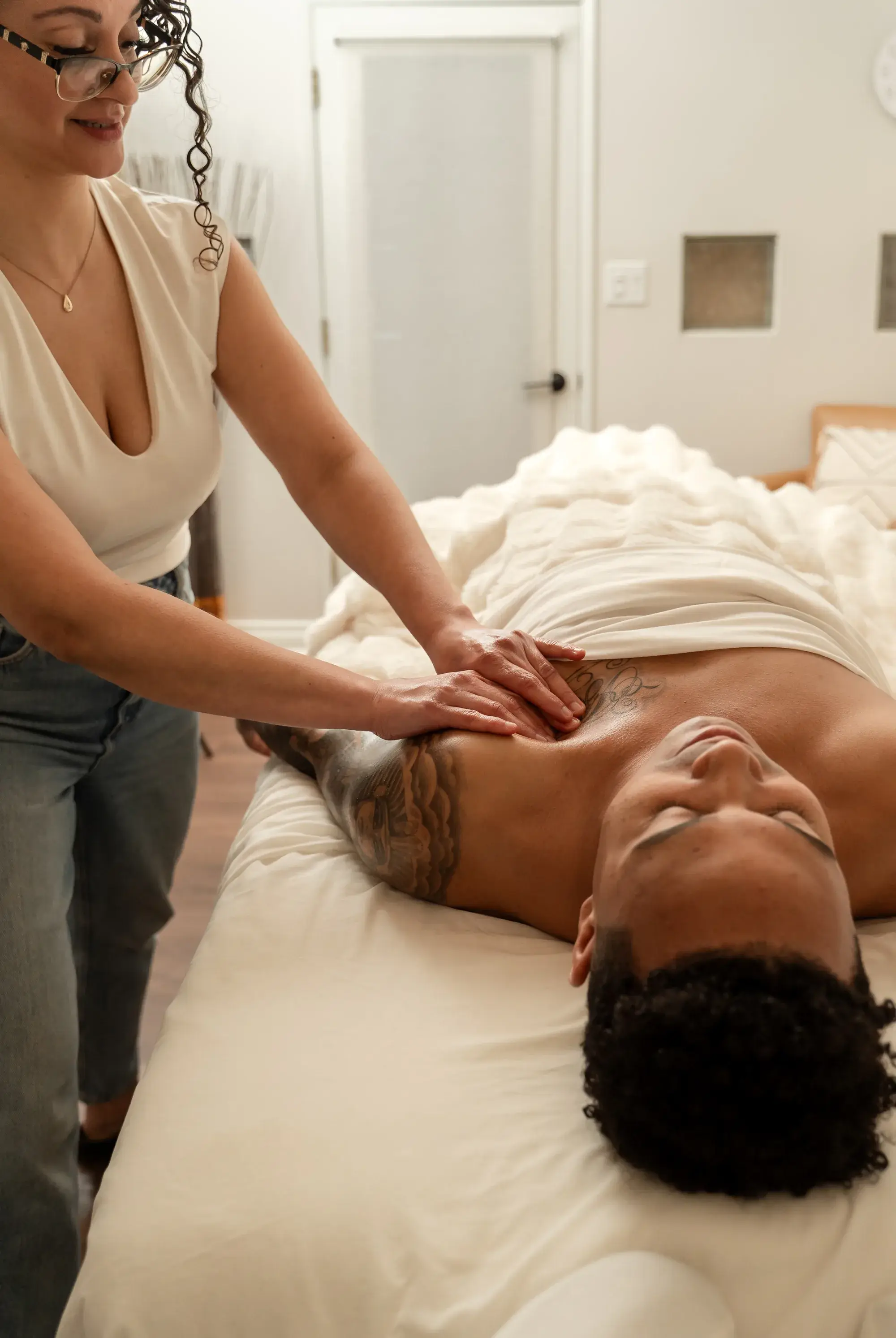
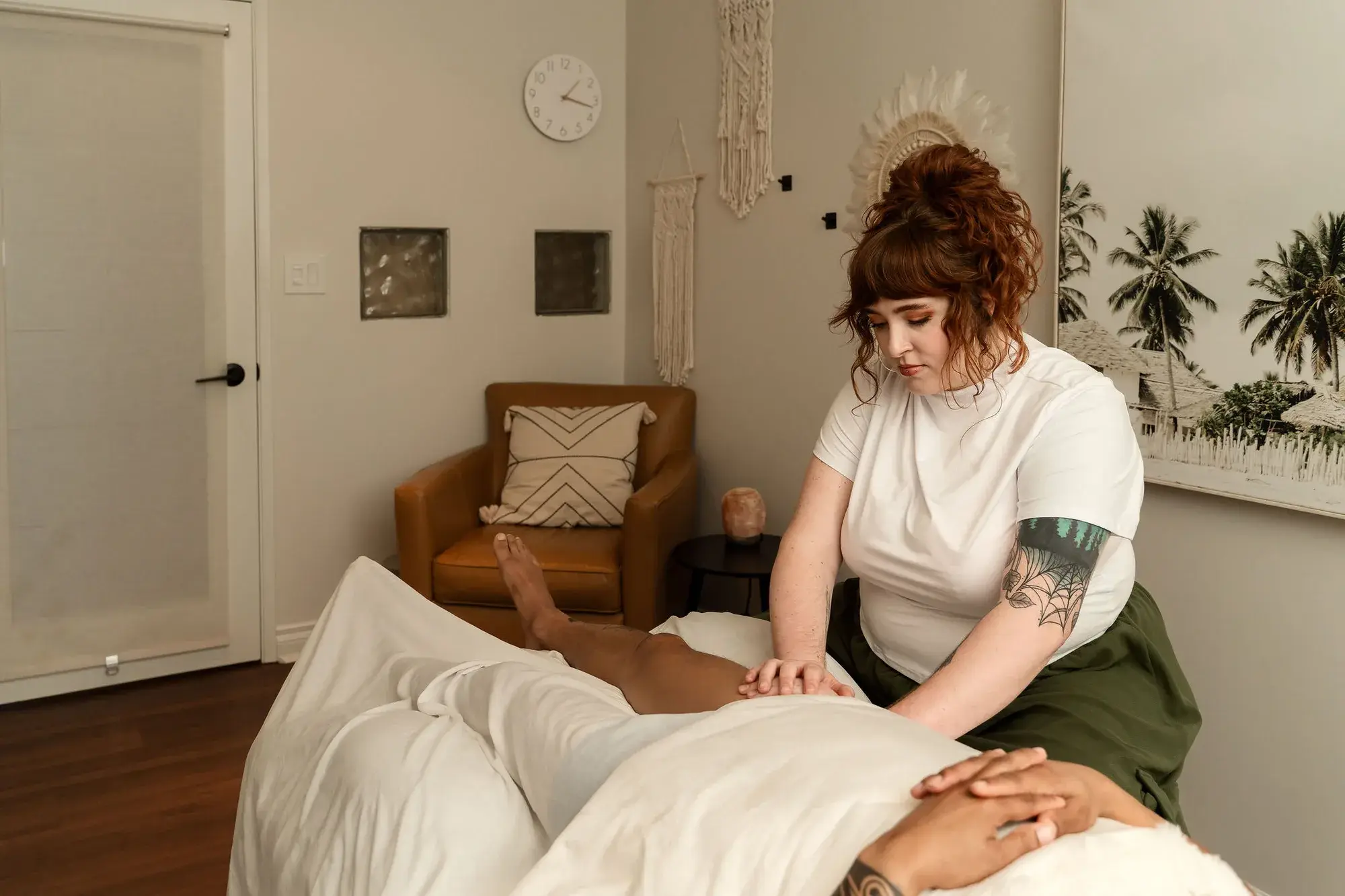
It can, as part of a plan. Cochrane's review of 25 trials found short-term improvements in pain and function for chronic low back pain, with no serious adverse events. Clients with chronic backs often book it for comfort and to lower the guard so exercise and daily movement feel easier. That makes massage a reasonable part of a plan for a chronic back, and a poor plan on its own.
A back that has hurt for a year has usually already cost money: pillows, a chair, a brace, two kinds of painkiller. Before you spend more of it on a massage, you deserve the research as it actually reads, not as a brochure reads it. We think the case for massage in chronic low back pain is real, and we would rather you knew what to expect walking in.
What the Cochrane review found
The most careful summary is Cochrane’s 2015 review of massage for low back pain: 25 randomised trials, 3,096 participants, published September 2015.
For subacute and chronic low back pain compared with inactive controls, massage improved both pain and function in the short term. Compared with active treatments such as exercise and spinal manipulation, massage was better for pain in both the short and the long term. Acute pain improved in the short term too.
What other reviews and guidelines say
The NCCIH summarises two evaluations. A 2016 review by the Agency for Healthcare Research and Quality, covering 20 studies, found evidence that massage was helpful for chronic low back pain. The 2015 review above was the other.
For chronic pain, the American College of Physicians’ 2017 guideline lists first-line nondrug options, as summarised by the NCCIH: exercise, acupuncture, mindfulness-based stress reduction, tai chi, yoga, progressive muscle relaxation, biofeedback and spinal manipulation. Massage fits alongside that kind of plan as a supporting treatment.
Where that leaves you
Put plainly, massage for a chronic back:
- Helps pain and function in the short term
- Is not a fix for the underlying problem
- Carries no serious harms in the trials, with a temporary increase in pain the commonest side effect, in 1.5 to 25 percent of people
That combination makes it a good supporting treatment and a poor sole one. If a session lets you walk further, sleep better or do your exercises with less guarding, it is earning its place. If it is the only thing you are doing for your back, pair it with the exercise-based care the guidelines recommend. How to schedule it so the short-term effect is used well is on How often should I get massage for low back pain?.
The acupuncture comparison
Because the guideline puts acupuncture among its first-line options for chronic back pain, people reasonably ask whether they should book that instead.
The NCCIH’s acupuncture summary reports that in 12 studies of 8,003 participants acupuncture was more effective than no treatment for back or neck pain. In 10 studies of 1,963 participants it was more effective than sham acupuncture, with a pain-relieving effect comparable to nonsteroidal anti-inflammatory drugs. The 2017 guideline included acupuncture among first-line options for chronic low back pain on moderate-quality evidence.
Cochrane’s own 2020 review of acupuncture for chronic non-specific low back pain, 33 trials and 8,270 participants, found that against no treatment, moderate-certainty evidence showed clinically important pain relief and better function immediately after treatment. Adverse effects were minor or moderate.
So the two treatments sit closer together than the guideline list suggests: both beat doing nothing in the short term. Dr. Will Tanner offers acupuncture at Renu, and an acupuncture and massage combination session is listed on our pricing page for people who want both in one visit. The head-to-head is on acupuncture vs massage therapy for back pain.
What the evidence does not measure
Trials measure pain scores and function questionnaires at fixed intervals. They do not measure whether an hour of being handled carefully made it easier to face the exercises, or whether the back that has been braced for a year let go for an afternoon. Those things are real, they are what many clients with chronic backs come for, and they are not in the Cochrane tables. We mention them because the right question is not only “does it work” but “what is it for”. For a chronic back, massage is for comfort and for lowering the guard so the lasting work can happen.
When a chronic back needs a doctor again
Chronic does not mean settled. The NHS lists symptoms that should take a long-standing back straight back to medical care:
- Tingling, weakness or numbness in both legs
- Numbness between the legs or around the back passage, or a new problem with bladder, bowel or sexual function: treat this as an emergency
- Pain that is suddenly severe, or that has been getting worse fast
- Feeling hot, cold, shivery or generally unwell
- Chest pain, or pain after a serious accident
If any of those is new, see a doctor before your next session with anyone. For an ordinary chronic back, the NHS describes what a GP can offer when weeks of self-care have not been enough: group exercise, physiotherapy, manual therapy and cognitive behavioural therapy. Massage sits comfortably inside that kind of plan.
Booking with your eyes open
Come for a massage expecting a short-term easing rather than a fix, and tell us what else you are doing for your back so the session supports it. If pressure-based work has never suited you, Monica’s RAPID NeuroFascial Reset is a movement-based alternative. And if after three or four visits nothing has moved, ask us plainly whether to keep going, or whether another part of your plan needs more attention.
Questions people ask
Why would a clinic offer massage for a chronic back?
Because a modest, short-term benefit with no serious harms is a reasonable thing to offer someone in pain, as long as it is described honestly. What we will not do is sell it as a fix. The trials found massage better than doing nothing in the short term and no worse than exercise or manipulation on pain, which makes it a fair supporting choice.
What counts as chronic low back pain?
Pain that has outlasted normal healing. The NCCIH defines chronic pain as pain lasting more than several months, variously set at three to six months. The Cochrane review groups subacute and chronic back pain together, and the American College of Physicians makes its recommendations separately for acute and subacute pain versus chronic pain.
Is acupuncture better than massage for a chronic back?
Both have a place. The NCCIH reports acupuncture as more effective than no treatment in 12 studies of 8,003 people and more effective than sham in 10 studies of 1,963, with pain relief comparable to anti-inflammatory drugs. The American College of Physicians lists it first-line for chronic low back pain. Neither treatment is a fix on its own; both are tools.
Could massage make a chronic back worse?
Temporarily, yes. The Cochrane review found an increase in pain intensity was the commonest side effect, affecting 1.5 to 25 percent of participants depending on the trial, and no serious adverse events. If a session leaves you sorer for more than a day or two, the pressure was too firm for your back, which is an adjustment rather than a reason to stop.
Sources
Page reviewed October 4, 2026. This page is education, not a diagnosis. For your own situation, talk to your doctor, surgeon or care team, or ask us.
Keep reading
Related pages