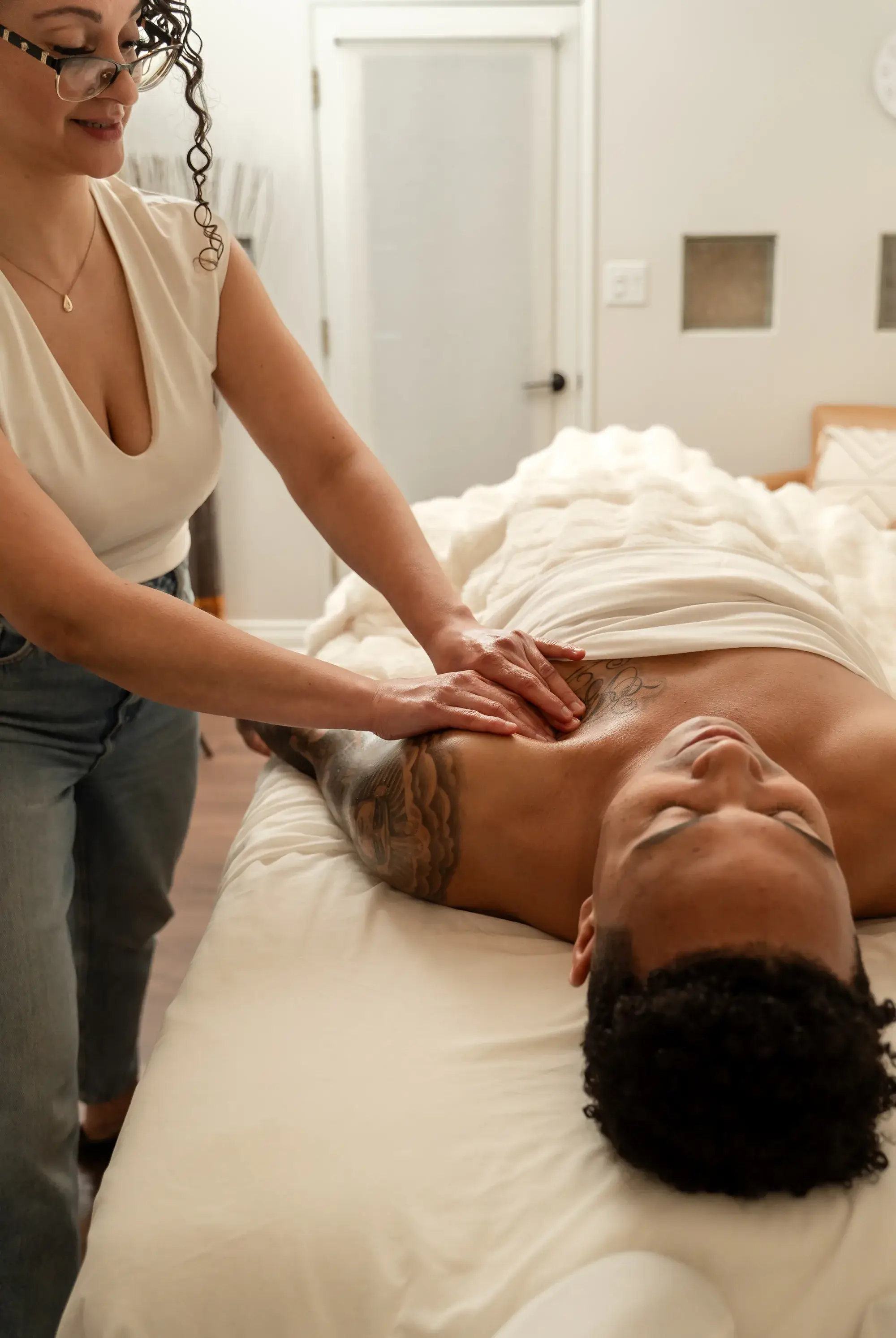

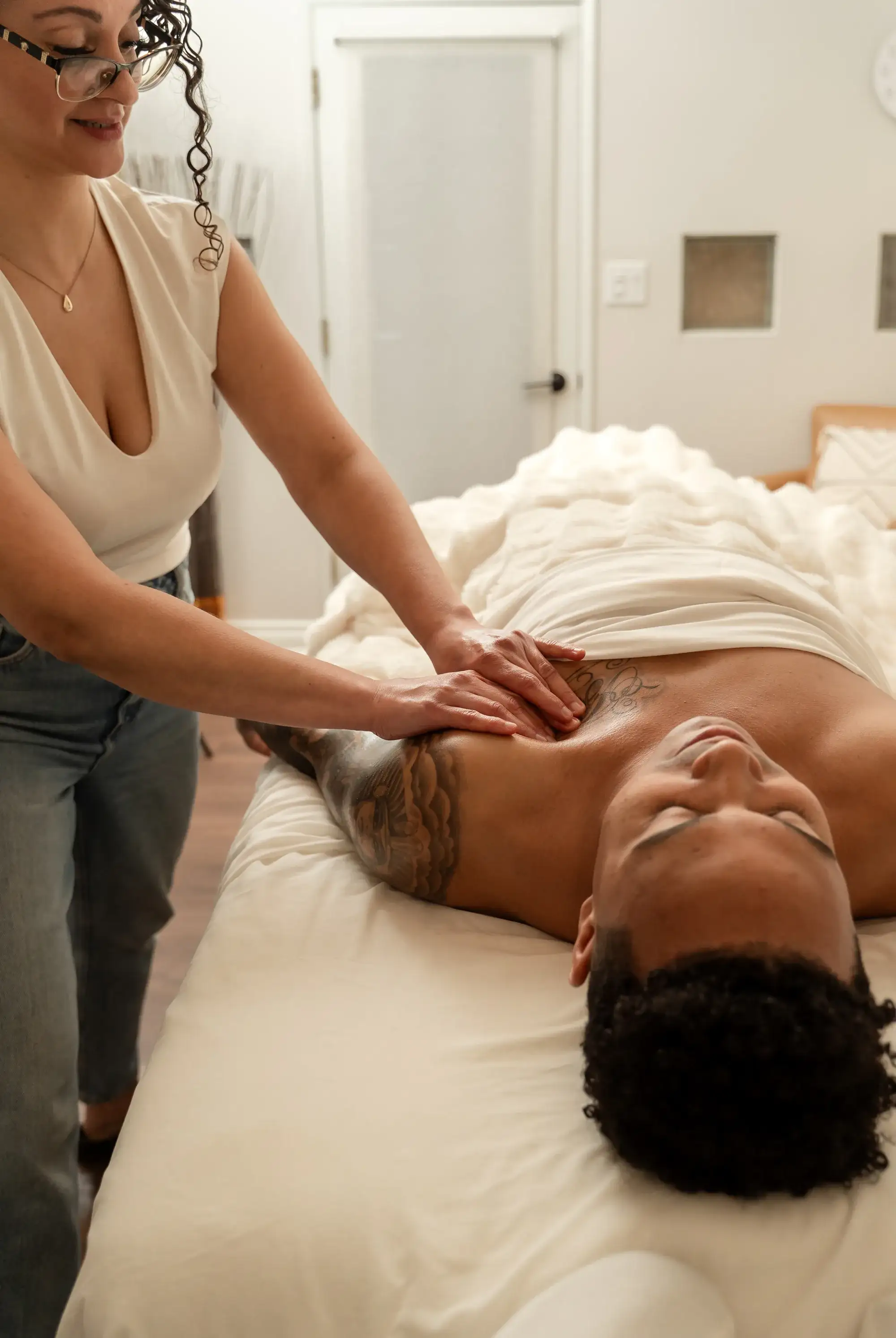
Massage for family caregivers in Calgary
Massage for family caregivers in Calgary: easing back and neck strain from transfers and night care, short sessions that fit respite, and Alberta supports.
By The Renu lymphatic and massage team · 5 min read
Massage can ease the back, neck and shoulder strain that comes from helping someone stand, lie down and reposition, and it gives a caregiver an hour that is genuinely their own. A small trial found family caregivers had fewer psychological symptoms and less stress after a short massage programme. If respite time is tight, a 30 or 45 minute session focused on one area is still worth booking.
Why caregivers book massage
Caregivers usually come to us for two reasons at once: a body that aches from the physical side of care, and very little time that belongs to them. Massage can help with both. It works on the back, neck and shoulders that do the lifting and holding, and it is an hour where nobody needs anything from you.
You are far from alone in this. In 2018, one in four Canadians aged 15 and older, 7.8 million people, provided care to a family member or friend with a long-term condition, a disability or problems related to aging. Caregivers Alberta counts nearly one million caregivers in this province, contributing 647 million hours of unpaid care a year, and notes that about one in three employees also have caregiving responsibilities.
The care tasks that strain the back and neck
Some caregiving tasks are harder on the body than others, and knowing which ones helps your therapist focus. A study of 156 female family caregivers found that 22.4% almost always had low back pain. The care activities linked with it were:
- night care
- helping the family member stand up and lie down
- dealing with challenging behaviours
- giving medication
When the researchers grouped tasks, those involving repositioning the person’s body and those done in a static position showed the clearest links. Bending and straightening the low back was the daily activity most affected.
The neck and shoulders take their share too. In a trial with 62 women caring for a dependent family member, 70.97% started with moderate pain intensity. A 12-week therapeutic exercise programme reduced their pain and their neck and low back disability. That is a useful reminder: massage eases the tension, but exercise and safer handling are what change the load over time. Ask your family member’s home care or therapy team about transfer techniques and equipment if lifting is part of your day.
What the evidence says about massage for caregivers
There is direct research on massage for this group, though it is small. In a rehabilitation hospital, 38 family caregivers were randomly assigned to one or three massages a week for two weeks. Psychological symptom and stress scores after the programme were lower than at the start in both groups, and caregivers welcomed and used the service.
What that study does not show is a long-term change, and it had no group that went without massage. We read it as encouraging: a massage is a reasonable, low-risk way to look after yourself during a demanding period, rather than a treatment for caregiver burnout. If stress is the bigger issue for you, our page on stress and tension covers what else helps.
Fitting a session into limited respite
Caregivers rarely have a free afternoon, so the length of the session matters. Statistics Canada found that among people giving 20 or more hours of care a week, 54% found it stressful and 75% had less time for relaxing and self-care. Those giving 1 to 3 hours a week reported stress far less often, at 19%.
At Renu, massage comes in lengths that can match the respite you have:
| Length | Price | A realistic use |
|---|---|---|
| 30 min | $80 | Neck and shoulders, or the low back, in a short break |
| 45 min | $100 | Back and neck together without feeling rushed |
| 60 min | $120 | A fuller session when backup care is in place |
| 90 min | $157 | A rare longer break: back, neck, hips and legs |
We are open seven days a week, 8:00 am to 8:30 pm on weekdays and 10:00 am to 5:00 pm on weekends, so you can book when another family member is home or after your loved one is settled for the evening. If you are wondering whether a short appointment is enough, read is a 30-minute massage worth it.
What to tell your therapist
A quick picture of your care routine shapes the session:
- Which tasks you do most: transfers, repositioning in bed, bathing, pushing a wheelchair.
- Whether you are up at night: broken sleep changes how much pressure feels good.
- Where it hurts and when: first thing in the morning, after lifting, or by the end of the day.
- Your own health: caregivers often put their own appointments last. Mention any condition or medication.
It is common to feel tired or emotional afterwards, especially if you have been holding a lot together; why you might feel tired or emotional after a massage explains why.
When to see your own doctor
Massage is not the right first step if your back pain:
- started suddenly during a lift or transfer and has not eased
- comes with numbness, tingling or weakness in a leg
- comes with changes in bladder or bowel control
- is getting worse week by week, or wakes you regardless of position
Those need a doctor’s assessment, and booking your own appointment is not selfish: you cannot keep lifting someone else on an injured back. So does exhaustion, low mood or anxiety that is affecting your ability to cope. Caregivers Alberta can also help with coaching, peer support and navigating benefits on 780-453-5088 or 1-877-453-5088.
When you are ready to book, choose a length that fits your respite in Jane, or see all our options on the massage therapy page.
Questions people ask
I only have an hour of respite. Is a 30-minute massage worth it?
Yes. Thirty minutes is enough to work one area well, such as the neck and shoulders or the low back, and leaves time to get here and home. Tell your therapist which area matters most so none of the time is spent deciding.
Is it normal to feel emotional during or after a massage?
It is common, and caregivers often carry a lot. Feeling tired, teary or very calm afterwards is not a sign that anything went wrong. Let your therapist know if you would rather talk or stay quiet.
Can I cancel at short notice if my family member has a bad day?
Caregiving is unpredictable, so ask about our cancellation terms when you book and pick a time when backup care is most likely to hold. Booking online through Jane also makes rescheduling simple.
Where can I get support as a caregiver in Alberta?
Caregivers Alberta offers Caregiver Coach consultations, a Caregiver Support Community, COMPASS for the Caregiver and educational workshops. You can reach them at 780-453-5088 or toll-free at 1-877-453-5088.
Sources
- Suzuki, Tamakoshi and Sakakibara, J Clin Nurs 2016: Caregiving activities associated with low back pain among female family caregivers
- Llamas-Ramos et al., 2022: Family caregiver care programme for shoulder-neck pain and disability, randomised trial
- Williams et al., Complement Ther Clin Pract 2019: Therapeutic massage to enhance family caregivers' well-being in a rehabilitation hospital
- Caregivers Alberta: Alberta's caregiver support organization
- Statistics Canada, The Daily 2022: Caregivers in Canada, 2018
Page reviewed October 5, 2026. This page is education, not a diagnosis. For your own situation, talk to your doctor, surgeon or care team, or ask us.
Keep reading
Related pages