
Your first lymphedema therapy appointment in Calgary: what to expect
Your first lymphedema therapy appointment in Calgary: history, tape measurements, skin checks, a first drainage session and a plan for the intensive phase.
By The Renu lymphatic and massage team · 6 min read
Your first lymphedema therapy appointment is mostly assessment: your Certified Lymphedema Therapist takes a full medical and cancer history, measures both limbs with a tape at set intervals to create a baseline, and checks your skin and tissue. First visits often include some manual lymphatic drainage and end with a plan, usually an intensive phase of frequent sessions with bandaging until the swelling stops reducing, followed by garments and a home routine. Bring your diagnosis or referral notes and any compression you already own.
What the first appointment is for
The first lymphedema appointment is an assessment that ends in a plan. It answers three questions: how much swelling there is, what the tissue and skin are like, and what kind of treatment schedule fits you. Treatment usually begins the same day, but the measurements and the history are the part you cannot skip.
At Renu, lymphedema care is provided by Meeghan Mackenzie, our founder and our only Certified Lymphedema Therapist. She has been a Registered Massage Therapist since 2005, trained as a CLT through the Academy of Lymphatic Studies with foundations in the Vodder and Földi methods, and is a Certified Compression Fitter. Book with Meeghan in Jane, or call the clinic if you would like to talk through timing first.
What to bring
Bringing the right paperwork saves a lot of guessing. Please bring:
- Diagnosis or referral notes, and any imaging or test reports you have
- Surgery and cancer treatment details: dates, which lymph nodes were removed and how many if you know, and where radiation was given
- A list of medications, especially for the heart, kidneys or blood pressure, and any blood thinners
- Every compression garment you own, even ones you have stopped wearing
- Loose clothing, so the limb can be uncovered and, if needed, bandaged afterward
The history: what you will be asked and why
The history shapes the whole plan, so expect it to take a while. The National Lymphedema Network’s position paper lists the areas a thorough lymphedema history covers, and your questions will follow the same lines:
- Onset and pattern. When did the swelling begin, was it gradual or sudden, does it change through the day, and does it improve overnight or with elevation?
- Symptoms. Is it one side or both, and is there pain, heaviness, tightness or tingling?
- Skin. Any redness, thickening, texture change or leaking fluid?
- Complications. Any past infections such as cellulitis, or seroma or hematoma after surgery?
- Function. What has become harder day to day?
- Risk factors. Family history, cancer treatment, surgery, injury, weight change.
Some answers change what is safe. The NLN names acute infection, decompensated congestive heart failure and acute deep vein thrombosis as contraindications to manual lymphatic drainage, and the Cleveland Clinic adds that providers will not work directly over cancerous tissue or skin damaged by radiation.
Measuring both limbs: why the baseline matters
Measurement turns “it feels bigger” into a number you can track. The usual clinical method is simple: a flexible tape measure placed around the limb at regular intervals along its length. The NLN describes intervals such as every 4 cm or 10 cm, with the readings converted to a volume using a formula that treats each segment as a truncated cone. It also notes that reliability improves when the same tester measures each time and that both limbs should be measured, because the comparison between sides is what matters.
That first set of numbers is your baseline. Every later measurement is compared with it to decide whether the intensive phase is still working, when it has plateaued, and what size of garment you need. Our glossary entry on limb volume measurement explains the method in more detail.
Skin and tissue checks
Your therapist will look at and feel the skin, because lymphedema changes it over time. The NLN describes the International Society of Lymphology staging, which runs from swelling that pits under a pressing finger and settles with elevation, through persistent swelling, to severe fibrosis with skin changes and no pitting. Expect your therapist to:
- Press gently to see whether a dent remains (pitting)
- Feel for firmer, fibrotic areas
- Check skin folds, nails and any cuts or cracks, since the NLN calls skin inspection crucial for preventing infection
Manual lymphatic drainage on the first visit
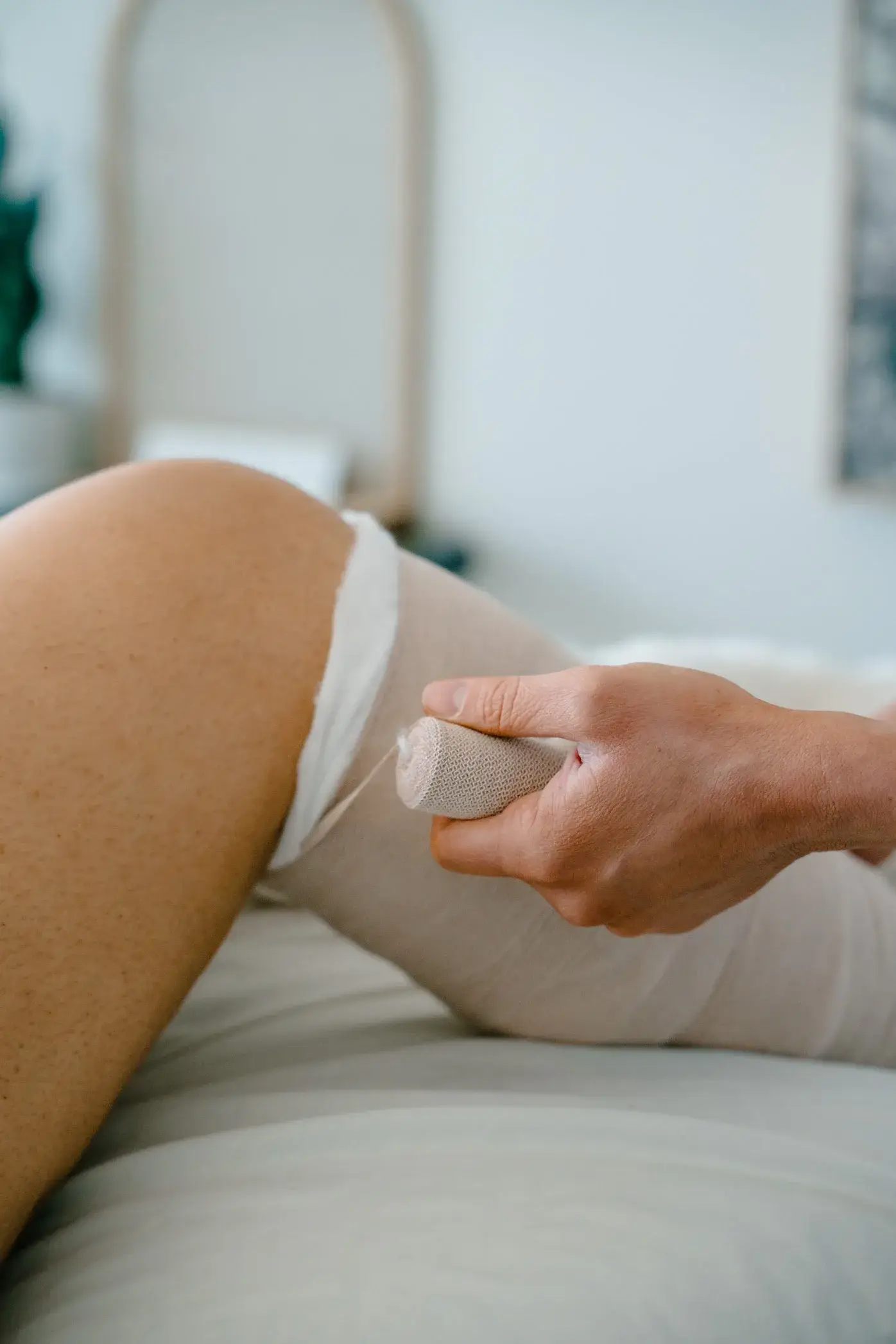
A first drainage session often follows once the assessment is done. The NLN describes manual lymph drainage as performed directly on the skin, with pressure adapted to the tissue, firmer for fibrotic areas and lighter for softer ones, and a sequence that starts near the trunk and works outward. It feels slow, light and rhythmic. Your therapist will also show you what is coming next, including whether bandaging will start now or at the next visit.
How the intensive phase is scheduled
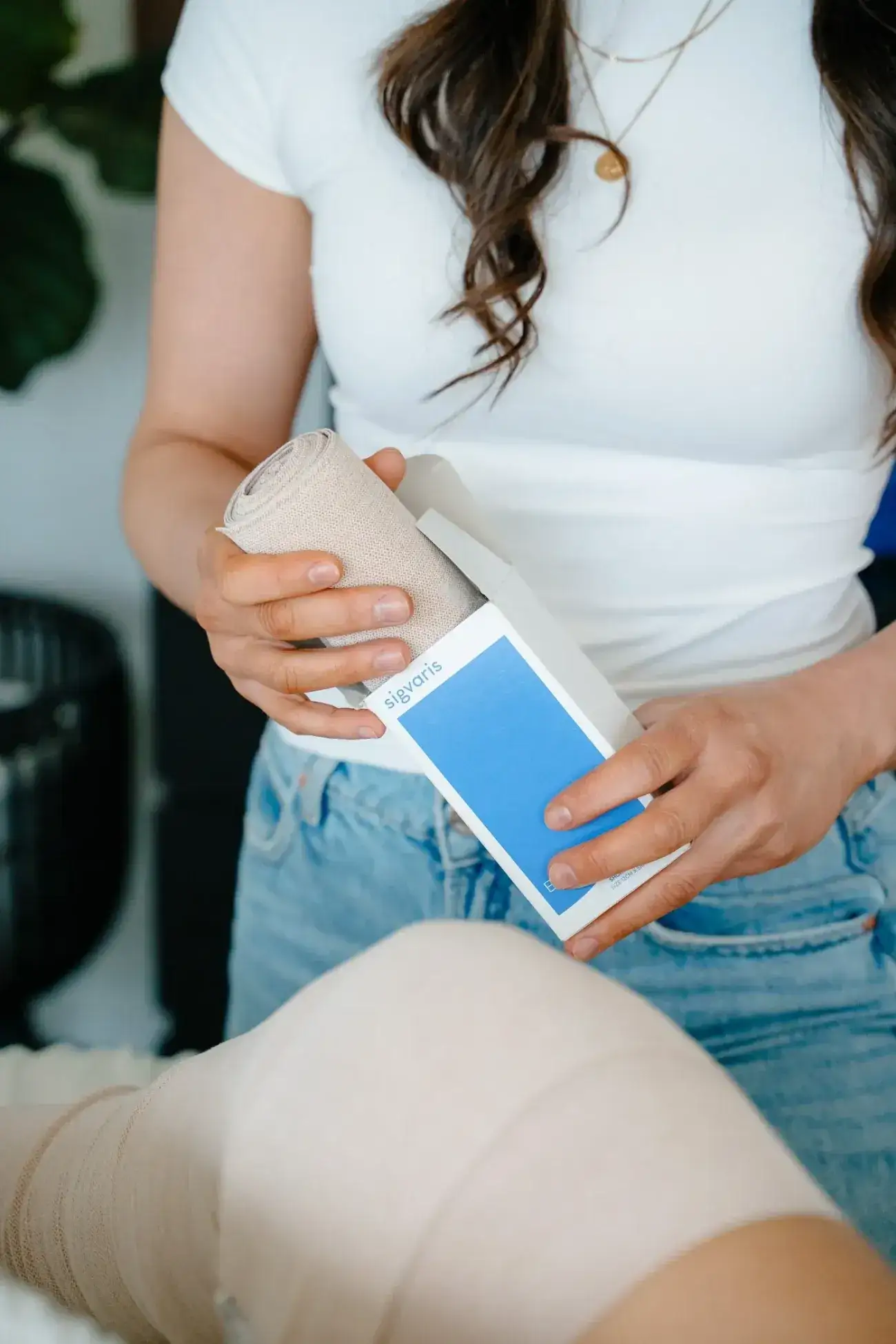
The plan you leave with usually has two phases. Ask us when you book how sessions and any bandaging would be scheduled for you. The NLN describes Phase I as daily sessions, five days a week, combining drainage, compression bandaging, exercise and skin care, ideally continued until volume reduction plateaus, typically over three to eight weeks. It also says modified schedules can still help some patients. The International Lymphoedema Framework notes that, in practice, the length of intensive therapy varies between one and four weeks, sometimes followed by a one to three month transition.
| Phase | What happens | How long |
|---|---|---|
| Intensive (Phase I) | Drainage, bandaging left on between sessions, exercise, skin care | Until measurements plateau; one to eight weeks depending on the source and your stage |
| Maintenance (Phase II) | Garments by day, sometimes at night; self-drainage; exercise | Ongoing, with garment fittings and replacements every four to six months |
The NLN stresses that you move from Phase I to Phase II without a gap in compression. That is why garment measuring is timed for the end of the intensive phase, once volume has stopped falling. If you would like to know how the bandaging weeks feel, read what to expect from lymphedema bandaging; the garment appointment is covered in what to expect at a compression fitting.
What you will learn to do at home
Lymphedema care becomes yours over time. The NHS describes the maintenance phase as one where you take over your care with simple self-massage known as simple lymphatic drainage, compression garments, continued exercise and skin care, with reviews every few months. Expect to be taught a short self-drainage routine, how to put on and take off your compression, an exercise or movement plan, and a daily skin routine. Calgary’s dry winter air makes the moisturising part more important, not less.
When to see your doctor first
Some swelling should be seen by a doctor before it is seen by us. Please contact your doctor, and let us know so we can reschedule, if:
- The limb becomes red, hot, swollen and painful, or you feel shivery or feverish; the NHS describes these as signs of cellulitis, which needs antibiotics
- Swelling appears suddenly, or one calf or thigh has throbbing pain and swelling, which the NHS lists as symptoms of a deep vein thrombosis
- Pain and swelling come with shortness of breath, which the NHS treats as an emergency; call 911
Once you are cleared, our complete decongestive therapy page explains how we deliver each part of the treatment.
Questions people ask
Do I need a diagnosis before my first lymphedema appointment?
It helps, but it is not required to book. If you have not seen a doctor about the swelling, do that first, because sudden or one-sided swelling can have causes that need medical care. If you have a diagnosis, bring the notes and any imaging reports.
Will I be bandaged at my first visit?
Not usually. The first visit is mainly assessment and planning, and in CDT bandaging starts once an intensive phase is planned and your skin and circulation have been checked. Whether bandaging is part of your plan at Renu, and how often you would come in, is worth asking when you book. If you are bandaged, plan to wear loose clothing and roomy shoes home.
How long is the intensive phase of lymphedema treatment?
The National Lymphedema Network describes sessions ideally five days a week until volume stops reducing, typically over three to eight weeks, while the International Lymphoedema Framework says one to four weeks is common in practice. Your plan depends on the stage of your lymphedema and what your schedule allows.
Does AADL require a lymphedema therapist's assessment for garments?
The AADL manual for ready-made compression stockings and lymphedema sleeves says clients presenting with chronic lymphedema should be assessed by a Certified Lymphedema Therapist or Specialty Assessor. If neither is accessible, a prescription from a physician or nurse practitioner is required instead.
Sources
- National Lymphedema Network: Position paper, Lymphedema diagnosis and treatment (2025)
- International Lymphoedema Framework: Compression therapy, a position document on compression bandaging
- NHS: Lymphoedema treatment
- Alberta Health: AADL compression stockings and lymphedema sleeves policy and procedures manual
- Cleveland Clinic: Lymphatic drainage massage
- NHS: DVT (deep vein thrombosis)
- NHS: Cellulitis
Page reviewed October 5, 2026. This page is education, not a diagnosis. For your own situation, talk to your doctor, surgeon or care team, or ask us.
Keep reading
Related pages