
What to expect from lymphedema bandaging
What to expect from lymphedema bandaging: round-the-clock wear, re-wraps every day or two, washing, shoes and clothes, and the signs that mean take them off.
By The Renu lymphatic and massage team · 6 min read
Lymphedema bandaging means living in padded, multilayer short-stretch bandages around the clock for the intensive weeks, taking them off only for washing, a skin check or if something feels wrong. Your therapist re-wraps them every one to two days, checking and moisturising your skin each time, and the biggest drop in swelling usually comes in the first week. Pain, numbness, pins and needles or fingers or toes changing colour mean the bandage should come off and your therapist should hear about it.
The bandaging weeks in brief
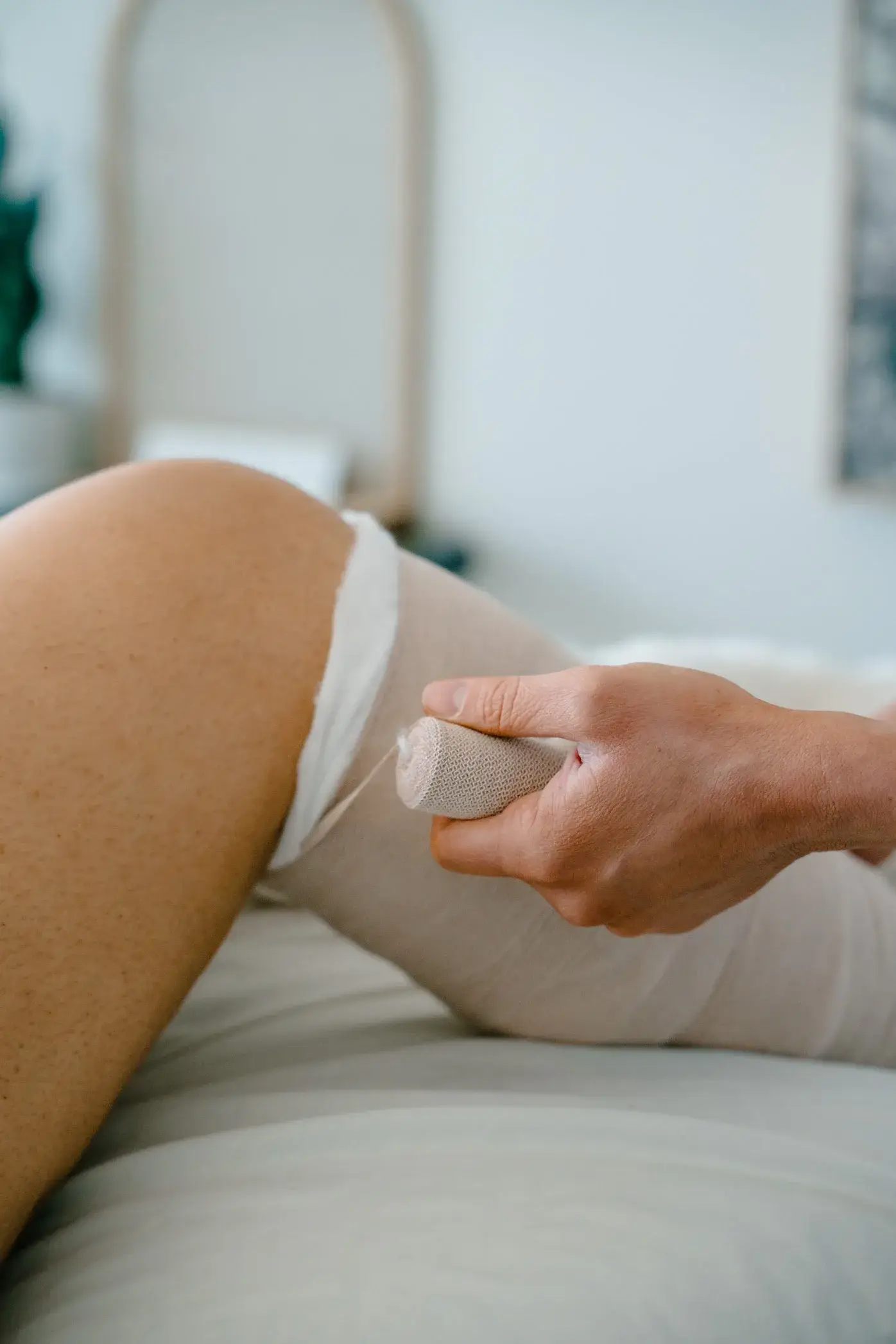
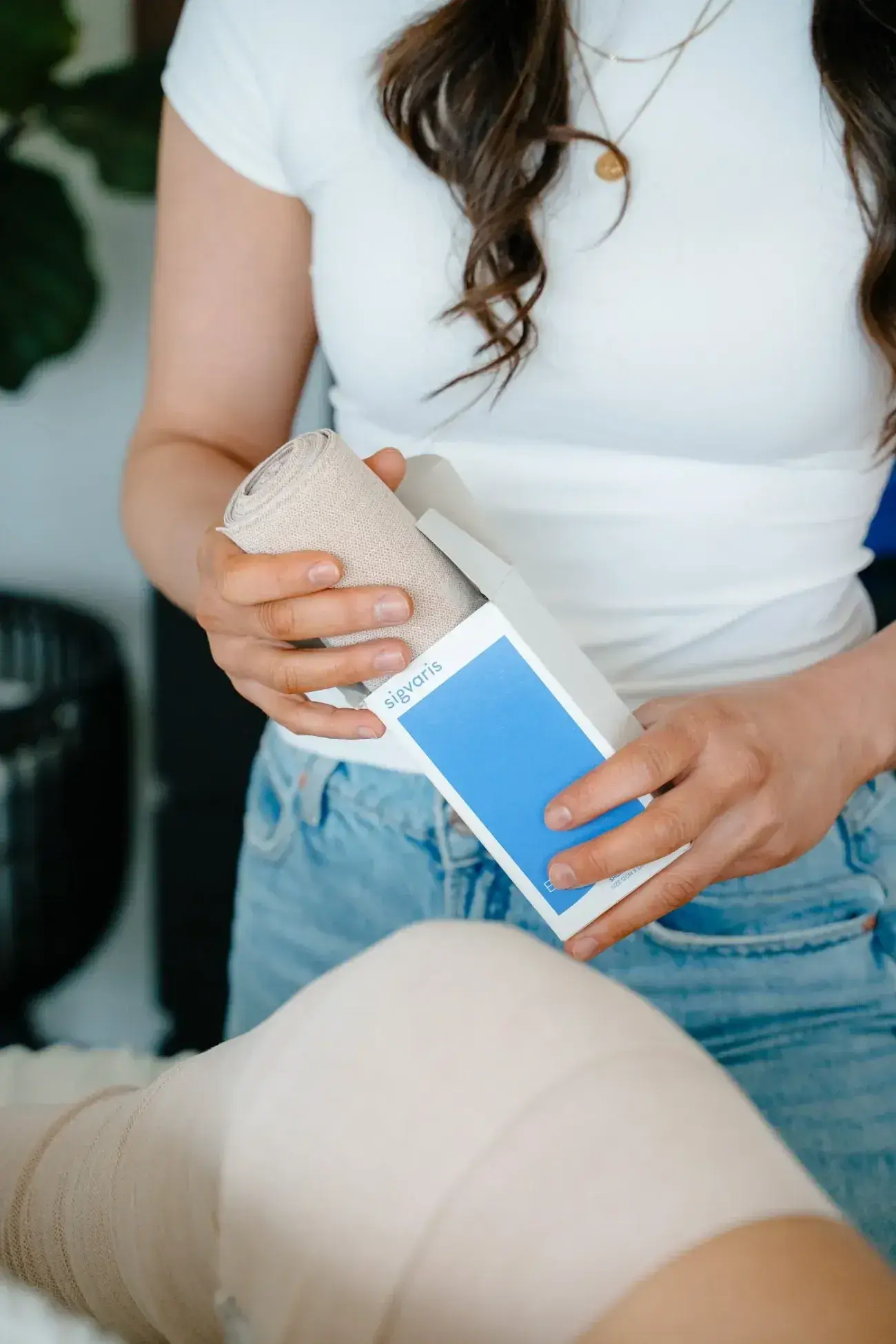
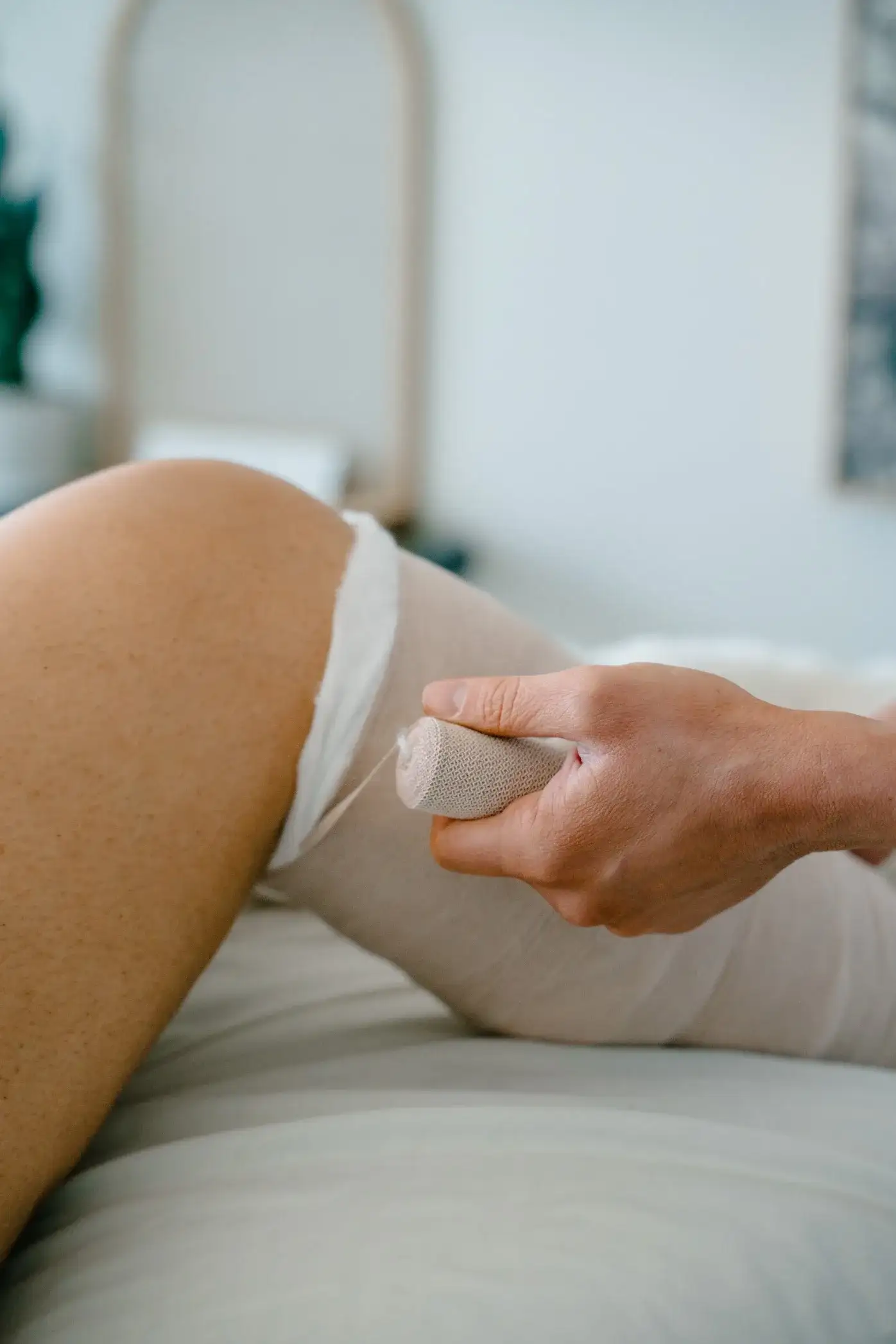
Bandaging is the part of lymphedema treatment that changes your daily routine most, and it is temporary. For a few weeks the swollen arm or leg is wrapped in padding and several layers of short-stretch bandage, the wrap stays on day and night, and your therapist takes it off, checks your skin and re-wraps it every day or two. Once the swelling stops going down, you move into a fitted garment.
How the wrap is built, layer by layer, is covered on our page about multilayer short-stretch bandaging. This page is about living in it.
Why the bandages stay on around the clock
The bandages only work if there is no gap. The National Lymphedema Network says compression bandaging is worn 24 hours a day during the intensive phase and that there should not be a gap in bandaging during that phase. The only reasons it lists for taking them off early are discomfort, changes in skin or sensation, a skin inspection, or daily hygiene.
The reason is simple: swelling comes back quickly without compression. The International Lymphoedema Framework puts it plainly, saying chronic oedema needs constant compression and that if compression is stopped the oedema will return rapidly. Short-stretch bandages suit this job because, as the NLN explains, they have a low pressure when you rest and a high pressure when your muscles push against them, which is also why they are bearable overnight.
Re-wraps every day or two, with a skin check each time
Expect to see your therapist often. Macmillan Cancer Support says a lymphoedema specialist will usually put the bandages on every one to two days. The ILF notes that clinical experience recommends changing multilayer bandages at least daily during the first week, partly so the therapist can see how well you are tolerating them.
Each re-wrap follows the same rhythm, as the NLN describes it:
- Bandages come off and the skin is inspected for marks, cuts, chafing or signs of infection.
- The skin is cleaned and moisturised, ideally with a pH-neutral, fragrance-free lotion.
- Manual lymphatic drainage is given.
- The limb is re-bandaged, from the fingers or toes upward, and checked for even pressure and circulation.
The NLN says bandages can be worn safely for up to 72 hours, which is how a weekend gap between appointments is managed, though pressure falls the longer they stay on.
Why the bandages loosen, and why that is good news
A bandage that feels looser the next morning is a sign that swelling has gone down. The ILF reports that multilayer bandage pressure drops by about half within two hours and by about two thirds after 24 hours as the limb shrinks. The NLN cites a pressure loss of a quarter within 30 to 60 minutes. Both conclude the same thing: frequent re-application is needed to keep the pressure effective.
The ILF also notes that the greatest reduction in swelling happens in the first week of treatment and slows after that, and that bandaging should continue until pitting oedema has gone and long-term compression garments begin. The step from wraps to a fitted sleeve or stocking has its own page: from bandaging to a compression garment.
Clothes, shoes, washing and moving
A few practical adjustments make the weeks much easier.
| Daily life | What helps |
|---|---|
| Clothes | Wide-leg pants, loose sleeves, wrap or button tops. Measure the bandaged limb against your wardrobe the first evening. |
| Shoes | The ILF notes bulky bandaging can stop you wearing normal footwear. Bring a roomy shoe, sandal or a size up to your first appointment. |
| Washing yourself | Plan to wash when the bandages are off between wraps; the NLN allows removal for daily hygiene. |
| Washing the bandages | The NLN advises washing at least weekly, more often if soiled, in lukewarm water with mild detergent, then air drying. Bandages last 10 to 50 washes and are usually replaced about every six months. |
| Moving | The NLN says you should stay mobile in bandages to make the most of the muscle pump. Walking, gentle exercises and normal daily tasks are part of the treatment. |
| Sleep | The ILF says bandages are usually kept on overnight in the initial phase. |
The ILF acknowledges bandaging can be hard to wear in hot climates or physically demanding jobs. Calgary summers are short, but if your intensive phase lands in July or during Stampede, plan cooler clothing and tell your therapist if heat is making the bandages hard to tolerate.
Warning signs: when to loosen or remove the bandages
Bandages should feel firm and supportive, not painful. The NLN lists discomfort and changes in skin or sensation as reasons to remove bandaging, and the ILF’s bandaging guidance includes checking the fingers or toes for colour and sense of touch after wrapping. Macmillan lists the signs that compression is too tight as numbness, pins and needles, pain, and fingers or toes changing colour, and advises removing the compression straight away and contacting your specialist.
Take the bandages off, and call your therapist, if you notice:
- Pain that is building rather than settling
- Numbness, tingling or pins and needles
- Fingers or toes changing colour, such as turning blue or dusky
- Rubbing, blistering or broken skin under the wrap
If the limb also becomes red, hot and more swollen, or you feel feverish, contact your doctor; that can be a skin infection rather than a bandage problem. Our page on how to tell if your lymphedema is infected has the details.
Who should not be bandaged
Bandaging is not safe for everyone, so your circulation is checked before the first wrap. The NLN says compression bandaging is contraindicated with acute infection, arterial insufficiency (an ankle-brachial index of 0.8 or lower), arterial wounds, and decompensated congestive heart failure. The NHS also notes that compression may not be suitable for people with arterial problems in their legs, and that Velcro wraps are sometimes used instead of bandages or garments.
Bandaging at Renu
At Renu, bandaging is part of complete decongestive therapy with Meeghan Mackenzie, our Certified Lymphedema Therapist and Certified Compression Fitter. Your schedule, including how often you are re-wrapped, is set at your first assessment, described in your first lymphedema therapy appointment, and when your measurements plateau, a 30-minute compression fitting ($25) moves you into a garment. See our complete decongestive therapy page for the full service.
Questions people ask
Can I shower with lymphedema bandages on?
Not with them on; wet bandages lose their shape and keep the skin damp. The National Lymphedema Network allows bandages to come off for daily hygiene so the usual plan is to wash in the window between removal and the next wrap.
Do I keep the bandages on overnight?
Usually yes, during the intensive phase. The International Lymphoedema Framework says bandages are usually kept on at night in the initial phase, because the aim is to reduce swelling without a gap in compression.
Why do my bandages feel loose by the next day?
Because they are working. As the swelling drops, the limb gets smaller and the same bandage presses less. That pressure loss is the main reason bandages are re-applied every one to two days.
Can I wrap my own bandages at home?
Some people learn to, especially for the foot or hand, and the NHS notes that Velcro wraps can be easier to apply yourself. During the intensive phase, though, the wrapping is normally done by your therapist so the pressure is even and safe.
Sources
Page reviewed October 5, 2026. This page is education, not a diagnosis. For your own situation, talk to your doctor, surgeon or care team, or ask us.
Keep reading
Related pages