
When can you use an infrared sauna after liposuction?
When can you use an infrared sauna after liposuction? Wait until incisions close, early swelling settles and your surgeon agrees, often six weeks or later.
By The Renu lymphatic and massage team · Reviewed by Meeghan Mackenzie, RMT, CLT · 6 min read
Most people should wait until their incisions have fully closed, early swelling has settled and their surgeon has given the okay before using an infrared sauna after liposuction. For many, that's somewhere around six weeks or later. Heat feels soothing, but in the early weeks it can work against the swelling you're trying to clear.
Many people who love an infrared session want it back as soon as possible after liposuction, especially during a Calgary winter when the warmth is part of the appeal. It is a fair question, and the answer comes down to swelling, healing skin and how your body handles heat while it is still recovering.
Why heat waits
- Heat draws more fluid into the tissue. Warmth widens blood vessels, and more fluid leaks out into the surrounding tissue. After lipo, your lymphatic system is already working with fewer open pathways, so that extra fluid can mean more swelling, not less. The Aesthetic Society notes that swelling peaks around 48 hours, mostly settles over two to three weeks, and can linger for up to four months, with some coming and going with activity for six to nine months.
- Fresh incisions need to stay closed and clean. Sweat, heat and shared surfaces aren’t kind to small entry wounds that are still healing. MyHealth Alberta advises against baths for the first two weeks after liposuction, or until your doctor says otherwise, and heavy sweating on fresh incisions is not much better for them.
- Numb skin can’t warn you. Areas treated with liposuction are often numb for weeks or months; the American Society of Plastic Surgeons lists a change in skin sensation that may persist among the risks of the procedure. Skin you can’t fully feel can overheat before you notice. Our answer on numbness after surgery explains what to expect from it.
- Pain medication and recovery fatigue. Both can make you lightheaded, and heat adds to that. Harvard Health describes how a sauna raises the pulse by 30% or more and how a person can lose about a pint of sweat in a short session. Blood pressure is unpredictable in the heat, rising in some people and falling in others. Our page on feeling light-headed after an infrared session explains that reaction in more detail.
The Aesthetic Society’s liposuction aftercare guidance puts a number on all this: wait a minimum of six weeks before exposure to sun and heat, because of the possibility of swelling. Six weeks is a floor, not a finish line. If you had several areas treated, a combined procedure such as a tummy tuck, or any complication, your surgeon may want you to wait longer. Bring the question to your follow-up appointment and ask about heat specifically, since “you can return to normal activity” does not always include saunas.
What to do instead in the first weeks
The weeks when heat is off the table are exactly the weeks when swelling care matters most, so the time is not wasted.
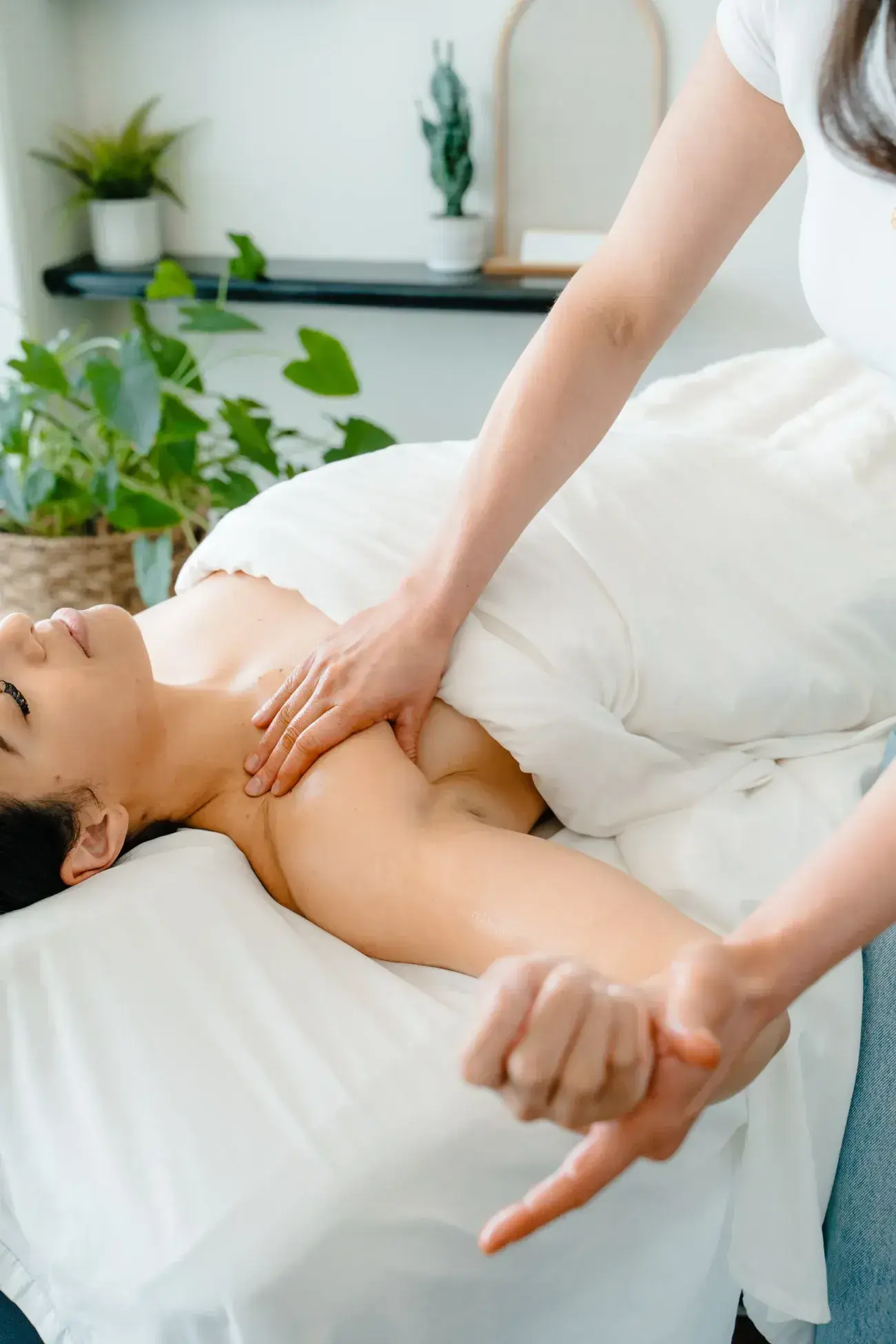
- Post-op lymphatic drainage. Gentle, light-pressure post-op lymphatic drainage sessions are commonly used early in liposuction recovery once your surgeon clears them. They work with the swelling rather than adding heat to it, and between sessions self-lymphatic drainage keeps the rhythm going at home.
- Walking. MyHealth Alberta encourages walking a little more each day after liposuction. It keeps the calf muscles pumping and helps with stiffness.
- Your garment. Wear it as your surgeon instructed. It is doing quiet work every hour you have it on.
- Warmth without heat. A warm, not hot, shower once your surgeon allows showering, and layers rather than a heat source on cold days.
Signs you may be ready
- Every incision is fully closed, with no weeping or redness
- Swelling no longer builds noticeably through the day
- You’re off prescription pain medication
- You can sit or lie comfortably for the length of a session
- Your surgeon has cleared you for heat
Easing in
When you do return, start gently: a lower temperature, a shorter session, plenty of water before and after, and a slow cool-down. Notice how your treated areas feel that evening and the next morning. If swelling flares, give it more time and mention it at your next lymphatic session.
A few specifics from the sauna guidance help you set that first session up:
- Treat yourself as new to infrared. Cleveland Clinic suggests starting around 110°F for five to ten minutes when you are new to it, and never going beyond 30 minutes.
- Hydrate before and after. Cleveland Clinic names dehydration as the main risk, and Harvard Health suggests two to four glasses of cool water afterward.
- Skip alcohol. Harvard Health advises avoiding alcohol and medicines that impair sweating around sauna use.
- Leave if you feel off. Get out if you feel dizzy or nauseated, as Cleveland Clinic advises.
What about lymphedema?
If you have lymphedema or are at risk of it, for example after lymph node removal, heat needs extra care. Early research suggests infrared heat may be helpful for some people with lymphedema, but responses vary and the evidence is still young. MyBCTeam, a community for people with breast cancer, encourages people with breast cancer-related lymphedema to speak with their care team first. We agree, and we’ll talk it through with you before suggesting it.
When to call your surgeon instead
Contact your surgeon, and skip the sauna, if you notice any of these during recovery. MyHealth Alberta lists increased pain, swelling, warmth or redness, and a fever, as signs of possible infection after liposuction. It also lists pain in the calf, back of the knee, thigh or groin, with redness and swelling in the leg or groin, as possible signs of a blood clot. Severe trouble breathing or sudden chest pain means call 911.
A sauna will not fix any of these, and heat can mask or worsen them.
Infrared and lymphatic care at Renu
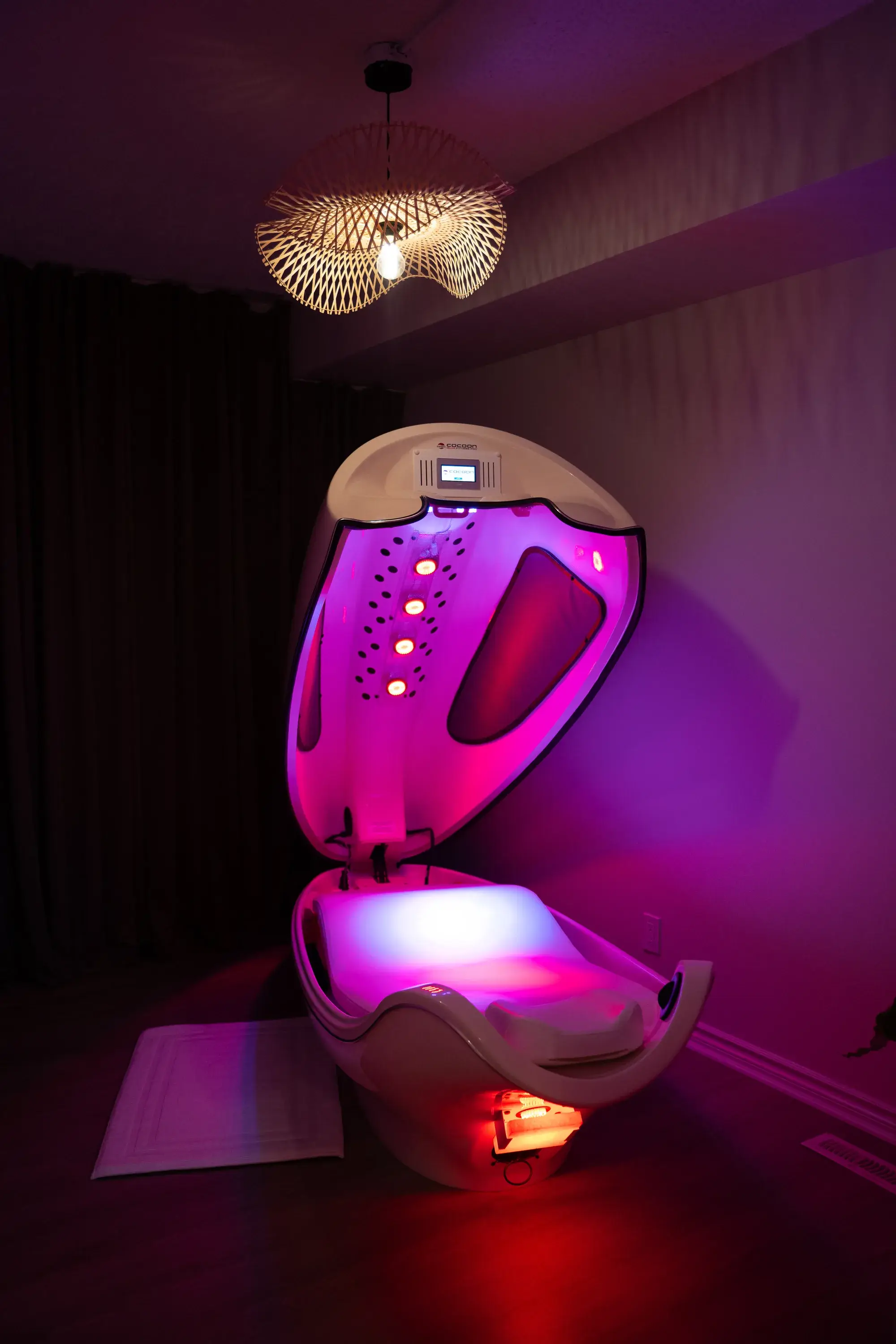
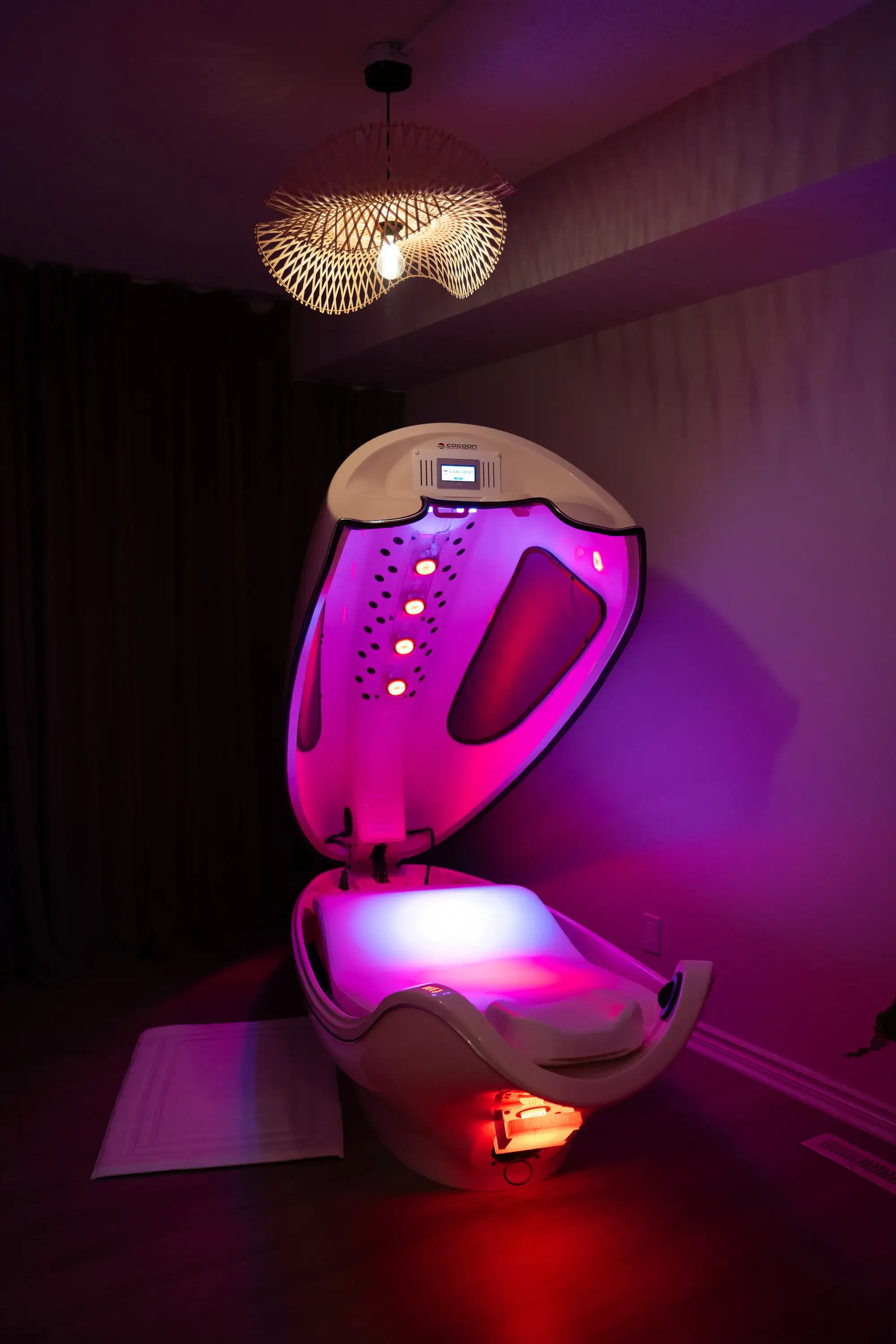
Renu has an infrared Cocoon Wellness Pod in the clinic. Once you’re well past the early stage of recovery, many clients enjoy pairing a Cocoon session with lymphatic drainage as part of their ongoing care. It’s a warm, quiet reset for a body that’s done a lot of healing. A Cocoon session on its own is 20 minutes for $25, and the Cocoon add-on to a facial, massage or lymphatic treatment is also 20 minutes for $25. The pod is shorter than many sauna sessions, which suits a cautious return, and our session protocol page covers timing and hydration in more depth.
We’ll only suggest it when it’s right for your stage of recovery. If you’re unsure, ask your therapist at your next post-op session; we can look at your tissue and help you decide. Tell us at booking that you have had liposuction and when, and we will help you decide whether an add-on after a lymphatic session or a stand-alone visit makes more sense.
Curious whether you’re ready for the Cocoon? Call us at 403-270-2111, tell us your procedure and surgery date, and we’ll help you work out the right timing.
Questions people ask
Is an infrared sauna gentler than a regular sauna after lipo?
It runs at a lower air temperature, but it still warms your body and makes you sweat, which is the point of it. The six-week guidance from The Aesthetic Society covers heat in general, not only hot rooms. Treat infrared heat the same way you would a traditional sauna or a hot tub during recovery.
Can I use a hot tub or bath sooner than a sauna?
Soaking has its own rule. MyHealth Alberta advises no baths for the first two weeks after liposuction, or until your doctor says it is okay, and a hot tub adds both soaking and heat. Ask your surgeon about each one separately.
Do I wear my compression garment in the pod?
Compression garments are worn under clothing during recovery, and the six-week wait usually overlaps with the weeks you wear one. By the time a sauna is appropriate, check with your surgeon whether short breaks from the garment are allowed for a heat session. Do not sit in heat wearing a tight, damp garment you cannot easily adjust.
My surgeon said heat is fine at four weeks. Should I still wait six?
Your surgeon's advice for your own body comes first. Six weeks is the general minimum in patient guidance; your surgeon may adjust it either way after seeing how you are healing. Start with a short, cool session and stop if swelling increases afterward.
Can I use an infrared sauna if I have lymphedema?
Heat needs extra care if you have lymphedema or are at risk of it, for example after lymph node removal. Early research suggests infrared heat may help some people, but responses vary and the evidence is still young, so speak with your care team first. We will talk it through with you before suggesting it.
Sources
- The Aesthetic Society: Liposuction aftercare and recovery
- MyHealth Alberta: Liposuction, what to expect at home
- Harvard Health Publishing: Saunas and your health
- Cleveland Clinic: Infrared sauna benefits
- American Society of Plastic Surgeons: Liposuction safety
- MyBCTeam: Infrared sauna for lymphedema, is it safe and can it help?
Page reviewed October 13, 2026. This page is education, not a diagnosis. For your own situation, talk to your doctor, surgeon or care team, or ask us.
Keep reading
Related pages