

Lymphedema care while working full time in Calgary
Lymphedema care while working full time in Calgary: fitting decongestive therapy around a job, what Alberta employers must accommodate, compression at work.
By The Renu lymphatic and massage team · 6 min read
Lymphedema care can fit around a full-time job, but the intensive phase asks a lot: the National Lymphedema Network describes daily sessions, five days a week, typically for three to eight weeks, while noting that modified schedules can still help some people. After that, most of the work moves home and into your compression garments. In Alberta, an employer must accommodate a disability to the point of undue hardship, which can include flexible hours or time off for treatment.
You can manage lymphedema and keep working full time, but the first few weeks of treatment take planning. The intensive phase of complete decongestive therapy (CDT) is ideally daily, five days a week, until the swelling stops going down, which the National Lymphedema Network (NLN) says typically takes three to eight weeks. It also says modified schedules may still help some people. After that, care shifts to compression garments and self-care you do at home, with occasional check-ins. This page is about the working part: how to plan treatment around a job, what Alberta law says your employer must consider, and how to live in compression through a workday.
Why lymphedema and full-time work collide
Lymphedema touches work in practical ways that are easy to underestimate. The NLN lists difficulty returning to work among the condition’s effects, alongside heaviness, reduced range of motion, clothing that no longer fits and repeated skin infections.
Research puts numbers to it. An Australian survey looked at 361 women after breast cancer. Among the women with lymphedema who were in paid work, 42 per cent said it affected their work performance, and the share rose with severity, from 22 per cent to 75 per cent. Those with moderate or severe swelling reported about 8.1 days off work a year, against 1.4 days for subclinical or mild swelling. A separate set of interviews with cancer survivors in paid employment found that manual and repetitive tasks were the hardest. People coped by covering the affected arm with long sleeves, changing the tasks they did, or in some cases changing employers. Those interviewees also said that controlling who at work knew about their lymphedema mattered to them.
The point is not that work is out of reach. It is that well-controlled swelling is easier to work with, and the intensive phase is an investment in that.
Planning the intensive weeks around your job
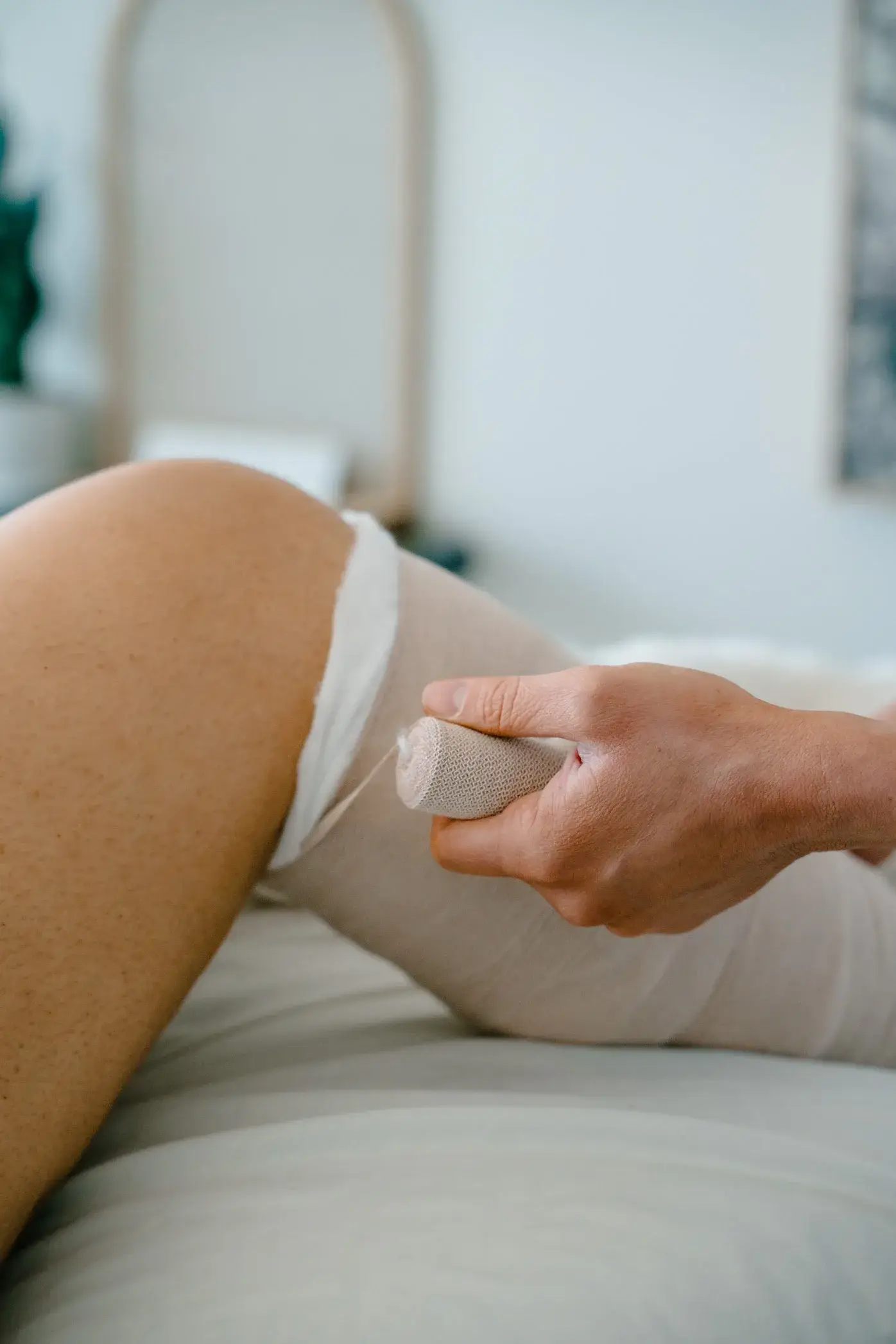
The intensive phase is the hardest part to schedule, so plan it like a short project with a start and end date. During this phase, each session usually involves manual lymphatic drainage, skin care, and reapplying multi-layer bandaging or another reductive compression system that stays on until the next visit. Our page on the phases of CDT explains each step.
Some ways people make it fit:
- Use the long weekdays. Renu is open 8:00 am to 8:30 pm Monday to Friday, so a session before work or after a day shift is often possible, and we are open 10:00 am to 5:00 pm on Saturdays and Sundays.
- Pick a lighter stretch at work. If your job has quieter weeks, start then.
- Ask about a modified schedule. The NLN notes that while daily sessions are optimal, modified schedules may also give positive results for some patients; how far that works for you depends on severity and skin condition.
- Expect bandages at work. Compression stays on between sessions, so plan clothing and footwear that fit over it.
At Renu, lymphedema care is led by Meeghan Mackenzie, a Certified Lymphedema Therapist and Certified Compression Fitter. Call us before you book so we can talk through your diagnosis, your job and the schedule you can realistically keep, and point you to the right appointments.
What Alberta employers must consider
In Alberta, physical disability is a protected ground, and the Alberta Human Rights Commission says employers must accommodate an employee’s needs to the point of undue hardship. Accommodation can cause some inconvenience and cost; undue hardship means something much heavier, such as intolerable costs or serious disruption to the business.
The commission’s examples map closely onto lymphedema:
| Accommodation the commission lists | How it might apply to lymphedema |
|---|---|
| Flexible or modified work schedules | Starting late or leaving early on treatment days in the intensive phase |
| Time off for medical treatment | Appointments that cannot be moved outside work hours |
| Changing job duties | Less repetitive lifting or gripping with the affected arm |
| Adjusting policies such as uniforms or dress codes | Wearing a compression sleeve or stocking with a uniform |
| Modifying equipment or tools | A different workstation, tool grip or bag |
You have responsibilities too. The commission says you should tell your employer about the need, provide enough documentation (for a disability, usually medical information), and cooperate in finding a solution. You cannot insist on only one option if a reasonable alternative meets your needs. A short note from your doctor explaining that daily treatment is needed for a set number of weeks, and that compression must be worn throughout the day, usually starts that conversation on a clear footing.
Living in compression through a workday
After the intensive phase, the NLN says you should move straight into fitted maintenance garments with no gap in compression. These are prescribed for both day and night. Daytime garments are designed for activity and hold firmly, and flat-knit garments are recommended for most people with lymphedema because they contain swelling well and do not settle into skin folds. Night garments are softer and meant for rest; see night-time compression garments for how they differ.
For a working day, that means:
- putting the garment on first thing in the morning, and keeping it on through the commute and the shift;
- choosing work clothes with room for it, such as looser sleeves over an arm garment;
- keeping a spare set so one can be washed while the other is worn;
- booking refits, since the NLN recommends regular fittings and replacement every four to six months.
A compression fitting at Renu is 30 minutes for $25. If you live with lymphedema in Alberta, garments may be funded through Alberta Aids to Daily Living; AADL funding for compression garments explains how that works.
Self-care that fits before and after work
The maintenance phase, which the NLN says may last a lifetime for more advanced lymphedema, depends mostly on what you do yourself. Its goals include skin care and hygiene, confidence with your compression, self-administered lymphatic drainage, and exercise and activity. In practice, a working routine might be a short self-drainage sequence in the evening, a moisturizer on clean skin at night, and movement built into the day rather than saved for the weekend. Self manual lymphatic drainage basics shows where to start.
When to call your doctor instead of pushing through
Some changes need medical attention the same day, even on a busy workday. Cellulitis, a skin infection, is the main risk: the NLN notes that it causes most lymphedema-related hospital stays and often shows up as redness, warmth, swelling and pain, sometimes without a fever. Call your doctor promptly if you notice:
- a red, warm, swollen and painful area of skin on the affected limb, with or without a fever;
- feeling generally unwell alongside a change in the limb;
- swelling that changes quickly rather than over weeks;
- red blotches on the skin, or open areas that do not heal.
Hold off on lymphatic drainage while an infection is active; our answer on lymphatic drainage during cellulitis explains why.
Questions people ask
Do I have to tell my employer I have lymphedema?
You do not have to share your full medical history, and many people with lymphedema value control over who knows. If you need an accommodation such as changed hours or duties, though, Alberta's Human Rights Commission says the employee must tell the employer about the need and provide enough documentation to support it.
Can I do the intensive phase of CDT on evenings and weekends only?
Daily sessions are the ideal, but the National Lymphedema Network notes that modified schedules may also give good results for some people. Whether a reduced schedule makes sense depends on how severe the swelling is and how your skin is doing, so it is a conversation to have at your assessment rather than a rule.
What if my work uniform does not fit over a compression garment?
Adjusting a uniform or dress code is one of the examples of accommodation the Alberta Human Rights Commission gives. Ask your employer early, before the garment arrives, and bring a note that explains why it has to be worn all day.
How much time off does lymphedema usually cost people?
In an Australian survey of women with breast cancer-related lymphedema, those with subclinical or mild swelling reported about 1.4 days off work a year, compared with 8.1 days for moderate or severe lymphedema. Keeping swelling well controlled is part of protecting your working life.
Sources
- National Lymphedema Network: Lymphedema diagnosis and treatment position paper (2025)
- Alberta Human Rights Commission: Duty to accommodate at work
- Boyages J, et al. Worse and worse off: the impact of lymphedema on work and career after breast cancer (SpringerPlus, 2016)
- Kalfa S, et al. Work experiences of Australian cancer survivors with lymphoedema: a qualitative study (Health & Social Care in the Community, 2019)
Page reviewed October 5, 2026. This page is education, not a diagnosis. For your own situation, talk to your doctor, surgeon or care team, or ask us.
Keep reading
Related pages