

Lymphatic drainage after facial feminization surgery in Calgary
Lymphatic drainage after facial feminization surgery in Calgary: gentle face and neck work planned around each procedure site, timing, and what to report.
By The Renu lymphatic and massage team · 6 min read
Gentle lymphatic drainage of the face and neck can help with the swelling after facial feminization surgery once your surgeon clears you, and it is easy to arrange close to home in Calgary if your surgery was out of province. Because FFS often combines forehead, nose, jaw, chin and throat work, each site has its own rules: splinted noses, intra-oral jaw incisions and the tracheal shave incision are worked around, never on. Most swelling settles within about two weeks, but some, especially after rhinoplasty, lingers for months.
One face, several recoveries
Facial feminization surgery (FFS) is a set of procedures chosen for each person, and the recovery depends on which ones you had. Denver Health’s patient guide puts it plainly: much of the postoperative course is determined by which procedures were done, and not everyone has “full” facial feminization. A plan might include forehead and brow work, a rhinoplasty, jaw tapering, a chin procedure and a tracheal shave, all in one operation or spread over several.
The face is richly supplied with blood vessels, so swelling and bruising are expected. Denver Health says the worst of it usually comes about two days after surgery and the majority resolves by about two weeks. The American Society of Plastic Surgeons (ASPS) adds that an elastic bandage or support garment may be used after extensive facial work, and that a small drain may be placed where extensive skin work was done.
Lymphatic drainage is gentle enough to help with that swelling, but only if every site is treated by its own rules.
Site by site: what is worked on and what is left alone
The table below is drawn from Denver Health’s guide. Your own surgeon’s timings come first.
| Procedure | Typical early recovery (Denver Health) | What lymphatic work does |
|---|---|---|
| Scalp advancement, brow lift or forehead reduction | Any drain and the head dressing come off on day one; sutures out at 7 to 10 days; forehead and eye swelling mostly gone by two weeks | Light strokes from the forehead toward the temples and down the sides of the face, off the incision line |
| Rhinoplasty | Tape and a rigid splint for one week; stuffiness and swelling for up to a month; some swelling up to nine months | The nose is never touched; work stays on the cheeks and neck |
| Jaw tapering or genioplasty | Incisions inside the mouth; a chin compression garment may be worn for two weeks; soft diet for four weeks | Gentle work on the neck and lower cheeks, never pressing the jawline or chin; no intra-oral work |
| Tracheal shave | A small vertical incision on the neck; voice changes usually settle in 10 to 14 days | The front of the throat and incision are avoided; work stays at the sides of the neck and collarbones |
If you had only one of these, our single-procedure pages go into more depth: rhinoplasty, jaw surgery, chin surgery and brow lift.
When to start, and how the timeline unfolds
Start when your surgeon clears you. In practice that is usually once splints and sutures are out, which for many FFS plans means around the end of the first week or in the second.
Denver Health’s general timeline helps set expectations:
- Day two: peak swelling and bruising.
- First two weeks: head elevated on pillows, a wedge or a recliner; no bending over, no lifting more than 20 pounds; light walking is fine.
- About two weeks: the majority of swelling and bruising resolved; most people feel comfortable returning to work and being seen in public at 10 to 14 days.
- Four weeks: exercise and strenuous activity can resume.
- Three months: about 80 percent of the result visible.
- Six to nine months: the full result, with wounds taking nine months to a year to mature.
Lymphatic drainage is most useful in the weeks when swelling is still visible. Some practices already include it after facial surgery: a 2023 review in the Aesthetic Surgery Journal Open Forum notes that lymphatic drainage is less studied after facial procedures, but that some surgeons build it into facelift recovery to reduce swelling and pain. The same caution applies to FFS. It is a comfort and swelling measure, not something that shapes bone.
How a face and neck session runs at Renu
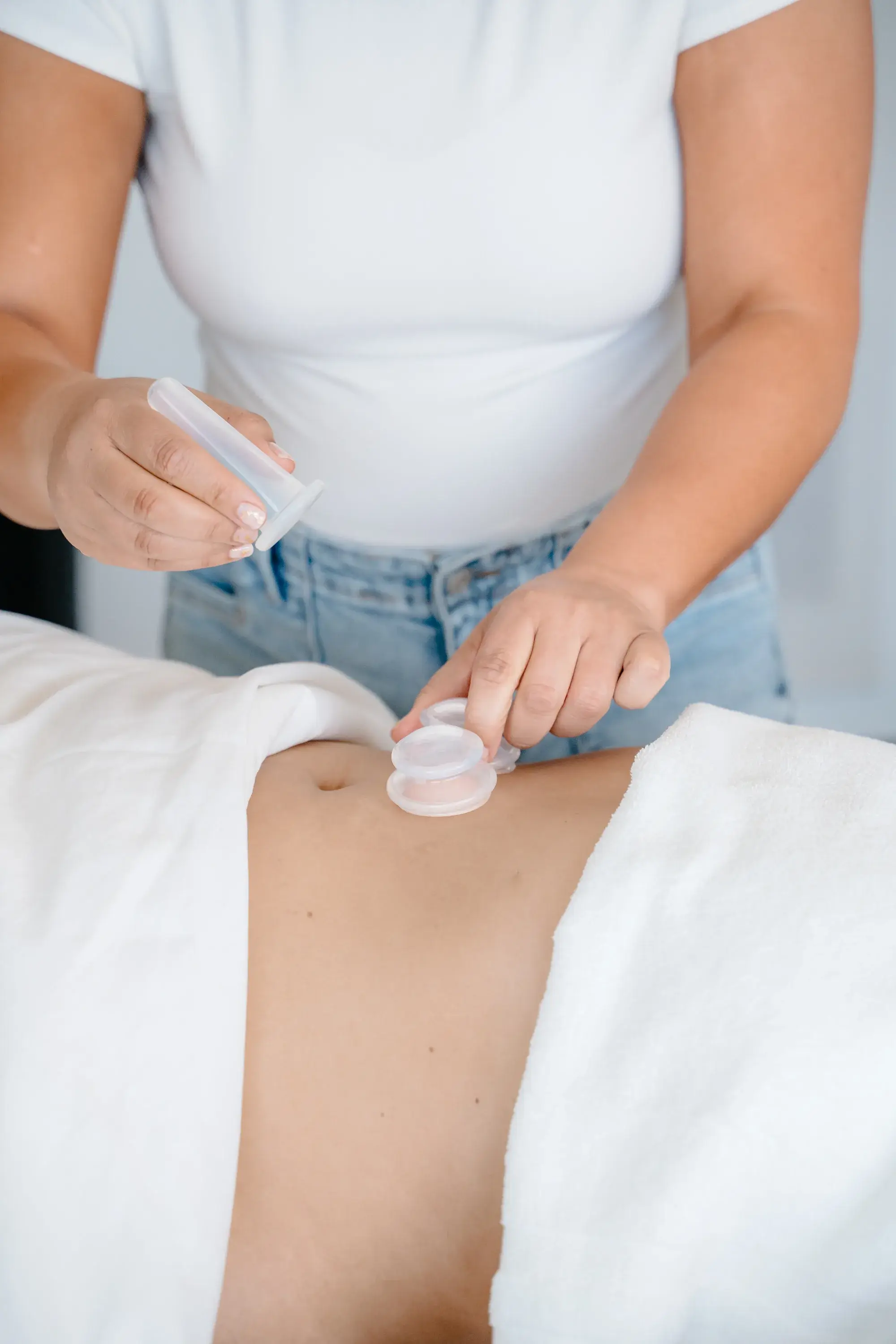
A post-FFS session is done with your head raised, as it would be at home, and the hands stay light.
- Collarbones and neck. Slow strokes above the collarbones and down the sides of the neck, away from any tracheal shave incision.
- Lower face. From the cheeks toward the angle of the jaw and down the neck, without pressing on the jawline or chin.
- Upper face and forehead. From the centre of the forehead outward to the temples, then down, staying off the hairline incision.
- Around the eyes and nose. Only the lightest touch on the cheeks below the eyes; the nose itself is left alone.
After FFS you would book post-op lymphatic drainage: $105 for half an hour, $115 for 45 minutes or $140 for an hour. Face and neck work fits comfortably in 30 or 45 minutes; if you had top surgery or body work at another time and want both areas treated, 60 minutes gives room for that. Our page on lymphatic drainage after top surgery covers chest recovery.
Many people travel for FFS and come home to Calgary to heal. Our page on lymphatic drainage in Calgary after surgery abroad lists what to ask your surgeon before you leave. You can book through Jane, add the name and pronouns you use to your booking notes, and Meeghan Mackenzie, our Certified Lymphedema Therapist, can help plan care if your swelling is slow to settle.
When to call your surgeon first
FFS is major surgery, but complications are uncommon. A 2026 systematic review of 48 studies found complication rates consistently below 5 percent across facial and neck procedures, and 5.3 percent when procedures were combined; the complications it counted included infection, bone fragments not healing together, and deep vein thrombosis.
Skip your session and contact your surgeon if you notice:
- nasal bleeding that does not stop with gentle pressure and the measures your surgeon gave you, which Denver Health says needs a call to the surgeon;
- redness and pain around an incision, cloudy fluid draining from it, or a fever, which the CDC lists as signs of a surgical site infection;
- swelling that suddenly gets worse on one side after it had been improving;
- numbness of the chin, lips or teeth still present well beyond four weeks; Denver Health says it usually resolves in two to four weeks but can take up to a year in a smaller group;
- a voice that has not recovered after the swelling has gone down.
The NHS lists throbbing pain and swelling in one leg, usually the calf or thigh, as signs of a deep vein thrombosis after surgery; get urgent medical advice, and call 911 for shortness of breath or chest pain.
Questions people ask
My FFS was out of province. Can I get lymphatic drainage when I get home to Calgary?
Yes, as long as your surgeon agrees. Ask them before you travel home for written instructions: which procedures were done, when splints and sutures came out, and when facial lymphatic work may start. Bring that to your first session so we can follow their plan.
Will lymphatic drainage change the shape of my bone work?
No. The strokes are skin-light and do not move bone or cartilage, and we never press on a healing nose, jawline or forehead. Your final shape comes from the surgery and from time, with about 80 percent of the result visible at three months and the full result at six to nine months, according to Denver Health.
Can I wear makeup to my session?
Please come with a clean face if you can, since the strokes are done on bare skin. Denver Health's guide also suggests avoiding harsh skin care and hair products for a month after surgery, so check with your surgeon before going back to your usual routine.
My voice is different since the tracheal shave. Will lymphatic work help?
Denver Health notes that temporary voice changes after a tracheal shave usually resolve as the swelling settles, within about 10 to 14 days. We do not work over the front of the throat. If your voice has not recovered by then, check in with your surgeon.
Sources
- Denver Health: Facial feminization surgery, what to expect and post-operative care
- van der Velden et al., Plastic and Reconstructive Surgery Global Open 2026: Complication rates in facial feminization surgery, a systematic review
- American Society of Plastic Surgeons: Facial feminization surgery recovery
- Marxen et al., Aesthetic Surgery Journal Open Forum 2023: The utility of lymphatic massage in cosmetic procedures
- Centers for Disease Control and Prevention: Surgical site infection basics
- NHS: DVT (deep vein thrombosis)
Page reviewed October 5, 2026. This page is education, not a diagnosis. For your own situation, talk to your doctor, surgeon or care team, or ask us.
Keep reading
Related pages