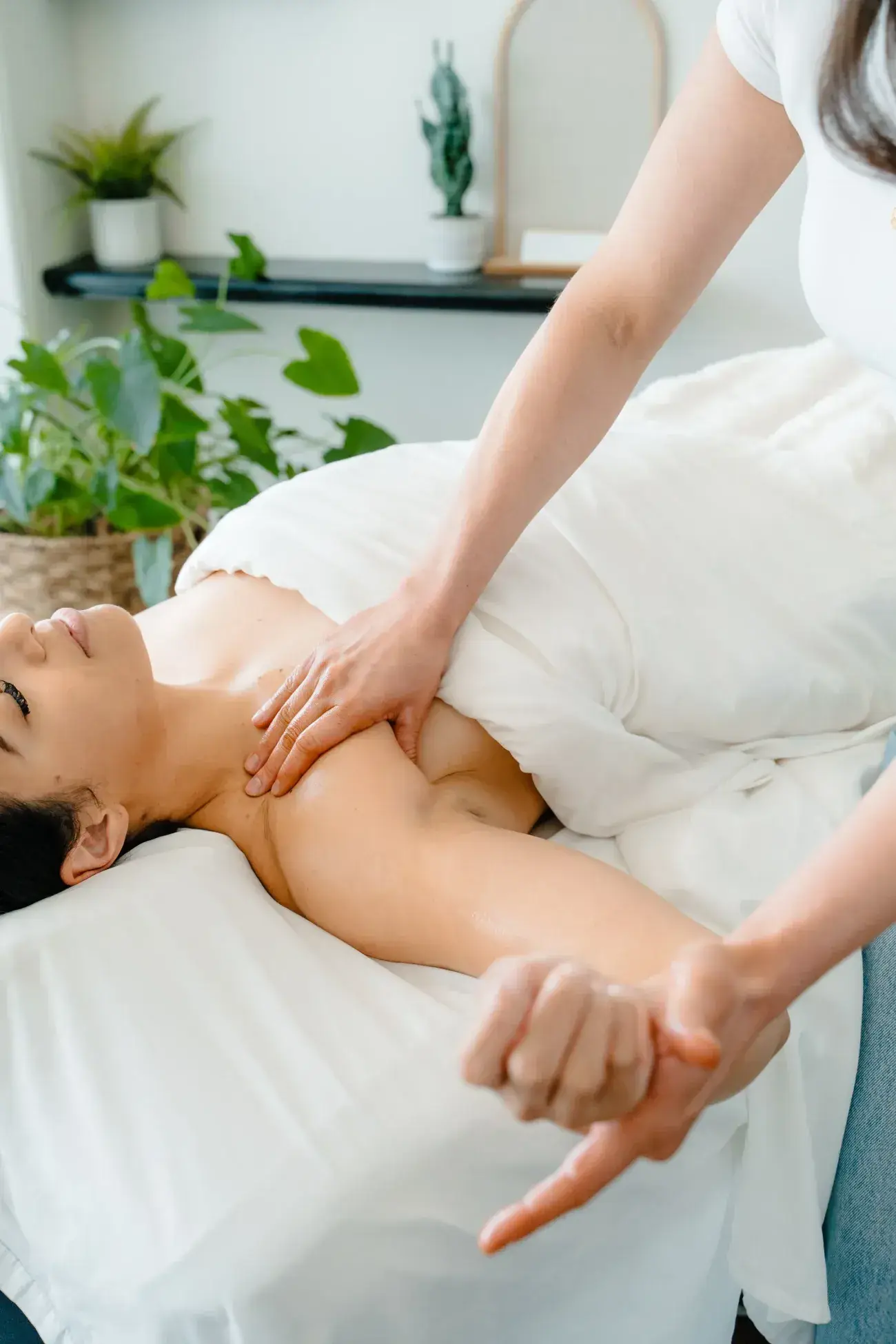


Lymphatic drainage after a mommy makeover in Calgary
Lymphatic drainage after a mommy makeover in Calgary: how sessions work around breasts, abdomen and lipo sites at once, drains, garments and the red flags.
By The Renu lymphatic and massage team · 6 min read
Lymphatic drainage after a mommy makeover can help the three swollen regions of a combined surgery, the breasts, the abdomen and the liposuction sites, once your surgeon clears you, usually after the drains are out. Each region has its own rules: the breasts stay in their support bra and are barely touched, the tummy tuck incision and new belly button are never pressed, and liposuction areas get the most attention. At Renu a 90-minute multiple surgeries session lets us reach all three without rushing.
Three operations, three kinds of swelling
A mommy makeover is not one surgery but a combination, most often a tummy tuck, a breast procedure (a lift, augmentation or reduction) and liposuction, done in a single trip to the operating room. That is why recovery feels so different from a single procedure: you are swollen in several places at once, and each place heals on its own terms.
The American Society of Plastic Surgeons (ASPS) describes the dressings that usually follow. Gauze or bandages go over the incisions, an elastic bandage or support bra minimizes swelling and supports the breasts, and a compression garment may be used to control swelling in the abdomen, waist and buttocks. Healing continues for several weeks as the swelling goes down and the shape of the breasts, abdomen, waist and buttocks improves.
For lymphatic work, it helps to think of your body as three zones:
| Zone | What usually covers it | How lymphatic work treats it |
|---|---|---|
| Breasts | Support bra or elastic bandage | Left in the bra; light work at the armpits and upper chest only |
| Abdomen | Abdominal garment, sometimes foam or a special dressing | Gentle strokes above the incision, never on the scar or belly button |
| Liposuction sites (flanks, back, thighs) | Compression garment | The main focus once the node regions are open |
If you want the detail for each part on its own, we have separate guides for the tummy tuck, breast augmentation or reduction and 360 liposuction. This page is about putting them together.
When the first session can happen
The first session waits for your surgeon, and in combined surgery the deciding factor is usually the drains. ASPS suggests asking your surgeon before surgery whether there will be drains and for how long, and the answer shapes your booking.
A 2026 series of 216 women having abdominoplasty after pregnancy, most of them with liposuction at the same time, removed drains once they produced less than 50 mL a day. On average the drains stayed in for about five to six days. Your own surgeon’s rule may differ, but that range explains why most people book their first lymphatic session in the second week rather than the first.
Some surgeons also use special wound dressings after a mommy makeover. In one small 2025 study of 40 mommy makeover patients, negative pressure dressings stayed on the incisions for 12 to 22 days. If you have one of these, it stays exactly where it is during your session, and the strokes simply go around it.
Surgeons genuinely differ on lymphatic massage. A 2023 review in the Aesthetic Surgery Journal Open Forum describes a common pattern of two to three sessions a week for the first three to four weeks, done by a certified lymphedema therapist or a massage therapist with lymphatic training. Other surgeons skip it: one 2026 liposuction study used two months of continuous compression and two weeks of lymphatic taping, with no recommendation for lymphatic drainage massage at all. Neither approach is wrong. Your surgeon’s plan comes first, and we follow it.
Why the lower belly is the slowest part
After a tummy tuck, the lower abdomen has to find a new way to drain. The Marxen review notes that after abdominoplasty the main lymphatic drainage of the abdomen may shift from the groin toward the armpits. Fluid from just above your scar now has a longer road to travel, which is why that strip of belly is often the last place to soften.
This changes how a session after a mommy makeover is built. Instead of pushing fluid down toward the groin, which the incision now interrupts, strokes guide it up and around the sides toward the armpits. That is also why the breasts matter: the armpits are shared territory, receiving fluid from the chest as well as the abdomen. Light work there serves both zones without touching the breasts themselves.
How a combined session runs at Renu
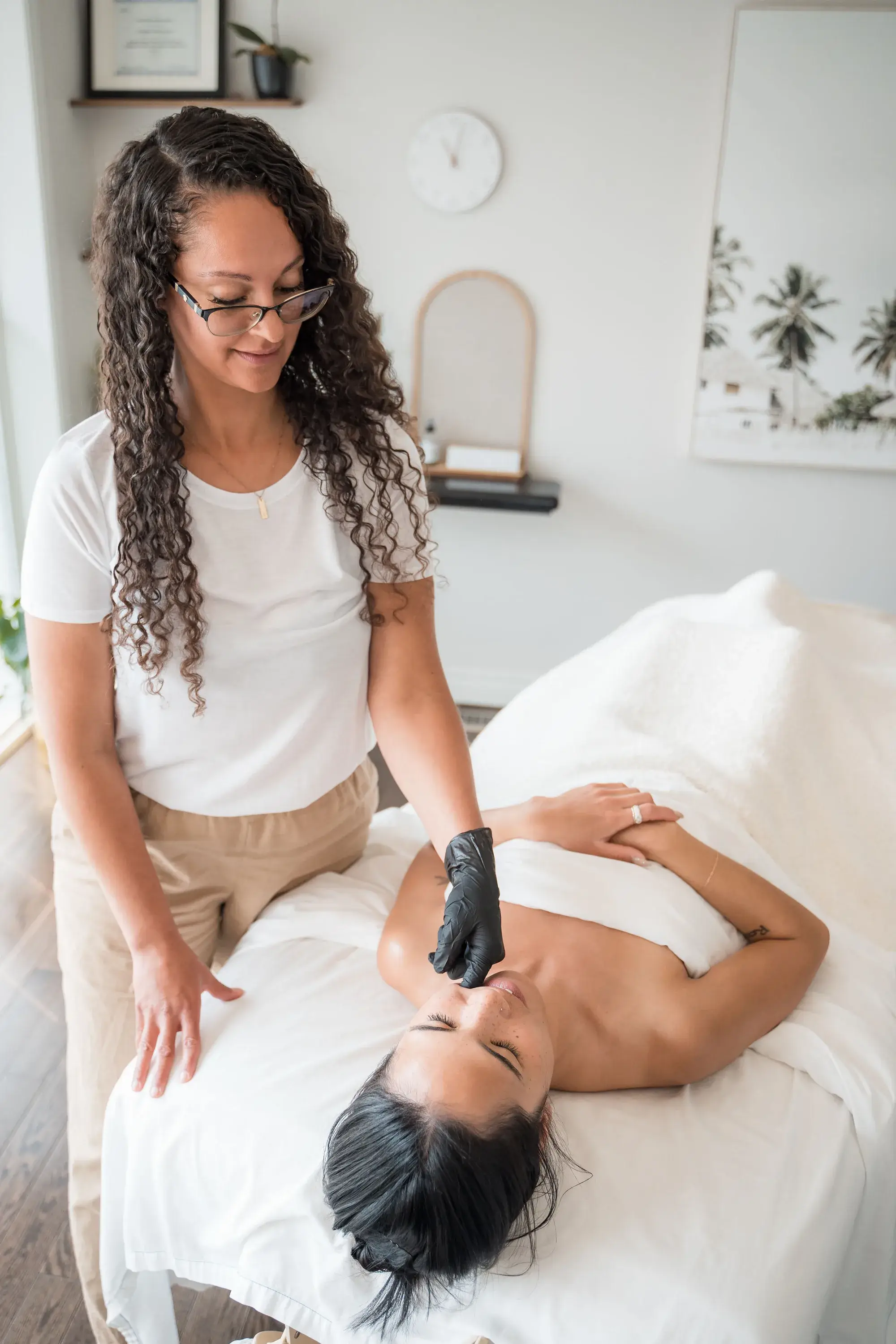
Our 90-minute multiple surgeries session exists for exactly this kind of recovery. Three regions plus the neck and armpits take time when every stroke is slow and light, and a shorter session would mean skipping one of them.
A typical early session looks like this:
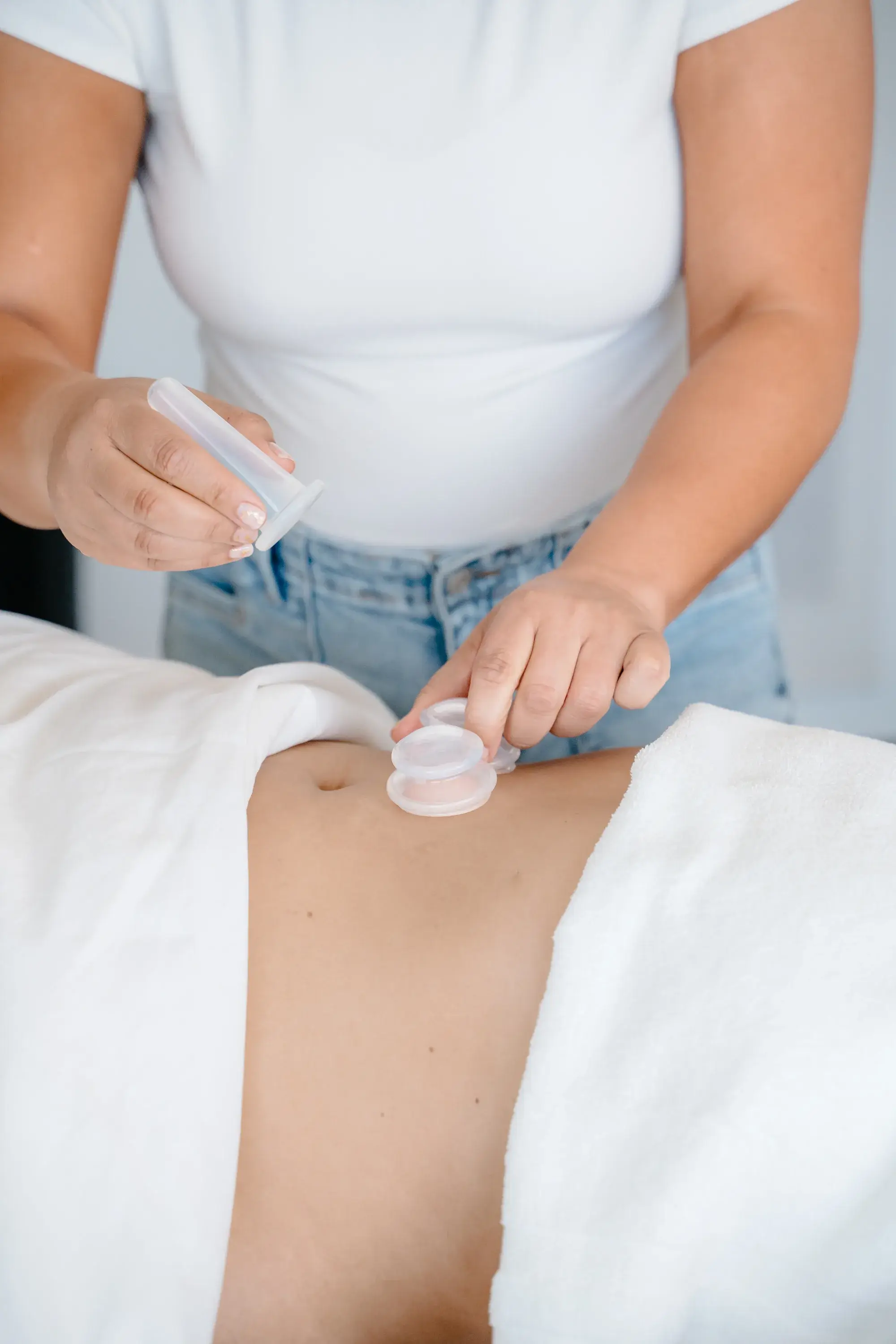
- Positioning. You lie on your back with your knees and head supported, so the tummy tuck incision is not stretched. Most early work is done on your back or side.
- Neck and armpits. Breathing and gentle work above the collarbones and in both armpits, which open the routes everything else will use.
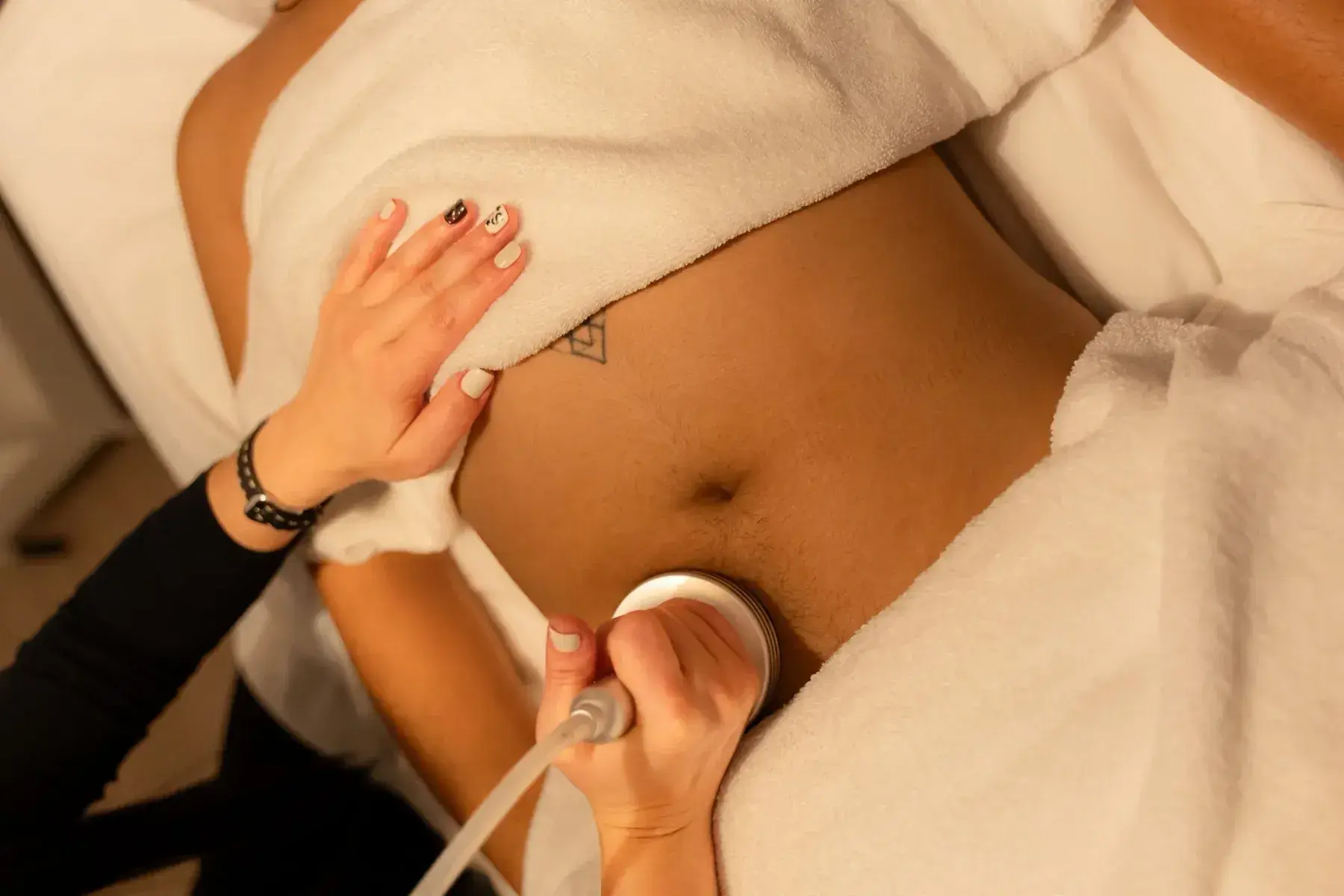
- Liposuction sites. With the garment opened or removed for that area only, strokes move fluid from the flanks and back toward the armpits.
- Upper abdomen. Feather-light work above the incision, never across it, never on the belly button.
- Chest. The support bra stays on. Any work near the breasts stays on the upper chest and sides, as your surgeon allows.
- Garments back on. Before you sit up, with help if you need it.
Prices for post-op lymphatic drainage are $210 for the 90-minute multiple surgeries session, $140 for 60 minutes, $115 for 45 minutes and $105 for 30 minutes. Meeghan Mackenzie, our founder and Certified Lymphedema Therapist, can help you plan session lengths around your surgeon’s schedule. You can book through Jane online, and we are open seven days a week, which helps when a partner can only drive you on a weekend.
Seromas and lumps worth showing your surgeon
A seroma is a pocket of fluid under the skin, and after combined surgery the abdomen is where it most often shows up. In the 2026 postpregnancy series, seromas affected about 3 to 4 percent of patients and most resolved after needle aspiration by the surgeon. In the small 2025 dressing study, two of the 20 abdomens treated with standard gauze developed a seroma.
According to Cleveland Clinic, a seroma tends to show up a week to 10 days after an operation as a soft, squishy swelling close to the incision. That timing overlaps with the start of most lymphatic sessions, so if a new fluid pocket is noticed, work in that area should stop and you should contact your surgeon. Lymphatic drainage does not empty a formed seroma, and pressing on one is not safe. Our page on lymphatic drainage with surgical drains in covers the earlier stage.
When to call your surgeon first
Combined surgery is generally safe, but it is still major surgery. A study looked at 29,235 combined abdominoplasty and breast operations performed as inpatient surgery in the United States between 2004 and 2011. It found major complications in 1.12 percent, including acute respiratory failure in 0.6 percent, pneumonia in 0.3 percent and blood clots (venous thromboembolism) in 0.1 percent. Older age, higher body mass index, long operating time and heavy blood loss raised the risk.
Skip your session and call your surgeon or get urgent care if you notice:
- throbbing pain or swelling in one leg, usually the calf or thigh, which the NHS lists as signs of a deep vein thrombosis;
- shortness of breath or chest pain, which needs 911 straight away;
- one breast or one side of the abdomen suddenly larger, harder or more painful than the other;
- fever, warmth, spreading redness or thick, cloudy, foul-smelling fluid from an incision;
- a fluid bump that keeps growing or has not improved after several weeks;
- skin near the tummy tuck incision or the belly button turning dark or dusky.
None of these are things lymphatic drainage treats. If one appears on the day of your appointment, call your surgical team first and let us know so the session can be moved.
Questions people ask
Should I book the 90-minute session after a mommy makeover?
Usually, yes, at least for the first few visits. Three treated regions plus the neck and armpits take time to do gently, and rushing light lymphatic work defeats its purpose. Once the breasts have settled, many people move to a 60-minute session focused on the abdomen and liposuction sites.
Can I bring my baby or toddler to my appointment?
Please ask us when you book so we can talk it through. In the first weeks after a mommy makeover your surgeon will likely limit lifting, so having another adult drive you and look after little ones is easier on your incisions.
Why does my lower belly stay swollen longer than my breasts?
After a tummy tuck the lymph from the lower abdomen can no longer take its usual route to the groin, and a 2023 review notes that drainage may shift toward the armpits instead. That longer path is one reason the lower belly, above the scar, often lags behind. Ask your surgeon if the swelling is one-sided, hot or growing.
My surgeon did not mention lymphatic massage. Should I still book?
Ask first. Surgeons differ: some build lymphatic drainage into their protocol and others prefer garments and taping alone. We follow your surgeon's plan, so a quick message to their office before your first session is the right step.
Sources
- American Society of Plastic Surgeons: Mommy makeover recovery
- Shaterian et al., World Journal of Plastic Surgery 2015: National trends in the use of inpatient hospitalization for combined abdominoplasty and breast surgery
- Guo et al., Plastic and Reconstructive Surgery Global Open 2026: Extensive flap dissection abdominoplasty combined with high-definition liposuction for the postpregnancy abdomen
- Tettamanzi et al., Case Reports in Plastic Surgery and Hand Surgery 2025: Negative pressure wound therapy dressing in mommy makeover surgery wounds
- Huber et al., Plastic and Reconstructive Surgery Global Open 2026: Liposuction followed by helium plasma radiofrequency versus liposuction control
- Marxen et al., Aesthetic Surgery Journal Open Forum 2023: The utility of lymphatic massage in cosmetic procedures
- Cleveland Clinic: Seroma
- NHS: DVT (deep vein thrombosis)
Page reviewed October 5, 2026. This page is education, not a diagnosis. For your own situation, talk to your doctor, surgeon or care team, or ask us.
Keep reading
Related pages