

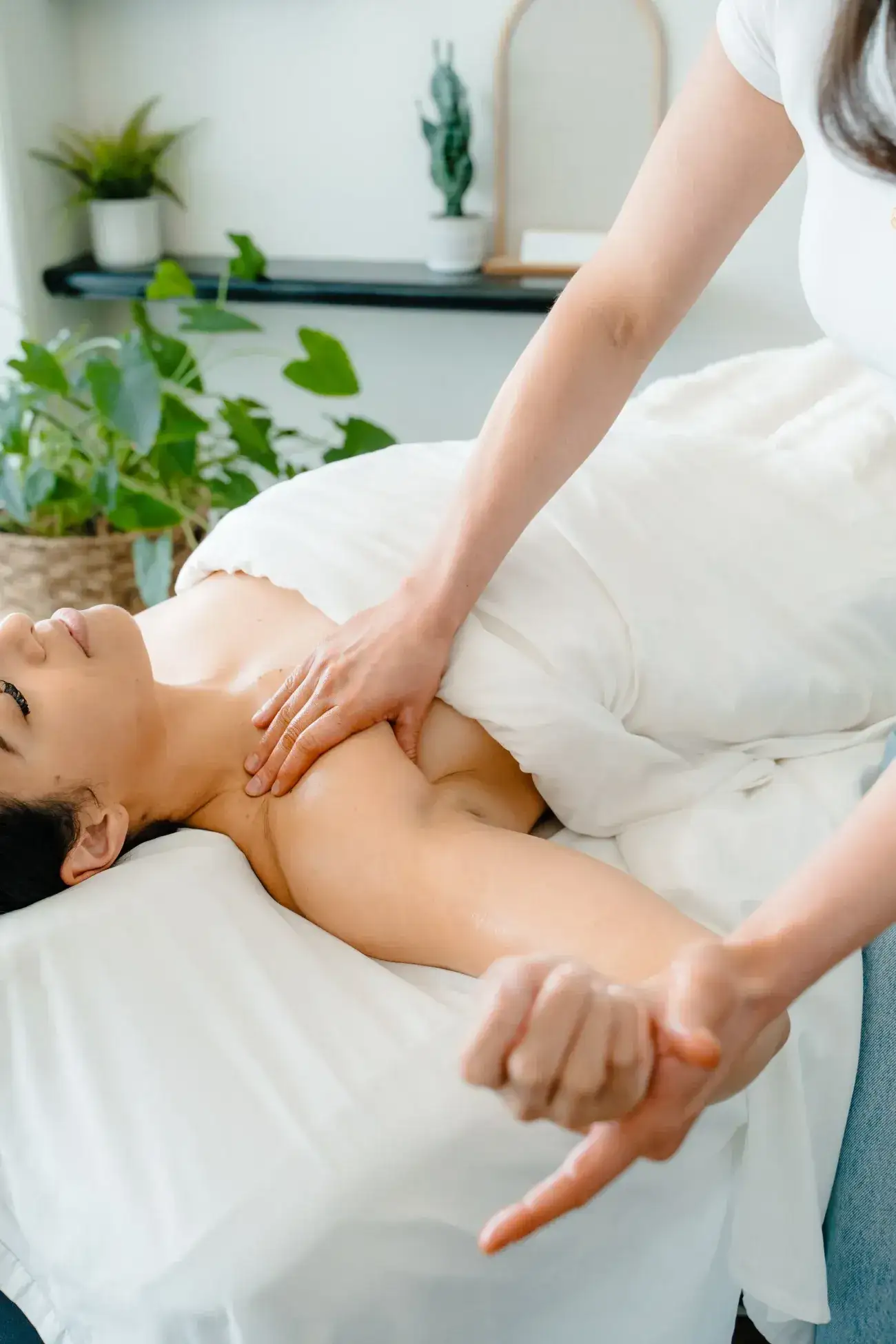
Lymphatic drainage after a lumpectomy in Calgary
Lymphatic drainage after a lumpectomy in Calgary can ease a heavy, swollen breast once your team clears it, with a supportive bra, exercise and skin care.
By The Renu lymphatic and massage team · 6 min read
Yes, gentle lymphatic drainage can help when the breast stays heavy, swollen or sore after a lumpectomy, usually once healing and radiation are far enough along that your cancer team is comfortable with it. In a small 2026 trial after breast-conserving surgery and radiotherapy, adding manual lymphatic drainage to education, compression and exercise eased breast pain and swelling more than those three alone. Your surgeon or radiation team sets the timing, and Renu's Certified Lymphedema Therapist can work within it.
A lumpectomy is meant to keep the breast, and most of the time the changes afterwards are modest. For some people, though, the breast itself stays puffy, tight or achy for months, especially once radiation has been added. That is a different problem from arm lymphedema, and it is the one this page is about: what is going on in the breast, what the research on lymphatic drainage shows, and how to time sessions around surgery and radiotherapy in Calgary.
Why the breast can stay swollen after breast-conserving surgery
A lumpectomy, which the Canadian Cancer Society calls breast-conserving surgery, removes the tumour and keeps as much of the breast as possible. The surgeon usually removes some lymph nodes from under the arm at the same time, and in most cases radiation therapy follows. Each step affects the lymph vessels that drain the breast.
The Canadian Cancer Society lists the side effects of breast-conserving surgery as:
- bleeding and infection;
- pain or tenderness;
- temporary swelling;
- changes in shape, scar tissue or a dimple at the scar;
- lymphedema, if lymph nodes were removed;
- persistent nerve pain in the chest wall, armpit or arm.
When the swelling lingers in the breast tissue and skin, researchers call it breast edema. A 2026 systematic review of 23 studies covering more than 10,000 women found it more often in people who had a full axillary node dissection, larger breasts, a higher BMI, cellulitis after surgery, or arm lymphedema as well. The same review noted that skin water readings in the operated breast were higher than in the other breast even before radiotherapy began, so the surgery alone starts the process.
How it tends to feel:
- heaviness, or a bra that suddenly feels tight on one side;
- aching or tenderness;
- thicker skin, sometimes with enlarged pores like orange peel;
- pinkness or redness that is not from radiation;
- a dent that lingers when you press the skin.
What the research on lymphatic drainage shows
The research is encouraging. In a 2026 randomised trial published in Cancers, 25 women who had finished breast-conserving surgery and radiotherapy were split into two groups. Both received education, compression and exercise; one group also had manual lymphatic drainage.
| Detail | What the trial did |
|---|---|
| When it started | After radiotherapy had finished |
| How often | Five times a week for two weeks, then weekly for ten weeks (20 sessions) |
| Who treated | A physiotherapist certified by the Academy of Lymphatic Studies |
| Result | Both groups improved; the drainage group had greater improvement in breast pain, breast swelling and some quality-of-life measures |
In the trial, drainage was added to education, compression and exercise rather than used on its own, and that is how we approach it too.
For more on the condition itself, our page on breast and chest wall lymphedema covers how it is assessed and the compression bras and vests used for it.
Timing sessions around surgery and radiation
Your cancer team sets the start. In general terms, there are three windows:
- While the incision heals. We do not work over a fresh incision or a breast that is still draining. If your arm or other areas need care, that is a conversation with your surgeon.
- During radiotherapy. Cancer Research UK’s advice is to avoid massaging any area being treated with radiotherapy, so the field is left alone. Our page on massage during radiation therapy explains why and what can still be worked.
- After radiotherapy. This is when the 2026 trial began. Cancer Research UK also advises against massage wherever skin is broken, bleeding or bruised, so skin in the radiation field waits until your radiation team says it has healed.
If a sentinel node biopsy or axillary dissection was part of your surgery, your arm’s risk is a separate question; lymphedema risk after sentinel node biopsy sets out the numbers.
What a session looks like for breast swelling
Drainage for the breast starts far from the breast. We begin at the neck and the armpit on the other side, so the fluid has open pathways to move toward. Then we work slowly across the chest, guiding fluid from the treated breast toward those healthy regions and around the scar rather than across it.
Along the way we look at:
- the bra you wear day to day, and whether it supports without digging into the swollen side;
- shoulder movement, since the Canadian Cancer Society lists limited shoulder and arm movement among the effects of node surgery;
- the skin, especially under the breast fold and in the radiation field;
- a short home routine. Our self-lymphatic drainage for the breast and chest guide covers what to do between visits.
On support garments, comfort and a good fit matter more than pressure for its own sake.
When to call your surgeon or cancer team first
Some breast and arm changes after a lumpectomy need a doctor rather than a therapist. Contact your team promptly if you notice:
- spreading redness, warmth or fever, which can mean infection or cellulitis;
- bleeding from the incision, or a swelling that is quickly getting larger or very painful;
- breast or skin changes that differ from what your team told you to expect;
- new arm swelling, particularly with arm pain.
A 2026 surgical review notes that new arm swelling after breast cancer can come from a blood clot, cancer recurrence, narrowing of the main arm vein, infection, heart failure, or kidney or liver failure. Those causes have to be ruled out first. The Canadian Cancer Society’s advice applies here too: tell your healthcare team about side effects early, because the sooner they know, the sooner they can help.
In the 2026 trial, people with active infection, acute deep vein thrombosis, uncontrolled heart failure or high blood pressure, acute kidney injury, or cancer recurrence or spread during treatment were not included, and we take the same cautious view.
Lymphatic drainage after a lumpectomy at Renu
Meeghan Mackenzie, our founder, is a Registered Massage Therapist and Certified Lymphedema Therapist, trained through the Academy of Lymphatic Studies, and a Certified Compression Fitter. That background suits breast swelling, where hands-on drainage, bra fit and a home routine all work together.
- Post-op lymphatic drainage: 30 minutes ($105), 45 minutes ($115) or 60 minutes ($140).
- A 30-minute session suits a focused breast and chest routine once you know it well; 45 or 60 minutes leaves room to include the arm, shoulder and a garment check.
You book through Jane, and we are open seven days a week, including evenings on weekdays, which can help if you are fitting sessions around work or follow-up appointments. Bring your surgical notes or a summary of which nodes were removed and where you were irradiated, and tell us if your radiation skin is still healing.
Questions people ask
Is it normal for my breast to feel firm and smaller after a lumpectomy?
Yes. The Canadian Cancer Society says the breast is usually smaller, slightly different in shape and slightly firmer after breast-conserving surgery, though often not very noticeably. Firmness alone is expected; a breast that keeps getting heavier, redder or more swollen is worth showing to your team.
Can I have lymphatic drainage on my breast while I am still having radiation?
Not on the area being treated. The usual rule during radiotherapy is to leave the treatment field alone, and the 2026 trial started its sessions after radiotherapy had finished. Other areas can often be treated in the meantime with your radiation team's agreement.
Does a compression sports bra fix breast swelling after a lumpectomy?
No bra fixes swelling on its own, but a supportive or compression bra may help comfort alongside drainage, exercise and skin care. Fit and comfort matter more than brand.
Will the swelling in my breast go away on its own?
Sometimes. Researchers note that breast edema, unlike arm lymphedema, can settle over time in some people. If it is still there months after radiation, or it is painful, ask your team about a referral and consider a lymphedema therapist's assessment.
Sources
- Canadian Cancer Society: Surgery for breast cancer
- Erkol et al. Cancers (2026): Effect of manual lymph drainage on breast edema after breast-conserving surgery and radiotherapy, a preliminary randomized controlled trial
- Barletti PS et al. Cureus (2026): Breast edema in women with arm lymphedema following breast-conserving surgery, a systematic review
- Monzy J et al. Cancers (2026): Delayed lymphatic reconstruction for breast cancer-related lymphedema
- Cancer Research UK: Massage
Page reviewed October 5, 2026. This page is education, not a diagnosis. For your own situation, talk to your doctor, surgeon or care team, or ask us.

