

Should you have lymphatic drainage before surgery?
Should you have lymphatic drainage before surgery? It is optional: research covers post-op sessions, but a visit beforehand can set up your recovery plan.
By The Renu lymphatic and massage team · 5 min read
It is optional, not essential. The published research on lymphatic drainage and cosmetic surgery looks at sessions after the operation, and we could not find good evidence that a session beforehand changes swelling or results. What a pre-op visit can do is practical: you meet your therapist, learn what post-op work feels like, settle a plan with your surgeon's instructions in hand, and book your recovery sessions before you are sore.
People often call us a few weeks before liposuction, a tummy tuck or a joint replacement and ask whether they should come in before the operation as well as after it. It is a fair question, because “pre-op lymphatic drainage” is now offered widely. The honest answer has two halves: what the evidence says, and what a visit beforehand can usefully do even without strong evidence behind it.
What the research does and does not cover
The research on lymphatic drainage around cosmetic surgery is about the weeks after the operation, not before it. We looked for trials of pre-operative sessions and did not find any worth citing.
Two examples show the pattern:
- A 2021 literature review in Research, Society and Development on manual lymphatic drainage in plastic surgery describes it as indicated in the acute phase of the postoperative period, performed with light movements. It does not discuss sessions before surgery.
- A prospective study of 18 women after liposuction or lipoabdominoplasty, published in the Indian Journal of Plastic Surgery, gave twelve sessions of therapeutic ultrasound followed by lymphatic drainage, three times a week. Pain, swelling and fibrosis fell over the course. The sessions began on average about 70 days after surgery, and none were given before it.
So if someone tells you a pre-op session will reduce your post-op swelling, ask what that is based on. As far as we can tell, it is an assumption rather than a finding. That does not make the visit pointless; it just means its value is practical rather than physiological.
What a pre-op visit is actually good for
A session in the weeks before surgery is mostly about preparation. These are the reasons we think it can be worth the time:
- You meet your therapist while you feel well. Your first post-op appointment is easier when the room, the person and the light, slow feel of the work are already familiar.
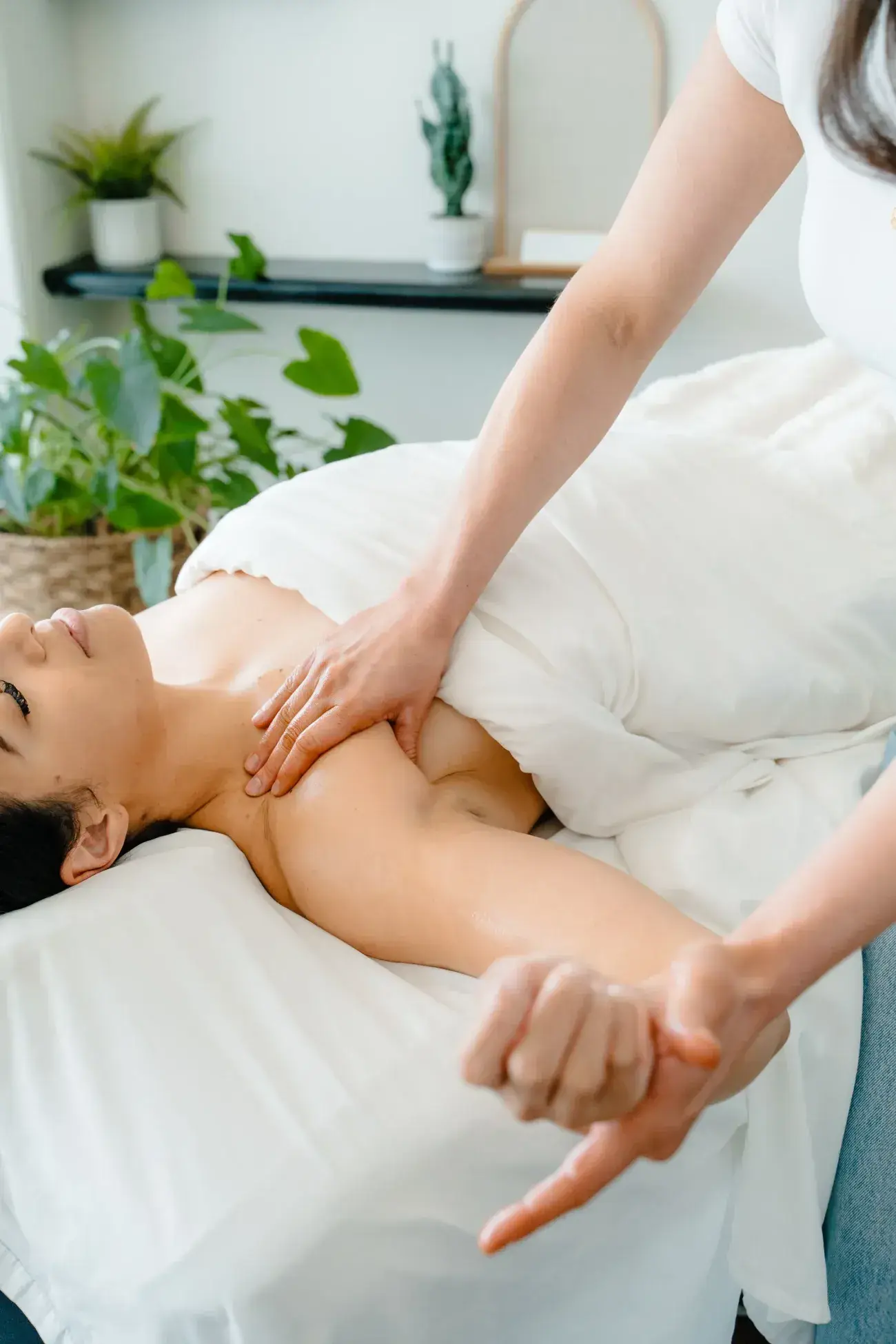
- You learn what the treatment feels like. Lymphatic drainage uses gentle, rhythmic skin stretching, not deep pressure. Knowing that in advance helps you relax into early sessions, when your tissue is tender.
- You build the plan around your surgeon’s instructions. Bring the procedure name, date and anything your surgeon has written about compression, drains and when lymphatic work may start. The therapist can then map the first weeks with you.
- You book your recovery sessions before you are sore. Organising appointments while you are moving comfortably is far easier than doing it from the couch.
- You can ask about self-care. Breathing, walking and the basics of what you can do between appointments are easier to learn on a day you can concentrate.
Some therapists also note how the area looks and feels before surgery. That is a casual reference point, not a medical measurement, but it can make later conversations about “is this still swelling?” a little more concrete.
What your surgeon’s pre-op checklist asks of you
A lymphatic session does not replace anything on your surgeon’s list, and that list matters more. The American Society of Plastic Surgeons (ASPS) advises people preparing for liposuction to:
| ASPS advice before liposuction | Why it is given |
|---|---|
| Get lab testing or a medical evaluation | To confirm you are ready for surgery |
| Take, adjust or stop medications as instructed | Your surgeon decides what changes |
| Stop smoking or vaping | Smoking reduces blood flow, slowing wound healing and raising infection risk |
| Avoid aspirin, anti-inflammatory drugs and herbal supplements | They can increase bleeding |
| Arrange a driver and someone to stay the first night | You cannot drive yourself home |
Only make medication changes your surgeon has asked for. If you take a supplement you are unsure about, ask the surgical team rather than your massage therapist.
The ASPS also suggests clearing errands before surgery so recovery can be rest. Booking your post-op lymphatic sessions is one of those errands.
When to hold off on a pre-op session
A pre-op session is optional, so there is no reason to push through it if something is off. The Cleveland Clinic lists these among the reasons to avoid lymphatic drainage:
- fever or an active infection, including cellulitis;
- blood clots or deep vein thrombosis;
- heart disease;
- kidney failure.
If you have a known clotting history, a heart or kidney condition, or you are unwell in the days before surgery, tell your surgeon and skip the session. The NHS notes that surgery itself raises the chance of a deep vein thrombosis, which is one more reason your surgical team should know about any leg pain or one-sided leg swelling before your operation.
How the pre-op session works at Renu
At Renu, the pre-op option is a classic lymphatic drainage massage of 60 minutes ($130), listed in our pre and post-op lymphatic drainage price group. You book it through Jane, the same online system you will use for your recovery appointments, and we are open seven days a week.
What we suggest bringing:
- your surgery date and the name of the procedure;
- any written post-op instructions, especially about compression garments and drains;
- your surgeon’s preferred start date for lymphatic work, if you have one.
Once you know the start date, our answer on when to book post-op lymphatic drainage walks through lining up the first weeks, and preparing for surgery in our Learning Centre covers the wider checklist. If you would rather not come in beforehand, that is fine too: we can do the same planning at your first post-op visit.
The short version
Book a pre-op session if you want to meet your therapist, understand the treatment and have your recovery appointments organised before the day. Skip it if money or time is tight, because the evidence supports the sessions that come after surgery, and that is where your budget does the most work.
Questions people ask
Does a pre-op lymphatic massage reduce swelling after surgery?
We could not find a trial showing that it does. The studies we read on cosmetic surgery all start their sessions after the operation, so any benefit from a session beforehand is unproven. Book one for planning and familiarity, not because it is expected to shrink post-op swelling.
How close to surgery can I have a pre-op session?
There is no published rule. The week or two before surgery is a practical window, because that is usually when your post-op instructions and bookings come together. If your surgeon has asked you to avoid anything in the days before the operation, follow that.
Is a pre-op session the same as a regular lymphatic drainage massage?
At Renu it is booked as a 60-minute classic lymphatic drainage massage ($130), so the hands-on work is the same light technique. The difference is the conversation around it: your procedure, your surgeon's instructions and the recovery schedule.
Can I skip the pre-op visit and just book post-op sessions?
Yes. Many people start with their first post-op appointment. The things a pre-op visit covers, like the intake questions and the plan, can be done at that first session, which may simply feel less relaxed because you are sore.
Sources
- Soares AF, Santos JR. Research, Society and Development (2021): Benefits of manual lymphatic drainage in post-operative plastic surgery
- Masson IFB et al. Indian Journal of Plastic Surgery (2014): Manual lymphatic drainage and therapeutic ultrasound in liposuction and lipoabdominoplasty post-operative period
- American Society of Plastic Surgeons: How should I prepare for liposuction?
- American Society of Plastic Surgeons: Eight ways to make liposuction recovery a breeze
- Cleveland Clinic: Lymphatic drainage massage
- NHS: DVT (deep vein thrombosis)
Page reviewed October 5, 2026. This page is education, not a diagnosis. For your own situation, talk to your doctor, surgeon or care team, or ask us.
Keep reading
Related pages