
Answers
Can you have lymphatic drainage with an open incision?
Can you have lymphatic drainage with an open incision? Often, with surgeon clearance: the therapist works around the wound and stops for signs of infection.
By The Renu lymphatic and massage team · 5 min read
Often yes, as long as your surgeon has cleared you and the wound is healing as expected. The therapist works around an unhealed incision, never on or over it, and leaves the dressing alone. Signs of infection change the answer: thick, discoloured or bad-smelling drainage, spreading redness, or a temperature of 38°C (100.5°F) or higher mean postponing the session and calling your surgeon.
An incision that is still open, weeping a little or taking its time to close is common after surgery, and it does not automatically rule out lymphatic drainage. What it changes is where the therapist’s hands go, what they check first, and how quickly a session gets postponed if the wound looks wrong.
Working around the wound, not on it
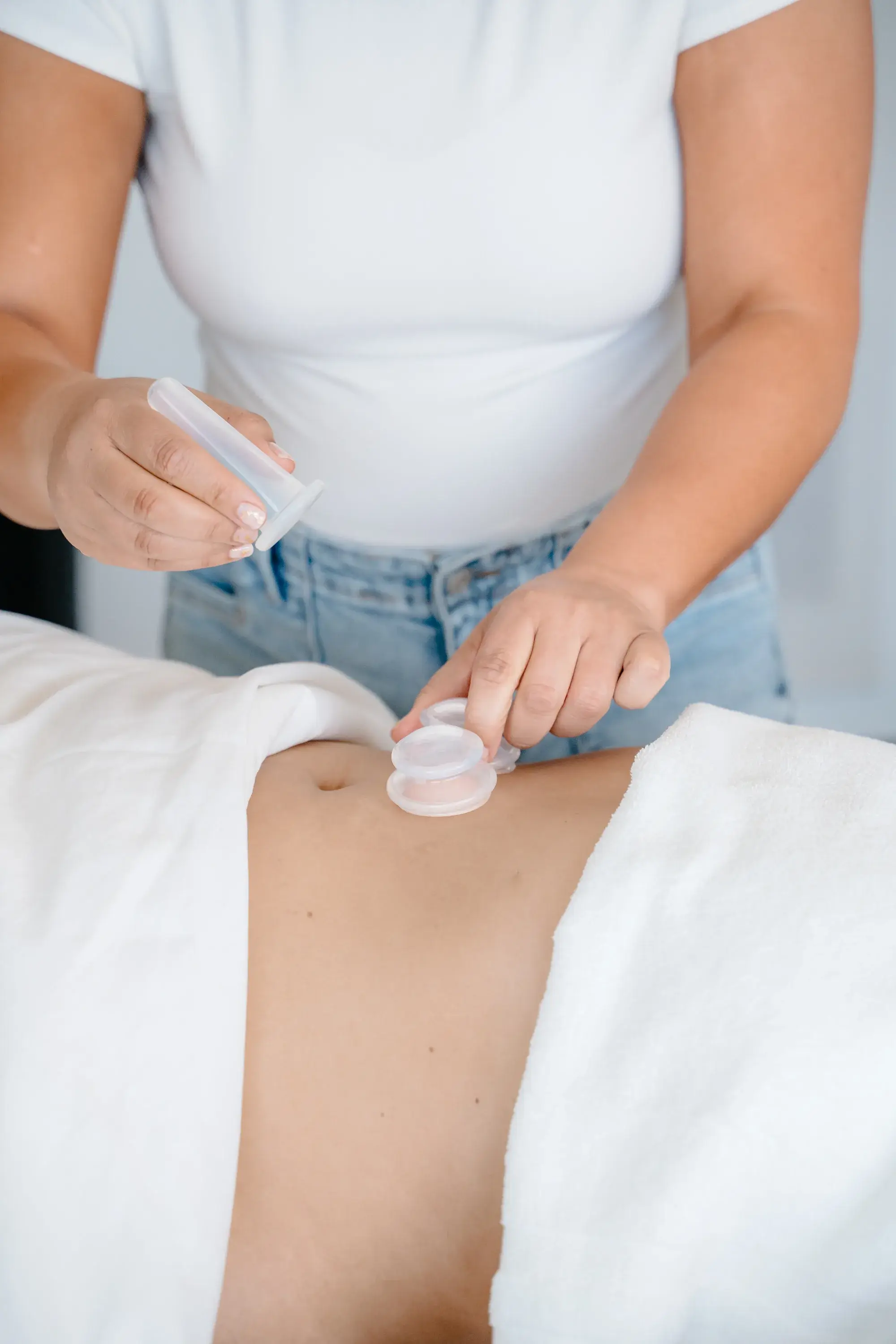
The rule is simple: the therapist treats around an unhealed incision and never on it. Lymphatic drainage works by moving fluid toward healthy lymph nodes, so much of the useful work happens away from the surgical site anyway, for example at the neck, armpits or groin, and in the tissue between the incision and those nodes.
The American Massage Therapy Association (AMTA) describes early post-surgical massage studies in which therapists did not massage incision sites directly; a surgeon quoted in the article called avoiding the vicinity of the incision a critical component. The same article notes that six weeks is a common wait before working on or near an incision, and only with the surgeon’s clearance.
In practice that means:
- dressings, tape and steri-strips stay where they are;
- the therapist keeps a clear margin around the wound;
- strokes are light and directed away from the incision, toward the nodes that drain the area;
- you may be positioned on your side or propped up if lying flat puts pressure on the wound.
What “healed” actually means
An incision is not healed just because it has stopped hurting. MyHealth Alberta describes healed skin as having scar edges that are well closed with no gaps and no drainage. Until all three are true, treat the incision as open.
Some incisions take longer than others. After liposuction, MedlinePlus says stitches are usually removed in 5 to 10 days, unless they dissolve. A tummy tuck or breast incision is much longer, so ask your surgeon what to expect for yours.
Normal drainage versus warning signs
A little fluid is not always a problem. After liposuction, MyHealth Alberta says fluid may drain from the incisions for several days, bloody at first and then clear. Our answer on fluid leaking from lipo incisions explains why.
What matters is the direction of change. MedlinePlus advises calling your doctor if:
| Sign | What it may mean |
|---|---|
| More redness, pain, swelling or bleeding at the wound | Inflammation or infection |
| Drainage that increases, or turns thick, tan, green or yellow | Possible pus |
| Drainage that smells bad | Possible infection |
| A temperature of 38°C (100.5°F) or higher | Possible infection |
| A wound that looks larger, deeper, dried out or dark | Poor healing |
Caring for the wound between sessions
Wound care belongs to your surgical team’s plan, and following it is what keeps lymphatic sessions possible. MedlinePlus guidance on open surgical wounds gives a sense of the basics, though your surgeon’s instructions come first:
- clean around the incision only as you were shown, often with normal saline or mild soapy water on gauze or a soft cloth;
- gently dab or wipe away drainage and dried blood rather than scrubbing;
- avoid products the guidance warns can damage healing tissue, such as skin cleansers with antibacterial chemicals, alcohol, peroxide and iodine;
- keep dressings in place as directed, since they absorb drainage and protect the wound while it fills in.
It also helps to take a quick photo of each incision every day or two in the same light. If you are unsure whether a wound is changing, a photo series is easier for your surgeon to judge than a description, and you can show it at the start of a lymphatic session too.
When to postpone and call your surgeon
If any of the signs in the table appear, cancel the session and contact your surgeon. The Cleveland Clinic lists fever, infection and cellulitis among the reasons to avoid lymphatic drainage, and AMTA describes therapists who see redness or inflammation at an incision referring the client to their doctor to rule out infection.
Also call your surgeon, or 911 when it is severe, for:
- red streaks spreading from the wound, or pus;
- calf pain or swelling in one leg;
- shortness of breath or chest pain.
Postponing for a few days costs you very little; working near an infected wound is not worth the risk.
Scar work comes later
Once the incision has healed, scar care can start, but that is a different treatment from lymphatic drainage. MyHealth Alberta’s scar massage guidance says to wait until the skin has healed, then massage the scar a few minutes at a time, two to three times a day, for six months to a year after surgery. Direct work on the scar, rather than around it, is usually where your surgeon’s clearance comes back into the picture. Our page on scar tissue and adhesions covers what happens next.
How Renu handles an open incision
At Renu, post-op work is booked through Jane under pre and post-op lymphatic drainage, in 30-minute ($105), 45-minute ($115) and 60-minute ($140) sessions, or 90 minutes ($210) after multiple surgeries. Before we begin, tell us which incisions are still open and show us where they are. Bring your surgeon’s instructions, and wear your garment so we can see how it sits over the dressings. If you are unsure whether you are cleared to start, our answer on surgeon’s clearance for lymphatic drainage lists the questions to ask first.
Questions people ask
Will lymphatic drainage pull my incision open?
It should not, because the work happens away from the wound and uses very light skin stretching. A therapist keeps their hands clear of the incision and the tissue right next to it, so there is no direct pull on the edges.
Can my therapist change my dressing?
No. Dressing changes and wound care are part of your surgical team's instructions, so leave them to you or your nurse as directed. If a dressing is soaked or loose when you arrive, it is better to sort that out with your surgeon's guidance first.
Can I have lymphatic drainage if one small spot is slow to close?
Often, with your surgeon's agreement, since the rest of the area can still be treated while that spot is kept clear. Mention it at the start of the session and point it out, so the therapist can plan around it.
When can scar massage start?
Only when the skin has healed. MyHealth Alberta describes healed skin as having scar edges that are well closed with no gaps and no drainage. Your surgeon or therapist will then show you how to begin gently.
Sources
Page reviewed October 5, 2026. This page is education, not a diagnosis. For your own situation, talk to your doctor, surgeon or care team, or ask us.
Keep reading
Related pages