

Radiation fibrosis after cancer treatment
Radiation fibrosis after cancer treatment is a slow tightening of treated tissue, months or years later. Patient hands-on care helps it soften and move.
By The Renu lymphatic and massage team · Reviewed by Meeghan Mackenzie, RMT, CLT · 3 min read
Radiation fibrosis is a gradual tightening and hardening of tissue in an area that's been treated with radiation. It can begin months or even years after treatment ends, and it often feels like skin and tissue that won't move, stretch or soften the way they used to. The good news: fibrotic tissue responds to patient, consistent hands-on care, and the sooner it's addressed, the more it can change.
Why it happens
Radiation is very good at what it’s designed to do, but it also affects the healthy tissue around the treated area. In response, the body starts healing, and sometimes it overdoes it. Physical therapist and CLT Kelly Sturm explains that radiation can prompt the body to lay down more collagen than it needs, in a tangled rather than orderly pattern. Over time, that dense, disorganised collagen is what makes tissue feel firm, tight or woody.
Radiation also affects the lymphatic vessels in the area, so fluid doesn’t clear as easily. This kind of swelling can be described as protein-rich and slow-moving, the type that encourages tissue to thicken if it lingers. That’s why fibrosis and swelling often show up together.
What it can feel like
- Skin that feels thick, tight, leathery or stuck to the tissue beneath
- Hard or dense areas, often around the scar or across the treated region
- A pulling sensation or reduced movement, such as difficulty lifting the arm after breast radiation
- Heaviness or swelling in the area
- After head and neck radiation, a stiff neck or difficulty opening the jaw fully
Breast tissue is a common place to notice it. Swelling after radiation often peaks four to six months after treatment, and fibrosis can follow a similar slow course.
How hands-on care helps
| Approach | Why it helps |
|---|---|
| Manual lymphatic drainage | Reroutes fluid toward healthy pathways, easing the swelling that feeds fibrosis |
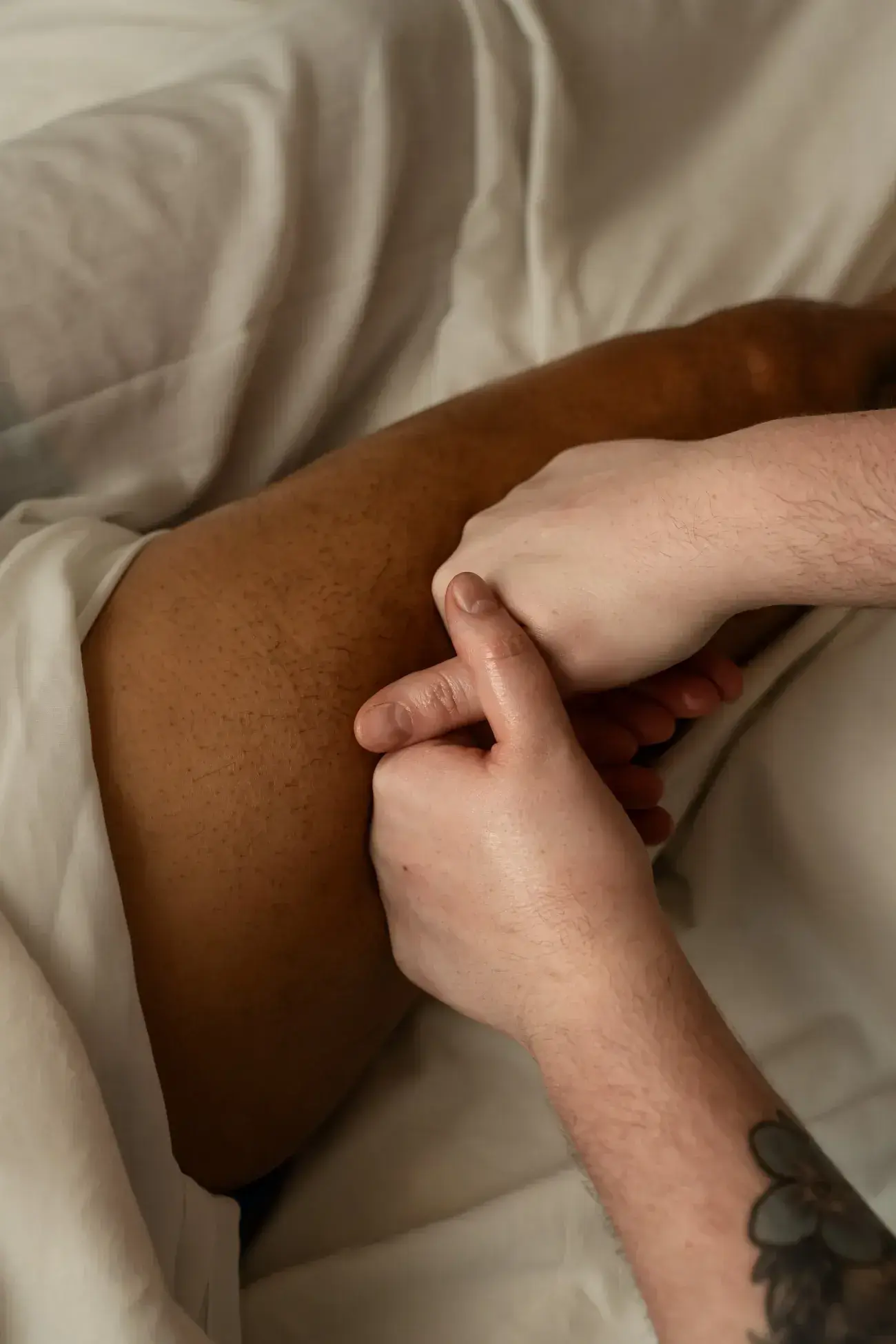
| Gentle fibrosis and scar work | Slowly softens dense tissue and helps layers glide over one another again |
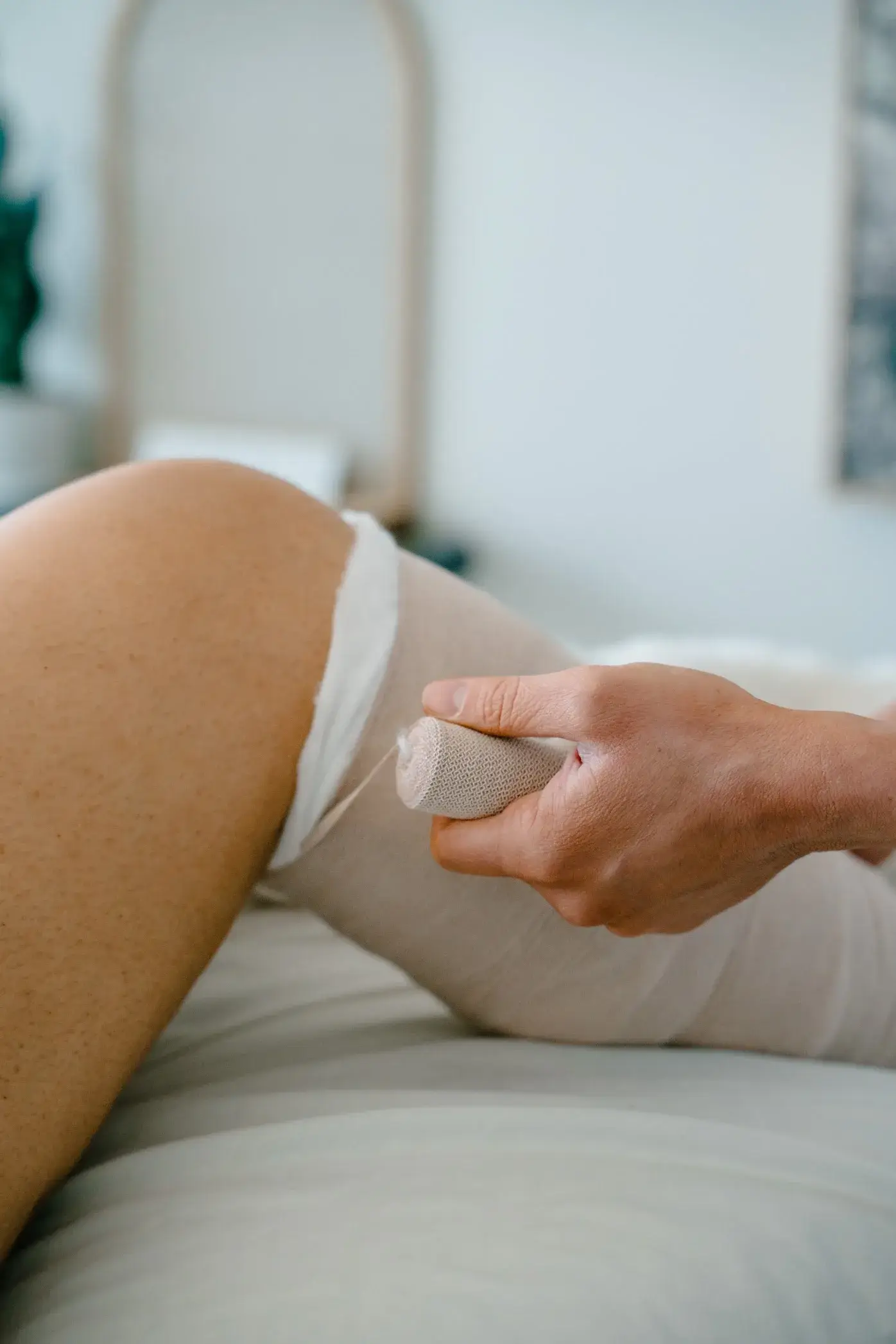
| Stretching and movement | Keeps shoulders, chest, neck or jaw from stiffening further; you’ll get simple exercises for home |
| Breathwork | The diaphragm is a natural pump for lymph; slow, low breathing can ease tightness and swelling in the chest |
| Compression, when needed | Supports areas where swelling keeps returning |
Let’s not forget stress reduction. Living with cancer treatment is exhausting, and a calmer nervous system makes the hands-on work easier to receive and the body more able to heal.
Timing
We begin once your skin has fully healed from radiation and your oncology team is comfortable. Freshly irradiated skin is fragile, so early sessions are especially light. Fibrosis rarely changes overnight; think of it as steady progress over a series of sessions, supported by what you do at home.
And if it’s been years since your treatment, it’s not too late. Long-standing fibrosis can still soften, it just asks for a little more patience.
From Meeghan’s treatment room
Clients often tell me they assumed the tightness was just something they’d have to live with now. Feeling tissue that’s been rigid for months or years begin to soften under our hands, and watching someone reach or turn their head more freely, is some of the most rewarding work we do.
Living with tightness after radiation? Call us at 403-270-2111 to talk with our Certified Lymphedema Therapist, or book online. We’re glad to work alongside your oncology team.
Education, not a diagnosis. New hardness, a lump, skin breakdown or significant pain in a treated area should always be checked by your oncology team.
Questions people ask
Can massage help radiation fibrosis?
Gentle manual therapy and lymphatic drainage aim to soften dense tissue, ease the swelling around it and restore range of motion, usually over a series of sessions with stretching at home. The NLN notes that scars from surgery or radiation call for techniques that soften tissue and improve drainage, with pressure adapted to the tissue.
How long after radiotherapy can fibrosis start?
Months or years. The Canadian Cancer Society notes that most side effects settle within a few weeks to two months of finishing treatment, but late side effects can appear long after. Fibrosis is one of those late effects.
Is radiation fibrosis the same as lymphedema?
No, but they are linked. Fibrosis is scarring in the tissue; lymphedema is fluid that cannot drain. Radiation to lymph nodes can partly block drainage channels, and fibrosis and swelling often occur together in the same region, each stiffening the other.
Why does my radiated skin need to be treated differently?
Irradiated skin can stay darker, thinner and permanently sun-sensitive, and the ribs beneath a chest field are more fragile. The NLN advises against deep techniques in irradiated fields, so sessions stay slow and adapted.
Sources
- Straub et al., Journal of Cancer Research and Clinical Oncology 2015: Radiation-induced fibrosis, mechanisms and implications for therapy
- Stubblefield, Physical Medicine and Rehabilitation Clinics of North America 2017: Clinical evaluation and management of radiation fibrosis syndrome
- DiFrancesco, Khanna and Stubblefield, Seminars in Oncology Nursing 2020: Clinical evaluation and management of cancer survivors with radiation fibrosis syndrome
- Cancer Rehab PT (Kelly Sturm, DPT, CLT): Blog
- National Cancer Institute: Lymphedema (PDQ), health professional version
- Canadian Cancer Society: Side effects of radiation therapy
- Cancer Research UK: Long term side effects of radiotherapy
- National Lymphedema Network: Position Statement, Lymphedema Diagnosis and Treatment (September 2025)
Page reviewed October 19, 2026. This page is education, not a diagnosis. For your own situation, talk to your doctor, surgeon or care team, or ask us.
Keep reading
Related pages