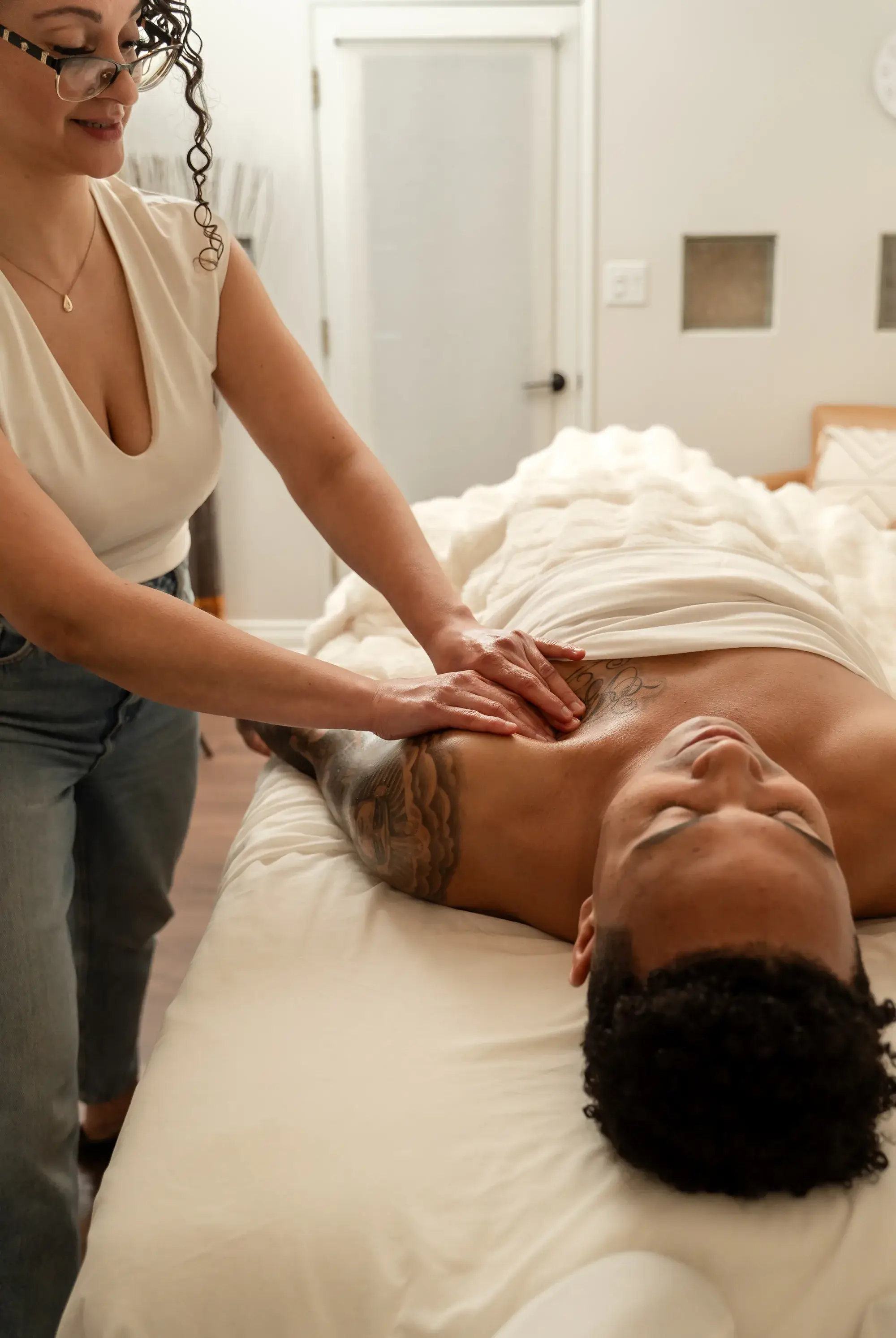

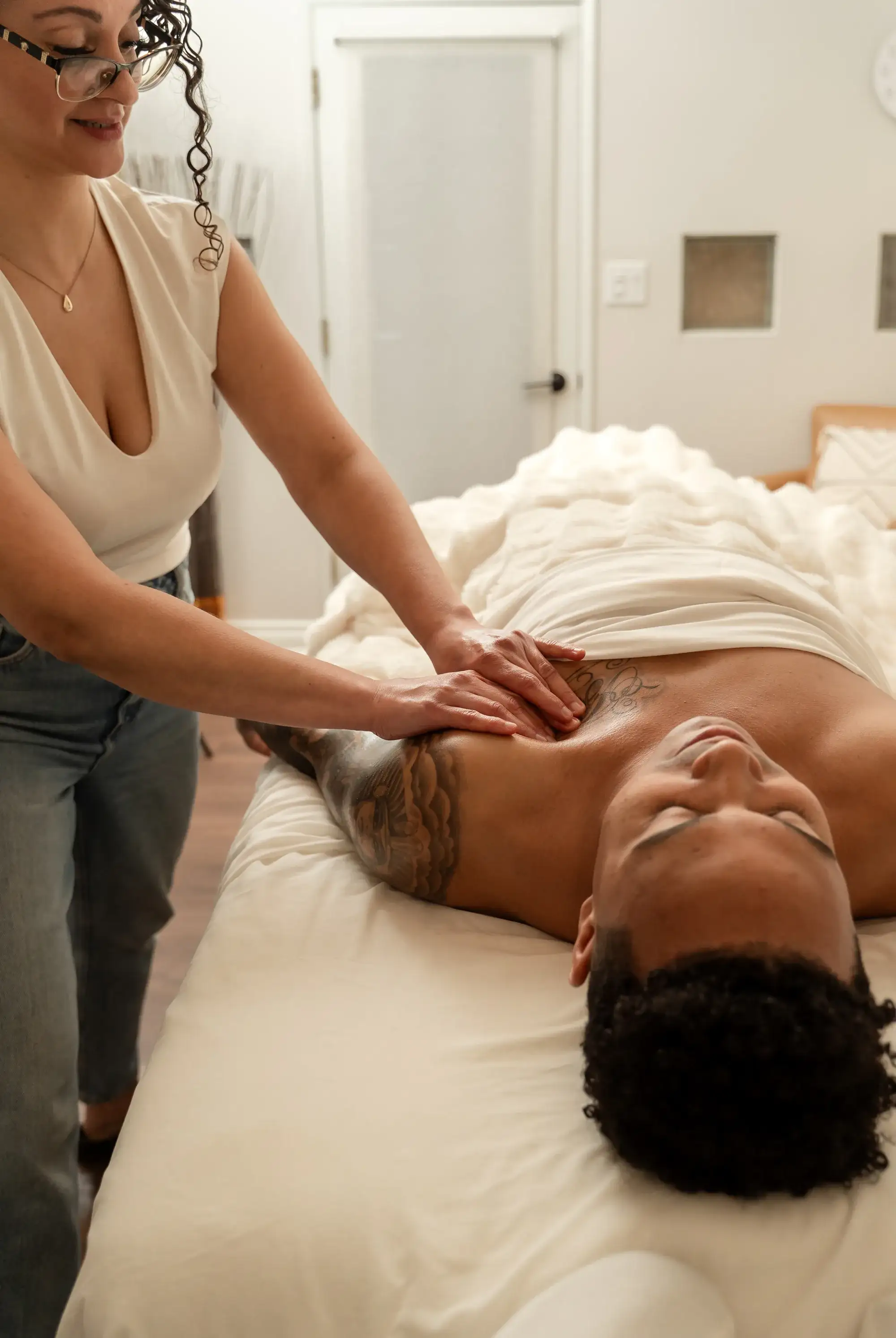
Massage therapy vs chiropractic care
Massage therapy vs chiropractic care: chiropractors are regulated in Alberta, diagnose and adjust the spine; RMTs treat soft tissue. How to choose, or both.
By The Renu lymphatic and massage team · 6 min read
Chiropractors in Alberta are a regulated profession: they must register with the College of Chiropractors of Alberta, they diagnose problems of the spine, muscles, nerves and joints, and they use hands-on treatment such as spinal adjustment. Massage therapy is not provincially regulated; Registered Massage Therapists train through programs of at least 2,200 hours and treat the soft tissues. If you need a diagnosis or have new numbness, start with a diagnosing clinician; if muscle tension and stress are the main story, an RMT fits, and many people use both.
A chiropractor and a Registered Massage Therapist can both help a sore back or a stiff neck, but they come at it from different directions and sit under different rules in Alberta. The chiropractor is a regulated, diagnosing clinician whose signature tool is the spinal adjustment. The massage therapist works with the muscles and connective tissue, usually for a longer stretch of hands-on time. Knowing which is which makes the first booking easier.
Who regulates each profession in Alberta
Chiropractic is regulated and massage therapy is not, and that is the clearest line between them. The Government of Alberta lists chiropractors among the professions governed by the Health Professions Act, with the College of Chiropractors of Alberta as their regulator. The province describes the purpose of regulation as protecting the public from injury or harm caused by incompetent or unethical health services.
For chiropractors, that has practical consequences:
- Registration is mandatory. ALIS, the province’s career information service, states that registration with the College of Chiropractors of Alberta is required to practise.
- Titles are protected. Only registered members may call themselves Doctor of Chiropractic, Chiropractor, Registered Chiropractor or DC.
- Entry is set. A chiropractor needs an approved chiropractic program and a pass on the Canadian Chiropractic Examining Board exam.
- You can look them up. The college runs a public Verify a Chiropractor register showing registration status and any conditions or discipline.
Massage therapy works differently. ALIS states plainly that massage therapy is not a regulated health profession in Alberta. Instead, professional associations require an educational program of no less than 2,200 hours before a therapist can join, and that same threshold is what benefit plans look for before they reimburse a massage. Some municipalities also have their own licensing bylaws. The full background is on our page about whether massage therapy is regulated in Alberta.
| Chiropractor | Registered Massage Therapist | |
|---|---|---|
| Provincially regulated | Yes, Health Professions Act | No; association membership |
| Regulator or body | College of Chiropractors of Alberta | Professional associations |
| Protected title | Chiropractor, DC and related titles | None yet |
| Training gate | Approved program plus national exam | Program of at least 2,200 hours |
| Diagnoses conditions | Yes | Assesses soft tissue and joints |
| Signature tool | Spinal adjustment | Hands-on soft-tissue work |
What actually happens in each visit
The core difference on the table is the adjustment versus sustained soft-tissue work. ALIS describes chiropractors as diagnosing and treating problems with the spine, muscles, nerves and joints, using hands-on treatment such as adjusting the spine and manipulating soft tissue.
That adjustment has a precise legal meaning in Alberta. The College of Physiotherapists of Alberta defines spinal manipulation as a deliberate, brief, fast thrust that moves the joints of the spine beyond the normal range but within the anatomical range of motion. It is a restricted activity: chiropractors perform it, and physiotherapists may do so only after approved post-entry training. Massage therapists do not perform it.
A massage visit is built around the soft tissues instead. ALIS describes massage therapists as assessing a client’s soft tissue and joints, then treating with therapeutic techniques. They keep treatment records, explain the procedure with its risks and benefits, and tell you that you can refuse, stop or change any part of it at any time. They also consult with other providers, chiropractors and physicians among them, to shape a treatment plan. In practice, a massage appointment is mostly hands-on time, with pressure adjusted as you go.
What the research says about each for back and neck pain
Neither approach has strong, lasting evidence on its own, and both appear reasonably safe for most people. Two reviews are worth knowing.
On adjustment safety. A 2024 systematic review and meta-analysis in Pain Physician pooled 14 randomized trials of high-velocity, low-amplitude neck manipulation. It found no increased risk of mild or moderate adverse events compared with control treatments, and every adverse event reported in those trials was mild. The authors add an important caution: randomized trials are not designed to detect rare serious events, so the findings cannot settle that question.
On massage. A Cochrane review of 15 trials of massage for mechanical neck disorders found the quality of evidence low or very low. As a stand-alone treatment, massage gave immediate or short-term relief of pain and tenderness, but the reviewers concluded its effectiveness for neck pain remains uncertain and they could not make practice recommendations.
The honest reading is that both can help how you feel in the near term, neither replaces the slower work of staying active, and choosing well depends more on what is driving your pain than on which profession “wins”.
How to decide which to book first
Start with what you need answered. A simple guide:
- You need a diagnosis. New pain without an obvious cause, pain after a fall or collision, or numbness, tingling or weakness in an arm or leg should go to a clinician who diagnoses first: your family doctor, or a chiropractor if that is your preference.
- The pain is getting worse or changing. Book with your doctor rather than waiting for either hands-on option.
- Tension, overuse and stress. Tight shoulders from desk work, a back that stiffens after a weekend of yard work or shovelling, or tension that tracks your stress levels usually suit a Registered Massage Therapist.
- You want unhurried hands-on time. If what helps you most is having the muscles worked through slowly, that is the centre of a massage appointment.
- You like the adjustment but your muscles stay tight. Many people use both, a chiropractor for joint work and an RMT for the soft tissue around it. Tell each one what the other is doing.
Massage at Renu, and what we do not offer
Renu is a massage therapy and lymphatic clinic. We do not have a chiropractor on staff, and we will say so plainly if you ask. What we offer for back and neck tightness is massage with Registered Massage Therapists.
- Massage, 60 minutes, $120. Enough time for a thorough health history, an assessment and focused work on your back, neck and shoulders.
- Longer and shorter visits are listed on our massage therapy page, alongside the therapists who provide them.
- Booking is online through Jane, and the clinic is open seven days a week, including evenings until 8:30 on weekdays.
The clinic is on 19 Street NW, a short drive from Memorial Drive and Kensington Road, with free street parking on 19 Street. If you already see a chiropractor, bring that context with you. We would rather fit in alongside the care you have than ask you to choose.
When to see a doctor before either
Some symptoms are a reason to see a doctor before any hands-on treatment. Book a medical appointment first if your pain followed a significant accident, if you have numbness, pins and needles or weakness in an arm or leg, if pain keeps getting worse, or if you feel unwell alongside it. A diagnosis does not close the door on massage or chiropractic care. It tells everyone, including you, what is safe and what is worth trying next.
Questions people ask
Is it better to see a chiropractor or a massage therapist first?
If the pain is new, unexplained, follows an injury or comes with numbness or weakness, start with a clinician who can diagnose, such as your family doctor or a chiropractor. If you already know the problem is muscle tension, overuse or stress, booking a Registered Massage Therapist first is reasonable.
Can I see a chiropractor and a massage therapist in the same week?
Yes, and many people do. Tell each practitioner about the other's treatment, and mention any soreness after an adjustment so your massage therapist can adjust pressure in that area.
How do I check that a chiropractor is registered in Alberta?
The College of Chiropractors of Alberta has a public Verify a Chiropractor register that shows whether someone is registered and any conditions on their practice. For a massage therapist, ask which professional association they belong to, because there is no provincial college for massage yet.
Does Renu have a chiropractor?
No. Renu's hands-on team is made up of Registered Massage Therapists, plus acupuncture, lymphatic and esthetic services. If you need a chiropractor, we are glad to work alongside one you already see.
Sources
- Government of Alberta: Regulated health professions
- ALIS: Chiropractor, certifications in Alberta
- College of Chiropractors of Alberta
- ALIS: Massage therapist occupation profile
- College of Physiotherapists of Alberta: Restricted activities
- Pain Physician (2024): Adverse events after cervical spinal manipulation, a systematic review and meta-analysis
- Cochrane (2012): Massage for mechanical neck disorders
Page reviewed October 5, 2026. This page is education, not a diagnosis. For your own situation, talk to your doctor, surgeon or care team, or ask us.
Keep reading
Related pages