
Your first deep tissue massage in Calgary: what to expect
Your first deep tissue massage in Calgary: agree a pressure number, know which discomfort to report, and expect soreness to settle within about 36 hours.
By The Renu lymphatic and massage team · 6 min read
A first deep tissue massage feels firmer and slower than a relaxation massage, and some moments are meant to feel intense, but it should never cross into pain you are bracing against. You and your RMT agree on a pressure level and focus areas before starting, check in during the session, and you can ask for lighter pressure or a stop at any time. Mild soreness is common afterward; in a study that tracked it, most side effects began within 12 hours and were gone within 36.
How a first deep tissue session differs from a regular massage
Deep tissue is not a different room or a different table; it is a different conversation. The parts of a first massage that are the same for everyone, such as intake forms, undressing and draping, are covered on what happens at your first massage appointment. This page is about what changes when you ask for depth.
Three things are different:
- The pressure is negotiated, not assumed. You and your RMT set a level before starting and revisit it during the session.
- The pace is slower. Deeper layers are reached by sinking in gradually and holding, not by pushing harder and faster.
- The focus is narrower. Rather than a full-body flow, most first deep tissue sessions spend most of their time on two or three areas. These are often the upper back, neck and shoulders for desk workers, or the hips and legs for runners and skiers.
Agreeing a pressure number before you start
The single most useful thing you can do on a first deep tissue visit is agree on a scale. A simple version works well: 0 is no pressure, 10 is the most you could tolerate, and you choose the highest number you are happy to reach. For most people a first session sits somewhere around 6 or 7.
Your RMT will check in, especially when moving to a new area. Answer with the number rather than “fine”. It gives your therapist something precise to work with, and it keeps you in charge.
This is not just good manners. The CRMTA’s Standards of Practice are one of the professional association codes that RMTs in Alberta practise under. They require members to monitor and work within the patient’s pain threshold relative to the efficacy of treatment, to keep the patient fully informed, and to discontinue treatment if the patient withdraws consent. You can read more on checking a massage therapist’s registration.
Productive discomfort versus pain to report
Deep work on a tight area can feel intense, and that is different from pain. Healthline notes that deep tissue massage uses stronger pressure and is more likely to cause soreness than gentler styles, so some intensity is expected.
| Usually fine | Tell your RMT now |
|---|---|
| A strong, dull ache that eases as the hold continues | Sharp, stabbing or burning pain |
| A “good hurt” you can breathe through | Pain that makes you hold your breath or tense up |
| Referred sensation that fades when pressure lifts | Tingling, numbness or shooting pain down an arm or leg |
| Tenderness over a known tight spot | Pain over bone, a joint or the front of the neck |
If you are bracing, the muscle is guarding against the pressure, and more force does not help. We go into this in more detail on whether deep tissue massage has to hurt to work.
What your RMT may do differently
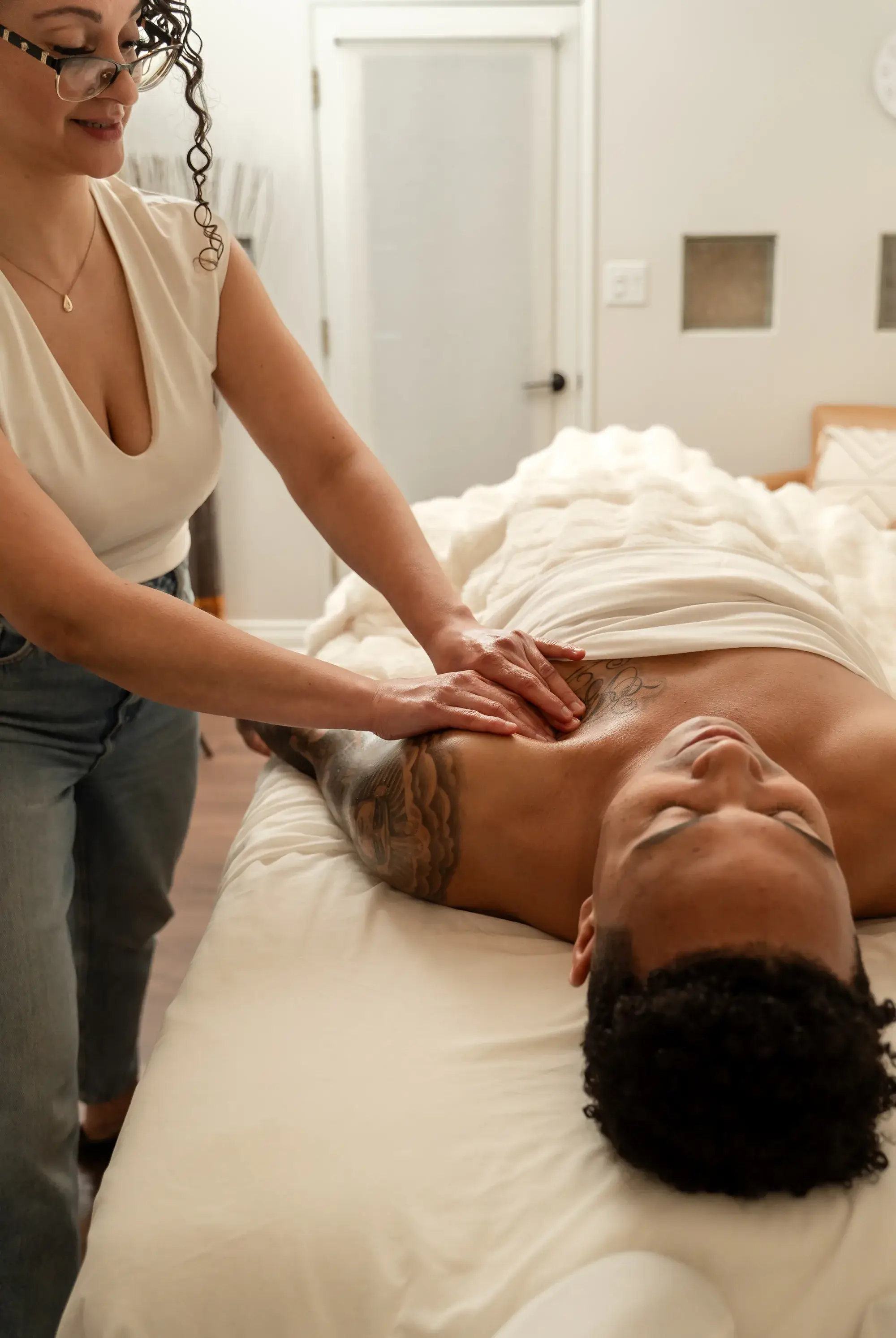
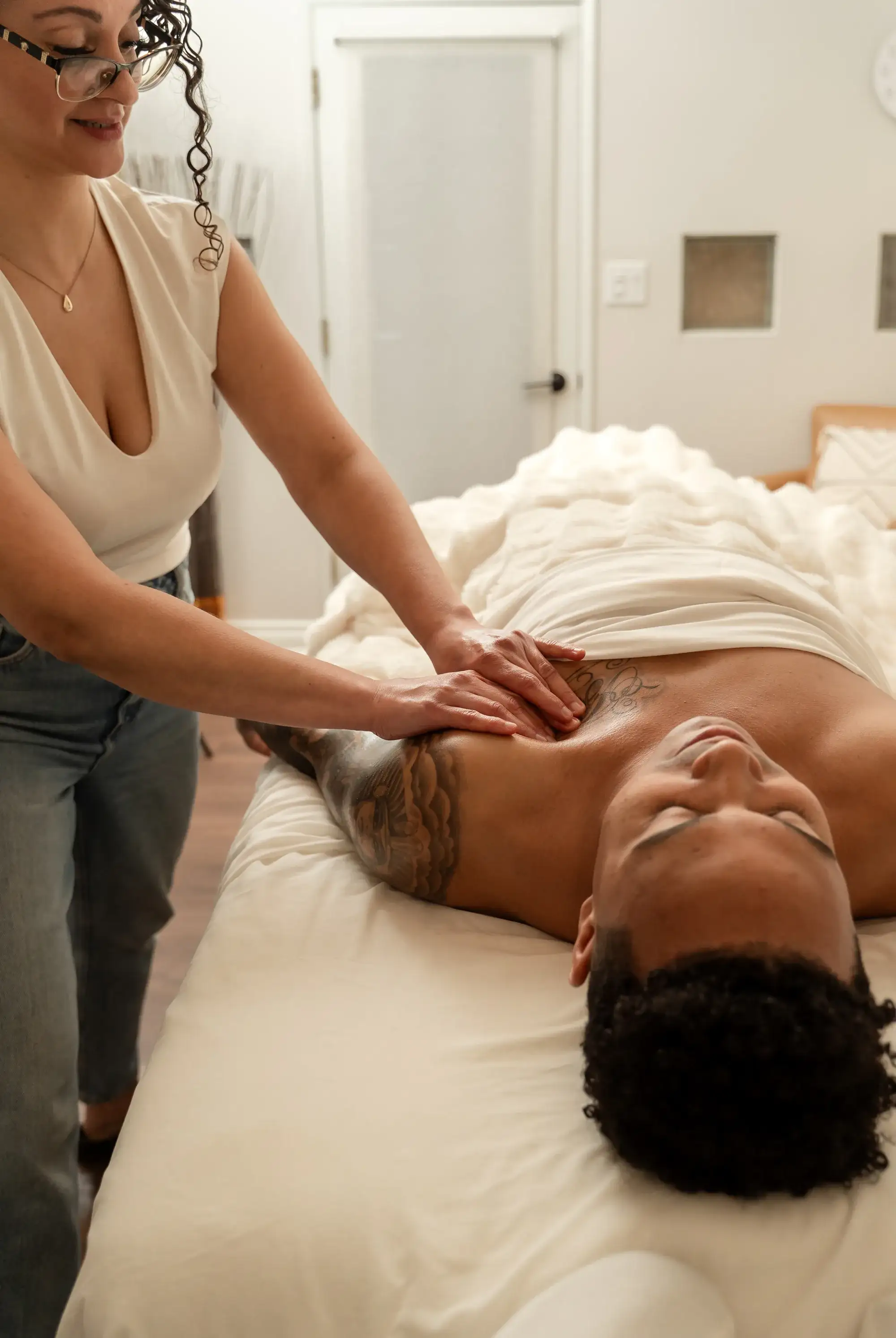
To reach deeper layers without poking, your RMT will often work slowly with broad contact, sinking in and waiting for the tissue to soften before moving on. On a large area such as the back or thighs, that broad contact may come from a forearm rather than fingertips; on a small, stubborn spot it may be a sustained hold. Expect quieter moments where the hands stay still: that stillness is part of the technique, not a pause.
You can ask for any area to be left out, and you can change your mind mid-session. If you are not sure how to raise it, our page on asking your massage therapist to stop or change the treatment has words you can use.
Choosing 60, 75 or 90 minutes
Longer is not deeper; it is more areas, or the same areas with more time to work gradually. Massage at Renu is booked as:
| Length | Price | A good fit when |
|---|---|---|
| 60 min | $120 | One region, such as neck and upper back |
| 75 min | $141 | Two regions, or one region plus time for stretching |
| 90 min | $157 | Back, neck, hips and legs, or a slower pace throughout |
For a first deep tissue visit, 60 or 75 minutes is a sensible start: enough to work properly without overloading tissue that has never had deep pressure. If you are torn, is a 60 or 90 minute massage better walks through the choice.
How you may feel over the next day and a half
Soreness after deep work is common, short and mild. A 2007 study, which its authors describe as the first to define the rate of side effects after massage, followed a university massage clinic. There, 100 new and returning clients agreed to be surveyed two to seven days after treatment, and 91 answered every question. Ten percent reported some minor discomfort afterward. Most negative symptoms started within 12 hours of the massage and lasted 36 hours or less, and no major side effects occurred. Healthline similarly notes that post-massage soreness usually subsides within a day or so.
So a realistic plan is: some tenderness that evening and the next morning, easing by the following evening. Light movement, a warm shower and an early night help. For the details, see what to do after a deep tissue massage and whether bruising after deep tissue massage is normal.
Who should talk to a doctor before booking deep work
For most healthy adults, deep tissue massage is low risk. NCCIH reports that the risk of harm from massage appears to be low. Rare serious side effects, such as a blood clot, nerve injury or bone fracture, have been reported, some involving vigorous types such as deep tissue massage or people at higher risk of injury, such as older adults.
Please check with your doctor first, and tell your RMT, if you:
- Have a blood clotting disorder, take blood thinners or have had a clot
- Have osteoporosis or fragile bones
- Have a calf that is swollen, warm or painful on one side
- Have numbness or weakness that is new or getting worse
The full list is on who should avoid deep tissue massage. NCCIH also advises not using massage to postpone seeing a health care provider about a medical problem.
Booking your first deep tissue massage at Renu
Book a 60, 75 or 90 minute massage in Jane and add a note that you would like deep tissue. All of our RMTs work at a pressure you set, and we are open seven days a week, open until 8:30 pm on weekdays for after-work sessions. Our clinic is in West Hillhurst on 19 Street NW, with free street parking. You can see every option on our massage therapy page.
Questions people ask
How do I tell my RMT the pressure is too much?
Say a number. If you agreed that 7 out of 10 is your ceiling and a spot reaches 8, say so and the pressure comes down straight away. You can also simply say lighter or stop; professional standards such as the CRMTA's expect therapists to work within your pain threshold and to stop if you withdraw consent.
Should I book deep tissue if I have never had a massage before?
You can, but tell your RMT it is your first massage of any kind. Many people do better starting at moderate pressure for the first half and building, so the body is not met with full depth on arrival.
Is it normal to feel sore the day after a deep tissue massage?
Yes, mild soreness is common after deeper work and usually fades within a day or so. Soreness that grows over several days, or comes with swelling, numbness or bruising you cannot explain, is worth a call to your doctor.
Can I train the day after a deep tissue massage?
Light movement usually helps. If you have a hard session or a race planned, leave a day or two between deep work and the effort, and tell your RMT what is coming so the pressure can be adjusted.
Sources
Page reviewed October 5, 2026. This page is education, not a diagnosis. For your own situation, talk to your doctor, surgeon or care team, or ask us.
Keep reading
Related pages