
Massage for spondylolisthesis
Massage for spondylolisthesis eases tight hamstrings, glutes and back muscles when positions and pressure are adapted, alongside physiotherapy.
By The Renu lymphatic and massage team · 5 min read
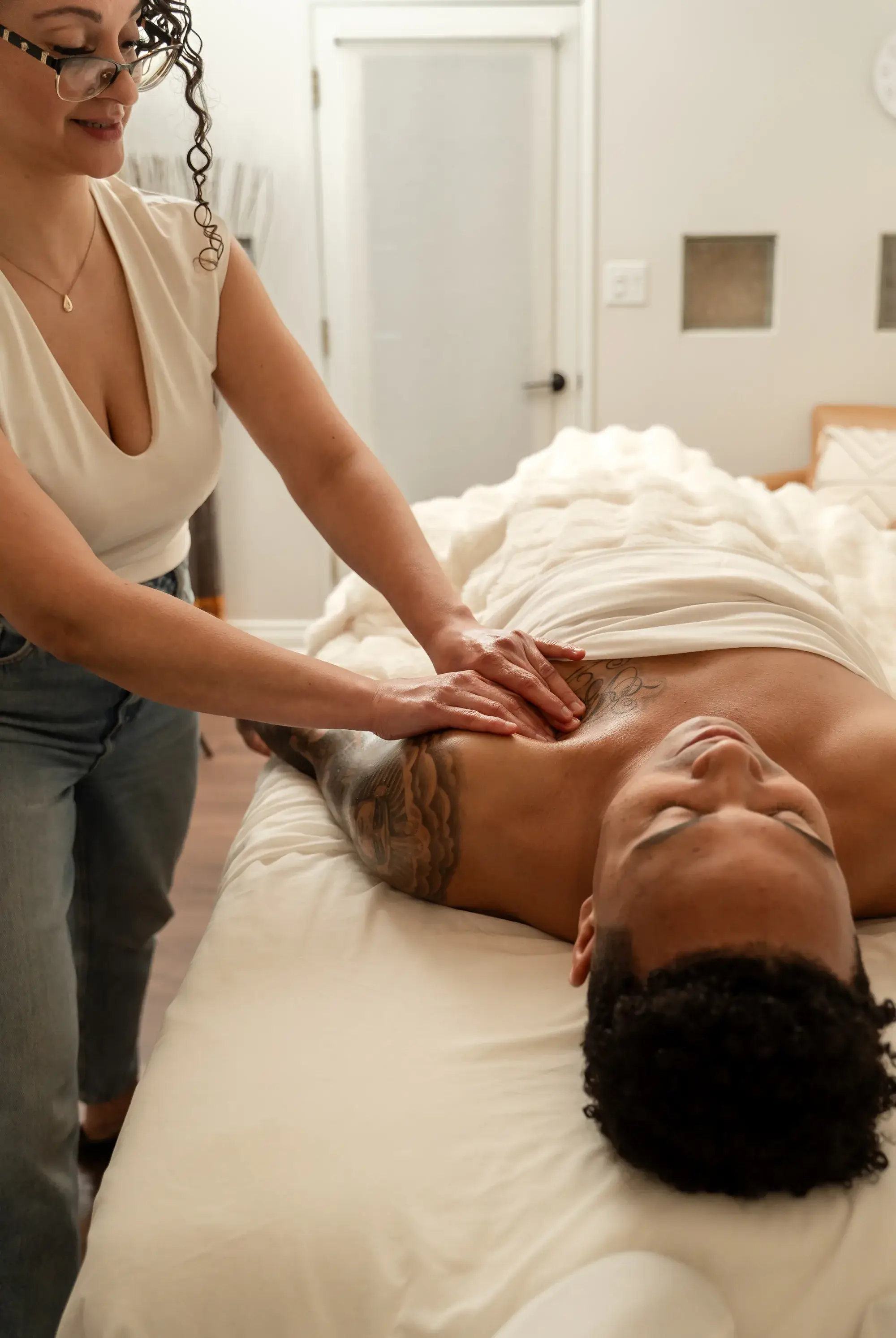
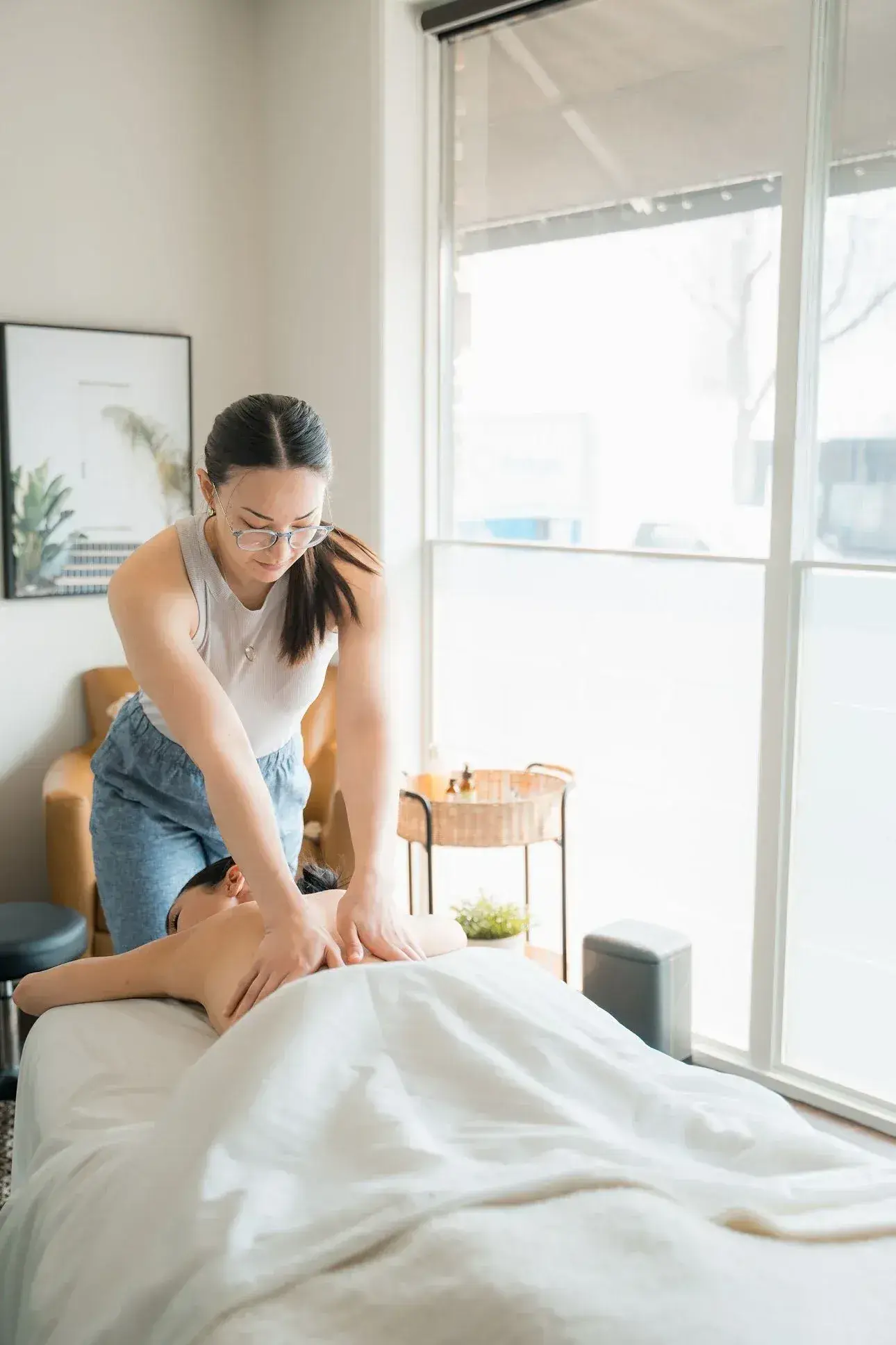
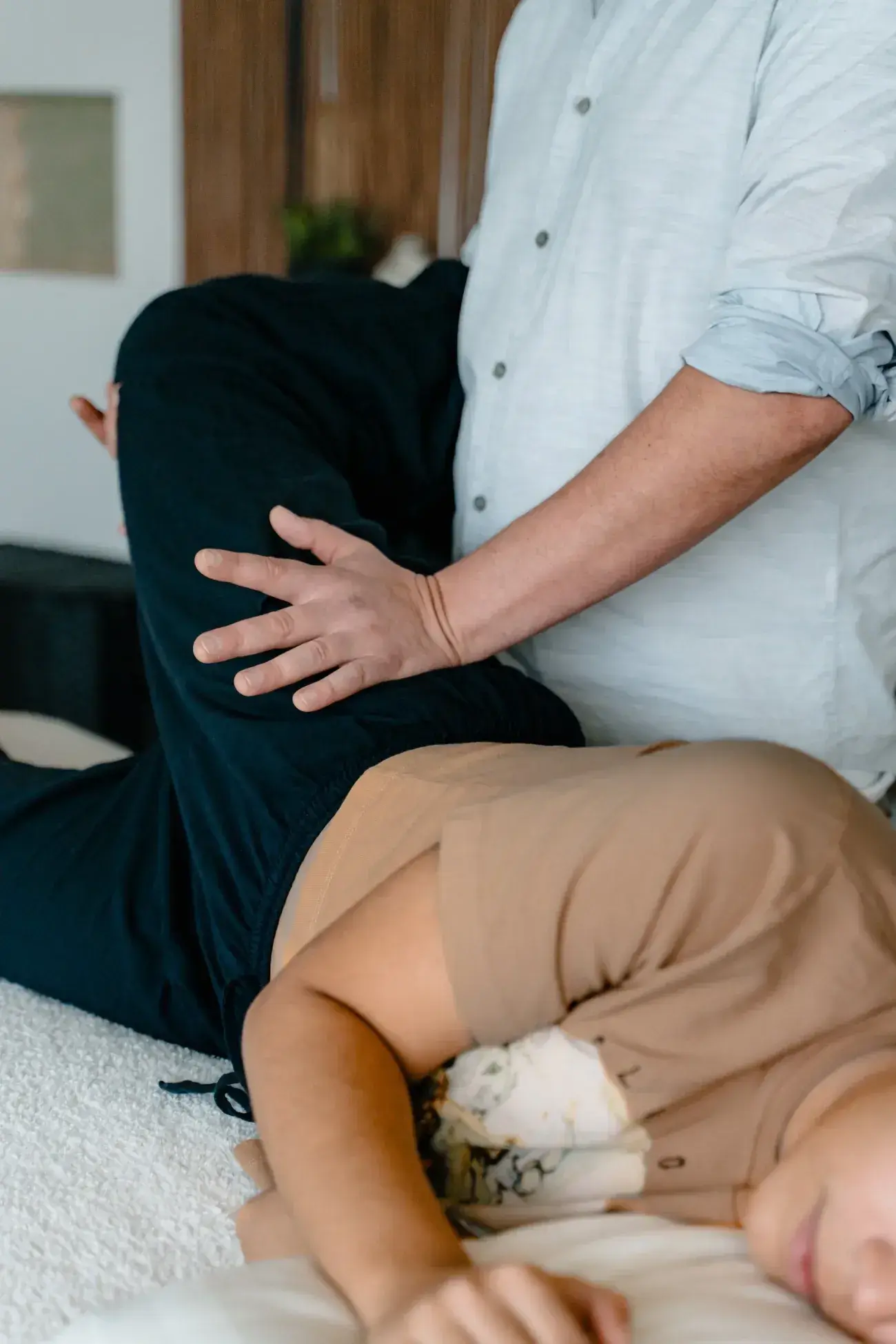
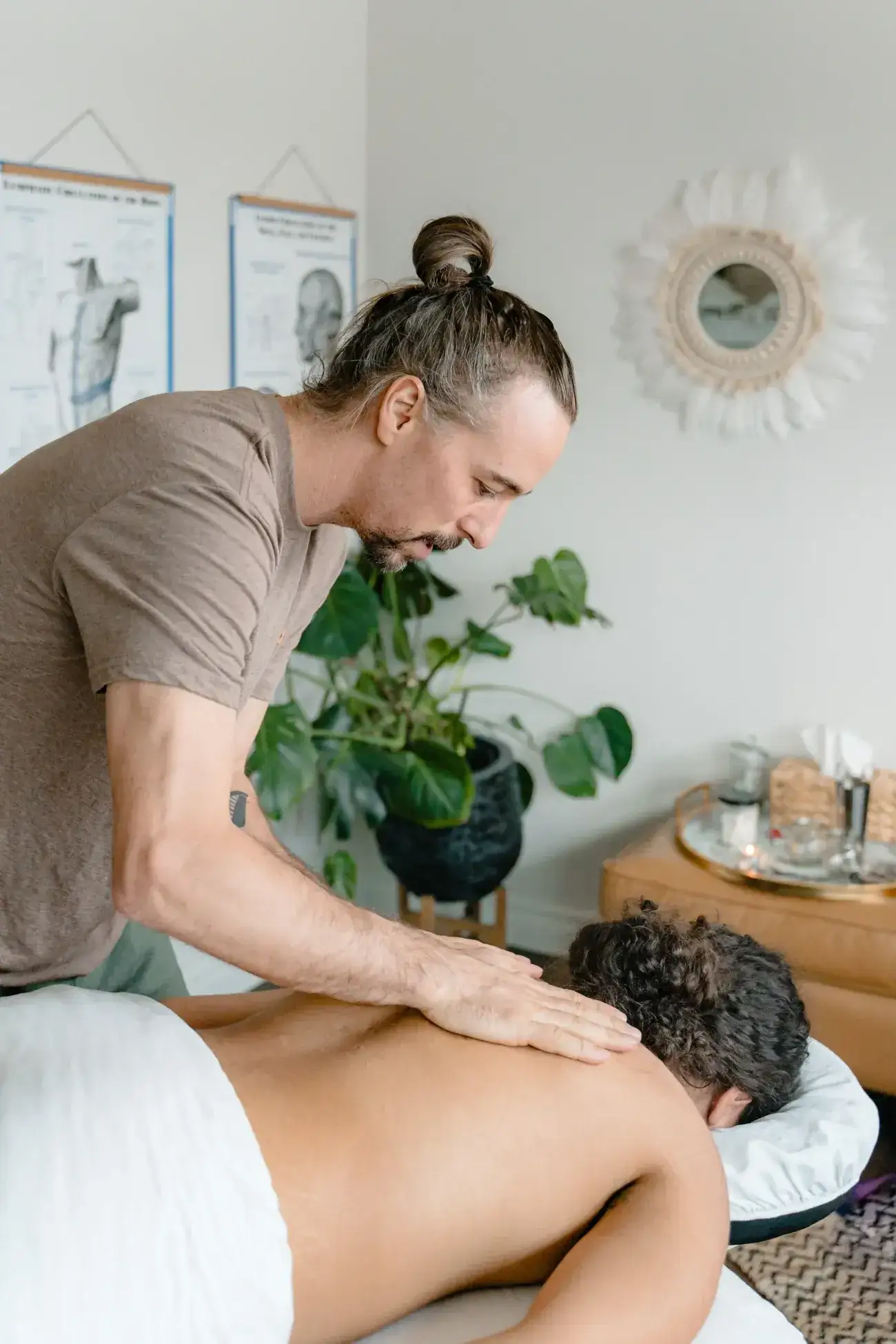
Massage for spondylolisthesis can ease the tight hamstrings, glutes and low back muscles that often come with a slipped vertebra, as long as positions and pressure are adapted. It supports, rather than replaces, the strengthening program a physiotherapist or physician sets. Expect your therapist to avoid arching your back or pressing heavily over the slipped level, and to use a pillow under your stomach or a side-lying position instead.
What spondylolisthesis is, and what it is not
Spondylolisthesis means one vertebra has slipped forward over the one below it. It can happen anywhere in the spine but is most common in the lower back. The NHS is clear that it is not the same as a slipped disc, where the cushioning tissue between vertebrae pushes out.
There are a few ways it comes about:
- With age. The bones and joints of the spine can weaken over time.
- In families. It can run in families.
- From a stress fracture. A tiny crack in a thin bridge of bone at the back of the vertebra, called the pars, is more common in young athletes and gymnasts. The crack itself is called spondylolysis, and a forward slip is a common complication of it.
A narrative review estimates spondylolysis affects about 6 percent of the population and usually begins in childhood or adolescence, and that most people with it have no symptoms at all.
The pattern most people describe
Spondylolisthesis does not always cause symptoms, and in adults it is often found by chance. The same review notes that in an adult, the finding is usually incidental and not likely to be a direct source of pain unless the segment is unstable. Progression of the slip is usually small, is most likely in young people, and significant progression in adults is rare.
When it does cause symptoms, the NHS describes:
- low back pain that is worse when standing or walking and eases when sitting or bending forward
- pain spreading into the buttocks or thighs
- tight hamstrings
- sciatica: pain, numbness or tingling running down one leg
That pattern, easing when you bend forward, matters for how a massage is set up, and we come back to it below. If sciatica is the main problem, our sciatica page covers it in more depth.
Treatment that leads: activity changes and strength
Physiotherapy-led strengthening is the foundation; massage sits beside it. The NHS lists the common treatments as:
- avoiding activities that make symptoms worse, such as bending, lifting, athletics and gymnastics
- anti-inflammatory or prescription painkillers
- steroid injections to relieve leg pain, numbness and tingling
- physiotherapy to strengthen and stretch the muscles of the lower back, abdomen and legs
Surgery, either spinal fusion or a decompression to free compressed nerves, is considered when these do not work.
A systematic review of non-surgical care found improvement with bracing, with range-of-motion work and flexion-focused strengthening, and with exercises targeting specific abdominal and lumbar muscles. The authors were frank that studies were few and varied, so no single program is proven best.
For young athletes with a pars fracture, the outlook with conservative care is encouraging. A review of 14 studies found that 92 percent of athletes managed with bracing, sport modification and physiotherapy returned to sport, at a mean of 4.6 months. Those who needed surgery returned at a mean of 6.8 months.
How we adapt massage for a slipped vertebra
Our role is to support and adapt: we ease the muscles that tighten around the problem without loading the segment itself. In practice that means:
- No arching. Because symptoms typically ease with bending forward, we avoid positions and techniques that push the low back into extension. Face down, a pillow under the stomach keeps the lower back from sagging. Side-lying is often more comfortable still.
- No heavy pressure over the slipped level. Work over the spine itself stays light. Firmer pressure goes to the muscles to either side, the hips and the legs.
- Hamstrings and glutes get time. Tight hamstrings are one of the listed symptoms, so slow, sustained work through the back of the thighs is usually part of the session. Our hamstring strain page covers that region if you have also pulled one.
- Your exercise plan stays central. Bring the exercises your physiotherapist set; feeling looser can make them easier to do consistently.
- After fusion surgery, follow your surgeon’s timeline and tell your therapist the levels fused and the date.
Booking an adapted massage at Renu
Any of our Registered Massage Therapists can adapt a session for spondylolisthesis. A 45-minute massage ($100) suits a focused low back, hip and hamstring session; 60 minutes ($120) gives time to address the upper back and shoulders as well. When you book through Jane, add a note about your diagnosis and the level involved so your therapist can plan positions before you arrive.
It also helps to tell your therapist what a bad day looks like for you: whether standing in a line-up, walking the dog or getting out of the car is what sets the pain off. Those details guide how long you stay in each position and how much pressure goes into the legs versus the back. If you leave a session feeling more stiff or sore than when you arrived, mention it at your next visit so the plan can change.
We are on 19 Street NW in West Hillhurst, open seven days, with free street parking nearby.
When to see your doctor first
See your family doctor before booking, or if things change, when you have:
- low back pain, or pain in the buttocks or thighs, that has not gone away after three to four weeks
- pain, numbness or tingling down one leg lasting more than three or four weeks
- difficulty walking or standing up straight
- a high temperature, night sweats or weight loss you cannot explain alongside the pain
Call 911 or go to an emergency department if you develop pain, tingling, weakness or numbness in both legs, loss of feeling around the genitals or anus, or new problems controlling your bladder or bowels.
Questions people ask
Can massage put my vertebra back in place?
No. Massage works on soft tissue and does not move a vertebra that has slipped forward. Treatment that changes the slip itself, when it is needed, is surgical, such as spinal fusion.
Should I lie on my stomach for a massage with spondylolisthesis?
Many people are comfortable face down with a pillow under the stomach, which keeps the low back from sagging into an arch. If that still hurts, side-lying works well for the back, hips and hamstrings, so say so at the start.
My teenager has a pars stress fracture. Can they have a massage?
Check with the doctor managing the fracture first, especially if they are in a brace or on a break from sport. Gentle work on tight hamstrings and hips may be fine, but the priority is the healing plan, which in athletes usually involves bracing, sport changes and physiotherapy.
Is spondylolisthesis the same as a slipped disc?
No. A slipped disc is the soft tissue between the vertebrae pushing out, while spondylolisthesis is the bone itself slipping forward. Both can irritate a nerve and cause sciatica, which is why they are often confused.
Sources
- NHS: Spondylolisthesis
- Haun and Kettner (2005), Journal of Chiropractic Medicine: Spondylolysis and spondylolisthesis, a narrative review
- Grazina et al. (2019), Physical Therapy in Sport: Return to play after conservative and surgical treatment in athletes with spondylolysis
- Garet et al. (2013), Sports Health: Nonoperative treatment in lumbar spondylolysis and spondylolisthesis, a systematic review
- NHS: Back pain
Page reviewed October 5, 2026. This page is education, not a diagnosis. For your own situation, talk to your doctor, surgeon or care team, or ask us.
Keep reading
Related pages