

Massage for facet joint pain
Massage for facet joint pain eases the guarding muscles around stiff spinal joints and makes moving easier. It supports, but does not replace, medical care.
By The Renu lymphatic and massage team · 5 min read
Massage for facet joint pain can ease the muscle guarding around stiff segments of the low back or neck and make it easier to stay active, but it does not treat the joint itself. Facet joints are a real but hard-to-confirm source of pain: no hands-on test can identify them, and only anaesthetic nerve blocks come close. Use massage alongside the plan from your physician or physiotherapist, whether that is exercise, injections or radiofrequency treatment.
What facet joints are, and how often they hurt
Facet joints, also called zygapophysial joints, are the small paired joints at the back of each spinal segment. They guide how the vertebrae glide when you bend, twist and lean back. Like any joint, they can become irritated or worn.
How often are they the real source of pain? The answer differs between the low back and the neck:
- Low back. A review in Anesthesiology puts lumbar facet joint pain at up to 15 percent of people with chronic low back pain. It usually comes on gradually, and predisposing factors include a forward-slipped vertebra (spondylolisthesis), disc degeneration and older age.
- Neck after whiplash. In an Australian study of 68 people with neck pain lasting more than three months after a whiplash injury, double-blind, placebo-controlled anaesthetic blocks identified the facet joints as the source in 60 percent. Among those whose main complaint was headache, the C2–C3 joint was the source in half.
So facet pain is common after whiplash and less common, though still real, in long-standing low back pain. Our pages on whiplash and degenerative disc disease cover the neighbouring causes.
Why nobody can confirm it by pressing on your back
You may have been told you have “facet syndrome” after an examination. The evidence says hands-on and history-based tests cannot make that call.
A systematic review in the European Spine Journal looked at every test clinicians use to decide whether low back pain comes from the disc, the sacroiliac joint or the facet joints. Some MRI features shifted the odds for the disc, and a cluster of manual tests did so for the sacroiliac joint. None of the tests for facet joint pain was informative.
The method accepted for diagnosis is a low-volume anaesthetic injection into the joint or onto the small medial branch nerves that supply it. If the pain goes away for the expected time, the joint is likely involved. Even this has a high false-positive rate, which is why careful studies repeat the block. In one trial, people needed three separate positive blocks before they were eligible.
For you, this means two things. A massage therapist cannot diagnose or rule out facet pain by feel, and neither should anyone else without blocks. And if your pain fits the pattern, the person who can confirm it is a physician who performs these procedures.
Medical treatment and where the evidence sits
The two standard medical treatments are steroid injections into the joint and radiofrequency denervation, which uses heat to interrupt the medial branch nerves. The Anesthesiology review describes the evidence for both as conflicting.
One small, well-designed trial is worth knowing about. In Sweden, 40 people with chronic low back pain who had three positive facet blocks were randomly assigned to radiofrequency treatment or a sham procedure, with neither patients nor assessors knowing which. At six months the treated group had less back and leg pain, better movement and better quality of life than the sham group, and the only complication was short-lived pain after the procedure. The authors’ conclusion was careful: it works in carefully selected patients.
The NHS lists the same procedure, described as sealing off some of the nerves in your back, as an option only for long-term lower back pain. It also lists manual therapy, in which a trained therapist massages and moves the muscles and joints, alongside exercise and physiotherapy.
Where massage fits
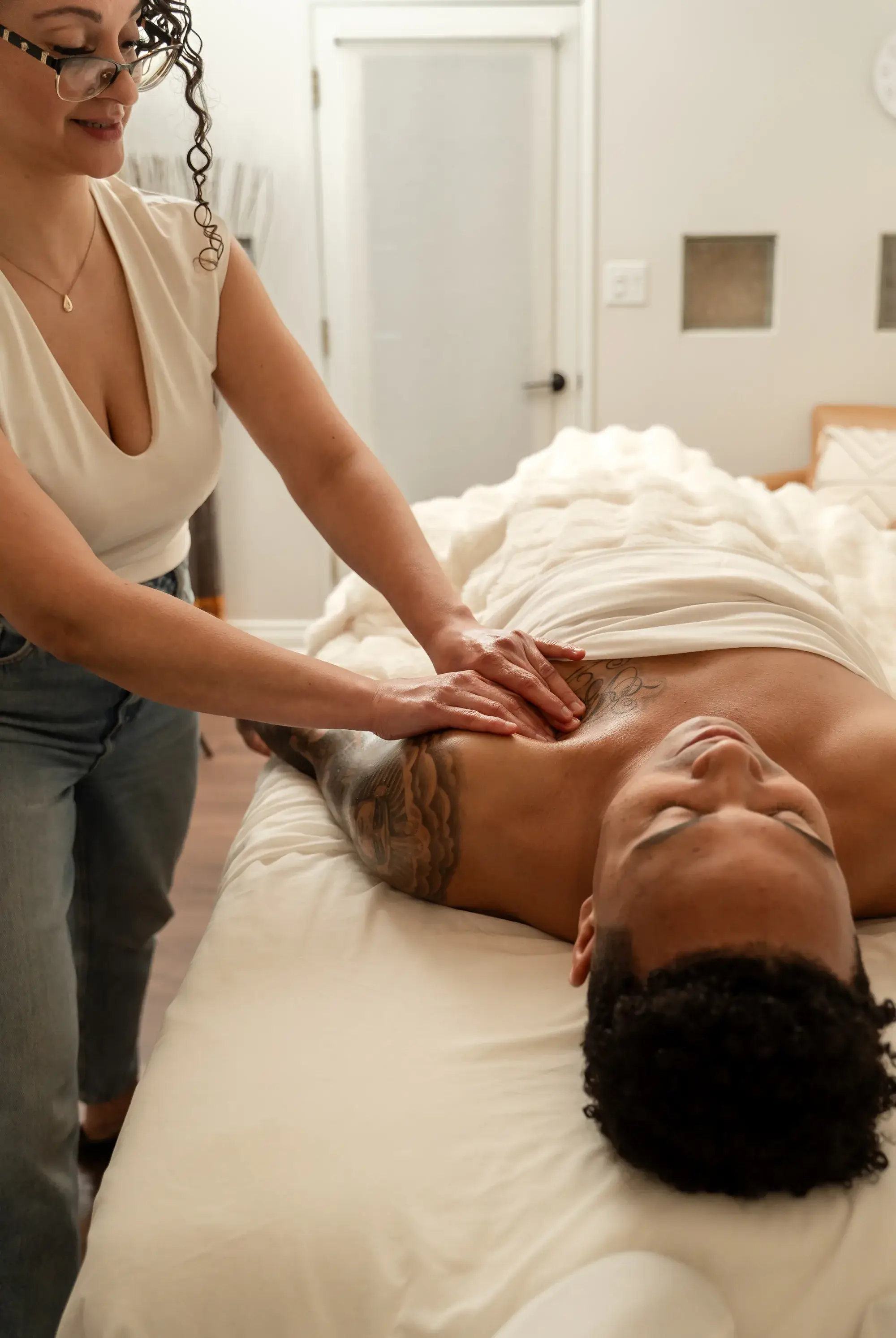
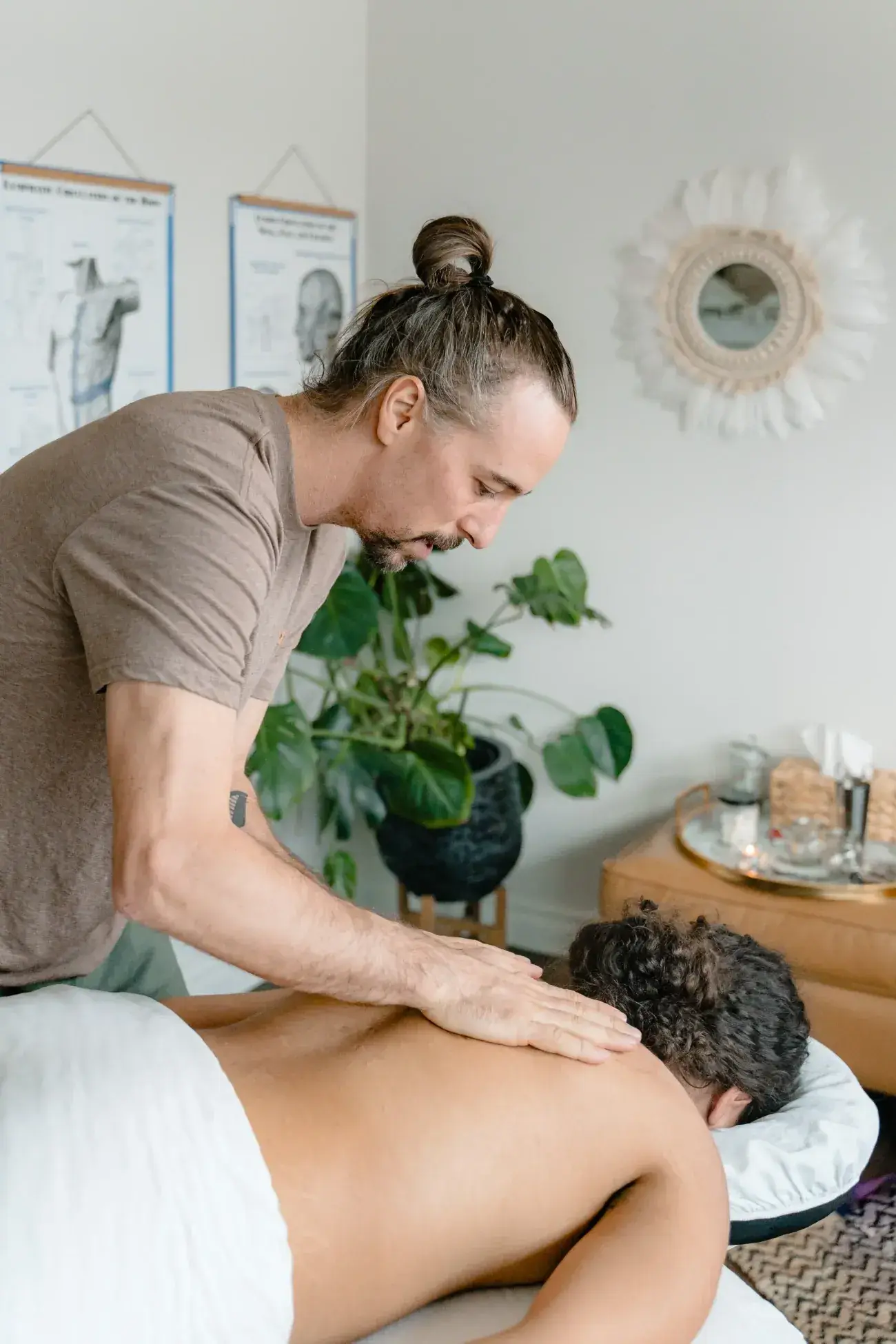
Massage supports facet pain care; it does not fix the joint. Here is what that looks like in practice:
- Easing guarding. Muscles beside a painful segment often tighten protectively. Slow, broad pressure through the back, hips or neck can ease that tension so movement feels less stiff.
- Comfort that makes activity possible. The NHS advice for back pain is to stay active and keep up daily activities. Feeling looser for a day or two can make it easier to start the exercise plan your physiotherapist set.
- Position and pressure chosen around your pain. Many people with facet irritation dislike lying flat on the stomach or arching the back. Your therapist can use a pillow under your hips or work with you on your side, and keeps direct pressure off any spot that sharpens your pain.
- After procedures. If you have had an injection or radiofrequency treatment, follow the timing your physician gives you and tell your therapist the date and site.
For a stiff neck, a session can include upper back work and gentle neck release. Our page on mechanical neck pain has more on that region.
Massage for facet pain at Renu
Book a 45-minute massage ($100) if your pain is limited to one region, or 60 minutes ($120) if you want the back, hips and neck covered in one visit. Tell us what your physician or physiotherapist has said, which positions are comfortable and what movements bring the pain on, and your Registered Massage Therapist will build the session from that.
For neck and upper-body pain, another option is RAPID NeuroFascial Reset with Monica (upper body, 30 minutes, $85), which combines pressure with active movement. Book either through Jane online. We are in West Hillhurst and open seven days, with evening appointments on weekdays.
Back and neck warning signs that come before massage
Facet pain itself is not dangerous, but back and neck pain can occasionally signal something that needs urgent care. Go to an emergency department or call 911 if any of these appear:
- weakness, numbness, tingling or pain affecting both legs
- loss of feeling around the genitals or anus
- new difficulty controlling your bladder or bowels
- chest pain with your back pain
- pain that started after a serious accident such as a car crash
See your family doctor soon if the pain is getting worse quickly, you feel feverish or unwell, you have lost weight without trying, the pain is worse at night or does not ease with rest, or it has not improved after a few weeks of self-care.
Questions people ask
My MRI report mentions facet arthropathy. Is that what is causing my pain?
Possibly, but not certainly. Wear in the facet joints is a common imaging finding, and a review of diagnostic tests found that none of the clinical tests for facet pain were informative. Your physician decides whether it is worth confirming with a diagnostic block.
Can I have a massage after a facet injection or radiofrequency treatment?
Ask the clinic that did the procedure how long to wait and whether to avoid pressure over the needle sites. In the radiofrequency trial on this page, the only complication was short-lived pain after the procedure, so most people are back to normal activity fairly quickly; your physician will give you the timing.
Is facet joint pain the same as a pinched nerve?
No. Facet pain comes from the small joints at the back of the spine, while a pinched nerve (radiculopathy or sciatica) produces pain, tingling or weakness that travels along a nerve into an arm or leg. The two can exist together, which is one reason a proper assessment matters.
Sources
- Cohen and Raja (2007), Anesthesiology: Pathogenesis, diagnosis and treatment of lumbar zygapophysial (facet) joint pain
- Hancock et al. (2007), European Spine Journal: Systematic review of tests to identify the disc, SIJ or facet joint as the source of low back pain
- Lord et al. (1996), Spine: Chronic cervical zygapophysial joint pain after whiplash, a placebo-controlled prevalence study
- Nath et al. (2008), Spine: Percutaneous lumbar facet joint neurotomy using radiofrequency current, a randomized double-blind trial
- NHS: Back pain
Page reviewed October 5, 2026. This page is education, not a diagnosis. For your own situation, talk to your doctor, surgeon or care team, or ask us.
Keep reading
Related pages