
Massage for musicians in Calgary
Massage for musicians in Calgary: neck, shoulder, arm and jaw pain from practice and performance, TMJ massage for wind and string players, and concert timing.
By The Renu lymphatic and massage team · 5 min read
Massage can ease the neck, shoulder, arm and jaw tension that hours of practice and performance build up, and for jaw pain a TMJ massage, which includes gloved intra-oral work, reaches muscles an outside massage cannot. String players usually need the neck and shoulders treated; wind players often need the jaw. Book a few days before a performance rather than the day before, and see a dentist or doctor first if your jaw locks or you cannot open your mouth fully.
Massage can ease the neck, shoulder, arm and jaw tension that practice and performance build up, and for jaw pain, TMJ massage reaches muscles an ordinary massage cannot. Which one you need depends a lot on your instrument: string players usually carry it in the neck and shoulders, wind players more often in the jaw. Time it a few days before a performance, and see a dentist or doctor first if your jaw locks.
Playing-related pain is common, and it is not a sign of bad technique
Pain from playing is common enough to have its own name: playing-related musculoskeletal disorders. A Canadian review in the CMAJ found prevalence between 39% and 87% in adult classical musicians and between 34% and 62% in secondary-school music students. The author noted that rates in musicians are comparable to work-related disorders in other occupations, which is a useful way to think about it: playing is physical work.
Professional players feel it most. In a survey of 408 German orchestral musicians:
- 89.5% had current or past playing-related pain;
- 62.7% had pain in the previous three months;
- about 43% had pain in more than five body regions, violinists in particular;
- the neck was the most common pain region in every instrument group.
Female musicians and those with stage fright were more likely to report pain.
Your instrument decides where it hurts
Instrument groups strain different areas, which shapes what we treat.
| Instrument group | Where the research points |
|---|---|
| Violin and viola | Neck and shoulder pain |
| Woodwind | Jaw (temporomandibular) pain |
| All groups | Neck as the most common pain region |
A survey of 1,470 Dutch ensemble musicians found that 18.3% reported jaw pain consistent with temporomandibular disorder (TMD) and 52.5% reported neck and shoulder pain. Jaw pain was associated with playing a woodwind instrument, and neck and shoulder pain with violin or viola. Oral habits such as clenching were a risk factor across the board. The authors did not find playing itself to be the main cause of mechanical jaw-joint problems, such as clicking or locking.
Jaw pain in wind and string players
Jaw symptoms are common in musicians of all kinds. A 2021 meta-analysis of 13 studies estimated TMD prevalence at about 53% in wind players and about 54% in string players, and found that daily and longer playing time explained much of the variation between studies.
Mouthpiece pressure seems to matter more than simply playing a wind instrument. In a study of 72 non-professional wind players and 66 non-players, the rate of high TMD risk was not significantly different between the two groups (29.2% versus 21.2%). Within the players, though, feeling pressure from the mouthpiece was a significant factor, with an odds ratio of 3.31.
What TMJ massage involves
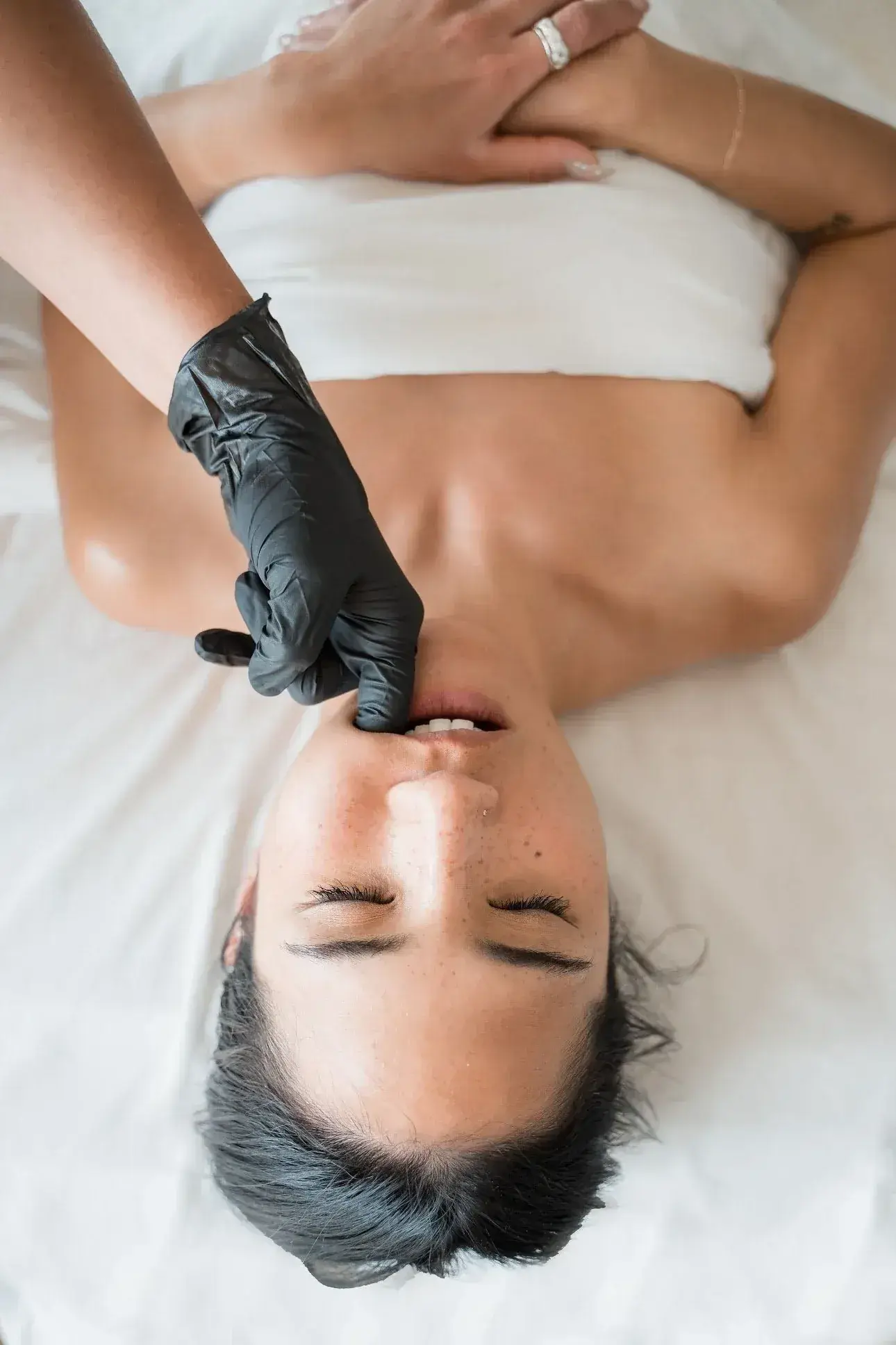
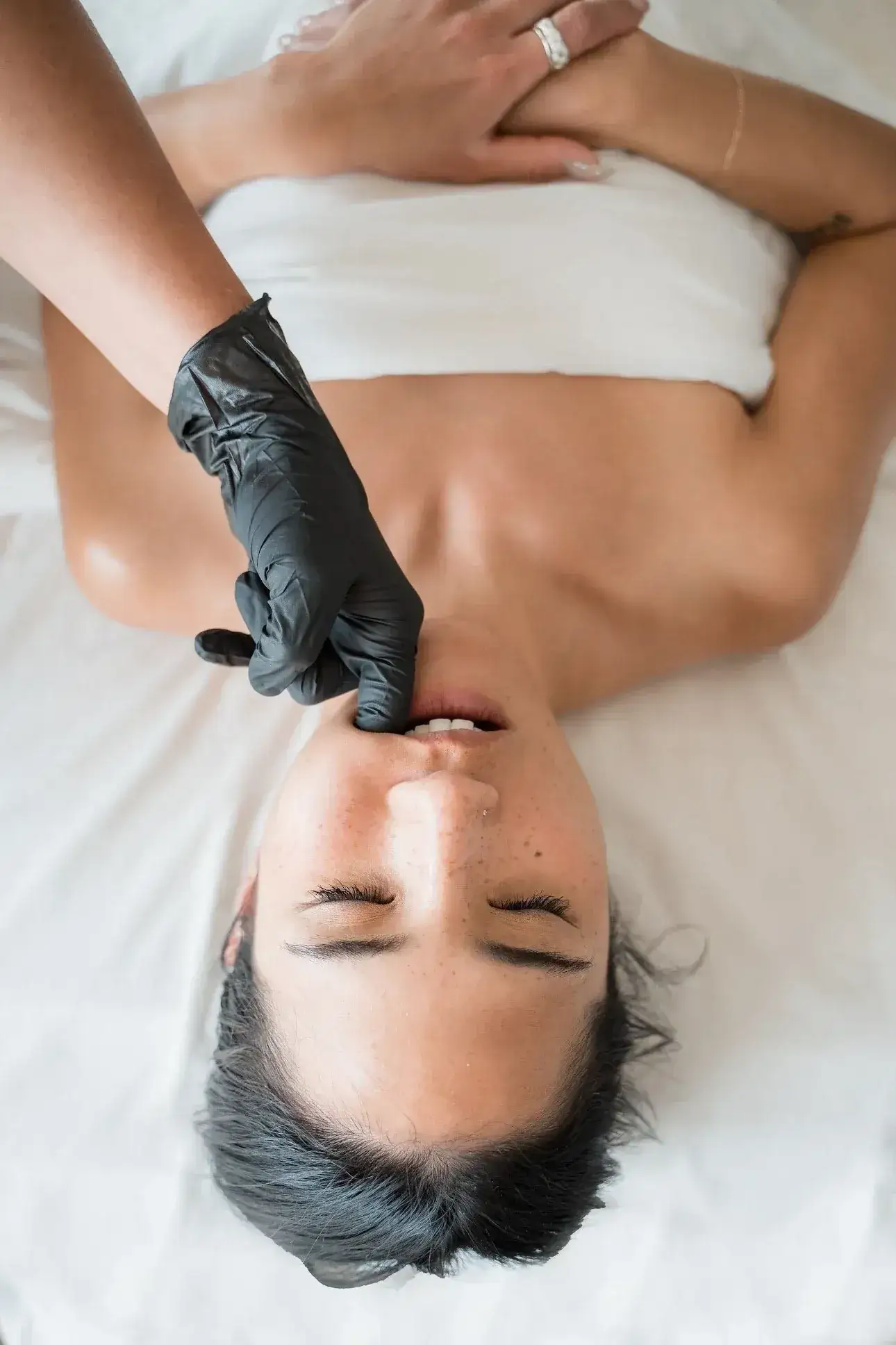
At Renu, TMJ massage is provided by Sasha Bernard, a Registered Massage Therapist trained in TMJ intra-oral work. A 60-minute session ($120) works the jaw, neck and facial muscles. The masseter and temporalis are treated through the skin, and with gloved hands inside the mouth Sasha reaches the pterygoid muscles that external work cannot. Neck tension is often part of the same pattern. Our page on why TMJ massage goes inside the mouth explains the reasoning, and can neck tension cause jaw pain explains the link between the two.
Habits that protect you between sessions
Massage is one part of looking after a playing body. A case-control study of Ontario professional and university musicians found that warming up before practice and taking breaks during practice sessions were protective against playing-related disorders, while female and string players were at higher risk.
Practical habits to build in:
- warm up before long sessions, not just before performances;
- take short breaks during practice rather than one long stretch;
- notice clenching off the instrument, since oral habits were a risk factor for every complaint in the Dutch study;
- for jaw pain, the NHS suggests soft food, heat or ice and gentle massage of the jaw muscles during flares.
Timing massage around rehearsals and concerts
Plan treatment around your performance calendar. Our general guidance:
- During a heavy rehearsal period: regular sessions while pain is active, ideally on lighter practice days.
- A few days before a performance: a familiar session you know you respond well to.
- The day before or of a performance: nothing new and nothing deep. Save a first intra-oral session for a week with no performance in it.
- After a run of shows: a longer session to work through what the run left behind.
When to see a dentist or doctor first
The NHS advises urgent medical advice for jaw problems when you:
- cannot eat or drink;
- have difficulty opening your mouth fully, or your jaw locks;
- have frequent, severe headaches, or pain and tenderness at the side of the head or scalp;
- have vision problems such as double vision.
Numbness or tingling in the hands from playing should also be assessed before massage.
Booking at Renu
You can book online through Jane. We are open until 8:30 pm on weekdays and from 10:00 am to 5:00 pm on weekends, which helps around evening rehearsals.
- TMJ massage, 60 min ($120): jaw, inside and out, plus neck and shoulders, with Sasha.
- RAPID NeuroFascial Reset (upper body), 30 min ($85): with Monica Von Gaza, for one arm or shoulder that flares with playing.
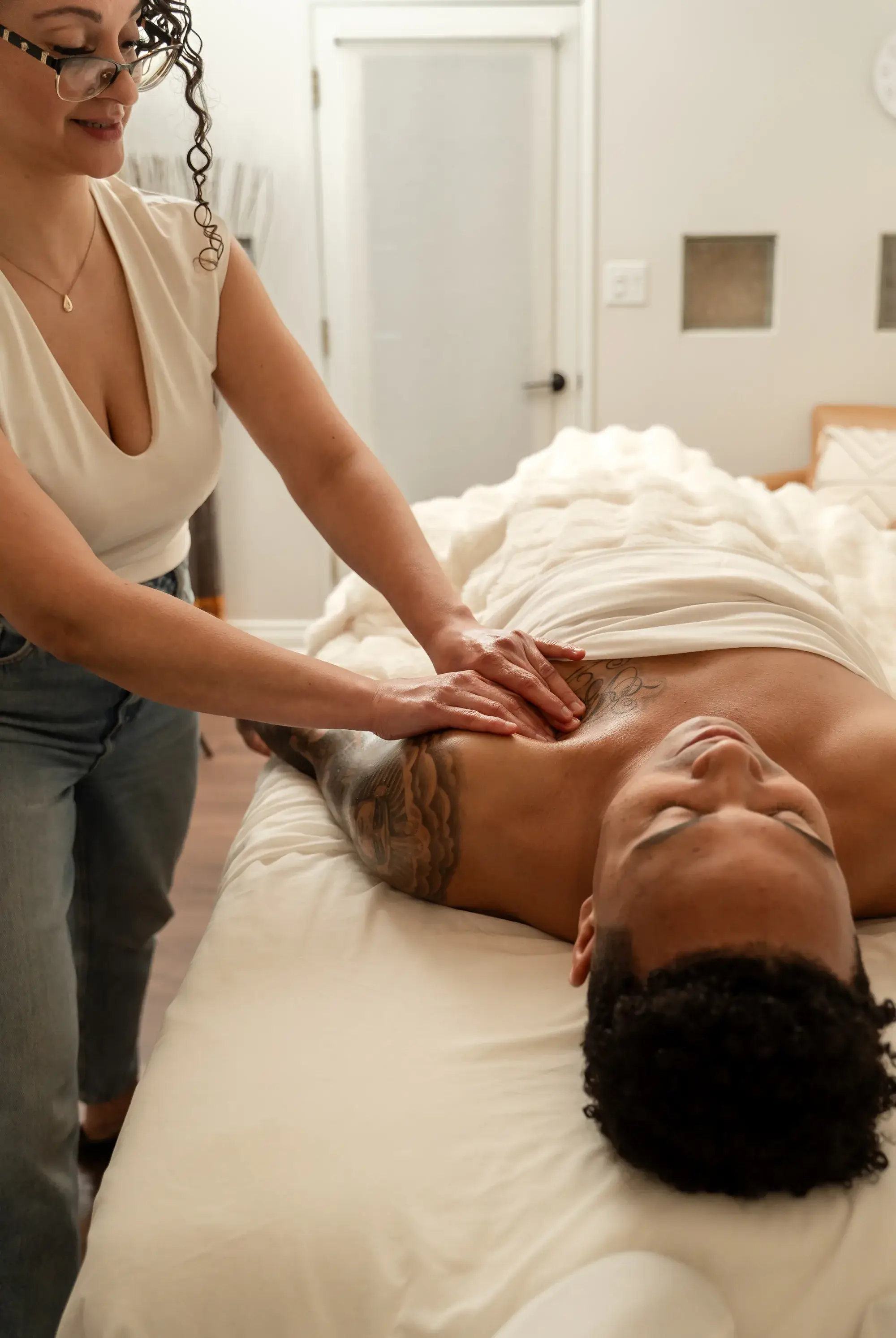
- Massage, 60 min ($120): neck, shoulders, back and arms, with any of our Registered Massage Therapists; see massage therapy.
Read more about the condition itself on our temporomandibular disorders page, or about our TMJ massage service.
Questions people ask
Is TMJ massage safe for a brass or woodwind player?
Yes, for most players. Tell your therapist what you play and when your next performance is, because it can feel unusual the first time and you want to know how your jaw responds well before you have to play.
How close to a concert can I have a massage?
We suggest leaving at least a few days, and not trying a new treatment or a deep session right before a performance. A familiar, lighter session closer to the date is fine if you know how your body responds.
Can massage help a violinist's neck and shoulder pain?
Massage can ease the muscles that hold the instrument, mainly the neck, upper shoulder and the side of the jaw. Practice breaks and warm-ups matter too; research in musicians links both with fewer playing-related problems.
Do I need a dentist before booking TMJ massage?
Not always. If your jaw locks, you cannot open your mouth fully or you have severe headaches, see a dentist or doctor first, because those can need other treatment.
Sources
- CMAJ (1998): Playing-related musculoskeletal disorders in musicians, a systematic review of incidence and prevalence
- Clinical Rheumatology (2015): Playing-related musculoskeletal pain in professional orchestral musicians in Germany
- American Journal of Industrial Medicine (1997): Musicians' playing-related musculoskeletal disorders, an examination of risk factors
- Journal of Oral Rehabilitation (2020): Temporomandibular disorders, neck and shoulder pain and headache among musicians
- Journal of Oral Rehabilitation (2021): Prevalence of temporomandibular disorders in musicians, systematic review and meta-analysis
- Open Dentistry Journal (2016): Wind instrument playing habits and symptoms of temporomandibular disorders
- NHS: Temporomandibular disorder (TMD)
Page reviewed October 5, 2026. This page is education, not a diagnosis. For your own situation, talk to your doctor, surgeon or care team, or ask us.
Keep reading
Related pages