
TMJ massage vs physiotherapy for jaw pain
TMJ massage vs physiotherapy for jaw pain: a physio assesses and coaches exercise, an RMT treats tight jaw muscles. Both are conservative; many use both.
By The Renu lymphatic and massage team · 5 min read
TMJ massage and physiotherapy are both conservative, reversible ways to treat jaw pain, and the research supports hands-on manual therapy from either for short-term relief of pain and stiffness. A physiotherapist is a regulated Alberta clinician who can assess the joint, prescribe exercise and add other tools. A massage therapist trained in intra-oral work spends the session on the tight chewing muscles themselves. If your diagnosis is unclear or your jaw locks, start with an assessment; if clenching muscles are the main problem, TMJ massage is a direct way in.
If someone has told you to try “manual therapy” for your jaw, both a physiotherapist and a massage therapist with TMJ training can offer it. They overlap more than people expect. The real differences are in who assesses you, what else happens in the room, and how much of the hour goes to the muscles that clench.
Both are the conservative first step
Either choice fits what the US National Institute of Dental and Craniofacial Research (NIDCR) recommends: start with simple, reversible care and avoid treatments that permanently change the jaw joints, teeth or bite, or involve surgery. NIDCR also notes that TMD signs and symptoms go away without treatment for many people, and that manual therapy, in which a therapist uses the hands to stretch the soft tissues and muscles around the joint, can help improve function and relieve pain.
So you are not choosing between a safe option and a risky one. You are choosing which kind of hands-on care suits your jaw right now.
What the research says about each
The evidence is encouraging but short term, and it does not crown a winner.
- Physiotherapy. A 2026 systematic review of 51 randomized trials published between 2020 and 2025 found that physiotherapy, particularly manual therapy, therapeutic exercise and laser therapy, was generally associated with less pain and better jaw mobility and function. It beat no treatment or placebo in most studies and was at least comparable to other conservative or drug treatments. The authors described the benefit as short term and the studies as small and varied.
- Manual therapy across professions. Another 2026 review pooled 18 trials of manual therapy given by different clinicians. Manual therapy was associated with less pain and wider maximum mouth opening, again mostly in the short term and with limited certainty. Physiotherapists in rehabilitation settings showed the most consistent results, and intra-oral techniques were part of the picture in some countries.
- Hands-on work versus a splint. A 2024 meta-analysis of nine trials (426 patients) found manual therapy more effective than occlusal splints for disability and mouth opening, with no difference for pain. Splints did better for pain in people whose problem was mainly muscular.
The fair reading: manual therapy helps many people in the short term, physiotherapists have the most studied track record, and no trial has shown that one profession’s hands work better than another’s for every jaw.
Scope: what each practitioner can do
The bigger difference is what surrounds the hands-on work.
| Physiotherapist | Massage therapist (TMJ massage) | |
|---|---|---|
| Regulation in Alberta | Regulated, College of Physiotherapists of Alberta | Not a regulated health profession; RMTs belong to professional associations |
| Assessment | Assesses the joint and how it moves | Takes a health history and works within massage scope |
| Main tools | Manual therapy, exercise prescription, other modalities | Massage of the jaw, face and neck, including intra-oral work |
| Extras | Needling or spinal manipulation only with added authorization | Muscle-focused time for the whole session |
| Best fit | Unclear diagnosis, limited opening, need for an exercise plan | Clenching, tight and sore chewing muscles, tension that feeds headaches |
The College of Physiotherapists of Alberta lists needle acupuncture, intramuscular stimulation and spinal manipulation among activities a physiotherapist may perform only with additional authorization, so not every physio offers them. Massage therapy is not on Alberta’s list of regulated health professions, which is why the RMT title comes from professional associations rather than a college.
How TMJ massage works at Renu
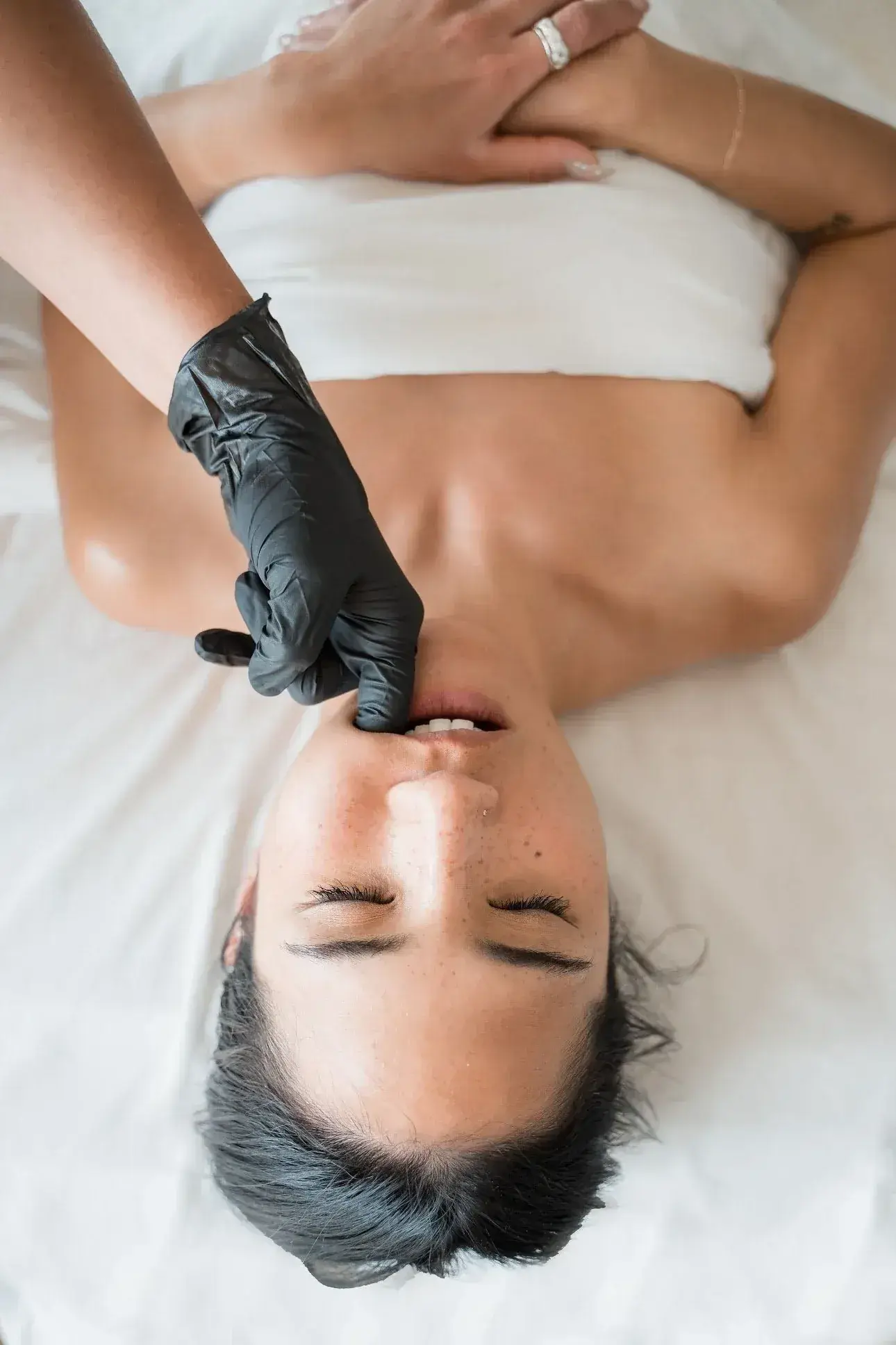
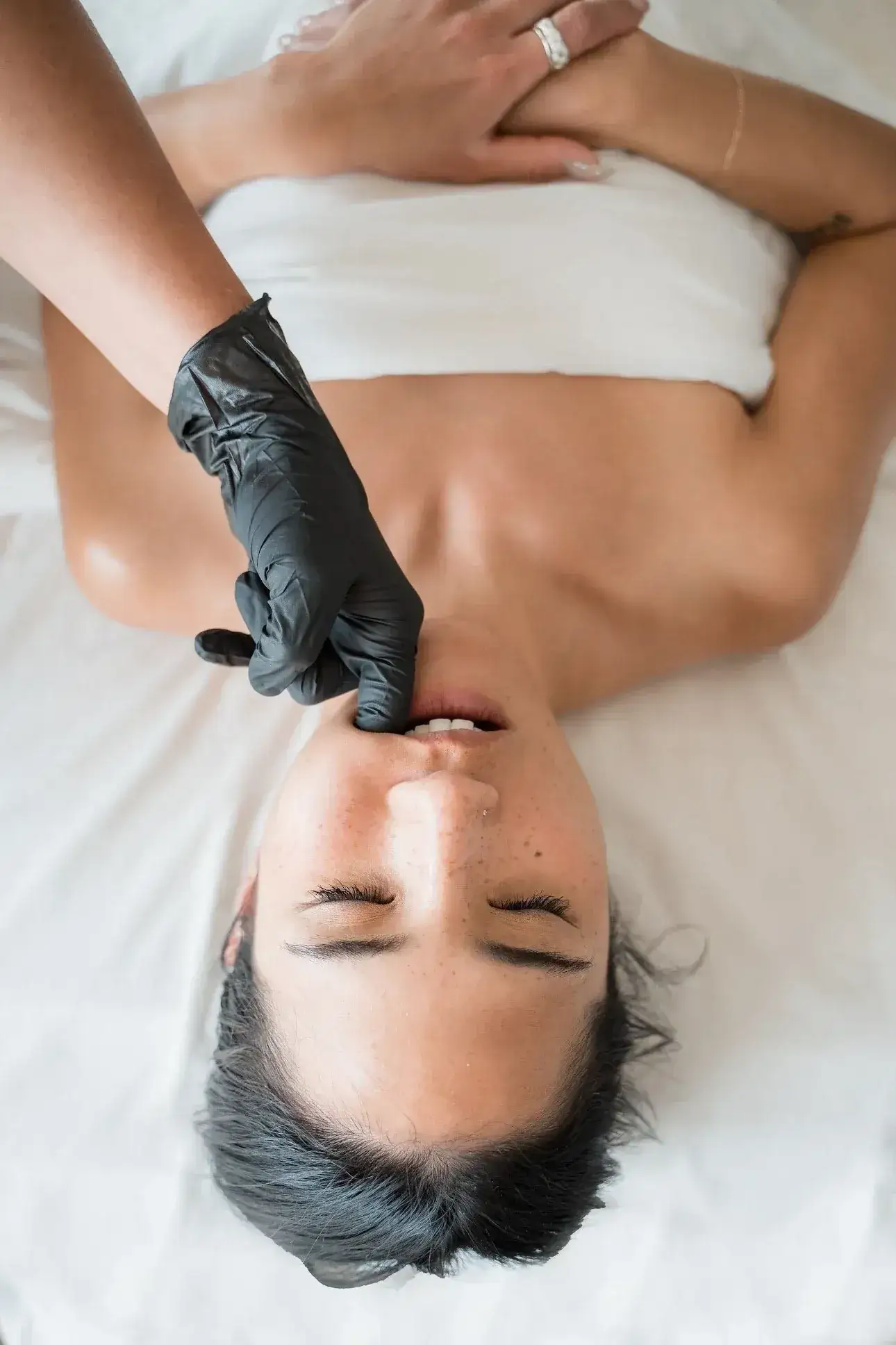
At Renu, TMJ massage is a 60-minute session for $120 with Sasha Bernard, RMT, who is trained in intra-oral work. She treats the masseter, temporalis and neck from the outside, then, with a gloved hand, reaches the medial and lateral pterygoid muscles from inside the mouth. Those muscles hold much of the joint’s tension and cannot be reached well through the skin. Our page on why TMJ massage goes inside the mouth explains the anatomy, and intra-oral TMJ release walks through the technique.
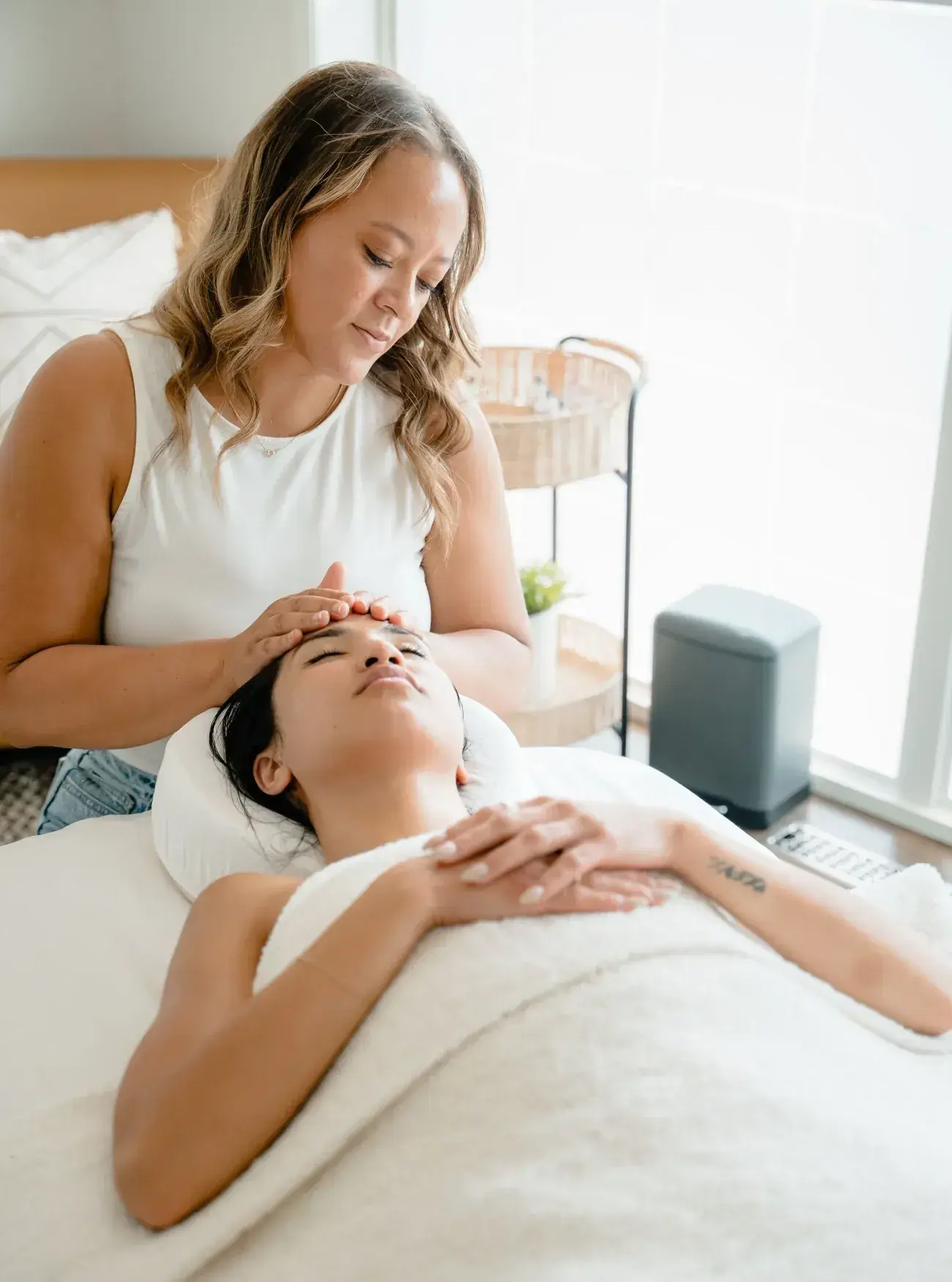
Sasha works slowly and checks in throughout, and you can pause at any point. If your jaw pain is tangled up with neck and shoulder tension, RAPID NeuroFascial Reset for the upper body (30 minutes, $85, or 45 minutes, $110) is listed on the same TMJ massage page. Book through Jane, or call the clinic if you are not sure which to choose.
What we do not do is diagnose the joint itself. If you need imaging, a disc assessment or an exercise program built around the joint mechanics, that is physiotherapy or dental territory, and we are glad to work alongside it.
When to see a dentist, doctor or physio first
Have your jaw assessed before booking any manual therapy if:
- Your jaw locks open or closed, or your opening has suddenly become limited
- The pain started after a fall, blow or accident
- Your bite feels different, or you have chipped, worn or sensitive teeth
- You have no diagnosis yet and the pain is getting worse
NIDCR’s advice is to consult a dentist or doctor if you think you have TMD. Our answer on whether to see a dentist before booking TMJ massage covers the order of appointments in more detail, and can massage help a jaw that locks looks at locking specifically.
How to choose
- You have no diagnosis, a locking jaw, or limited opening after an injury: start with a dentist or physiotherapist for assessment.
- You have a diagnosis and the pain is mostly muscular, from clenching or grinding: TMJ massage puts the whole hour on those muscles, including the ones inside the mouth.
- You want a home program: a physiotherapist will build one; our jaw exercises for TMJ at home are a reasonable start in the meantime.
- Your symptoms keep coming back: a combined route often makes sense, with a physio for assessment and exercise, TMJ massage for the muscles, and daily self-care in between.
For the broader professional comparison beyond the jaw, see massage therapy vs physiotherapy in Alberta. If clenching at night is part of your story, TMJ massage vs a night guard covers what a splint adds.
Questions people ask
Can I see a physio and a massage therapist for my jaw at the same time?
Yes, and many people do. Tell each of them about the other so the plans fit together, for example exercises from the physio and muscle work from the massage therapist in the same week. Space a massage and a hard exercise session apart if your jaw feels tender afterwards.
Do physiotherapists do intra-oral jaw work?
Some do, as part of manual therapy for the jaw, and the research on manual therapy includes several professions. Ask the clinic before you book, since techniques vary from one physiotherapist to the next.
Do I need a referral for TMJ massage or physio in Alberta?
You can book either directly. Your benefits plan may have its own rules, so check whether it asks for a doctor's note before you claim.
Which one helps a jaw that clicks but does not hurt?
A painless click on its own is common and often needs no treatment. If it starts to hurt, catches, or your opening becomes limited, have it assessed by a dentist or physiotherapist first.
Sources
- NIDCR: TMD (temporomandibular disorders)
- Skorupa-Strojna and Kulesa-Mrowiecka, Scandinavian Journal of Pain (2026): Effectiveness of physiotherapy for temporomandibular disorders, systematic review
- Chiaramonte et al., Journal of Manual & Manipulative Therapy (2026): Manual therapy by different healthcare professionals in TMD, systematic review
- Villar-Aragón-Berzosa et al., Dentistry Journal (2024): Manual therapy versus occlusal splint therapy for TMD, meta-analysis
- Government of Alberta: Regulated health professions
- College of Physiotherapists of Alberta: Restricted activities
Page reviewed October 5, 2026. This page is education, not a diagnosis. For your own situation, talk to your doctor, surgeon or care team, or ask us.
Keep reading
Related pages