
Massage for hairstylists and barbers in Calgary
Massage for hairstylists and barbers in Calgary: easing shoulder, wrist, low back and foot pain from days behind the chair, booked on your salon day off.
By The Renu lymphatic and massage team · 5 min read
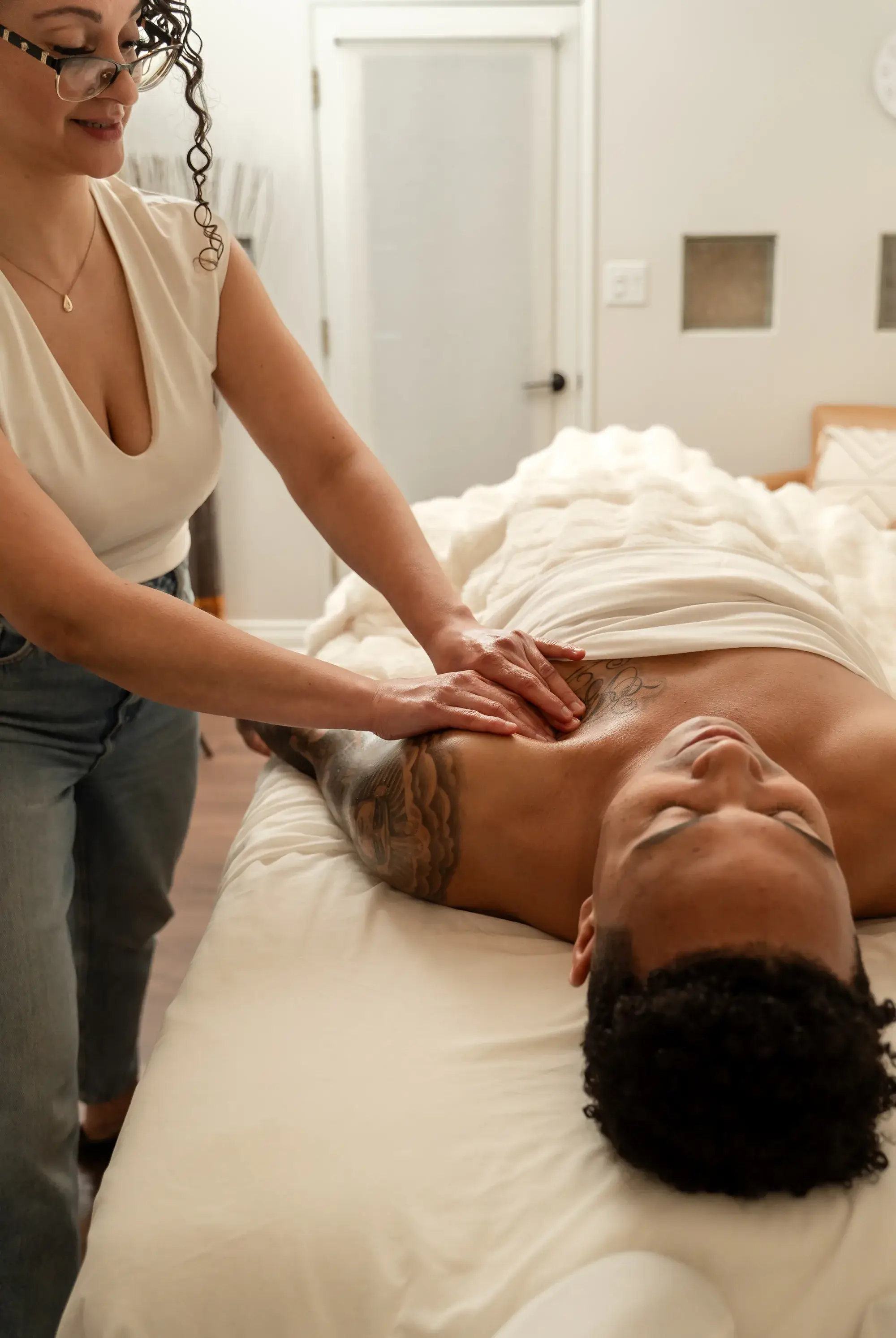
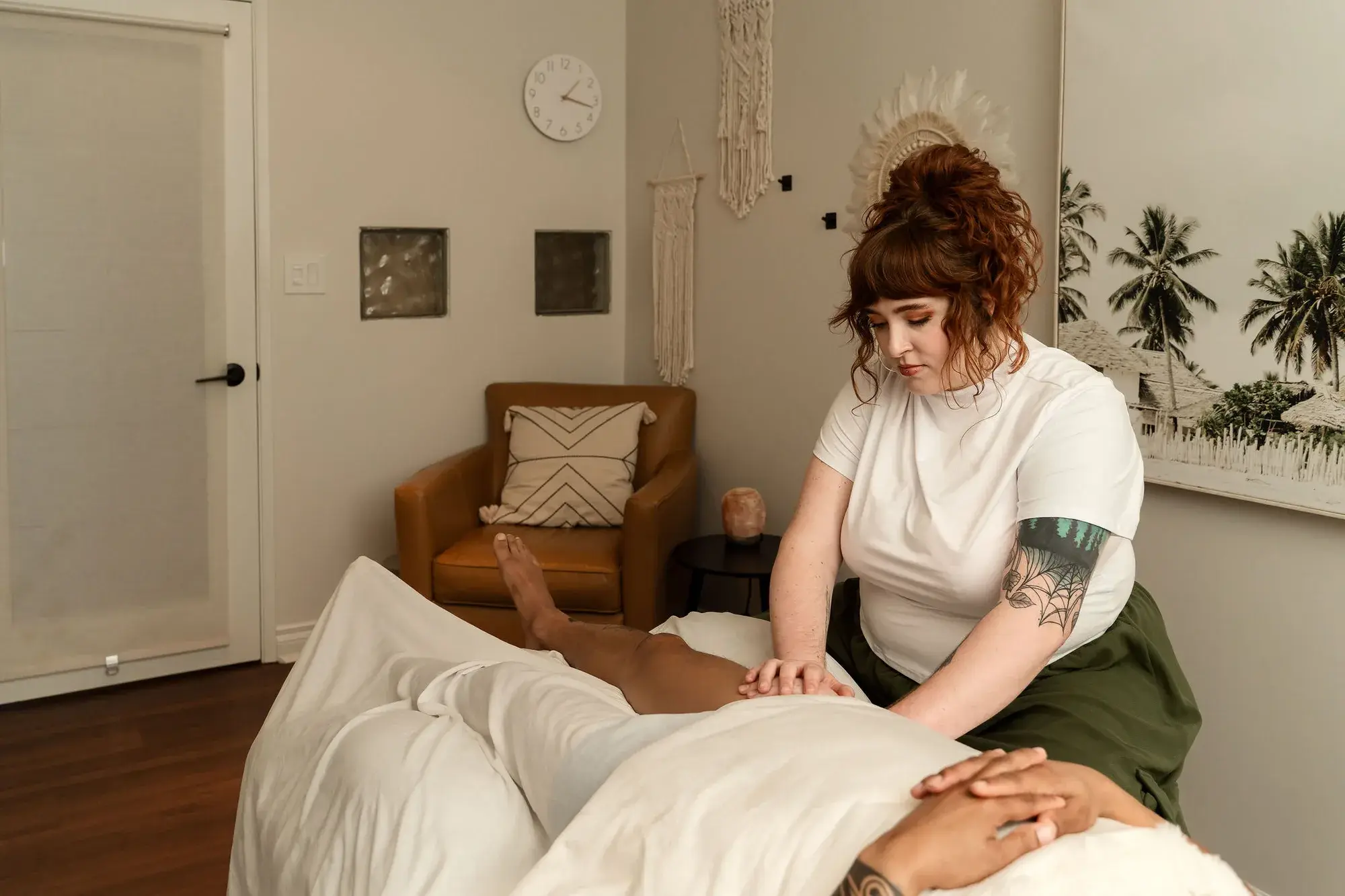
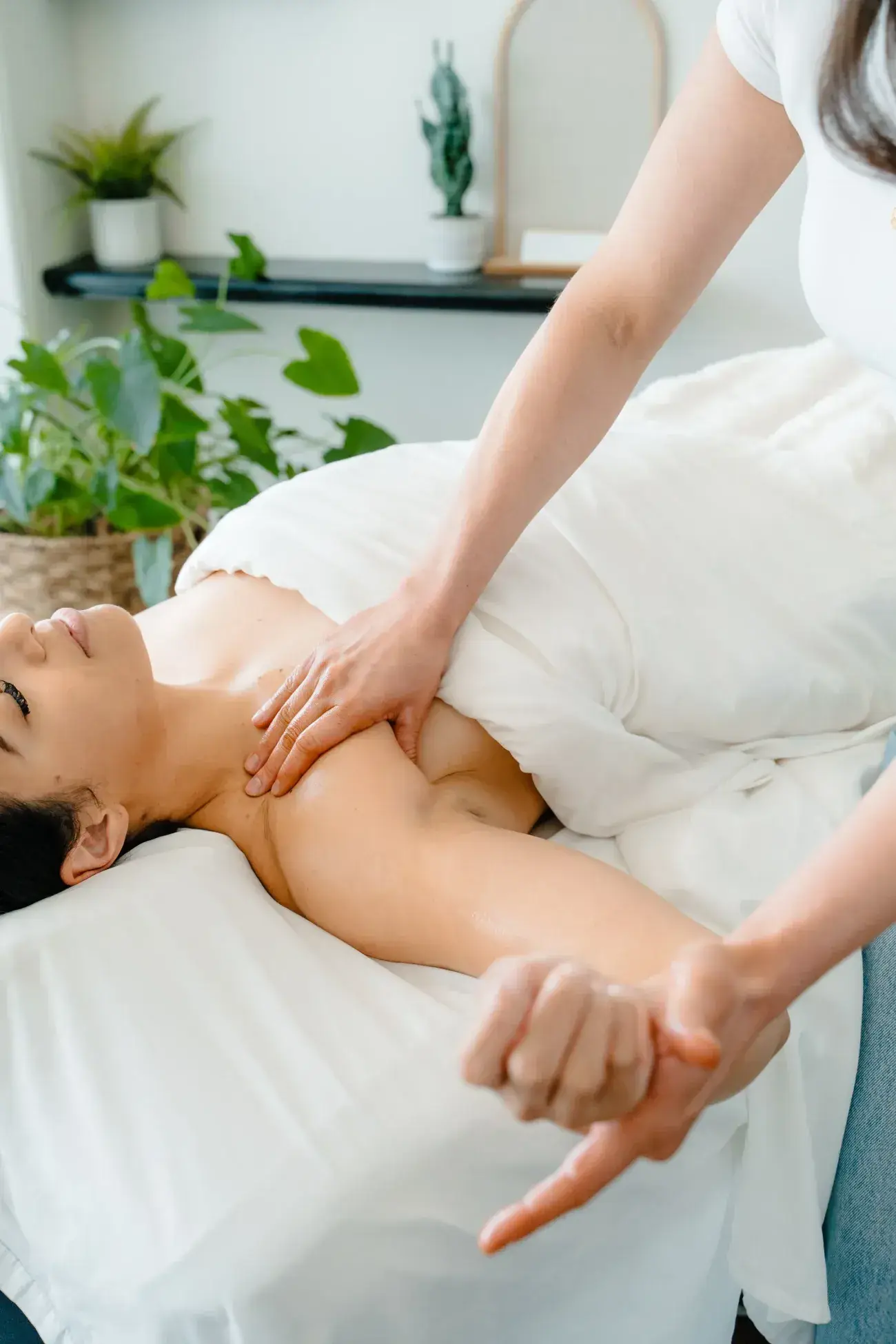
Massage is a good fit for the shoulder, forearm, low back and foot pain that comes from long days behind the chair, and it is easiest to book on your salon day off. A 60-minute massage covers the shoulders, back and arms; RAPID NeuroFascial Reset suits a wrist, forearm or shoulder that keeps flaring. Tell us about any hand eczema at booking so we can choose oils and products that suit your skin.
Massage suits the shoulder, forearm, low back and foot pain that builds up behind the chair, and the simplest time to book it is your salon day off. A 60-minute massage covers the shoulders, back and arms; RAPID NeuroFascial Reset suits a single wrist, forearm or shoulder that keeps flaring. If you have hand eczema, mention it when you book so we can plan around your skin.
What a day behind the chair does to the body
Hairdressing combines raised arms, fine hand work and long hours on your feet. Studies of hairdressers in several countries find the same pattern:
- Shoulders. In a study of 147 hairdressers compared with non-hairdressing controls, work-related shoulder pain carried an adjusted odds ratio of 11.6. Upper back (3.8), lower back (4.9) and wrist and hand pain (2.8) were all raised as well.
- Legs and feet. The same study found the largest gap of all for work-related leg and foot pain, an odds ratio of 31.0, though the confidence interval was very wide (3.8 to 267), so the exact size is uncertain.
- Low back. In a survey of 299 hairdressers, 75.6% reported a musculoskeletal disorder in the previous 12 months. The low back was most often affected (76.3%), then the shoulder (62.5%) and neck (46.3%), and hours spent standing were significantly associated with symptoms.
The raised right arm
Measuring the arm itself shows why the shoulder suffers. Researchers fitted 28 female hairdressers with inclinometers for four full working days. The right arm was raised above 60 degrees for 6.8% of the whole working day, and 9.0% of the time spent on clients, compared with 3.7% during other tasks. The authors concluded that this frequency of highly raised arms puts the neck and shoulders at risk, particularly during client work.
Wrists and elbows: why some stylists leave the trade
Hand and forearm strain is one of the main health reasons people leave hairdressing. A Finnish study following almost 3,500 hairdressers over 15 years found that, compared with women in commercial work, they were 2.7 times as likely to leave the profession because of a wrist or elbow strain injury and 1.7 times as likely because of neck or shoulder disease. Asthma or hand eczema raised the risk of leaving 3.5 times.
In Brazil, a survey of 220 hairdressers found a 71% prevalence of work-related disorders. Uncomfortable posture at work (odds ratio 3.54) and more than 15 years in the profession (3.04) were among the strongest risk factors. Strain tends to accumulate over a career, so it is worth looking after your forearms before they force a decision.
Common forearm complaints in stylists include pain on the outside of the elbow, covered on our page on tennis elbow, and pain at the base of the thumb, covered under De Quervain’s tenosynovitis.
Small changes at the station that help
Massage works better when the day that caused the strain changes a little too. The hairdressers surveyed in Lagos named working in the same position for long periods and seeing a large number of clients in one day as major job risks, and taking enough rest breaks was one of the ways they coped. Ideas that fit a busy book:
- raise or lower the hydraulic chair so your arms stay below shoulder height wherever the cut allows;
- leave a few minutes between clients to drop the arms and walk, rather than stacking appointments back to back;
- alternate which hand does the sustained holding where you can, such as the brush during a blow-dry;
- look at your footwear and the floor you stand on: CCOHS names both as major factors in standing comfort, and leg and foot pain showed the largest gap of all in the hairdresser comparison above.
What to book
The right session depends on where you hurt most:
| If your main complaint is | Book |
|---|---|
| Shoulders, neck and low back together | Massage, 60 min ($120) |
| One wrist, forearm or shoulder that keeps flaring | RAPID NeuroFascial Reset (upper body), 30 min ($85) or 45 min ($110) |
| Upper body plus sore, heavy legs and feet | Massage and lymphatic combination, 60 min ($130) |
RAPID NeuroFascial Reset is provided by Monica Von Gaza. She applies pressure to the problem area while you move it through a range, which suits the scissor hand and the dryer arm well. The 30-minute session treats one area; 45 minutes allows for the forearm and shoulder together. Our RAPID NeuroFascial Reset page explains the approach in more detail.
Hand eczema and the products we use
Hand eczema is common enough in hairdressing to be one of the reasons people leave the trade, so we ask about it rather than assume. At the start of your appointment, tell your therapist:
- whether any skin on your hands, wrists or forearms is cracked, weeping or inflamed;
- any products or ingredients that set off a flare;
- whether you would rather they skip your hands that day.
Your therapist can then work around affected skin or leave the hands out entirely, and still do useful work on the forearms and shoulders.
When to see a doctor first
Most salon aches are muscular, but some symptoms need assessment before massage:
- numbness, tingling or pins and needles in the fingers, especially at night, or a weak thumb and trouble gripping: the NHS lists these as signs of carpal tunnel syndrome;
- a shoulder that has lost strength or wakes you at night;
- one leg that is swollen and painful with discoloured skin, which can signal a blood clot.
Booking on your day off at Renu
We are open seven days: Monday to Friday from 8:00 am to 8:30 pm, and Saturday and Sunday from 10:00 am to 5:00 pm. Whether your salon closes on Sunday, Monday or a weekday, there is time to book. You can book online through Jane with any of our Registered Massage Therapists, or with Monica for RAPID. Free street parking is available on 19 Street NW.
If you also spend the day leaning over people in a chair, our page on massage for dental hygienists covers the neck side of that work.
Questions people ask
What is the best day for a hairstylist to get a massage?
Your day off, ideally early in it, so your arms and back have time to rest before the next client. We are open seven days, which helps if your salon closes on a Sunday or Monday.
Can massage help wrist pain from cutting hair?
Massage and RAPID can ease the forearm muscles that grip scissors and hold a dryer. Numbness, tingling at night or a weakening grip should be checked by a doctor, because those can point to a nerve problem rather than tired muscles.
I have eczema on my hands. Can I still have a massage?
Usually, yes. Tell your therapist at the start so they can avoid broken or inflamed skin and choose an oil or lotion that will not irritate it; if a flare is severe, we may work around your hands entirely.
Why are my feet and legs so sore after a salon day?
Standing in one small area for hours, without much walking, tires the leg muscles and lets fluid settle in the feet. A massage and lymphatic combination adds gentle work for the legs.
Sources
- Annals of Occupational Hygiene (2010): Upper arm postures in female hairdressers across four full working days
- Occupational Medicine (2011): Self-reported work-related symptoms in hairdressers
- International Archives of Occupational and Environmental Health (1999): Health reasons for leaving the profession among Finnish hairdressers
- International Journal of Occupational Medicine and Environmental Health (2015): Work-related musculoskeletal disorders among hairdressers
- Occupational Medicine (2008): Work-related musculoskeletal disorders in Brazilian hairdressers
- CCOHS: Working in a standing position, basic information
- NHS: Carpal tunnel syndrome
- NHS: Deep vein thrombosis (DVT), symptoms
Page reviewed October 5, 2026. This page is education, not a diagnosis. For your own situation, talk to your doctor, surgeon or care team, or ask us.
Keep reading
Related pages