
Massage for chronic exertional compartment syndrome
Massage for chronic exertional compartment syndrome may let you run longer before pain starts. Get a diagnosis first; what studies show and red flags.
By The Renu lymphatic and massage team · 5 min read
Massage for chronic exertional compartment syndrome (CECS) has one small study behind it: six sessions plus daily stretching let athletes work longer before pain began, although the pressure inside the muscle did not change. That makes massage a reasonable part of conservative care, but only after a doctor has confirmed CECS with pressure testing, because shin splints, stress fractures and other problems can feel similar. Sudden, severe leg pain after an injury is a different condition and an emergency.
Chronic, acute and shin splints are three different problems
Compartment syndrome is a rise in pressure inside a muscle that restricts blood flow and causes pain. The lower leg muscles sit in tight sleeves of connective tissue called compartments, which is why the lower legs are the usual site. The NHS separates two forms that behave very differently:
| Chronic (exertional) | Acute | |
|---|---|---|
| How it starts | Gradually, with exercise | Suddenly, after an injury or a cast or bandage that is too tight |
| What it feels like | Pain, tightness, numbness or weakness that builds during exercise | Severe pain, worse on stretching, with swelling, tightness and numbness |
| What happens with rest | Settles when you stop | Does not settle |
| Urgency | See a GP | Emergency: call 911 |
Chronic exertional compartment syndrome is described in a 2017 review as rare and mostly seen in distance runners and other running athletes. Pain and pressure build with repeated activity and ease when you stop.
Shin splints (medial tibial stress syndrome) are a different condition, and a calf strain is a torn muscle. They can all ache in the same part of the leg, which is why the next step matters.
A pressure test makes the diagnosis
Here our role is to refer first. Massage should come after a physician has confirmed CECS, not before.
According to the NHS, testing may include an X-ray to look for a fracture, MRI scans, and compartment pressure measurement: a needle connected to a monitor is placed in the muscle before and after exercise. The 2017 review adds that a good history, ruling out other causes and post-exercise pressures together confirm the diagnosis.
Pressure testing is useful but not perfect. A systematic review of 32 studies found that measurements varied widely between clinics and that the evidence behind the common cut-off values is weak. The one time point where patients and healthy controls did not overlap was one minute after exercise: 34 to 55.4 mm Hg in people with CECS against 9 to 19 mm Hg in controls.
What the massage study found
One pilot study has tested massage directly. Seven athletes in Melbourne with anterior CECS (the front of the shin) had six massage sessions over five weeks, twice in the first week and weekly after that, and did a stretching routine for the front and back of the lower leg twice a day between sessions.
- What did not change: the pressure in the front compartment three minutes after exercise.
- What did change: the amount of work the athletes could do lifting the foot before pain began, which rose significantly.
So massage with stretching may help you go further before symptoms start, without changing the underlying pressure. Seven people and no control group is a small signal, and the authors concluded only that it should be considered. People with a bleeding disorder were excluded from the study.
Other options before surgery
A 2016 systematic review of non-surgical care found four approaches described in the literature: massage, changes to running technique, botulinum toxin injections, and ultrasound-guided fenestration of the fascia. All the evidence came from case series and one case report, but all four had few or no reported side effects. The effects of gait changes and fenestration lasted one and one and a half years respectively.
The running-technique series is worth knowing about. Ten runners already recommended for surgery learned a forefoot strike over six weeks. Their average post-run pressure fell from 78.4 to 38.4 mm Hg, their running distance rose from 1.4 to 4.8 km, pain while running dropped, their two-mile times got faster, the improvement held at one year, and none needed surgery.
When conservative care is not enough, limited-incision fasciotomy remains the most effective treatment and the surgical gold standard. The 2017 review notes that military patients have higher failure rates after fasciotomy than civilians.
Booking lower leg massage at Renu
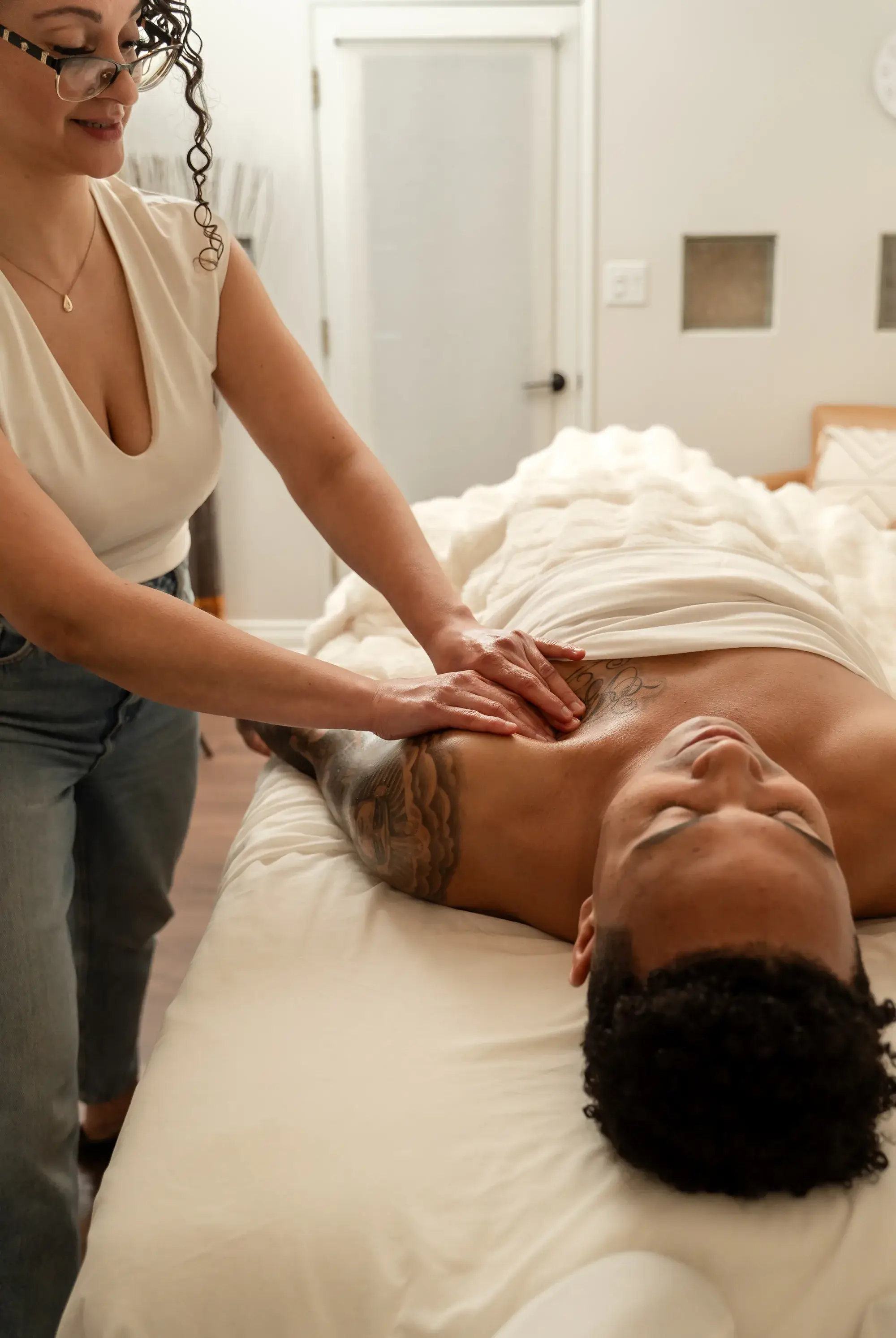
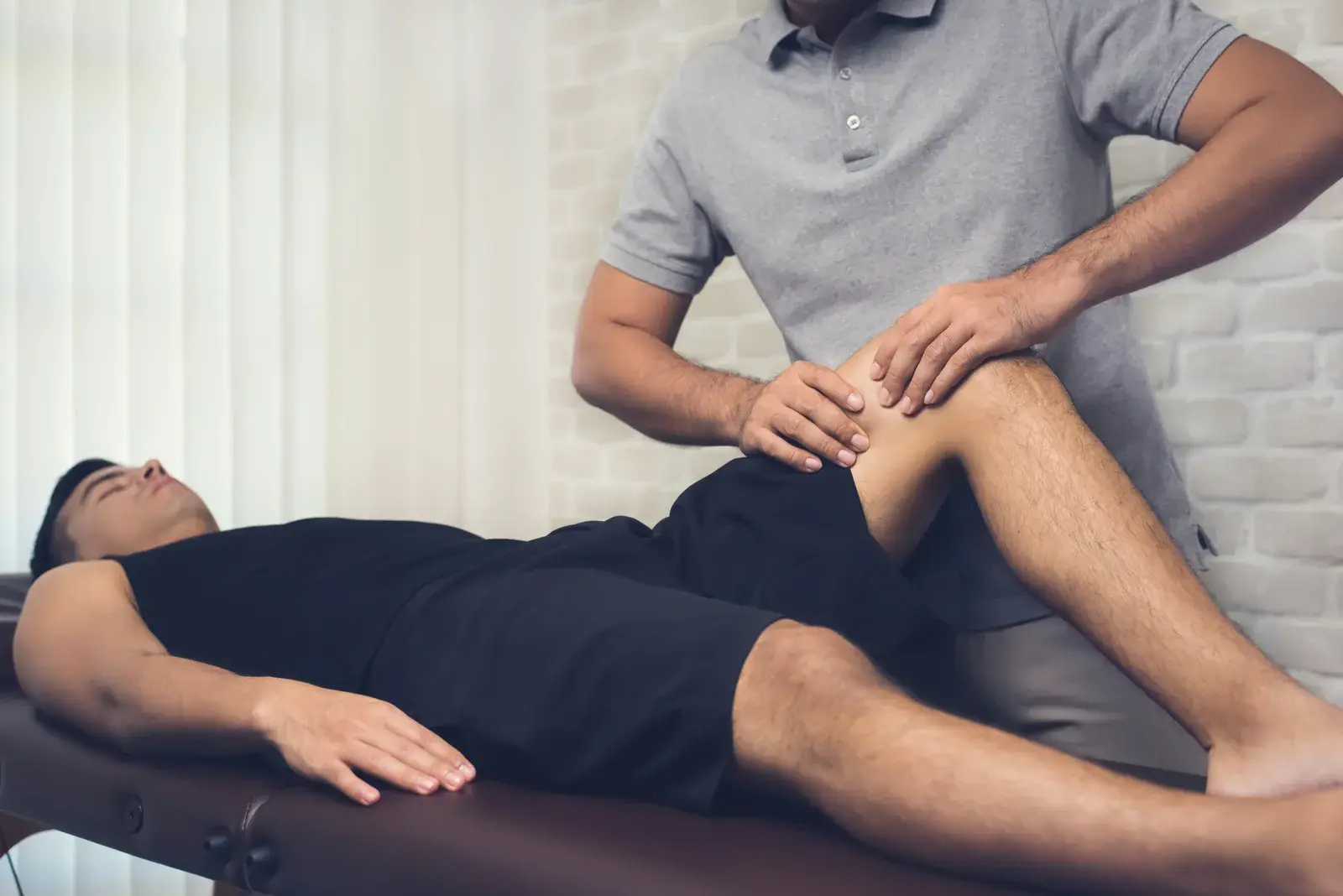
Once CECS is confirmed, massage at Renu can be one part of a conservative plan. A 45-minute massage ($100) gives time for both lower legs and the feet; 60 minutes ($120) also covers the thighs and hips that change when you alter your stride. If you are following a stretching routine or a gait program, bring it, so your Registered Massage Therapist can work in step with it. A simple log of how far or how long you ran before symptoms started is the most useful thing to track, because that was the measure that improved in the massage study, and it gives you and your physician something concrete to compare over the weeks.
Book through Jane. We are in West Hillhurst, open seven days, with weekday appointments until 8:30 pm for after-work runners. Training for spring races, including the Calgary Marathon, is covered on our marathon runners page.
When to get medical help
Call 911 or go to an emergency department if you have sudden, severe pain in the leg, especially after an injury or under a cast or tight bandage. Acute compartment syndrome needs surgery as soon as possible.
See your family doctor, and hold off on massage aimed at the problem, if:
- you keep getting pain, numbness, swelling or trouble moving the foot during exercise and it has never been assessed
- numbness or weakness does not settle after you stop
- the bone itself is sore to touch or the pain lingers long after you stop, since an X-ray may be needed to check for a fracture
- symptoms are getting worse despite resting from the activity
Questions people ask
How is CECS different from shin splints?
CECS pain builds at a fairly predictable point during exercise and fades within minutes of stopping, sometimes with numbness or weakness, and the muscle feels tight. Shin splints are a separate condition that can ache in the same part of the leg, so only a physician's assessment and testing can confirm CECS.
Can massage replace a fasciotomy?
For some people, conservative care is enough, but massage alone has not been shown to fix CECS. In the one massage study, pressure inside the muscle did not drop. Fasciotomy remains the standard surgical treatment when symptoms persist, so make that decision with your surgeon.
Does compartment pressure testing hurt?
It involves a needle connected to a pressure monitor placed into the muscle, before and after exercise. Ask your physician about local anaesthetic and what to expect, as protocols differ between clinics.
Should I keep running with exertional compartment syndrome?
The NHS suggests avoiding the activity that brings it on while you are being assessed. If you are diagnosed, your physician may suggest changing how you run rather than stopping altogether, since a running-technique change helped in one series.
Sources
- NHS: Compartment syndrome
- Blackman, Simmons and Crossley (1998), Clinical Journal of Sport Medicine: Treatment of chronic exertional anterior compartment syndrome with massage, a pilot study
- Rajasekaran and Hall (2016), Current Sports Medicine Reports: Nonoperative management of chronic exertional compartment syndrome, a systematic review
- Diebal et al. (2012), American Journal of Sports Medicine: Forefoot running improves pain and disability associated with CECS
- Aweid et al. (2012), Clinical Journal of Sport Medicine: Intracompartmental pressure monitoring in diagnosing CECS of the leg
- Vajapey and Miller (2017), The Physician and Sportsmedicine: Evaluation, diagnosis and treatment of CECS
Page reviewed October 5, 2026. This page is education, not a diagnosis. For your own situation, talk to your doctor, surgeon or care team, or ask us.
Keep reading
Related pages