
Lymphatic care after liposuction for lymphedema in Calgary
Lymphatic care after liposuction for lymphedema in Calgary centres on lifelong flat-knit compression, regular refits and a local lymphedema therapist.
By The Renu lymphatic and massage team · 6 min read
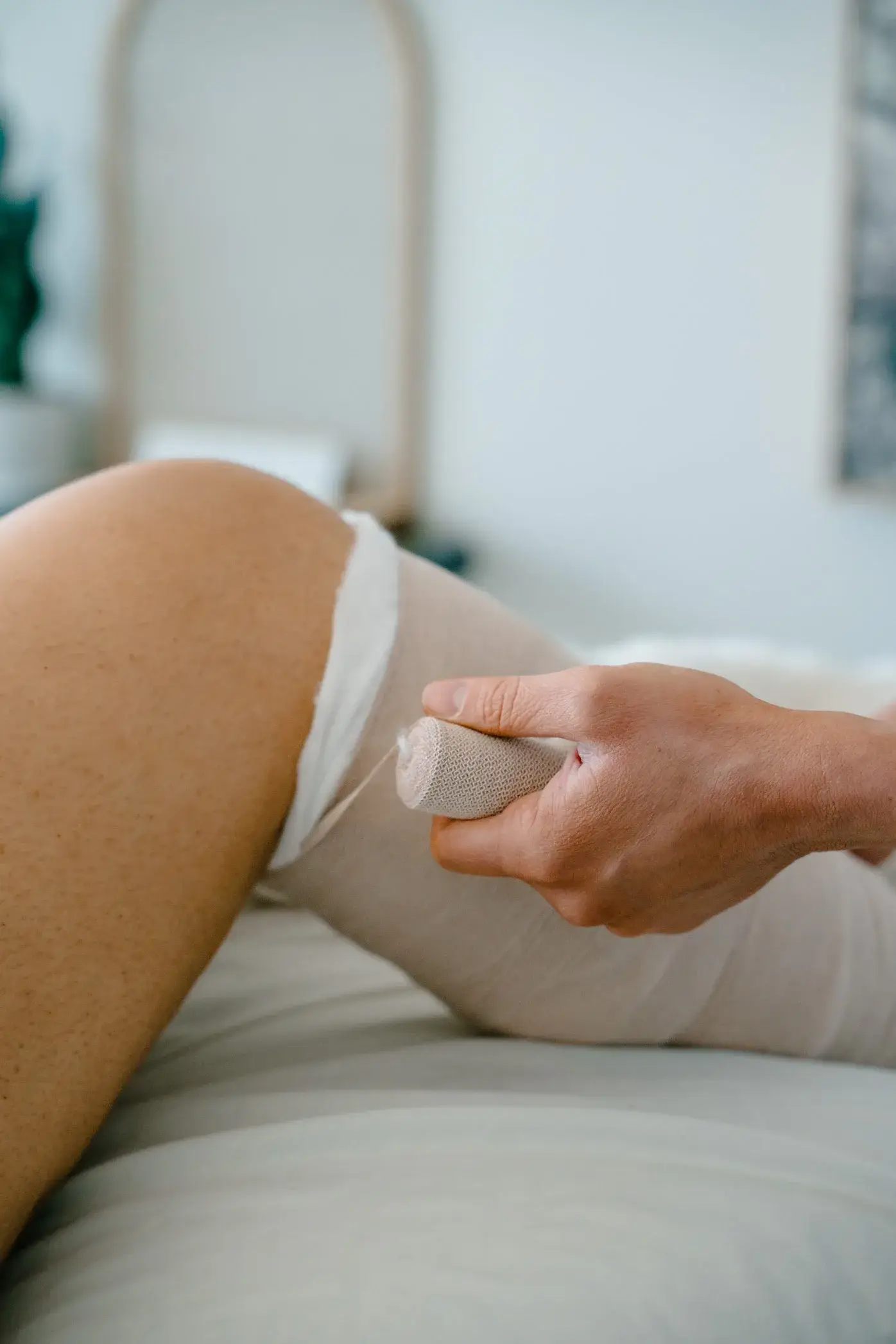
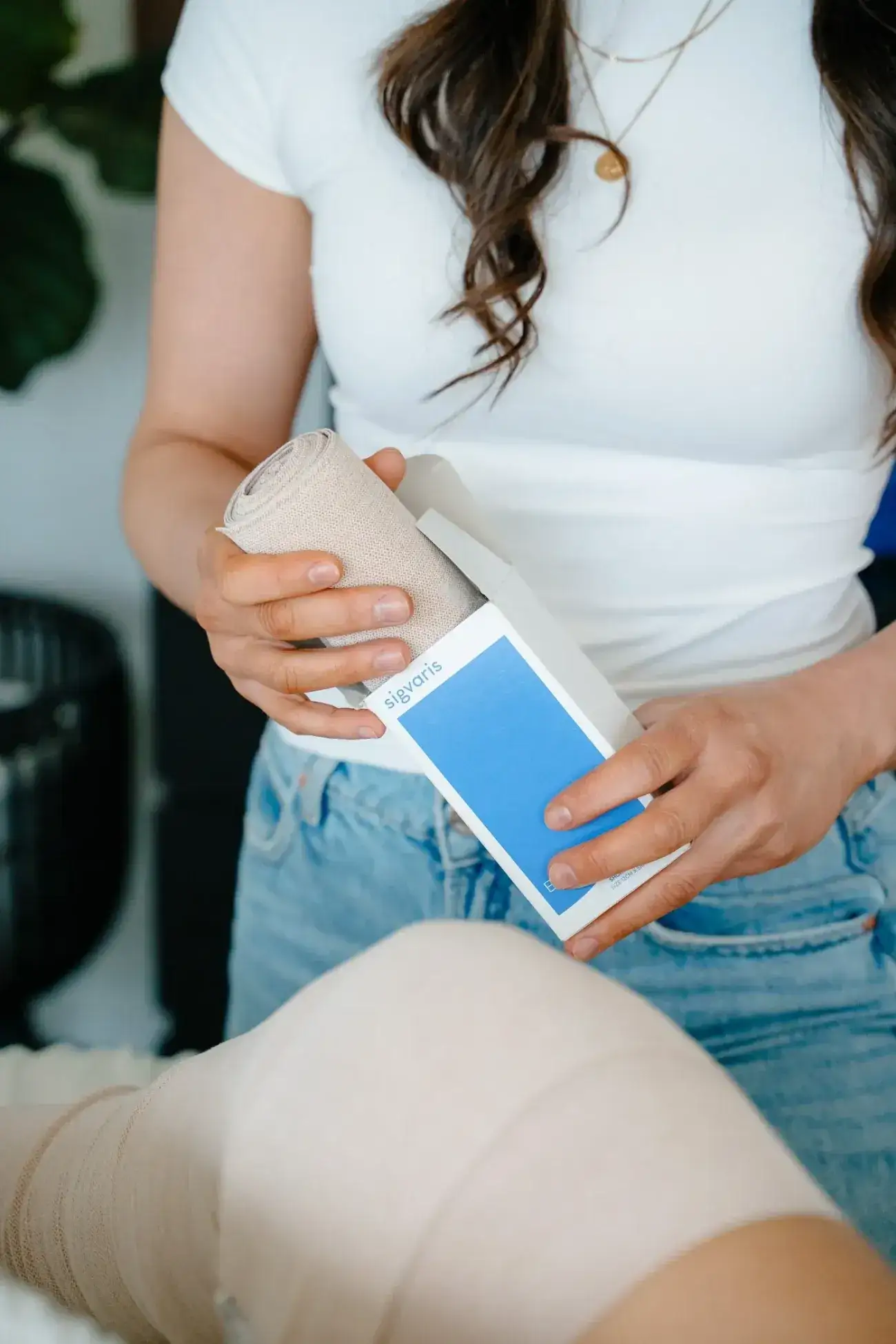
After liposuction for lymphedema, compression is the treatment that keeps the result, and it is meant to be worn for life. The operation removes the hardened fatty tissue that years of lymphedema leave behind, but it does not repair lymph drainage, so the fluid side still has to be controlled with well-fitted flat-knit garments, regular replacements and ongoing decongestive care. In Calgary, Renu's Certified Lymphedema Therapist and compression fitter can take on that long-term follow-up once your surgical team hands it over.
When lymphedema has been present for years, part of the extra volume in the arm or leg is no longer fluid. Long-standing lymph congestion and inflammation lay down fat and fibrous tissue that pressing, bandaging and drainage cannot move. Liposuction for lymphedema, often called suction-assisted protein lipectomy or the Brorson method after the Swedish professor whose protocol many teams follow, removes that tissue. What it leaves you with is a smaller limb and a lifelong partnership with compression, which is where a local lymphedema therapist comes in.
What this operation does, and what it leaves behind
The operation removes solid tissue; it does not touch the reason lymph is pooling. A 2017 surgical overview in BMC Cancer explains that because liposuction does not affect the fluid burden from damaged lymphatics, garments or wraps must be worn throughout the day afterwards to control that fluid and hold the reduction. A 2026 narrative review in JPRAS Open states it more bluntly: liposuction is not curative, and patients require continuous compression and decongestive therapy.
That is also why surgeons are selective. A 2026 systematic review on who is a good candidate for leg lymphedema liposuction found the criteria used most consistently were:
- an inadequate response to conservative care;
- International Society of Lymphology stage II to III disease;
- tissue that is mostly fibrous and fatty, often shown by skin that no longer pits when pressed and confirmed on MRI;
- a confirmed capacity to wear compression garments for life.
The same review reported that stage II limbs did better than stage III, and that the volume reduction lasted up to 96 months in one cohort, but only with continuous compression.
How compression starts, sometimes before you wake up
In the Brorson-style protocols, compression goes on in the operating room. In a five-year Australian series from Macquarie University’s ALERT program (59 people operated on between 2012 and 2017), the team applied compression before releasing the tourniquet:
| Limb | First compression after surgery | Next step |
|---|---|---|
| Arm | Flat-knit class 2 sleeve from wrist to armpit, plus a flat-knit glove | Changed after 2 days, then every 2 days until the person could manage a normal alternate wash-and-wear routine |
| Leg | Adjustable Velcro wrap with foam padding at the ankle, shin and back of the knee | Exchanged within the next week for a class 3 flat-knit one-legged garment measured before surgery |
People with an arm treated went home once they could change the garment themselves, around day four. Many leg patients spent another five to seven days in a rehabilitation hospital to learn independent management first. A 2026 review of delayed lymphatic reconstruction describes the same principle: custom garments are ideally ordered before the operation, short-stretch wraps can bridge the gap, and an early move into decongestive therapy is critical because liposuction is followed by rebound swelling.
If you want to understand why flat-knit fabric is chosen here, our comparison of flat-knit and circular-knit compression covers the difference in how the two hold a reshaped limb.
The first year: replacements, swelling and skin checks
The first year is the busiest, because the limb keeps changing. In the Australian series, garments were replaced every three to six months for the first year and every six months once the limb volume was stable and close to the other side. Two sets were always supplied, so one could be washed while the other was worn.
Three things are worth knowing in that year:
- A temporary rise is normal. Measurements went up between two and six weeks after surgery. The team attributed it to post-surgical swelling, and it had settled by one year.
- Pressure points need watching. The only complications reported were superficial garment pressure wounds behind the knee or at the front of the ankle, five cases in all, each healing within a few weeks. Check those spots when you take the garment off.
- Results can drift if compression slips. At five years, arm results held well (a median excess of 22 mL against 1,061 mL before surgery), while leg results had crept back up (669 mL from 263 mL at one year). Some leg patients described trouble with garment fit, heat, sleep and the cost of garments, which led them to change how they wore them.
Our guide to when to replace compression garments explains the everyday signs that a garment has lost its hold.
Who follows you after the surgical team
Long-term care often moves to a therapist close to home. The Australian team saw people in clinic at about two to six weeks and then at 3, 6, 9, 12, 18 and 24 months. After two years, people either kept attending every six months or were transferred to their local lymphedema therapist, with advice on garments from the surgical team. Agreeing to that ongoing management was one of the conditions for having the operation.
Long-term follow-up from a therapist usually covers:
- measuring the limb on a regular schedule and comparing it with the other side;
- refitting and replacing garments, including gloves or foot pieces;
- checking skin at pressure points and folds;
- manual lymphatic drainage or bandaging if fluid starts to build, as your team advises.
When to contact your surgical team
Some changes are for your surgeon or doctor rather than your therapist. Get medical advice promptly for:
- redness, heat, fever or spreading pain in the limb, which can mean cellulitis;
- a skin break or pressure wound that is not healing, or one under a garment you cannot take off comfortably;
- sudden swelling with calf or arm pain, which needs deep vein thrombosis ruled out;
- swelling that rises steadily despite wearing your garments as prescribed.
Compression fitting and lymphedema care at Renu in Calgary
Meeghan Mackenzie, our founder, is a Registered Massage Therapist, Certified Lymphedema Therapist and Certified Compression Fitter. After this operation the fitting side matters as much as the hands-on side, and she does both.
- Compression fitting: 30 minutes ($25), part of our complete decongestive therapy service, for measuring, checking and reordering garments as the limb changes.
- Post-op lymphatic drainage: 30 minutes ($105), 45 minutes ($115) or 60 minutes ($140), when your team wants hands-on drainage alongside compression.
Booking is through Jane, and we are open seven days a week. Bring your current garments, your surgical team’s garment prescription and any recent limb measurements. If your lymphedema also involves fluid that a bypass or node transfer is treating, lymphatic drainage after LVA or lymph node transfer covers that other path, and if your surgery was for lipedema instead, see lymphatic drainage after lipedema liposuction.
Questions people ask
Is liposuction for lymphedema the same as lipedema liposuction?
No. In lymphedema, the fat builds up because lymph has been pooling in the limb for years, and surgeons take it out to reduce the volume while the drainage problem stays. Lipedema is a separate fat disorder with its own surgical aftercare, covered on our lipedema liposuction page.
Why does my limb look bigger a few weeks after lymphedema liposuction?
In the Australian five-year series, limb measurements rose between two and six weeks after the operation, and the team put this down to normal post-surgical swelling, which had settled by one year. Keep wearing your garments and tell your surgical team about it, but a temporary rise at that stage is expected.
Can I go back to wearing my old compression sleeve after the operation?
Usually not. Your limb is a different size and shape, so garments are measured for the new limb and, in the published protocols, replaced several times in the first year as it settles. An old garment that is now loose cannot hold the result.
What happens if I stop wearing compression after lymphedema liposuction?
The fluid part of lymphedema comes back, because liposuction does not change lymph drainage. Surgical reviews describe rebound swelling after liposuction and say strict compression is what holds the reduced volume over the long term.
Sources
- Karlsson T et al. Plastic and Reconstructive Surgery (2024): Liposuction for advanced lymphedema in a multidisciplinary team setting in Australia, 5-year follow-up
- JPRAS Open (2026): Debulking the future of lymphedema surgery, a narrative review
- Garza R et al. BMC Cancer (2017): A comprehensive overview on the surgical management of secondary lymphedema of the upper and lower extremities
- Journal of Vascular Surgery: Venous and Lymphatic Disorders (2026): A systematic review on clinical and imaging criteria for liposuction candidacy in lower extremity lymphedema
- Monzy J et al. Cancers (2026): Delayed lymphatic reconstruction for breast cancer-related lymphedema
Page reviewed October 5, 2026. This page is education, not a diagnosis. For your own situation, talk to your doctor, surgeon or care team, or ask us.
Keep reading
Related pages