
Infrared sauna vs cold plunge
Infrared sauna vs cold plunge: cold eases soreness fast but can blunt strength gains; infrared warms muscle gently. How to choose by goal, timing and health.
By The Renu lymphatic and massage team · 6 min read
A cold plunge and an infrared sauna push your body in opposite directions. Cold water immersion has the stronger recovery evidence for soreness right after hard exercise, but used routinely after lifting it can modestly blunt strength and muscle gains, and the first minutes of cold carry a real shock to the heart and breathing. Infrared heat warms the outer layers of muscle without raising core temperature and suits rest days, stiffness and relaxation. Choose by your training goal and timing, and talk to a doctor first about either if you have a heart condition.
Heat and cold are not two versions of the same recovery tool. A cold plunge is a short, sharp stress that numbs soreness quickly; an infrared sauna is a slow, gentle warming that relaxes stiff tissue. Cold water has the better evidence for feeling less sore right after hard exercise, but it carries a trade-off for strength training and a genuine shock to the heart. Infrared heat is milder on both counts. We do not have a cold plunge at Renu, so this page is about helping you decide honestly, not steering you to the option we sell.
What a cold plunge actually does for recovery
Cold water immersion reduces how sore and tired you feel in the hours after hard exercise, but most of its measurable effect fades within a day. The clearest summary is a 2023 meta-analysis by Xiao and colleagues in Frontiers in Physiology, which pooled 20 studies and 419 participants who used cold water after high-intensity exercise.
What it found:
- Soreness and perceived exertion dropped immediately after immersion, but soreness was no different from controls at 24 and 48 hours.
- Creatine kinase, a marker of muscle stress, was lower at 24 hours, and lactate was lower at 24 and 48 hours.
- Inflammation markers (C-reactive protein and IL-6) showed no meaningful change at any point.
- Water temperature and how much of the body was immersed made no difference to fatigue recovery overall, although water below 10 °C did improve jump performance at 24 hours.
So the cold plunge is good at taking the edge off right away. It is not a reliable way to switch off inflammation.
The trade-off for strength training
Routine cold plunges straight after lifting can modestly blunt the gains you are training for. A 2026 review by Tornero-Aguilera and colleagues calls this the recovery-adaptation paradox. It describes a typical protocol as 10 to 15 °C for 10 to 15 minutes, and reports:
- a small but significant reduction in strength gains compared with passive recovery (effect size −0.23);
- a larger reduction in growth of the fast-twitch (type II) muscle fibres in one seven-week study;
- endurance adaptations largely spared, and possibly helped.
The authors’ practical advice is to use cold for quick turnaround between sessions, such as tournament days or two workouts in one day, and to avoid it routinely after resistance training when building muscle is the goal. In other words, deploy it by goal, not habit.
The cold shock your heart has to handle
The first two to three minutes in cold water are the risky part, and they matter most if you have heart disease. The cold shock response includes a gasp reflex, rapid uncontrolled breathing and a racing heart. Below about 15 °C, a normal breath-hold of 60 to 90 seconds can shrink to a few seconds, which is why accidental cold water immersion is so dangerous.
A 2026 review in the Journal of Applied Physiology by Leuci, Tipton and colleagues explains that the cold shock response can cause death through aspiration and cardiac arrhythmia before core temperature has fallen at all, and that alcohol and other substances change the risk. Sudden constriction of blood vessels also makes the heart work harder, which is a concern for anyone with existing heart disease.
A supervised plunge in a tub is not the same as falling through river ice, but the reflexes are the same. Get in slowly, keep your head above water, never plunge alone or after drinking, and talk to your doctor before you start if you have any heart condition, high blood pressure or a history of fainting.
What infrared heat does instead
Infrared heat warms the outer few centimetres of muscle without raising your core temperature. In a 2025 study by Reed and colleagues, ten adults sat in a far infrared sauna for 45 minutes with temperature probes in their thigh muscle. Muscle temperature rose about 3.0 °C at 1.4 cm deep, 1.9 °C at 2.4 cm and 1.1 °C at 3.4 cm, while core temperature did not change. People lost about half a percent of their body weight in sweat. The authors concluded that commercial infrared saunas heat peripheral tissues only superficially.
That makes infrared a gentle option. It will not give you the immediate soreness drop that cold does, but it also does not interfere with strength adaptation in the way the cold research describes, and it is a pleasant way to loosen stiff muscles on a rest day.
Cleveland Clinic’s advice for infrared sessions is to start low and short, around five to ten minutes, keep sessions under 30 minutes and three or four times a week, drink water, avoid alcohol, and get out straight away if you feel dizzy or nauseated. It advises skipping infrared saunas if you are pregnant, trying to conceive, unwell, or have multiple sclerosis.
| Cold plunge | Infrared sauna | |
|---|---|---|
| Typical use in studies | 10 to 15 °C for 10 to 15 minutes | Air about 43 to 57 °C, sessions under 30 minutes |
| Best-supported effect | Less soreness right after hard exercise | Warms superficial muscle, relaxation |
| Main trade-off | Can blunt strength and muscle gains if used after lifting | Dehydration and light-headedness if overdone |
| Biggest safety concern | Cold shock: gasp reflex, arrhythmia risk | Heat intolerance, pregnancy, illness |
How to choose
Pick by what you are training for, when, and your health. A simple way to think about it:
- Racing, tournament weekends or two sessions a day: cold can help you feel fresher for the next effort.
- Building strength or muscle: skip the cold plunge after lifting; use heat or nothing on those days.
- Stiff, tight muscles on a rest day, or recovery that feels more like stress relief: infrared heat.
- Any heart condition, uncontrolled blood pressure or a pacemaker: speak with your doctor before either, and especially before cold immersion.
Many Calgary runners and skiers use both at different points in the week. That is reasonable as long as the cold stays away from strength sessions and you respect the first minutes of immersion.
How the infrared pod fits at Renu
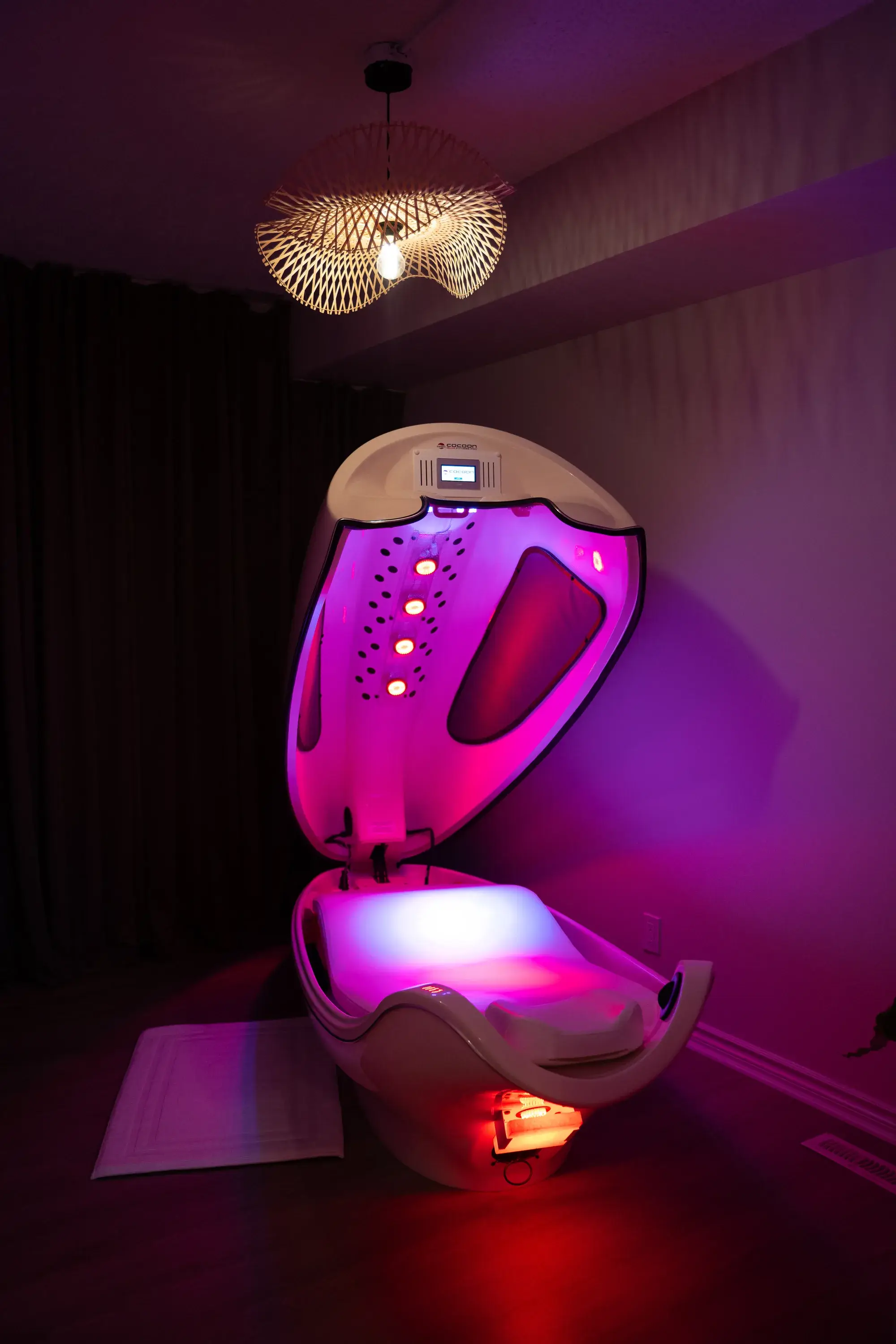
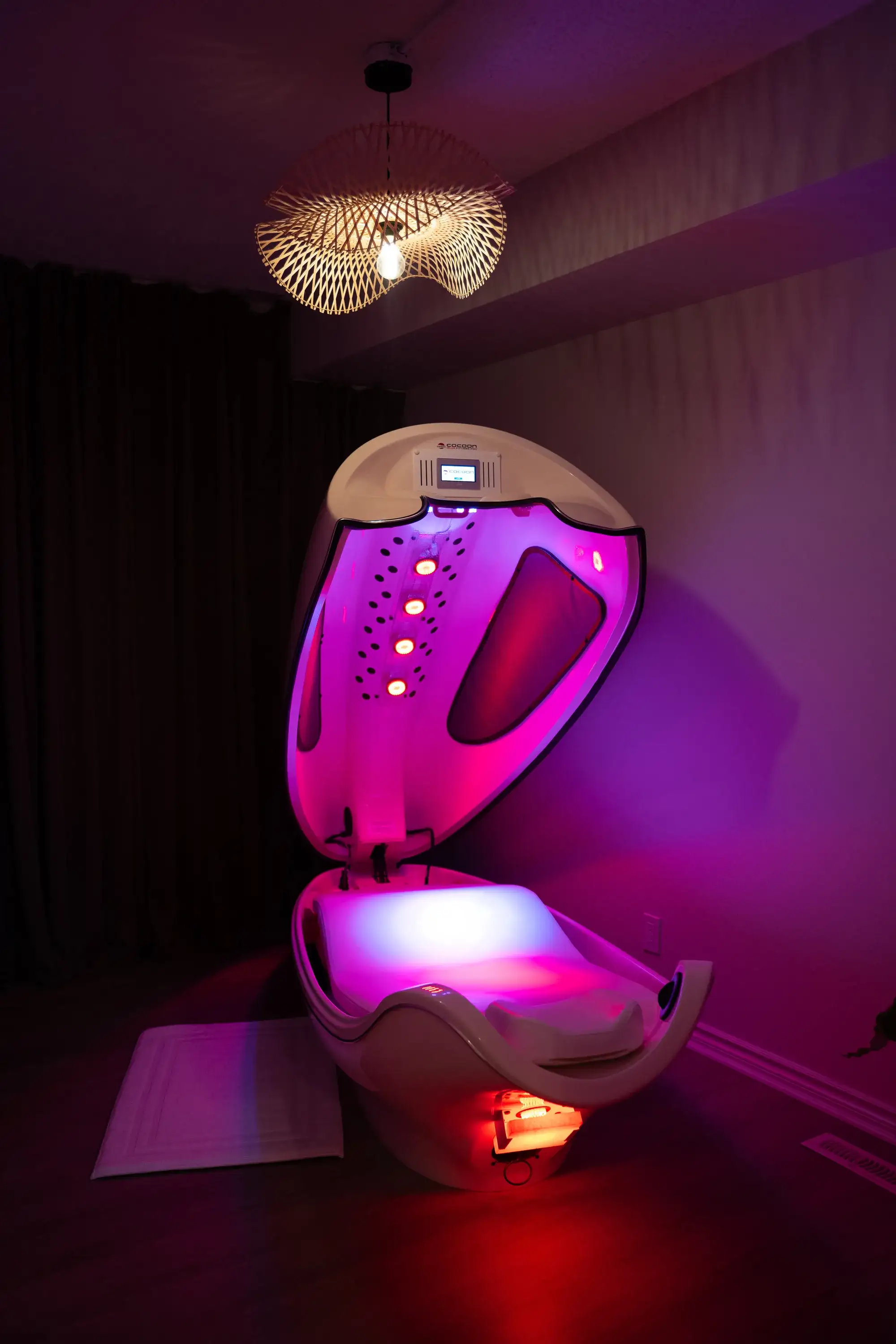
Our heat option is the infrared cocoon pod in the BodyTox studio, a cushioned, single-person chamber you lie in while full-spectrum infrared warms you. A 20-minute session can be booked on its own, added to a massage, facial or lymphatic treatment, or taken often with the monthly membership, which includes 40-minute member sessions. If you are new to infrared, start with 20 minutes.
If your recovery question is really about sore legs after the Calgary Marathon or a weekend at Lake Louise, hands-on work may help more than either temperature. Our pages on whether infrared heat helps muscle recovery and massage for sore muscles after exercise go further, and if you have a heart or blood pressure condition, read using the pod with high blood pressure or a heart condition before booking.
Questions people ask
Should I do the sauna or the cold plunge first?
There is no strong evidence for one order over another. What the research does support is thinking about timing relative to training: cold straight after strength work is the combination most linked to blunted gains, so if you use both on a lifting day, keep the cold well away from the workout or save it for another day.
Is a cold shower the same as a cold plunge?
Not quite. The studies on recovery used full or partial immersion, typically at 10 to 15 °C for 10 to 15 minutes, which cools the body far more than a shower. A cold shower is milder in both its effects and its shock, so the research on plunges does not transfer directly.
Can I use the infrared pod the day after a race or a big ski day?
For most healthy people, yes. Gentle heat on a rest day is a reasonable way to ease stiffness. Drink plenty of water first, since you will already be low after a long effort, and keep the session short if you still feel depleted.
Does a cold plunge reduce inflammation?
Less than people assume. In the 2023 meta-analysis, cold water immersion lowered creatine kinase and lactate, markers of muscle stress, but made no meaningful difference to the inflammatory markers C-reactive protein and IL-6 at any time point.
Sources
- Xiao et al., Frontiers in Physiology 2023: Effects of cold water immersion after exercise on fatigue recovery and exercise performance, meta-analysis
- Tornero-Aguilera et al. 2026: The cold-water immersion recovery-adaptation paradox
- Leuci et al., Journal of Applied Physiology 2026: Beyond hypothermia, mechanisms of death, rescue and prevention in cold water immersion
- Wikipedia: Cold shock response
- Reed et al., Journal of Applied Physiology 2025: Muscle temperature increases during a single far infrared sauna session without changes in intestinal temperature
- Cleveland Clinic Health Essentials: Infrared saunas, what they do and health benefits
Page reviewed October 5, 2026. This page is education, not a diagnosis. For your own situation, talk to your doctor, surgeon or care team, or ask us.
Keep reading
Related pages