
Does an infrared sauna help muscle recovery?
Does an infrared sauna help muscle recovery? Small athlete trials show less soreness and better jump recovery after some sessions, but the evidence is thin.
By The Renu lymphatic and massage team · 5 min read
Possibly, a little, after some kinds of training. Small trials in athletes found that a short infrared session after exercise eased soreness and helped jump performance bounce back, but strength, sprint speed and muscle growth did not change. Treat it as a pleasant extra in a recovery routine built on sleep, food and sensible training, not as the routine itself.
Possibly, a little, and more after some kinds of training than others. Three small trials in athletes give us the best picture: a short infrared session after exercise eased soreness and helped jump performance recover, while strength, sprint speed and muscle growth were no different. That is a modest, real-world sized benefit, the kind worth having if you enjoy the heat, not one to build a training plan around.
If you run the Bow River pathway, play rec hockey through the winter or spend weekends on the ski hills west of the city, here is what the research found and how we would use the pod around your training.
What the trials actually found
Each of the three main studies asked a slightly different question, and the answers differ too.
| Study | Who | Sauna | What changed | What did not |
|---|---|---|---|---|
| Mero et al., 2015 | 10 active men | 30 min far-infrared, 35 to 50 °C | Jump height 30 min after a maximal treadmill run was better than with no sauna (0.34 m vs 0.32 m) | No recovery difference after a strength session |
| Ahokas et al., 2023 | 16 young male basketball players | 20 min, about 43 °C, right after resistance training | Smaller drop in jump performance and less soreness 14 hours later than passive rest | Sprint, maximal leg-press strength, sleep and heart-rate recovery markers |
| Ahokas et al., 2025 | 40 female team-sport athletes over 6 weeks | 10 min at 50 °C after training, three times a week | Better jump power in jumps with 15 and 25 percent added load | Unloaded jumps and muscle size, which grew equally in both groups |
The pattern is consistent enough to be useful. Infrared heat after training seems to help how fresh and springy your legs feel, and it may take the edge off next-day soreness. It does not appear to make you stronger, faster over a short sprint, or more muscular.
Why we hold these results loosely
- They are small. Ten, sixteen and forty people, and in the 2023 study some analyses had only 11 to 14.
- They are athletes. Young, trained people may respond differently from a 50-year-old recreational runner.
- There is no real placebo. You know when you have been in a sauna, and the 2023 authors flag that expectation could affect soreness ratings.
- The heat doses vary from 10 to 30 minutes and 35 to 50 °C, so there is no settled “right” session.
Northwestern Medicine sums up the wider field the same way: infrared research is mostly small and short-term, and the strongest sauna evidence comes from traditional saunas.
Why heat might help (and why it is not proven)
The usual explanation is blood flow. Cleveland Clinic describes blood vessels widening within minutes of an infrared session and suggests the improved circulation can help muscle recovery after activity. Northwestern Medicine says increased blood flow may deliver oxygen and nutrients to muscles and support recovery. The Finnish team behind the 2015 study suggested infrared heat penetrating a few centimetres into tissue might favour recovery of the nervous system and muscles after endurance work.
These are plausible ideas rather than demonstrated mechanisms. We mention them so you know why people expect a benefit, not as proof that one exists for you.
How to use the pod around training
If you want to try it, these are the habits we would suggest, drawn from the trials and from the safety guidance we read.
- After, not before. Every study placed the sauna after training, and heat before hard effort adds fluid loss when you need it least.
- Rehydrate first. Northwestern Medicine lists dehydration, dizziness and overheating as the main risks. After a long run or a hot Stampede-week ride, drink before you climb in.
- Keep it short. The trials used 10 to 30 minutes. Cleveland Clinic advises keeping sessions under 30 minutes and getting out if you feel dizzy or nauseated.
- Judge it by how you feel the next day. Soreness and how your legs respond on the next run are the outcomes that changed in the research, so they are the sensible things to watch.
- Do not chase it on a race day. Save new recovery experiments for training blocks, not the week of the Calgary Marathon.
If your soreness after a session is sharp, one-sided or comes with swelling, treat it as a possible injury rather than ordinary training soreness, and have it looked at before adding heat.
Pairing the pod with massage at Renu
The pod also fits neatly after a massage rather than straight after training. We have a separate page on whether to use the pod before or after your massage, so we will not repeat it here; the short version is after.
For hands-on recovery, a post-event sports massage or a regular massage with one of our Registered Massage Therapists is the main event, and the pod is the quiet finish. If swelling rather than tightness is your issue after a long event, our page on lymphatic drainage for muscle recovery looks at that evidence.
The options for the pod:
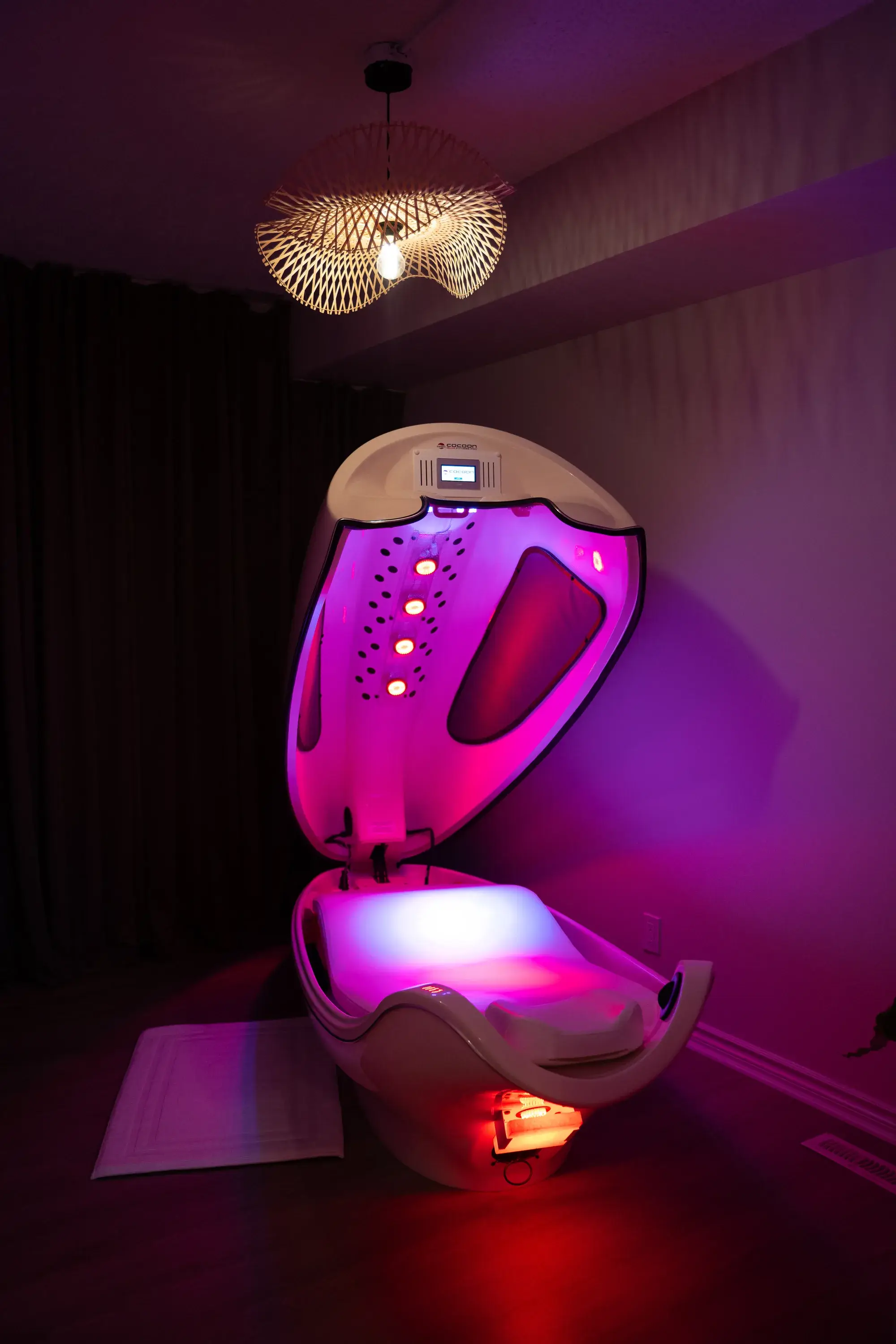
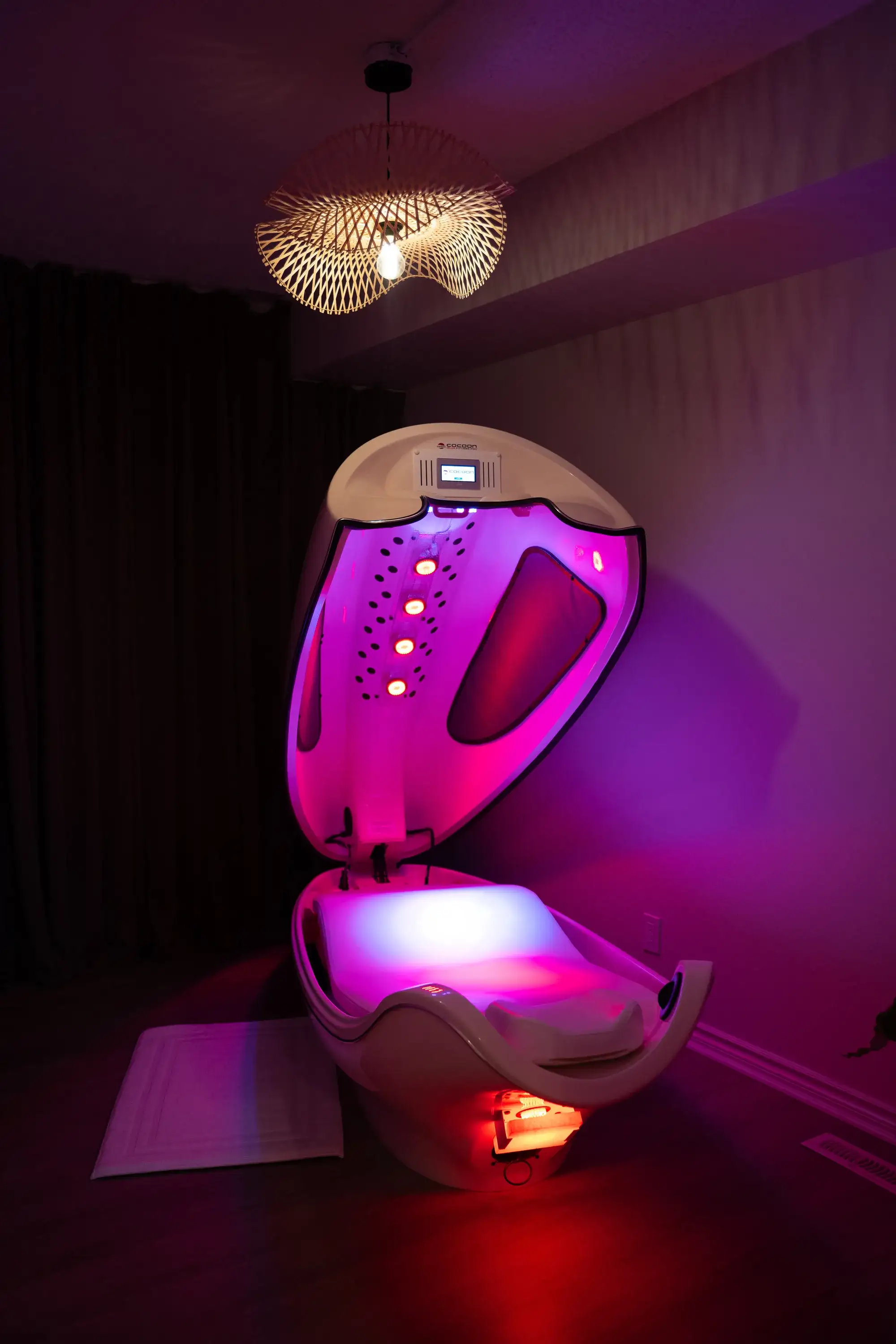
- Cocoon add-on to a massage, facial or lymphatic treatment: 20 minutes, $25.
- Cocoon session on its own: 20 minutes, $25, handy on a day you trained but are not booked for treatment.
- Monthly pod membership: $129 + GST for one month, with 40-minute member sessions included. If you train most days, this is the simplest way to use the pod regularly; you do not need to stay for the full 40 minutes.
Pod time is booked through Jane under BodyTox by Renu, the body studio inside our West Hillhurst clinic, and it runs on availability, so reserve it when you book your massage.
Who should check with a doctor before using heat for recovery
Some people should ask first. Northwestern Medicine advises anyone with a heart condition or high blood pressure, or who is pregnant, to talk with their doctor before using an infrared sauna. Cleveland Clinic adds people with MS, who tend to be heat intolerant, and anyone who is unwell, who should wait until they have recovered.
Get out of the pod at once if you feel dizzy, nauseated or your heart is racing in a way that does not settle. If you faint or have chest pain, call 911.
Questions people ask
How long after a workout should I use an infrared sauna?
In the trials we read, the sauna came soon after training: right after a resistance session in the basketball study and after the training session in the six-week study. Rehydrate first, especially after a long run or a hot day, and skip it if you feel light-headed.
Is 10 minutes in an infrared sauna enough to help recovery?
The six-week study used 10 minutes at 50 °C and found better loaded jump power, though its authors wondered whether 10 minutes was too short to warm the muscles enough for any effect on growth. Twenty minutes was used in the basketball trial. Nobody has worked out an ideal dose.
Can an infrared sauna help with an injury such as a sprain?
The recovery trials looked at healthy athletes after normal training, not injuries. A fresh sprain, strain or swollen joint should be assessed first, and heat on a newly swollen area is something to clear with whoever is treating it.
Is a traditional sauna better than infrared for recovery?
In the Finnish study, both sauna types were used for 30 minutes and the traditional one pushed heart rate higher. Northwestern Medicine notes that the strongest overall sauna evidence comes from traditional saunas, but neither type has been shown to be clearly better for muscle recovery.
Sources
- Mero et al., SpringerPlus (2015): Effects of far-infrared sauna bathing on recovery from strength and endurance training sessions in men
- Ahokas et al., Biology of Sport (2023): A post-exercise infrared sauna session improves recovery of neuromuscular performance and muscle soreness
- Ahokas et al., Frontiers in Sports and Active Living (2025): Effects of repeated use of post-exercise infrared sauna on neuromuscular performance and muscle hypertrophy
- Northwestern Medicine: Health benefits of infrared saunas and how they work
- Cleveland Clinic: Infrared sauna benefits
Page reviewed October 5, 2026. This page is education, not a diagnosis. For your own situation, talk to your doctor, surgeon or care team, or ask us.
Keep reading
Related pages