
Infrared sauna vs steam room
Infrared sauna vs steam room: steam is wet heat near 43 to 49 C at close to full humidity; infrared is dry radiant heat at about 40 to 60 C. How to choose.
By The Renu lymphatic and massage team · 5 min read
A steam room is wet heat: around 43 to 49 C with humidity close to saturation, so sweat cannot evaporate and even a short session feels intense. An infrared sauna is dry radiant heat at roughly 40 to 60 C that warms your body directly rather than the air around you, which many people find easier to breathe in and to stay in a little longer. Steam has one plausible edge, loosening mucus when you are congested; infrared suits a quieter, private, drier sweat. Both need the same caution around heart conditions, pregnancy and dehydration.
A steam room and an infrared sauna both make you sweat, but they do it in opposite air. Steam fills the room with moisture at a relatively modest temperature. Infrared leaves the air dry and warms your body directly. That one difference, humidity, explains most of what people notice: how hot it feels, how long they can stay, how it feels to breathe, and what it does to skin.
Wet heat and dry heat
Steam rooms usually sit around 43 to 49 C (110 to 120 F), according to WebMD, and are defined by their moisture. Traditional Turkish baths run around 50 C with humidity approaching saturation; the lower temperature compensates for the wet air.
Infrared saunas run at roughly 40 to 60 C (104 to 140 F). Instead of heating the air first, infrared emitters give off radiant heat that is absorbed by your skin. Cleveland Clinic gives a similar range, 43 to 57 C.
By comparison, a traditional Finnish sauna runs at 75 to 100 C with low humidity. Our page on infrared vs traditional sauna covers that comparison.
| Steam room | Infrared sauna | |
|---|---|---|
| Air | Near-saturated, wet | Dry |
| Typical temperature | About 43 to 49 C | About 40 to 60 C |
| How you heat up | Hot, wet air around you | Radiant heat absorbed by the skin |
| Suggested session | 5 to 10 minutes | Start at 5 to 10 minutes, build up, stay under 30 |
| Breathing feel | Heavy, moist | Dry, lighter |
| Setting at Renu | No steam room | A private room |
Why humidity changes how long you can stay
In a steam room, sweat runs off you but cannot evaporate into air that is already full of moisture. Evaporation is how sweat cools you, so a steam room at 45 C can feel harder than a dry room that is hotter. That is why WebMD advises keeping steam sessions to 5 to 10 minutes.
Infrared guidance from Cleveland Clinic is to start low, around 43 C for 5 to 10 minutes, build up as you tolerate it, keep sessions under 30 minutes, and use it no more than three or four times a week.
What each may do for you
Steam and congestion. WebMD notes that steam loosens mucus and phlegm, which can help you clear a blocked nose. This is the one benefit that is specific to wet heat. In a dry Calgary winter, that moisture is part of the appeal.
Heat and the heart. Most research on regular sauna bathing and lower blood pressure and cardiovascular risk comes from Finnish observational studies of traditional dry sauna, summarised in a 2018 review in Mayo Clinic Proceedings. It does not tell us much about steam rooms or infrared specifically. For infrared, the measured effects on blood pressure and heart rate appear short-term, and some may simply reflect fluid loss.
Detox. Sweating in either does not meaningfully remove toxins. Your liver and kidneys do that work, and heavy sweating can reduce urine output.
Skin, hygiene and safety
Warm, wet, shared surfaces are where steam rooms differ most. A 2025 dermatology review of communal bath settings lists athlete’s foot, plantar warts, molluscum contagiosum and Pseudomonas folliculitis, often called hot tub folliculitis, among the infections linked to them, while noting they are uncommon where facilities are disinfected frequently. WebMD likewise warns that the warmth and moisture can help bacteria grow.
Both forms of heat carry the same main risk, dehydration. Leave right away if you feel dizzy, sick, short of breath or tight in the chest.
Check with your doctor first
Some people should get medical advice before using either:
- heart and circulation: WebMD lists low blood pressure, coronary artery disease, a past stroke or TIA, and heart rhythm problems as reasons to ask your doctor before using a steam room
- pregnancy or trying to conceive: Cleveland Clinic advises against infrared saunas in both cases
- multiple sclerosis: Cleveland Clinic notes that people with MS tend to be heat intolerant and generally should not use saunas
- illness: wait until you have recovered
- lymphedema: see our page on sauna and steam rooms with lymphedema
If you take blood pressure medication or have a heart condition, our answer on using the pod with high blood pressure or a heart condition has more detail.
How to choose
- You are congested and want a short, hot soak: steam, for 5 to 10 minutes, once you are past the contagious stage.
- Humid air makes you feel short of breath: infrared’s dry heat is usually easier.
- You want a longer, quieter sweat on your own: infrared, built up gradually.
- You are prone to athlete’s foot or folliculitis: a private infrared session avoids shared wet floors.
- You have any of the conditions above: talk to your doctor first, whichever you choose.
Infrared heat at Renu
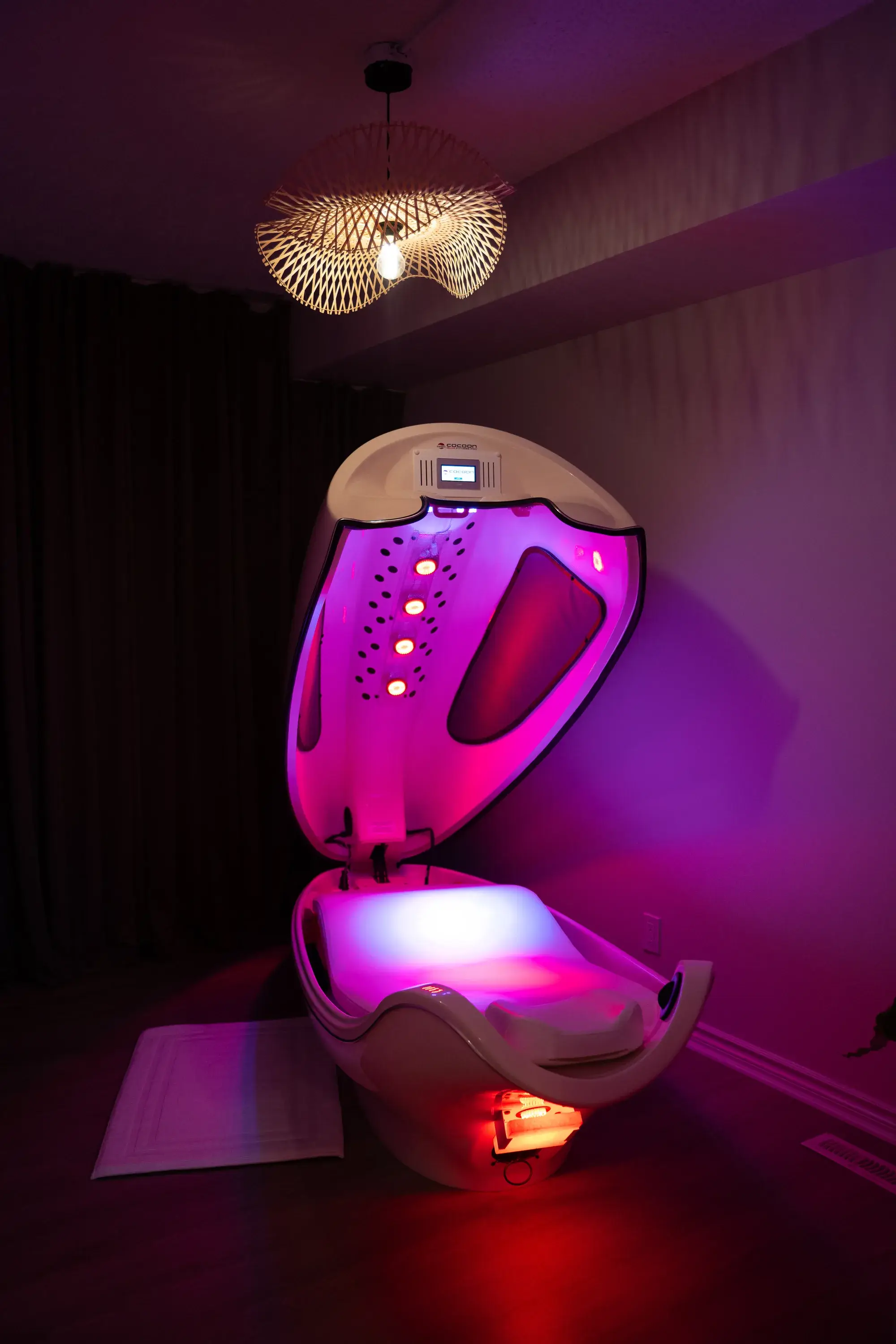
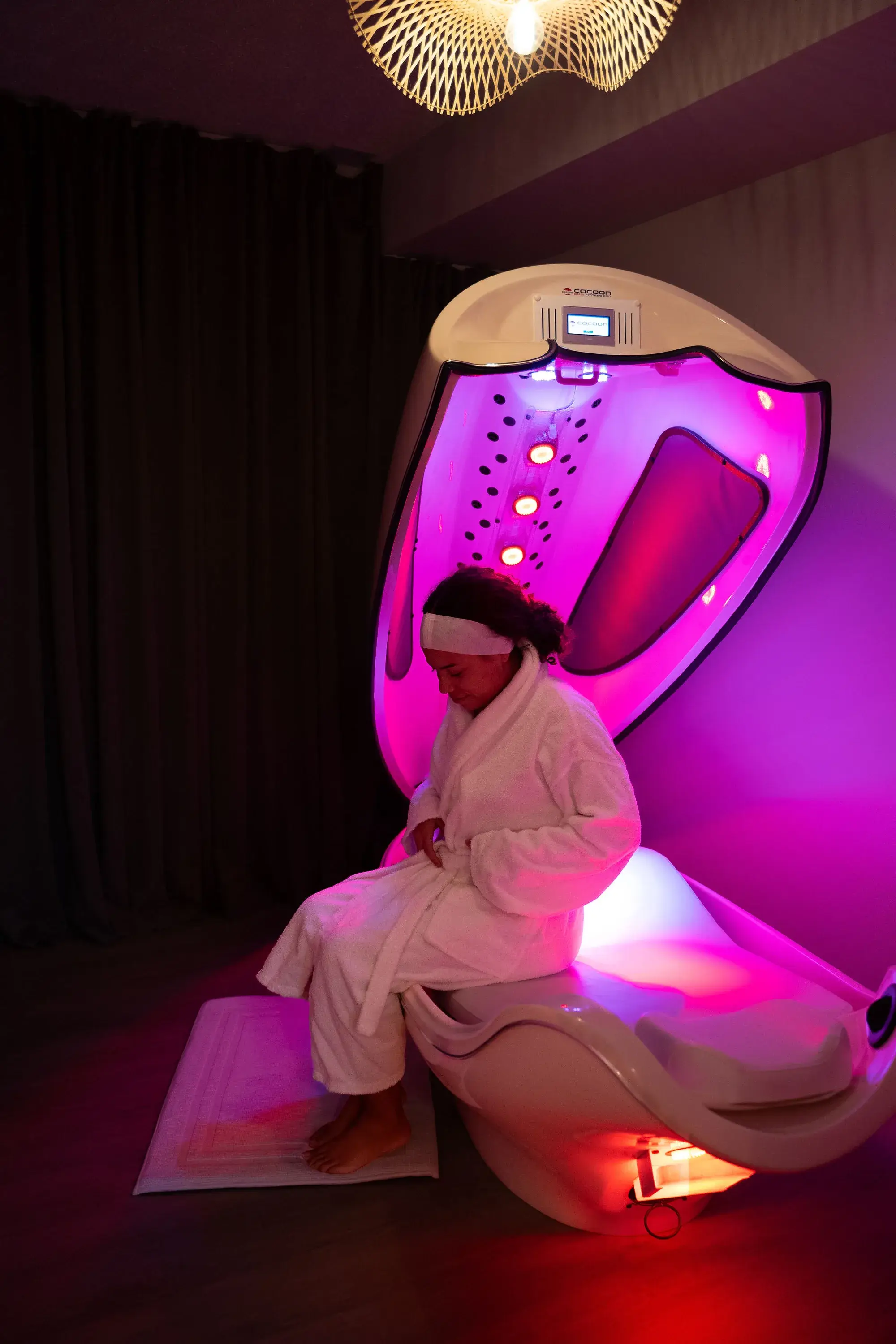
We do not have a steam room. What we offer is the infrared cocoon pod at BodyTox by Renu, in a private room inside our West Hillhurst clinic. A 20 minute session on its own is $25, or you can add 20 minutes to a facial, massage or lymphatic treatment for $25. For frequent use, the monthly pod membership is $129 plus GST, and it includes 40 minute member sessions. If you are new to infrared, the 20 minute session sits within Cleveland Clinic’s advice to start short and build up.
Book through Jane, and see what happens in a cocoon pod session before your first visit. If you feel woozy afterwards, this page on light-headedness explains why and what helps.
Questions people ask
Is a steam room or an infrared sauna better for a cold?
Steam is the one with a plausible benefit, because warm moist air loosens mucus and can help clear congestion. That said, Cleveland Clinic advises waiting until you are well before using an infrared sauna, and a steam room shared with others is not the place for a contagious cold.
Why does a steam room feel hotter than an infrared sauna at the same temperature?
In near-saturated air your sweat cannot evaporate, so your body loses its main way of cooling. In dry air, sweat evaporates and carries heat away, which is why a dry room at a similar or higher temperature can feel more bearable.
Are steam rooms bad for your skin?
Not usually, but warm, damp communal spaces favour fungal and bacterial skin infections such as athlete's foot and hot tub folliculitis. A dermatology review notes these infections are uncommon where facilities are disinfected often. Wear sandals and shower afterwards.
Can I use a steam room or infrared sauna with lymphedema?
Talk to your lymphedema therapist or doctor first, because heat is a known concern with lymphedema and guidance differs between organisations. Our page on sauna and steam rooms with lymphedema sets out what each one says.
Sources
- WebMD: Health benefits of steam rooms
- Wikipedia: Sauna
- Wikipedia: Infrared sauna
- Cleveland Clinic: Infrared sauna benefits
- Kutlu O et al. Turkish bath-associated infectious dermatoses: a comprehensive review. Sisli Etfal Hastan Tip Bul, 2025 (Europe PMC)
- Laukkanen JA, Laukkanen T, Kunutsor SK. Cardiovascular and other health benefits of sauna bathing: a review of the evidence. Mayo Clin Proc, 2018 (Europe PMC)
Page reviewed October 5, 2026. This page is education, not a diagnosis. For your own situation, talk to your doctor, surgeon or care team, or ask us.
Keep reading
Related pages