
Your first TMJ massage in Calgary: what to expect
Your first TMJ massage in Calgary: jaw questions, outside work on the jaw and neck, then gloved intra-oral work only with your consent and a pause signal.
By The Renu lymphatic and massage team · 6 min read
Your first TMJ massage begins with questions about your jaw, then external massage of the jaw, temples, neck and the base of the skull. Only after your therapist explains it and you agree does the intra-oral part start, with a gloved finger inside your cheek, and you agree a hand signal beforehand because you cannot talk during it. Expect your jaw to feel tender for a day or so, and plan soft food that evening.
How the hour is laid out
A first TMJ massage moves from the outside in. You talk about your jaw, the therapist works the neck, head and face from outside, and the intra-oral part comes last and only with your agreement. Here is the usual order:
- Questions about your jaw: when it hurts, whether it clicks or locks, whether you clench or grind.
- A look at how wide and how straight your mouth opens.
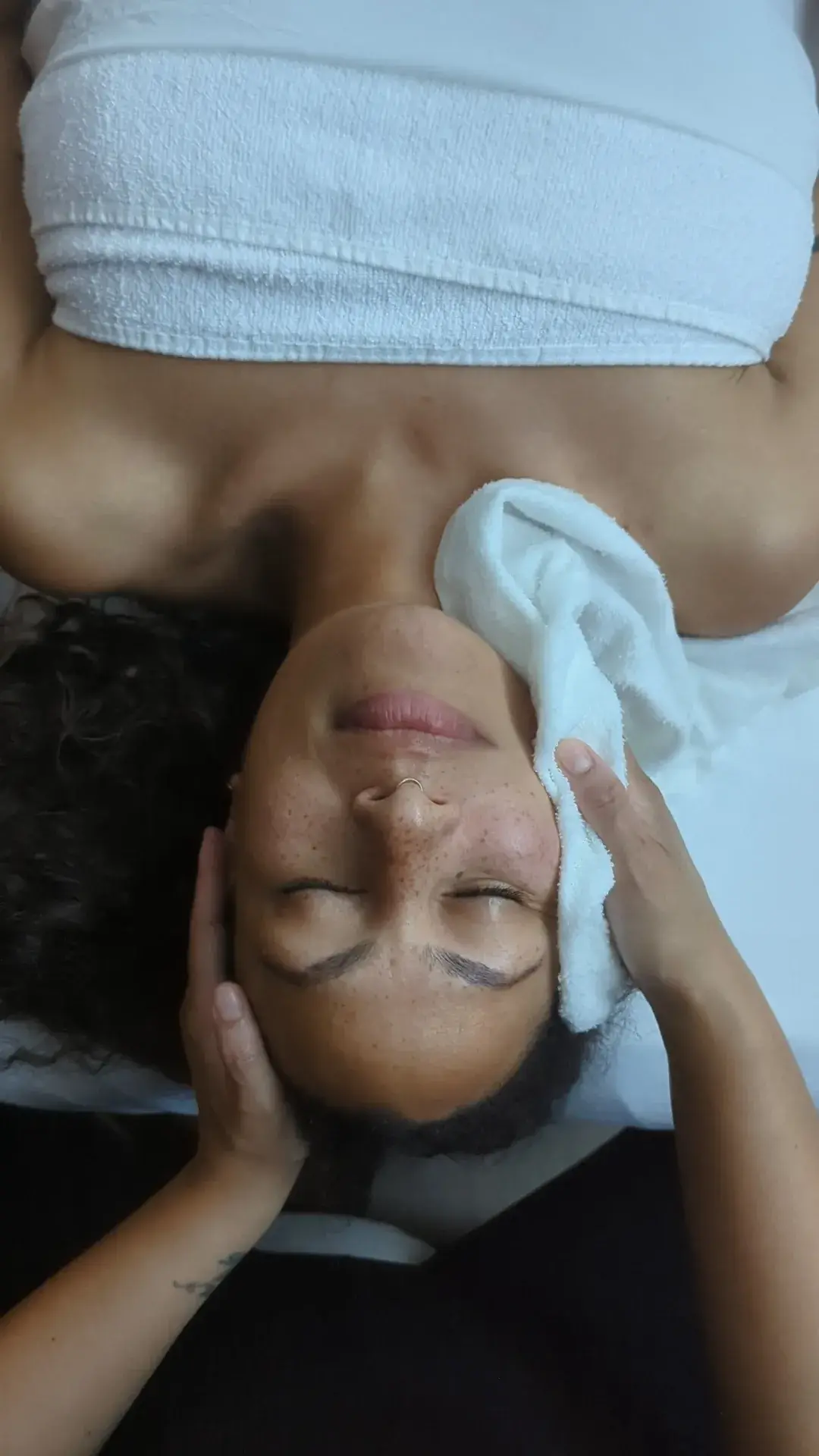
- External massage of the neck, the base of the skull, the temples and the cheeks.
- A plain explanation of the intra-oral work, and your yes or no.
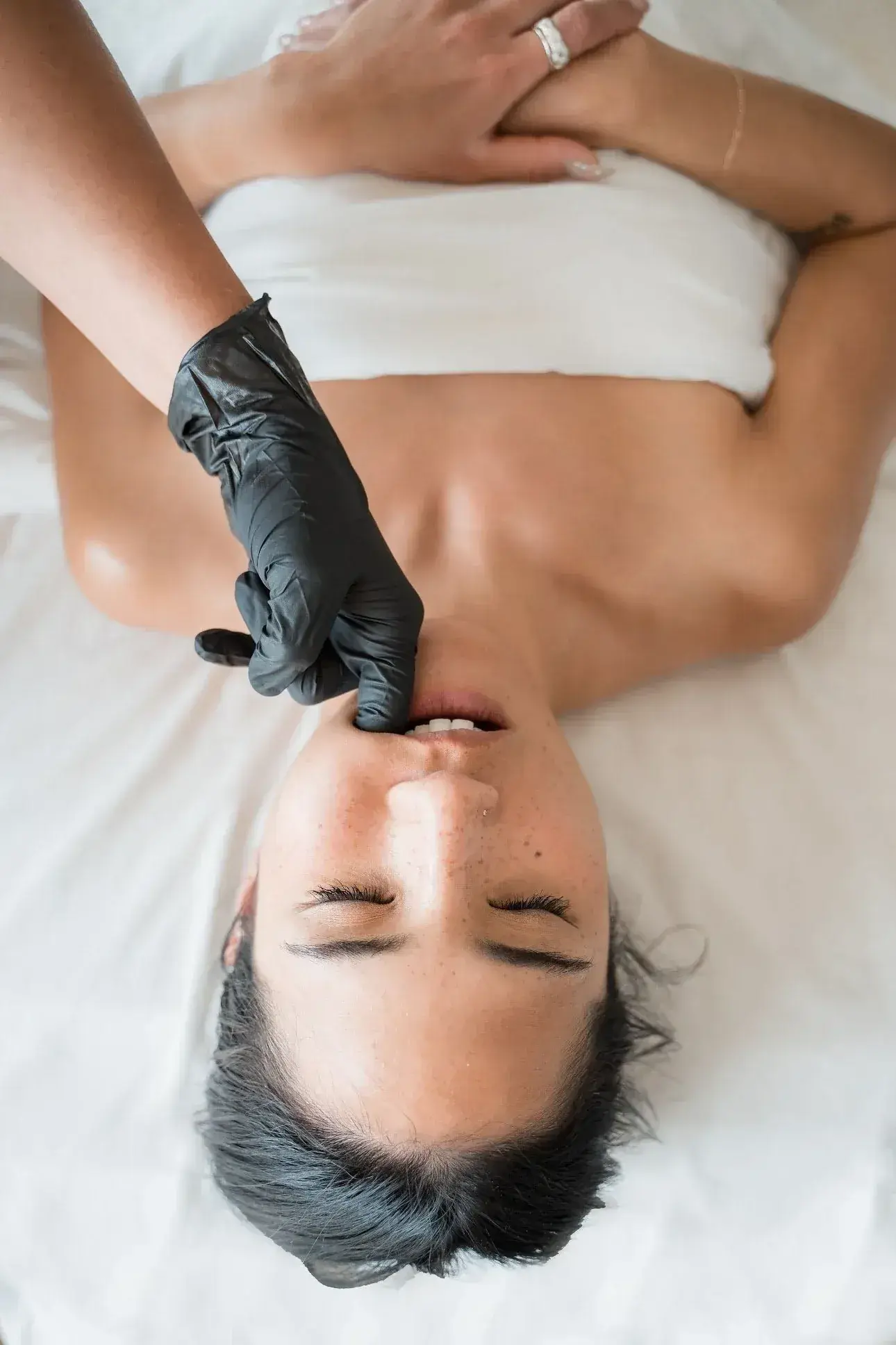
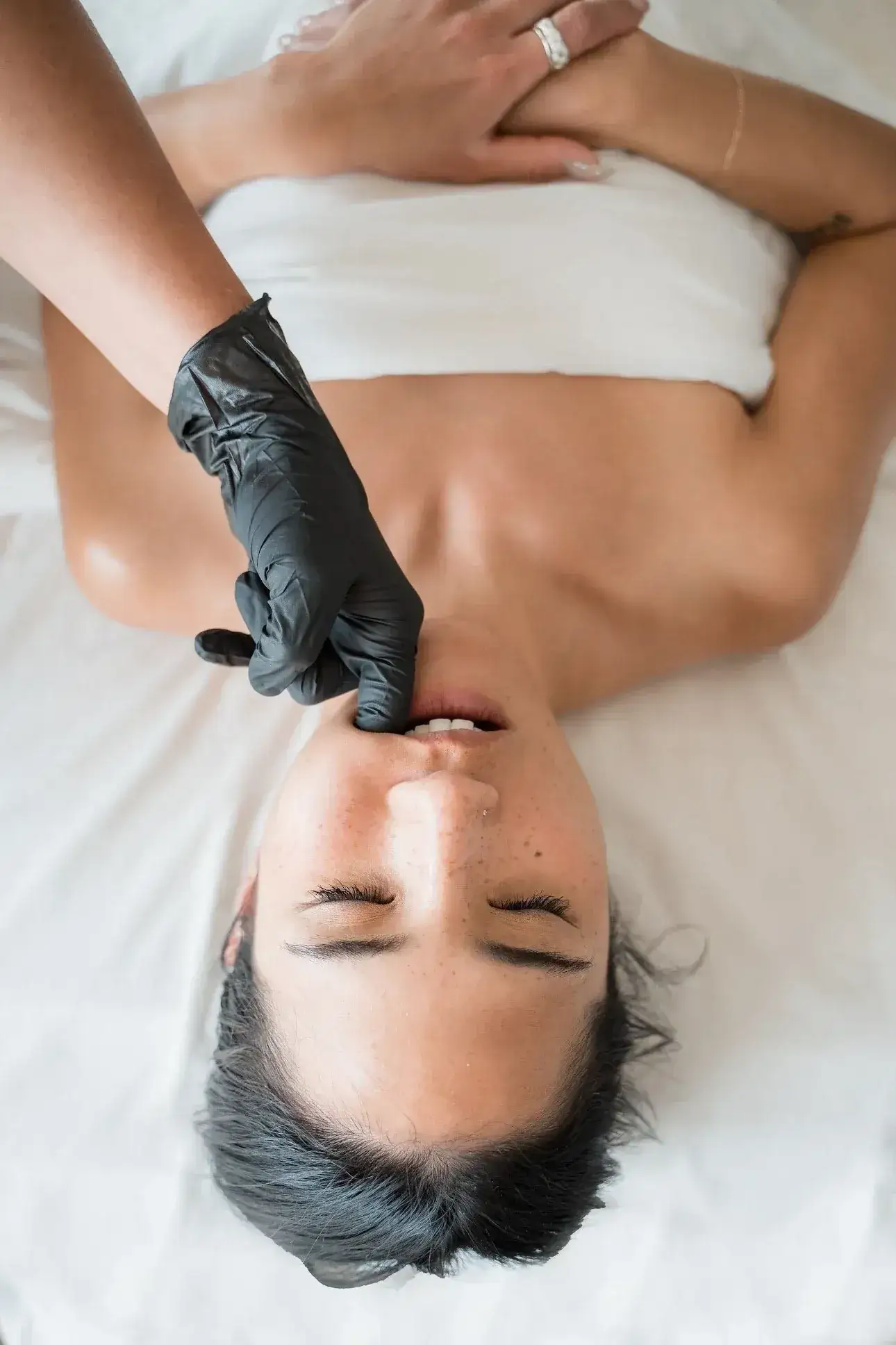
- Gloved intra-oral work, in short stretches with breaks.
- A little more external work to settle the area, and advice for the evening.
The questions come first, and some answers mean a doctor first
Your therapist needs to know what kind of jaw problem this is before touching it. The NHS describes the common signs of temporomandibular disorder as pain around the jaw, ear and temple, clicking or popping, difficulty opening the mouth fully and, sometimes, locking.
Some answers point away from massage. The NHS asks people to get urgent help if they cannot eat or drink, have a severely locked jaw, have frequent severe headaches, have problems with their vision, or have a tender scalp, because these can signal a serious problem. If any of those apply, we will ask you to see your doctor or dentist before we treat. Our page on seeing a dentist before booking explains when a dental check makes sense, and jaw that locks covers that symptom on its own.
Also mention a cold sore, mouth ulcer, recent extraction or any infection in your mouth. Expect the inside work to wait until those have healed.
External work: neck, skull and temples before the jaw
Most of the session happens outside your mouth. Healthline lists the muscles TMJ massage commonly works: the masseter above and below the cheekbone, the temporalis at the temples, the suboccipitals under the back of the skull, the sternocleidomastoid at the front of the neck, and the upper trapezius across the neck and shoulders.
The neck comes early because tension there and in the jaw tend to travel together, and a relaxed neck makes the face easier to work. When your therapist reaches the masseter, expect a broad, firm pressure along the cheek that can feel surprisingly tender if you clench. Temple work tends to feel like a slow, deep circle. Healthline notes that pressing a trigger point can produce pain, tingling, twitching or itching, so a strange buzz is not a sign that something has gone wrong.
Consent before the intra-oral part
Intra-oral work only begins after your therapist has told you what they will do and you have said yes. CRMTA standards require that you are fully informed and consent before treatment, and that treatment stops if you withdraw consent. Healthline quotes an RMT noting that intra-oral work is part of a registered massage therapist’s scope of practice.
Before the gloves go on, you agree a signal. You will not be able to speak with a finger inside your cheek, so most people choose a raised hand to pause and a tap on the table to stop. Use it as often as you like. Taking a breath, swallowing or asking for a minute is part of the work, not an interruption.
What the inside work feels like
The intra-oral part feels like firm, specific pressure inside the cheek, tender in places but not sharp. Your therapist slides a gloved finger between your cheek and your back teeth to reach the inner surface of the masseter, then, if you are comfortable, works further back toward the deeper chewing muscles.
That deeper spot, near the pterygoid muscles, is the one most first-timers remember. It can feel intensely tender, a little like pressing a bruise you did not know you had. Pressure is held for a short time and eased when you signal. Your mouth may water and you may need to swallow; that is expected, and your therapist will pause to let you. Why the inside route is needed at all is explained in why TMJ massage goes inside the mouth.
The next 24 to 48 hours
Expect your jaw to feel worked, as though you had chewed something tough, for a day or so. The NHS self-care advice suits this window well:
- Soft food such as pasta, omelettes and soup
- A heat pack or ice pack wrapped in a tea towel on the jaw
- No chewing gum, nail biting or pen chewing
- No very wide yawns, and no clenching outside of eating
If you would like a routine to follow, our TMJ flare routine lays one out. Tenderness that is getting worse after two days, or new locking, is worth a call to your dentist or doctor.
How sessions might be spaced
There is no fixed course, but research gives a reference point. In a randomized trial of 93 adults aged 18 to 50 with jaw-muscle pain lasting more than three months, intra-oral myofascial therapy was given twice a week for five weeks. Both treatment groups improved more than a wait-list group on resting, opening and clenching pain and on mouth opening at six months and one year, and the group that added education and self-care exercises did better still at one year. Those treatments were delivered by chiropractors, so the study supports the intra-oral approach rather than any one profession.
The Cleveland Clinic notes that some people with TMD feel better in a week or two while others need ongoing care. Your therapist will suggest a rhythm after the first session; how many TMJ massage sessions you need goes into it further.
TMJ massage at Renu
TMJ massage at Renu is a 60-minute session at $120, booked in Jane. Sasha Bernard, RMT, lists TMJ intra-oral work among her credentials. If your jaw pain comes with stubborn neck or shoulder restriction, RAPID NeuroFascial Reset with Monica Von Gaza is listed on the same menu at 30 minutes for $85 or 45 minutes for $110; our page on a first RAPID session explains how that differs. We are on 19 Street NW in West Hillhurst, open seven days, with weekday evening times for people who clench through the workday.
When to see a dentist or doctor instead
Massage is for muscle-driven jaw pain, not for every jaw problem. See a dentist or doctor rather than booking if you cannot eat or drink, your jaw is locked, you have frequent severe headaches, vision problems or a tender scalp, or the pain followed a blow to the face. The Cleveland Clinic also advises talking to a health care provider if jaw pain, clicking or stiffness does not improve.
Questions people ask
Do I have to have the inside-the-mouth part on my first visit?
No. Intra-oral work only happens if you agree to it, and you can decide to have external work only on the first visit and try the inside work another time. Your therapist will still treat the jaw, temples and neck from outside.
Is intra-oral massage hygienic?
Intra-oral work is done with a gloved hand, never bare fingers. Mention any glove or latex allergy when you book so it can be planned for.
Should I brush my teeth before a TMJ massage?
It is a kind thing to do and makes the intra-oral part more comfortable for you, but it is not required. Take out any removable retainer, aligner or denture before the session; fixed braces are covered on their own page.
Can I eat normally after TMJ massage?
Most people can, but the NHS suggests soft foods such as pasta, omelettes and soup when the jaw is sore. That is a sensible choice for the first evening, along with skipping chewing gum.
Sources
- Kalamir et al., Journal of Manipulative and Physiological Therapeutics: Intraoral myofascial therapy for chronic myogenous TMD, a randomized controlled trial (2012)
- Healthline: TMJ massage
- NHS: Temporomandibular disorder (TMD)
- Cleveland Clinic: Temporomandibular disorders (TMD)
- CRMTA: Standards of practice
Page reviewed October 5, 2026. This page is education, not a diagnosis. For your own situation, talk to your doctor, surgeon or care team, or ask us.
Keep reading
Related pages