
Does an infrared sauna help you lose weight?
Does an infrared sauna help you lose weight? Not really: the drop on the scale is sweat that returns when you drink. Here is what heat can and cannot do.
By The Renu lymphatic and massage team · 6 min read
Not in the way the scale suggests. The weight you lose in an infrared session is sweat, and it comes back as soon as you drink, which you should. A sauna can be a calm, restorative part of a weight plan, but the plan itself still rests on food, movement, stress and sleep.
Not in the way the scale suggests. Step on a scale after twenty minutes of infrared heat and the number may well be lower, but what left your body was water, and it returns as soon as you drink. That is a good thing, because replacing it is part of using a sauna safely.
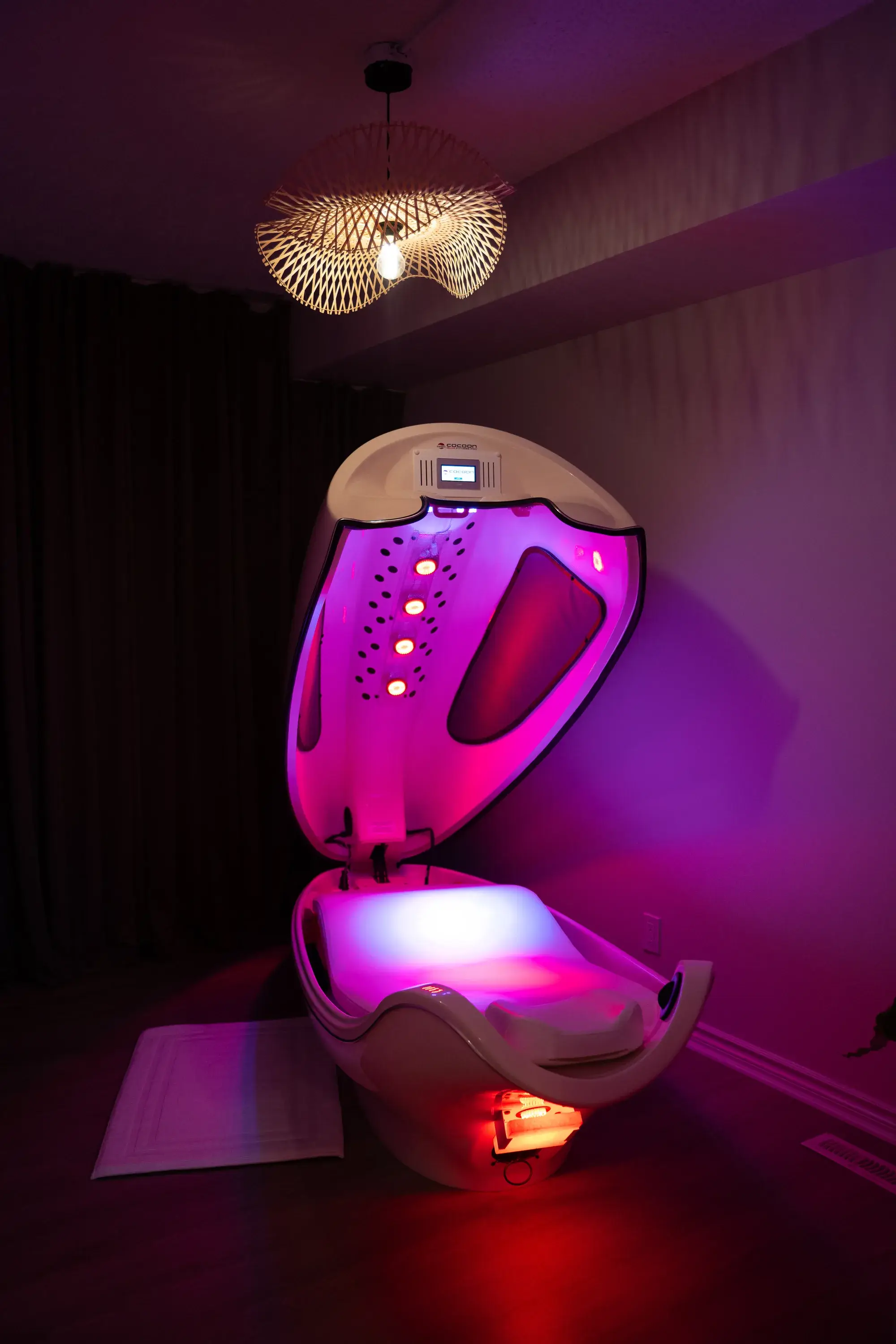
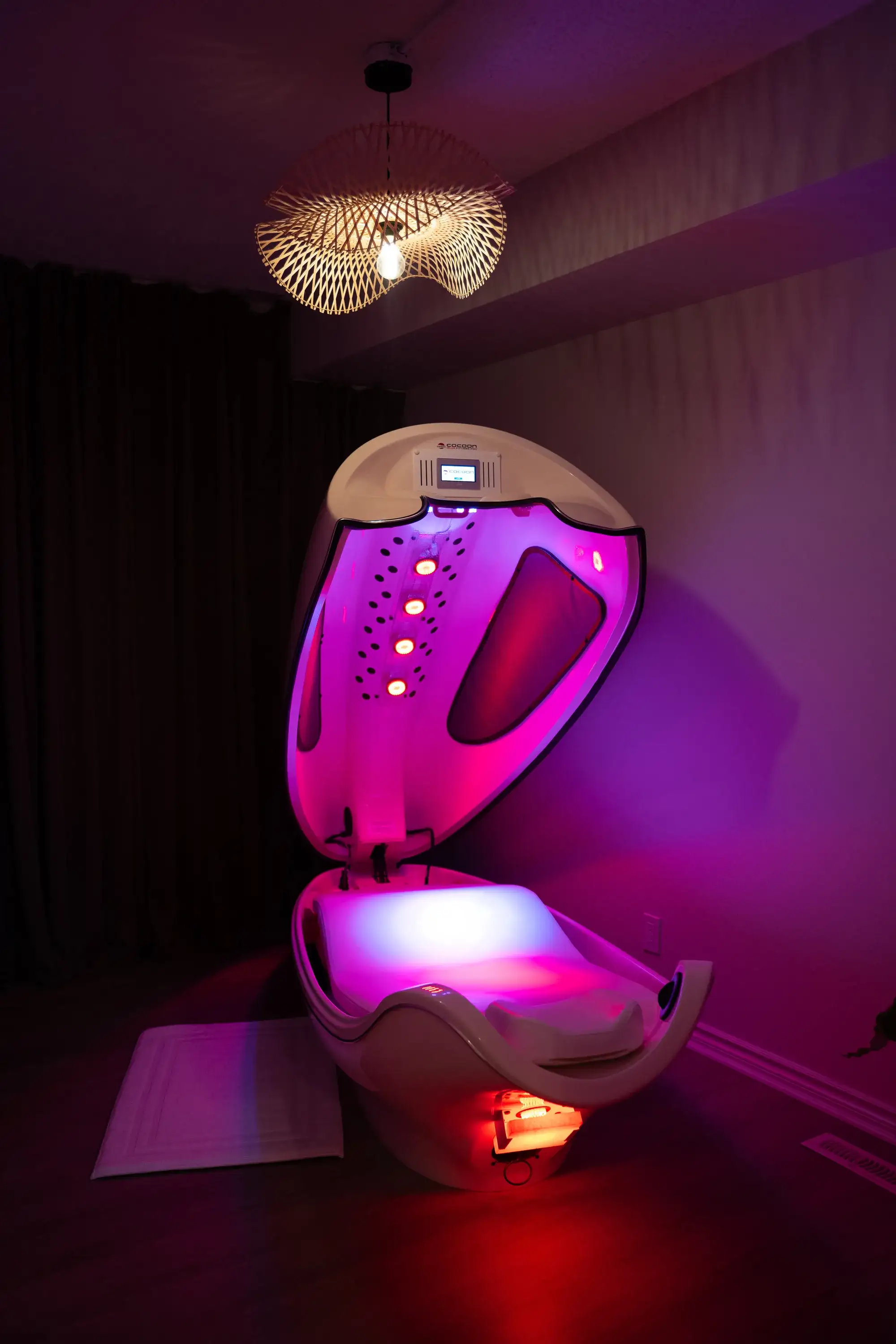
We get asked this often enough, usually by people looking at the cocoon pod membership, that it deserves a straight answer. Here is what the heat actually does, what it does not do, and where a sauna can honestly fit if you are working on your weight.
What the scale is measuring after a session
The scale is measuring sweat. Harvard Health estimates that the average person sweats out about a pint during a short sauna stint, and recommends drinking two to four glasses of cool water afterwards.
Researchers have used exactly this effect on purpose. In a 2025 study, healthy young adults sat in a portable infrared sauna set to about 66 °C, in rounds of up to 20 minutes with short rests, specifically to dehydrate them for experiments. Over roughly two hours of total heat, the men lost about 2.8 percent of their body mass and the women about 2.4 percent, and the authors describe that loss as sweat. In other words, a sauna is a reliable way to lose fluid, which is why scientists use it when they want people dehydrated.
None of that is fat. It is the same water you would replace with a few glasses at the kitchen sink.
| What changes in a session | Does it last? |
|---|---|
| Body weight (fluid lost as sweat) | No, it returns when you rehydrate |
| Core temperature | No, it settles once you cool down |
| Heart rate | No, it eases after the session |
| Body fat | No good evidence it changes |
Heat is not the same as a workout
A sauna raises your temperature far more than it works your body. That distinction matters for weight.
A small 2022 crossover trial in ten healthy women compared 45 minutes of infrared sauna with moderate exercise and with sitting quietly. Ear temperature rose most in the sauna, while breathing rate rose most with exercise. The researchers found no differences in blood pressure, arterial stiffness or heart rate variability between the three, and concluded that the sauna’s effects are driven by the body cooling itself rather than by anything resembling exercise.
Northwestern Medicine makes the practical point: using a sauna is not a substitute for exercise, and infrared research is mostly small, short-term studies. Cleveland Clinic describes the body’s response to infrared heat as one that “mimics exercise” in the sense that blood vessels widen and heart rate rises, but it does not offer weight loss as a benefit, and neither did any of the other sources we read.
So if you have seen claims of hundreds of calories burned per session, we could not find research that supports them, and we would not plan around them.
Where a sauna can sensibly fit in a weight plan
The pod can support the habits that do move the needle, even if it does not move it itself. CDC describes sustainable weight management as a lifestyle with good nutrition, regular physical activity, stress management and enough sleep, and notes that people who lose about 1 to 2 pounds a week are more likely to keep it off than people who lose weight faster. CDC also points out that losing 5 percent of your body weight, 10 pounds for someone at 200, can help lower blood pressure, cholesterol and blood sugar.
Against that backdrop, a sauna session can reasonably be:
- A wind-down that is not food or alcohol. A quiet, warm half hour after a long day is a stress outlet in its own right.
- Part of a recovery routine on days you train. Our page on whether an infrared sauna helps muscle recovery looks at what the athlete studies found.
- A reason to slow down. Many people find a regular, booked block of rest easier to protect than a vague intention to relax.
What it should not be is the plan itself, or a reason to skip the walk, the meal planning or the earlier bedtime. If someone promises you inches lost in the pod, they are describing water.
Lymphatic treatments get the same question, and the honest answer there is similar. See does lymphatic drainage help you lose weight if that is your next thought.
Using the pod safely while you are trying to lose weight
People working on their weight sometimes push heat harder, hoping more sweat means more progress. It does not, and it raises the risks. Northwestern Medicine lists dehydration, dizziness and overheating as the main side effects of infrared saunas.
Sensible limits from the sources we read:
- Start short. Cleveland Clinic suggests five to 10 minutes at the low end of the temperature range at first, building up as your body adapts.
- Cap it. Cleveland Clinic advises keeping sessions under 30 minutes and visits to three or four a week; Northwestern Medicine describes 15 to 30 minutes, two to four times a week, as typical.
- Drink before, during and after. Bring water in with you. Cleveland Clinic notes that an electrolyte drink can also help.
- No alcohol around a session. Harvard Health advises avoiding alcohol and medicines that impair sweating before and after.
- Get out if you feel dizzy or nauseated, as Cleveland Clinic advises.
Calgary’s dry air, especially in winter and during a chinook, is another reason to take hydration seriously; you may not feel how much fluid you are losing.
Check with your doctor first if
- you have heart disease, high blood pressure or take regular medication (Northwestern Medicine and Harvard Health both say to ask first);
- you are pregnant or trying to conceive (Cleveland Clinic advises against sauna heat in pregnancy and notes heat affects sperm);
- you have MS or another heat-sensitive condition;
- you are taking medicines for weight loss or diabetes, which can change how you handle fluid and blood sugar; your prescriber is the right person to ask about heat.
Do not use the pod while you are unwell; Harvard Health and Cleveland Clinic both say to wait until you have recovered.
The cocoon pod at Renu: sessions and membership
The infrared cocoon pod is in BodyTox by Renu, the lymphatic body studio inside our West Hillhurst clinic. A cocoon session on its own is 20 minutes for $25, and a 20-minute session is included with the new client massage special and with every Full BodyTox.
If you would like to use the pod regularly, the monthly pod membership is $129 + GST for one month, and member sessions of 40 minutes are included. Forty minutes is longer than the 30-minute ceiling Cleveland Clinic suggests, so there is no need to use the full time, particularly in your first weeks; leaving early is always fine.
Book pod time through Jane under the BodyTox by Renu location, or call the front desk. If weight is part of why you are asking, tell us; we will happily talk through how the pod fits into the rest of your week, and we will be honest about what it will not do. Our page on how often you can use the infrared cocoon pod covers frequency in more detail.
Questions people ask
How much weight do you lose in one infrared sauna session?
It depends on how much you sweat, how hot the session is and how long you stay in. Harvard Health puts a short sauna stint at about a pint of sweat. Whatever the number, it is fluid, and drinking afterwards puts it back.
Does an infrared sauna burn fat while you lie there?
We did not find good evidence that it does. The trials we read measured temperature, heart rate and fluid loss, not fat. Northwestern Medicine is clear that a sauna is not a substitute for exercise.
Should I weigh myself before and after the pod to track progress?
We would not. A before-and-after weigh-in mostly measures how dehydrated you got, which is the opposite of what you want. If you track weight, do it at the same time of day, well away from sauna sessions.
Is the pod membership worth it if weight loss is my main goal?
Honestly, the pod is better value if you also want a regular quiet hour of heat and rest. Weight change comes from the bigger habits CDC describes, and the pod can sit alongside those rather than replace any of them.
Sources
- Harvard Health Publishing: Saunas and your health
- Lebron et al., Journal of the International Society of Sports Nutrition (2025): Reliability of achieving target dehydration levels using a portable infrared sauna protocol
- Hussain et al., Complementary Therapies in Medicine (2022): Infrared sauna as exercise-mimetic? A randomized crossover trial in healthy women
- CDC: Losing weight
- Cleveland Clinic: Infrared sauna benefits
- Northwestern Medicine: Health benefits of infrared saunas and how they work
Page reviewed October 5, 2026. This page is education, not a diagnosis. For your own situation, talk to your doctor, surgeon or care team, or ask us.
Keep reading
Related pages