

Do you need medical approval for a prenatal massage?
Do you need medical approval for a prenatal massage? Not for a healthy pregnancy, but check with your provider first, and always if you have complications.
By The Renu lymphatic and massage team · 5 min read
For a healthy, uncomplicated pregnancy you generally do not need a signed note to book a prenatal massage, but health sources advise mentioning it to your doctor or midwife first, and that is a good habit. If your pregnancy has complications, such as high blood pressure, gestational diabetes or another condition your provider is watching, massage should only go ahead after you have talked it through with them. Either way, tell your massage therapist you are pregnant and what your provider has said.
If your pregnancy is healthy and uncomplicated, you generally do not need a signed note or formal clearance to book a prenatal massage. The sources we trust still suggest a quick word with your doctor or midwife first, and we agree; it costs nothing and catches the occasional concern you may not have known about. When a pregnancy has complications, that conversation stops being a courtesy and becomes the first step.
Approval for a healthy pregnancy: a conversation, not paperwork
For most people, “approval” simply means your provider knows and has no concerns. Cleveland Clinic advises checking with your pregnancy provider before a prenatal massage, and HealthLink BC, British Columbia’s public health information service, focuses on what you tell the massage therapist: that you are pregnant, and choosing someone with training in pregnancy massage.
The research supports massage for healthy pregnancies. A 2021 systematic review of 12 randomized trials found relaxation massage reduced stress, anxiety, depression and back and leg pain in pregnant women without complications. All the women in those trials were at least 12 weeks pregnant when they started, which is one reason many providers suggest waiting until the second trimester.
When your provider’s go-ahead really matters
Some situations call for a real discussion before anyone puts hands on you. The same 2021 review concluded that women with difficult pregnancies or pre-existing complications should only be massaged after consulting their obstetrician. The trials it reviewed deliberately excluded women with placenta previa, premature labour, blood clotting disorders and diabetes. Cleveland Clinic names gestational diabetes and high blood pressure as examples of conditions where a provider may advise against massage.
| Your situation | What we suggest |
|---|---|
| Healthy pregnancy, past 12 weeks, no concerns from your provider | Mention it at your next appointment and book |
| First trimester | Ask your provider; many recommend waiting until the second trimester |
| High blood pressure, gestational diabetes, a clotting disorder, placenta previa or preterm labour | Talk with your provider before booking, and bring their advice to the session |
| Twins or more, or a pregnancy labelled high risk | Get your provider’s view first; see massage in a high-risk or twin pregnancy |
| New symptoms since your last appointment | Check with your provider before your next massage |
Our page on when to wait on prenatal massage lists the conditions and symptoms in more detail. This page is about the step before that: getting the right answer from the person who knows your pregnancy.
Questions worth asking your doctor or midwife
A specific question gets a more useful answer than “is massage okay?” Try these at your next prenatal visit:
- Is there anything about my pregnancy that makes massage a bad idea right now?
- Are there areas I should ask the therapist to avoid, or positions I should not lie in?
- Is my blood pressure, blood sugar or anything else something the therapist should know about?
- Are any essential oils a problem for me? HealthLink BC advises talking to your doctor before using aromatherapy oils, because some may be unsafe in pregnancy.
- Should I check in again later in the pregnancy?
Write the answers down or save them in your phone. You will want them when you arrive.
What to share with your therapist on the day
Even with your provider’s blessing, your therapist needs the details to adapt the session. Tell them:
- how many weeks pregnant you are, and whether you are carrying more than one baby
- any diagnosis your provider is monitoring, and any medications
- what your provider said about massage, including any limits
- any pain, swelling or discomfort that is new, especially in one leg
Feeling able to say this matters. In a 2020 study where 20 women described their pregnancy massages, they felt safer when they could voice their needs and be heard, and when the therapist was experienced and qualified. They also said that mixed messages about whether massage was safe made them doubt it. A clear conversation with your provider, carried through to your therapist, is the simplest way to end the mixed messages.
Medical approval and insurance notes are different things
A clinical go-ahead and a note for your benefits plan answer different questions. Approval is about whether massage is right for your body today. A note is about whether your insurer will reimburse the session, and each plan sets its own rule. If you are hoping to claim prenatal massage, read when you need a doctor’s note for massage therapy and check your plan before your appointment.
Prenatal massage at Renu
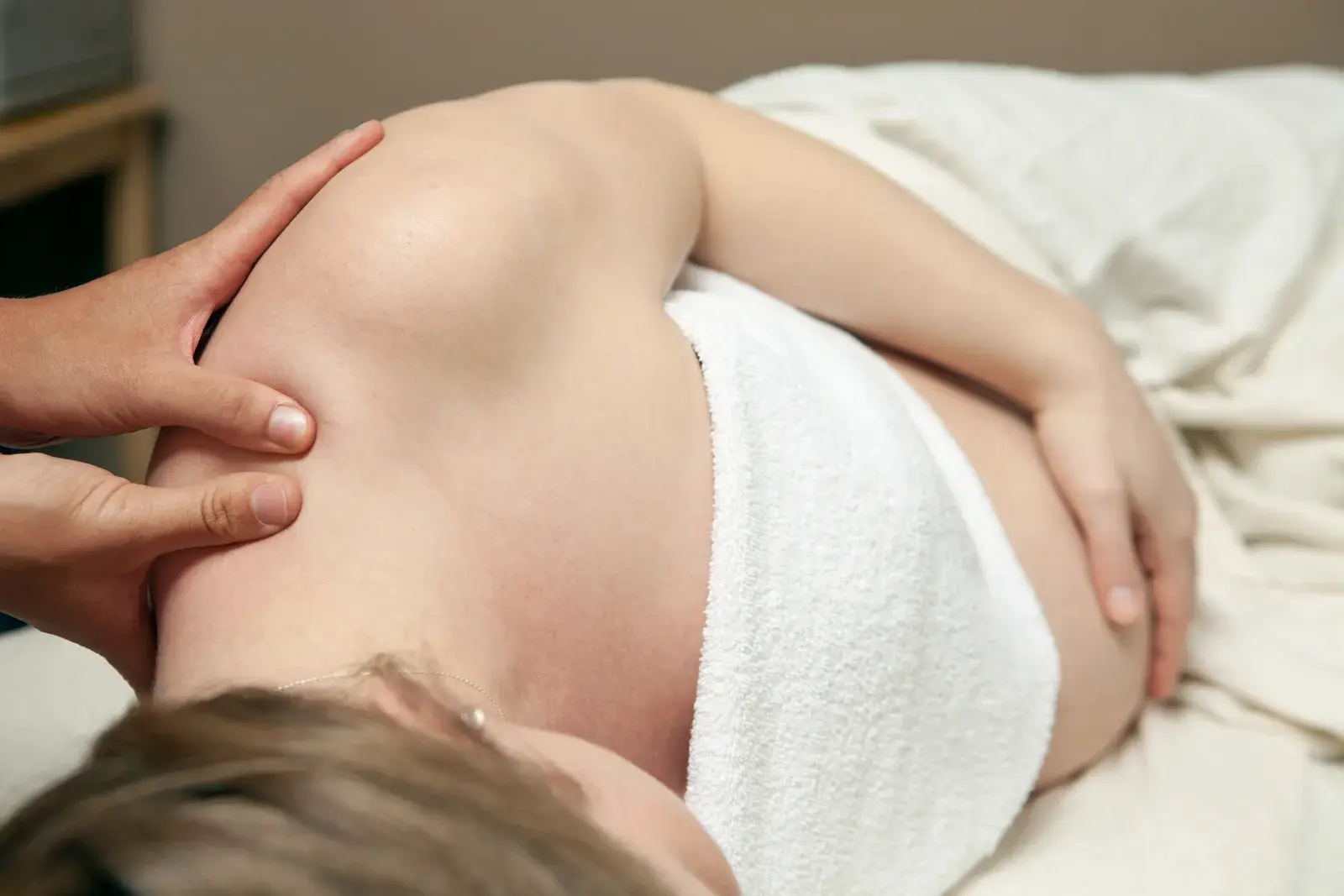
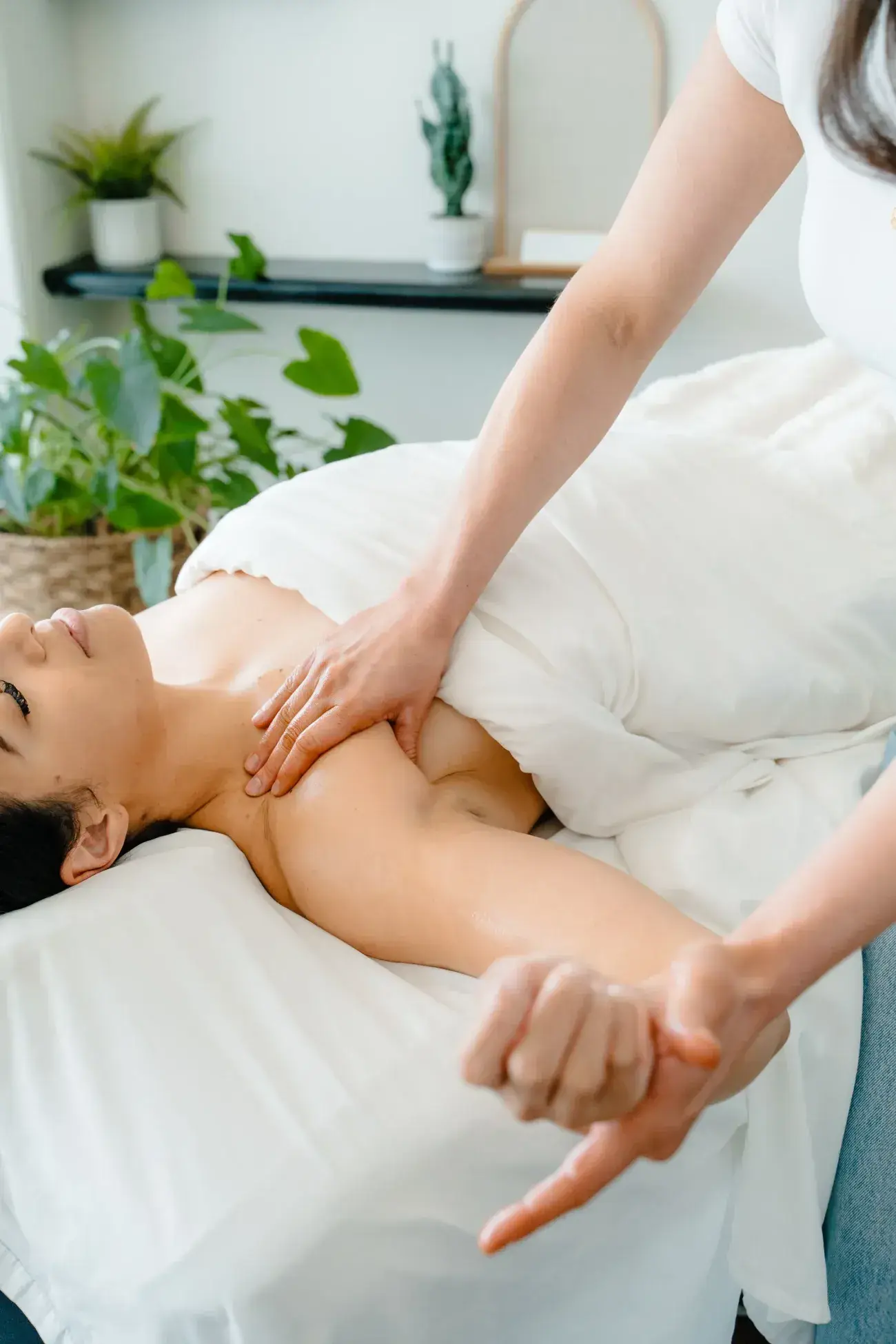
At Renu, prenatal massage is offered by Sasha Bernard and Dr. Will Tanner, both Registered Massage Therapists, as a 60-minute session for $120 or a 90-minute session for $157. You are usually positioned on your side with supportive cushioning and draped throughout, and pressure is adjusted to your stage and comfort. Aisha Mendes, our licensed esthetician and Brazilian lymphatic specialist, also offers a 75-minute Pre-natal Drift and Drain for $170.
Booking is through Jane. Bring what your provider told you, and if anything has changed since your last prenatal appointment, we would rather you check first and rebook than come in unsure. The clinic is in West Hillhurst, on 19 Street NW, and open seven days.
Symptoms that mean call your provider, not your therapist
Some symptoms need medical attention before any massage. Pregnancy and the six weeks after birth raise the risk of a deep vein thrombosis, a clot in a deep vein. The NHS lists throbbing pain in one leg, usually the calf or thigh, and swelling in one leg as warning signs; ask for an urgent appointment. If those come with breathing difficulty or chest pain, call 911, because the clot may have travelled to the lungs. The 2021 review notes that clot symptoms can resemble the ordinary swelling and back pain of pregnancy, which is exactly why a new one-sided leg symptom should go to your provider first.
Questions people ask
Does a midwife's okay count the same as a doctor's?
Yes. Whoever is managing your pregnancy, whether a midwife, family doctor or obstetrician, is the right person to ask, because they know your history and current tests. What matters is that the person who knows your pregnancy has had the chance to raise any concerns.
Do I need to bring something in writing?
For an uncomplicated pregnancy, a verbal conversation with your provider is usually enough, and you can simply tell your therapist what was said. A written note becomes useful when your provider has given specific limits, or when a benefits plan asks for one for reimbursement, which is a separate question.
My provider said yes months ago. Do I need to ask again?
If something has changed since then, yes. A new diagnosis, a change in blood pressure, bleeding, a scan result or a new medication is a reason to check again before your next session. If nothing has changed, tell your therapist the date of that conversation.
What if my doctor says no?
Follow their advice and ask what would need to change before massage is an option. Sometimes the answer is to wait a few weeks, and sometimes it is to limit treatment to particular areas, such as hands, feet or shoulders, in a seated position.
Sources
- Mueller SM, Grunwald M. Effects, side effects and contraindications of relaxation massage during pregnancy: a systematic review of randomized controlled trials (J Clin Med, 2021)
- Cleveland Clinic: Prenatal massage
- HealthLink BC: Massage therapy during pregnancy
- Fogarty S et al. Safety and pregnancy massage: a qualitative thematic analysis (Int J Ther Massage Bodywork, 2020)
- NHS: Deep vein thrombosis in pregnancy
Page reviewed October 5, 2026. This page is education, not a diagnosis. For your own situation, talk to your doctor, surgeon or care team, or ask us.
Keep reading
Related pages