
Can you get a deep tissue massage while pregnant?
Can you get a deep tissue massage while pregnant? Not a true one: deep leg work and belly pressure are avoided, but moderate pressure on the back is fine.
By The Renu lymphatic and massage team · 5 min read
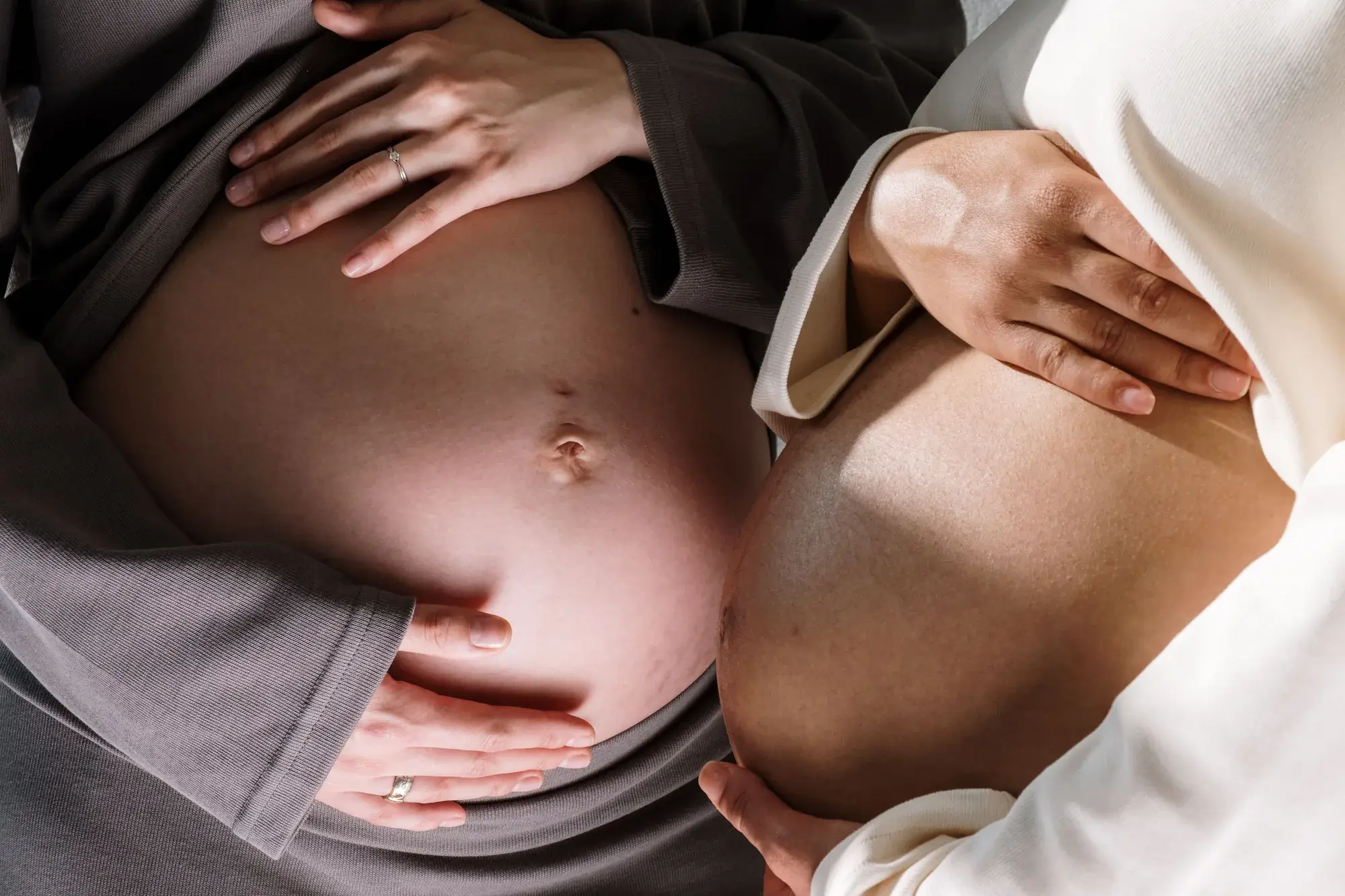
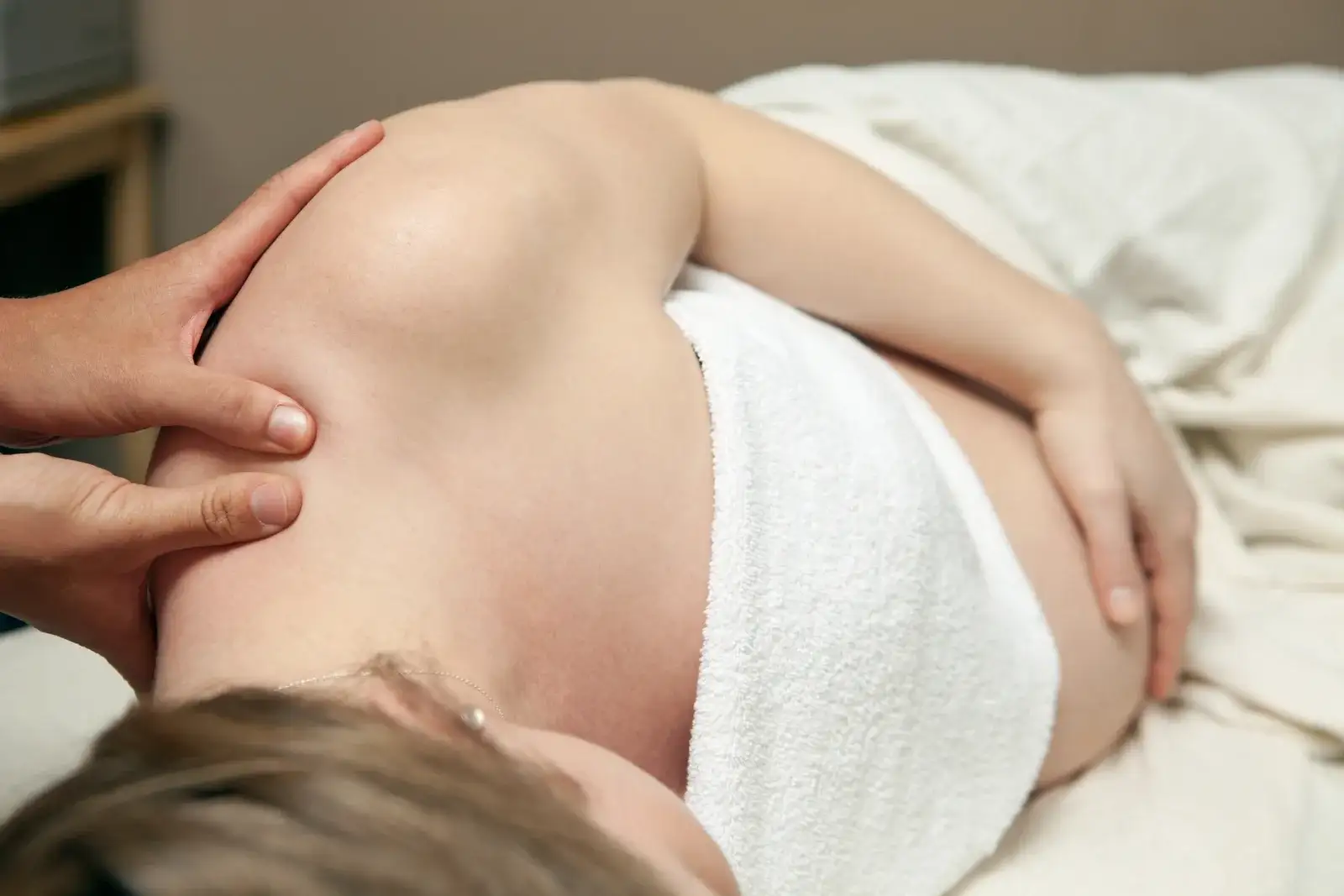
Not in the usual sense. Pregnancy raises the risk of blood clots about fivefold, so deep pressure on the legs and arms is avoided, and the belly is never massaged firmly. What you can have is moderate, steady pressure on your back, shoulders, neck and hips while you lie on your side, which the research suggests is the level that actually eases pregnancy back and leg pain.
You cannot have a true deep tissue massage while pregnant, but you do not have to settle for a feather-light one either. Deep pressure on the legs and arms and any firm work on the belly are set aside for safety. Your back, shoulders, neck and hips can still be worked with moderate, steady pressure while you lie on your side, and that is the pressure level the research links to less pregnancy back and leg pain.
Why your usual deep tissue session is set aside
The main reason is blood clots. A 2021 systematic review of massage in pregnancy notes that women are five times more likely to develop a deep vein thrombosis, a clot in a deep vein, while pregnant. It concludes that deep tissue massage should generally be avoided in pregnancy so that a clot is not dislodged. Cleveland Clinic makes the same point and adds a second one: deep pressure can also affect your blood pressure, which pregnancy already changes.
There is a practical problem too. The review warns that clot symptoms can look very much like the ordinary discomforts of pregnancy, such as swollen legs and back pain. A therapist cannot see a clot, so the safe approach is to keep pressure on the places a clot is most likely to sit gentle for everyone.
Legs and arms: where pressure stays light
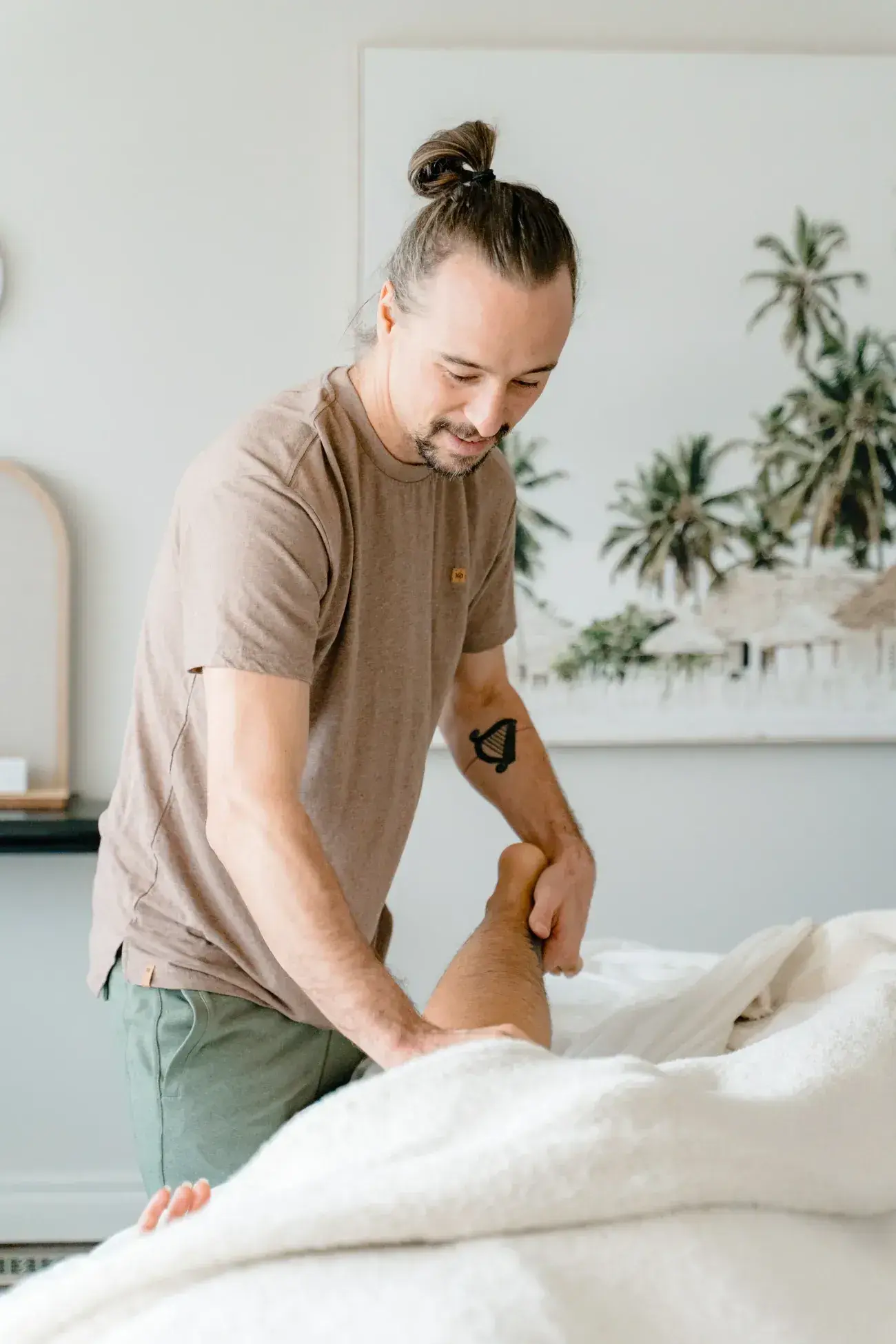
The 2021 review is specific: no massage of the deep muscle tissue of the arms, and especially not the legs, to avoid loosening clots or causing a hematoma. That rules out the slow, sinking work into the calves, hamstrings or forearms you might be used to.
It does not rule out touch. The same review says superficial lymphatic drainage and gentle stroking to relieve swelling are allowed. So if your ankles and calves feel heavy by evening, the legs can still be part of your session, just with a light, skin-level technique rather than deep work. Our page on blood clots and prenatal massage explains the clot risk in more depth.
The belly is never worked with pressure
This one has no exceptions. HealthLink BC warns that firm massage of the pregnant belly could cause serious pregnancy problems, and the 2021 review advises against massaging the abdomen at all, citing the risk of harm to the placenta and uterus. If you carry tension in your abdomen or around the ribs, tell your therapist; they will approach it through the back and sides instead.
What “firm enough” looks like in pregnancy
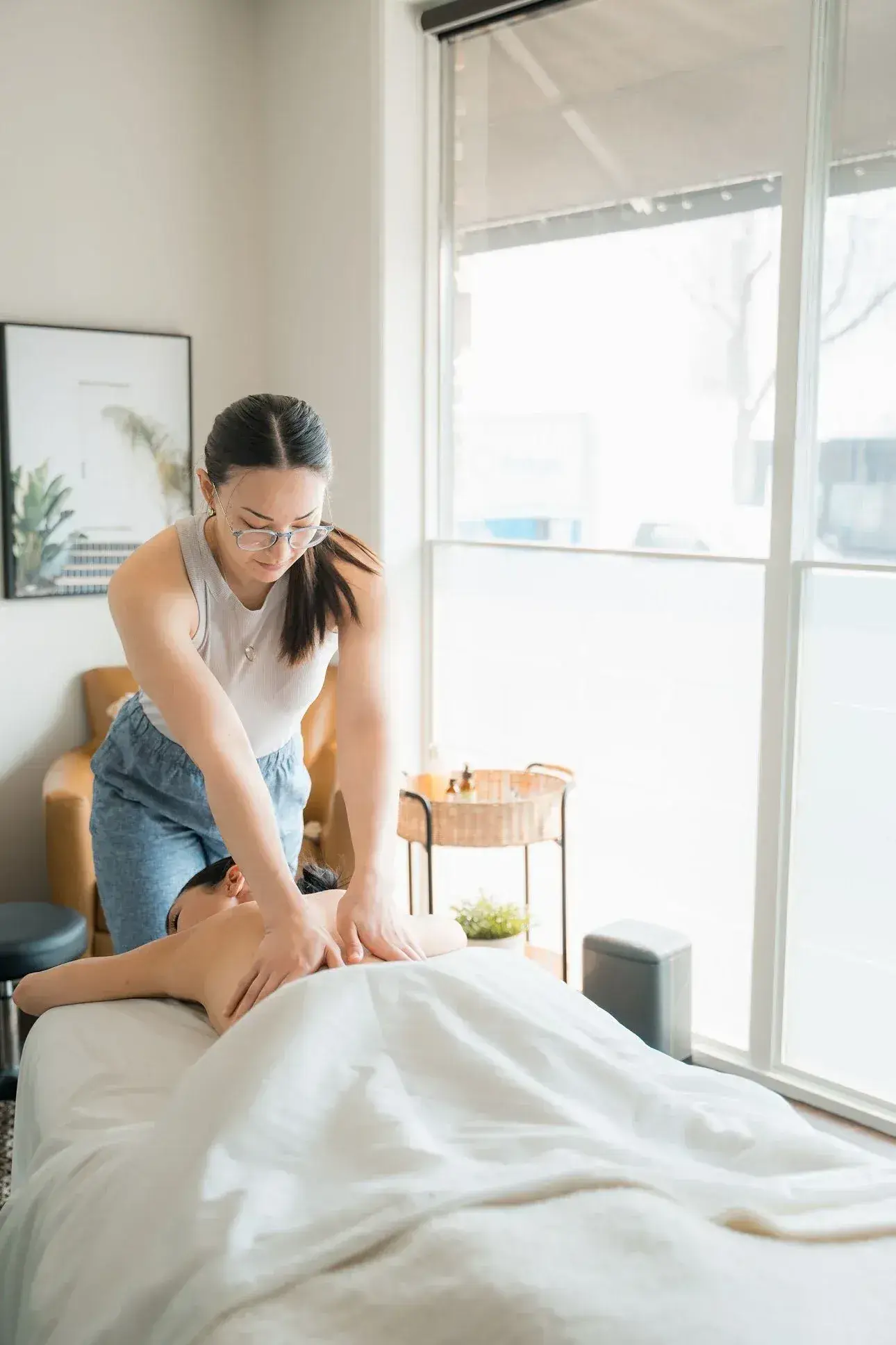
The trials did not use light, token touch. The 2021 review recommends moderate pressure that the woman finds pleasant and not painful, and notes that massage that is either too painful or too gentle can stir up the nervous system rather than calm it. In the trials, women lay on their side with supporting pillows and were massaged on the head, shoulders, back, arms, hands and feet, typically for about 20 minutes once or twice a week. Compared with women who did not receive massage, they reported significantly less back pain and leg pain.
| Area | What you can ask for |
|---|---|
| Upper back, shoulders and neck | Moderate, steady pressure, slow strokes, attention to knots |
| Lower back and sacrum | Moderate pressure in a side-lying position |
| Hips and glutes | Steady pressure on the outer hip and buttock muscles |
| Legs and arms | Light, gentle strokes only; superficial lymphatic work for swelling |
| Belly | No pressure |
Position matters as much as pressure. HealthLink BC advises avoiding lying on your belly after 12 weeks and on your back after the fourth month, and Cleveland Clinic calls side-lying the safest position. Lying on your side also lets a therapist lean into the back and hip muscles at a good angle. Our page on how you lie on the table in prenatal massage shows how the pillows are arranged.
How to ask for the pressure you want
Be specific about where, not just how hard. A therapist can do a lot with “the knot under my right shoulder blade” or “the outside of my left hip when I lie down”, and much less with “go as hard as you can”. Useful things to say:
- where the pain is and what makes it worse, such as standing, sleeping or walking
- that you normally like firm work, so they know to stay at the top of the comfortable range
- “a bit more” or “that’s enough” as the session goes; pressure can change stroke by stroke
If several areas need attention, a longer appointment gives time to work each one at a steady pace instead of rushing. Our page on choosing 60 or 90 minutes for a prenatal massage helps with that decision. If your back pain is the main reason for booking, low back pain in pregnancy covers what else helps.
Prenatal massage at Renu
At Renu, prenatal massage is offered by Registered Massage Therapists Sasha Bernard and Dr. Will Tanner, as a 60-minute session for $120 or a 90-minute session for $157. You are usually positioned on your side with supportive cushioning, pressure is adjusted to your stage and comfort, and because several of our therapists are also trained in lymphatic work, gentle lymphatic techniques can be woven in for swelling. If you have been a deep tissue regular with us, tell your therapist; they can stay at the firm end of what is safe on your back and hips.
If you are early in pregnancy or managing a complication, read do you need medical approval for a prenatal massage before booking. Appointments are booked through Jane, and the clinic is open seven days.
Leg symptoms that mean stop and call
New pain or swelling in one leg is a reason to call your provider, not to book a massage. The NHS lists these warning signs of a clot in pregnancy:
- throbbing pain in one leg, usually in the calf or thigh
- swelling in one leg
- red, blue or darkened skin around the painful area, which can be harder to see on brown or black skin
- swollen veins
Ask for an urgent appointment with your doctor or midwife if you notice them. If they come with breathlessness or chest pain, call 911. The risk stays raised for six weeks after the birth, so the same signs matter in those early postpartum weeks too.
Questions people ask
Will a gentler prenatal massage still help my sore back?
In the trials, yes. Pregnant women who had moderate-pressure massage, about 20 minutes once or twice a week, reported significantly less back and leg pain than those who did not. The goal is pressure that feels good, not pressure that makes you brace.
Can I go back to deep tissue massage after the baby is born?
Not straight away. The risk of a leg clot stays higher for the six weeks after birth, so the same care with leg pressure applies during that time. Our page on massage after birth covers the timing.
Is it safe to have firm pressure on my glutes for hip pain?
Steady, moderate pressure on the buttock and hip muscles in a side-lying position is usually comfortable and helpful. The cautions in pregnancy are about the deep muscles of the legs and arms and about the belly, so tell your therapist exactly where the hip pain sits.
What if I ask for more pressure and the therapist says no?
They are not being timid. They are working within limits set by the research and by how pregnancy changes your veins and blood pressure, and they can usually find another way to reach the tight area, such as a different angle or a longer, slower stroke.
Sources
Page reviewed October 5, 2026. This page is education, not a diagnosis. For your own situation, talk to your doctor, surgeon or care team, or ask us.
Keep reading
Related pages