Comparison
Postpartum massage vs pelvic floor physiotherapy
Postpartum massage vs pelvic floor physiotherapy: leaking, heaviness or pelvic pain after birth need a pelvic floor physio; massage eases neck, back and hips.
By The Renu lymphatic and massage team · 5 min read
They do different jobs. Pelvic floor physiotherapy assesses and treats the pelvic floor itself, including internal examination, which in Alberta only authorized physiotherapists may perform; it is the right first step for leaking, heaviness, a bulge or pelvic pain after birth. Postpartum massage works the neck, shoulders, back and hips that strain with feeding and carrying, and gives you an hour to rest. Massage complements pelvic floor care but does not replace it.
The weeks and months after birth ask a lot of a body. Some of what you feel is the pelvic floor recovering from pregnancy and delivery; some is your neck and back adapting to feeding, lifting and rocking a baby for hours. Pelvic floor physiotherapy and postpartum massage each speak to one of those, so the first question is which kind of symptom you have.
Sort your symptoms first
Pelvic symptoms belong with a pelvic floor physiotherapist; muscle strain and exhaustion are where massage helps. A quick guide:
| What you notice | Who to see first |
|---|---|
| Leaking when you cough, sneeze, laugh or run | Pelvic floor physiotherapist |
| Heaviness, pressure or a bulge in the vagina | Your doctor, then a pelvic floor physiotherapist |
| Pain with sex, or pain at a healing tear or scar | Your doctor or midwife, then a pelvic floor physiotherapist |
| Difficulty controlling wind or bowels | Your doctor, then a pelvic floor physiotherapist |
| Neck, shoulder and upper back ache from feeding and carrying | Massage therapist |
| Low back and hip tightness, poor sleep, feeling run down | Massage therapist, alongside pelvic floor care if needed |
The NHS lists a feeling of heaviness, discomfort or pressure, or a bulge in or coming out of the vagina, as symptoms of pelvic organ prolapse, and names pregnancy and childbirth among the common causes. Those signs deserve a medical look.
What a pelvic floor physiotherapist does
A pelvic floor physiotherapist assesses the muscles themselves and teaches you to train them properly. Physiotherapists in Alberta are a regulated profession, governed by the College of Physiotherapists of Alberta. Pelvic health assessment often includes an internal examination, and in Alberta that is a restricted activity: examination beyond the labia majora or beyond the anal verge, to assess and treat urological, gynaecological and rectal conditions, may be performed only by physiotherapists the college has authorized after approved post-entry pelvic health education with a passed evaluation.
Pelvic floor muscle training is the core of the work, and the evidence behind it is solid by rehab standards. A 2017 Cochrane review of 38 trials and 9,892 women reports that about one-third of women have urinary incontinence and up to one-tenth have faecal incontinence after childbirth. In women who were continent in pregnancy, antenatal pelvic floor training lowered the risk of urinary incontinence in late pregnancy by 62 percent (low-quality evidence) and three to six months after birth by 29 percent (moderate-quality evidence). Apart from two reports of pelvic floor pain, the trials found no harmful effects.
Expect it to take time. The NHS notes that you may need to do pelvic floor exercises for a few months before seeing a benefit. For prolapse, the NHS describes physiotherapy and pelvic floor muscle training, usually with a specialist women’s health physiotherapist, as one of the main treatments.
What postpartum massage does
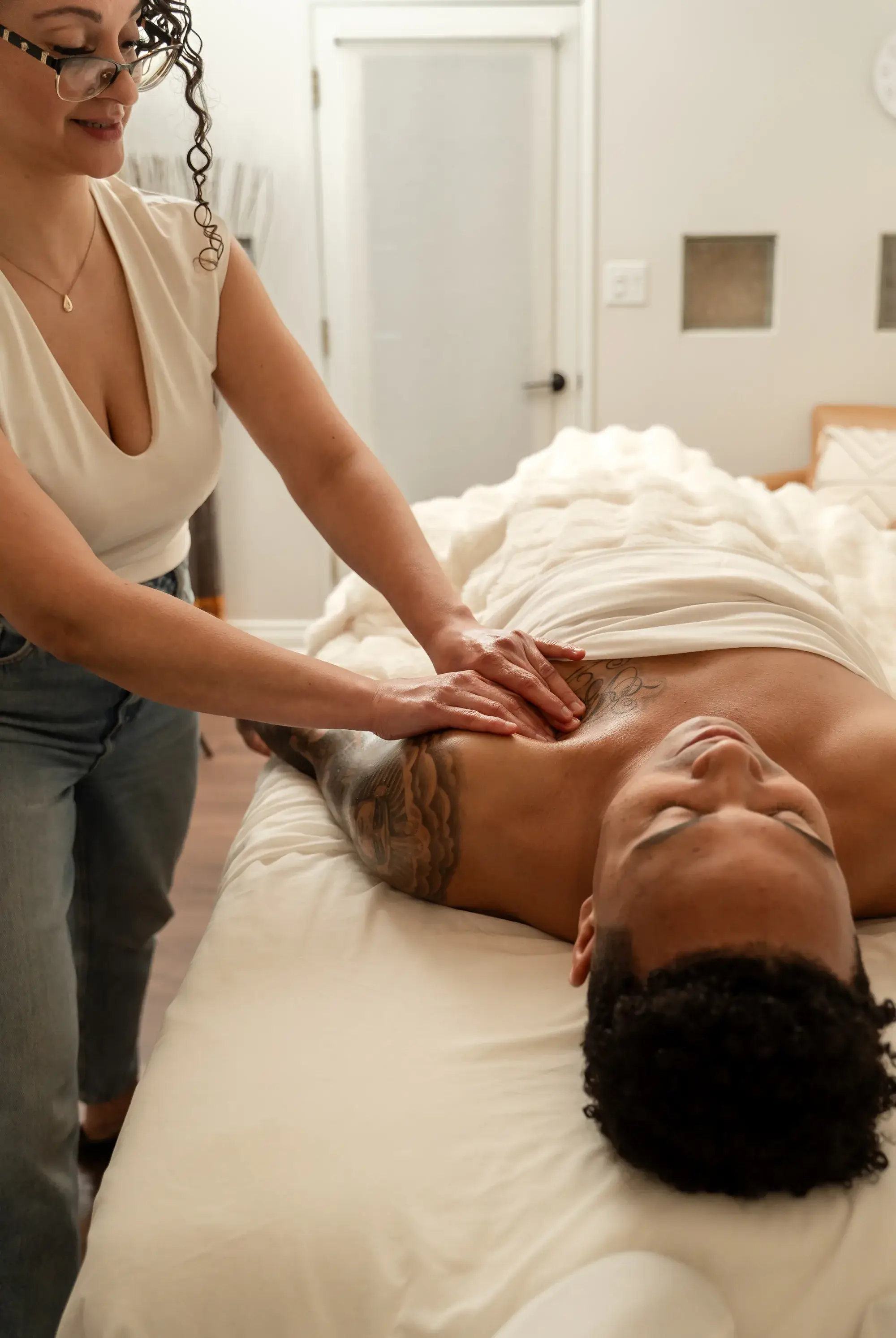
Postpartum massage cares for the rest of you. Massage therapists, as ALIS describes the occupation, assess the soft tissues and joints and use hands-on techniques to relieve pain and stress. After a birth, that usually means:
- Neck, shoulders and upper back, which round forward through hours of feeding, burping and carrying.
- Low back, hips and glutes, which took the load of pregnancy and now handle car seats and strollers.
- Forearms and wrists, from lifting and supporting a baby’s head.
- An hour lying down, which for many new parents is its own kind of treatment.
What massage does not do is assess or retrain the pelvic floor, and a massage therapist does not work internally. If leaking or heaviness is the issue, massage can make you more comfortable while you do the real rehab, but it is not a substitute. Our page on postpartum posture for feeding and carrying has simple changes that ease the same muscles between appointments.
When to call your doctor or midwife first
Some symptoms after birth are for your doctor before any hands-on care. The NHS guidance on the postnatal check advises talking to your doctor if:
- you have trouble controlling wind or holding in urine, or you are soiling yourself;
- sex is painful;
- you feel sad or anxious, or think you may have postnatal depression.
The NHS also advises seeing a GP for a lump in or around the vagina. None of these is something to put on a brave face about, and none is a reason to wait for a massage appointment.
If you had a caesarean or a significant tear, ask your midwife or doctor when massage and exercise are appropriate, and tell your therapist about your birth.
Postpartum massage at Renu
Renu offers massage, not pelvic health physiotherapy, so for leaking, heaviness or pelvic pain we will suggest a pelvic floor physiotherapist first and are glad to work alongside one.
For the neck, back and hips, Sasha Bernard is a Registered Massage Therapist whose training includes prenatal and postnatal massage; her colleagues on our prenatal massage page also see clients through pregnancy. A 60-minute massage is $120, and other lengths are on our massage therapy page. Book through Jane online; we are open seven days, including weekend hours from 10 am to 5 pm, when a partner may be home to take the baby. Wondering about logistics? See can I bring my baby to a postpartum massage. For the pelvic floor side, our gentle pelvic floor and core routine for the first weeks after birth is a starting point to share with your physiotherapist.
Questions people ask
How do I find a pelvic floor physiotherapist in Alberta?
Ask the physiotherapy clinic whether the physiotherapist is authorized by the College of Physiotherapists of Alberta for internal pelvic health examinations, since that authorization requires extra post-entry training. Check your benefits plan's rules before you book, as plans set their own conditions for payment.
Can a massage therapist do pelvic floor massage?
Not internally. Examination beyond the labia majora or the anal verge is a restricted activity in Alberta that the College of Physiotherapists of Alberta authorizes only after approved post-entry training. A massage therapist can work the hips, glutes, low back and abdomen externally when appropriate.
How soon after birth can I have a postpartum massage?
It depends on how you gave birth and how you are healing. If you had a caesarean, stitches or complications, ask your midwife or doctor when hands-on treatment is fine, and tell your massage therapist about your birth when you book.
How long do pelvic floor exercises take to work?
The NHS says you may need to do them for a few months before you notice a benefit. A pelvic floor physiotherapist can check you are doing them correctly, which matters more than the number of repetitions.
Sources
- College of Physiotherapists of Alberta: Restricted activities
- Cochrane (2017): Pelvic floor muscle training for prevention and treatment of urinary and faecal incontinence in antenatal and postnatal women
- NHS: Pelvic floor exercises
- NHS: Pelvic organ prolapse
- NHS: Your 6-week postnatal check
- Government of Alberta: Regulated health professions
- ALIS: Massage therapist occupation profile
Page reviewed October 5, 2026. This page is education, not a diagnosis. For your own situation, talk to your doctor, surgeon or care team, or ask us.
Keep reading
Related pages