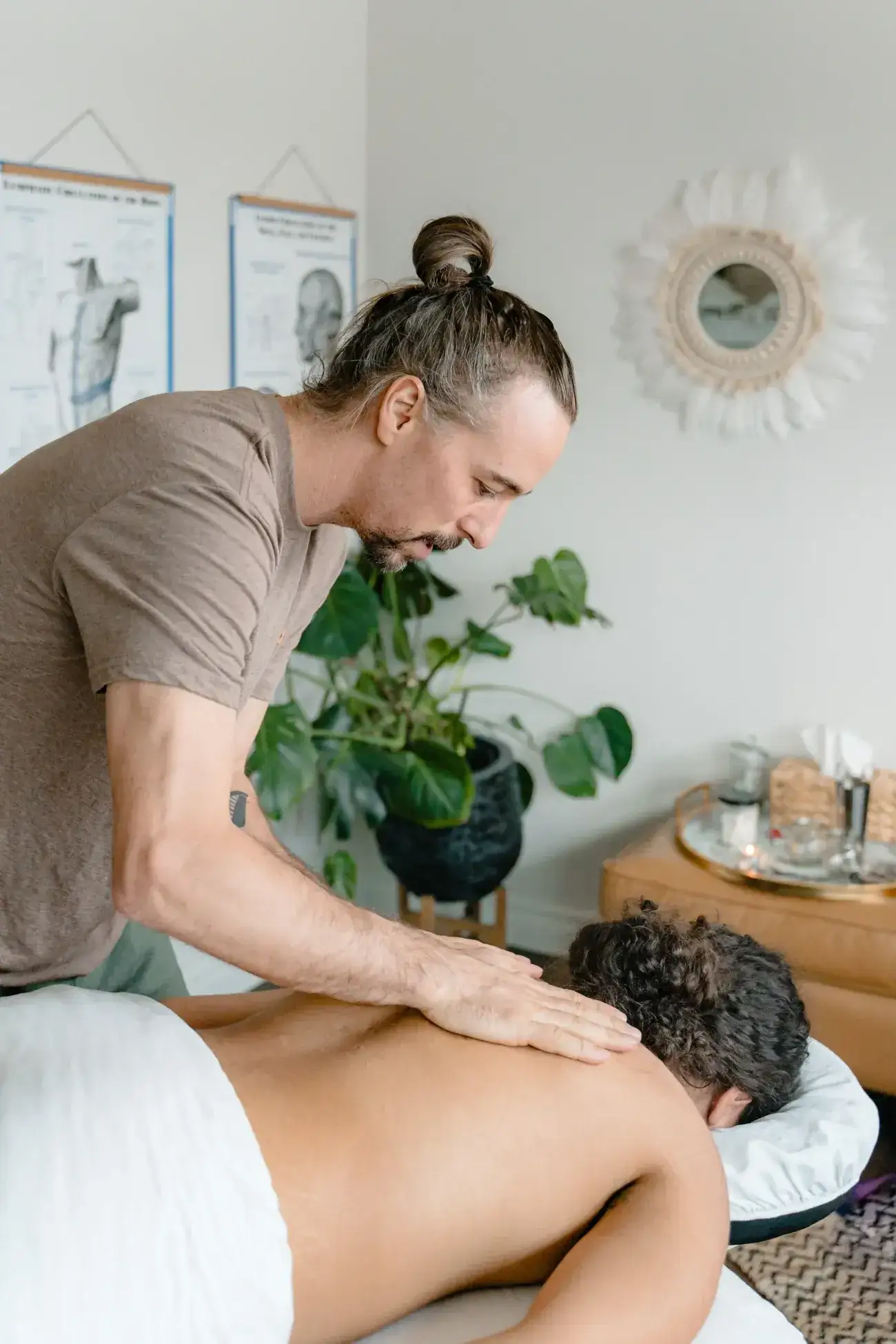
Massage therapy vs osteopathy
Massage therapy vs osteopathy: in Canada an osteopath can be a licensed physician or an unregulated manual practitioner. What each does and how to choose.
By The Renu lymphatic and massage team · 5 min read
In Canada the word osteopath covers two very different people: osteopathic physicians, who are medical doctors licensed through a provincial college, and non-physician manual osteopathic practitioners, who are not regulated and train through private programs. Massage therapy is also unregulated in Alberta, but Registered Massage Therapists complete programs of at least 2,200 hours, the standard benefit plans recognize. Choose by the practitioner's training and your goal rather than the label.
People often ask us how osteopathy differs from massage, and the answer starts with a surprise: in Canada, “osteopath” does not describe a single profession. Before comparing techniques, it is worth knowing which kind of osteopath you are looking at, because the training behind the word ranges from a full medical degree to a private certificate.
Two very different people called “osteopath”
The title covers both physicians and non-physician manual practitioners, and they are not interchangeable.
Osteopathic physicians (DOs). The Canadian Osteopathic Association explains that an osteopathic physician completes the same comprehensive medical education as an MD, plus training in biomechanical assessment, then residency training, specialty certification and medical licensing exams for registration with a provincial college. Only graduates of accredited American osteopathic medical schools are eligible for licensure in Canada. In Alberta, the government lists osteopaths under the regulation that covers physicians, surgeons, osteopaths and physician assistants, with the College of Physicians and Surgeons of Alberta as regulator.
Non-physician manual osteopathic practitioners. This is who most people mean when they book an “osteopath” for a sore back. The Canadian Osteopathic Association states there are no government-recognized or accredited colleges of osteopathy in Canada, despite the many programs offering training and certification, and it warns that non-physician practitioners presenting as osteopaths practise outside legislation and lack medical training. The Ontario Association of Osteopathy, which represents manual practitioners, likewise notes that non-medical manual osteopathy is not a regulated health profession in Ontario.
Here is the nuance worth knowing: that same association says many of its members are already regulated health professionals, including nurses, massage therapists, occupational therapists and physiotherapists, who added osteopathic training. So the person treating you may be an RMT or physiotherapist with extra manual training.
How a massage therapist compares
Registered Massage Therapists are not provincially regulated either, but their training gate is clearer. ALIS, Alberta’s career information service, states that massage therapy is not a regulated health profession in Alberta, and that joining a professional association requires a program of no less than 2,200 hours, which is also the threshold benefit plans use for reimbursement. ALIS lists the Canadian Massage and Manual Osteopathic Therapists Association among those associations, another sign of how much the two worlds overlap.
| Osteopathic physician | Manual osteopathic practitioner | Registered Massage Therapist | |
|---|---|---|---|
| Medical doctor | Yes | No | No |
| Regulated in Alberta | Yes, College of Physicians and Surgeons | No | No |
| Training | Medical school, residency, licensing exams | Private programs; varies | Program of at least 2,200 hours |
| Typical focus | Medical care plus manipulative treatment | Joint and soft-tissue manual techniques | Soft-tissue assessment and treatment |
What the evidence says
Osteopathic manipulative treatment has some supporting evidence for low back pain, but the picture is thin. A 2005 meta-analysis in BMC Musculoskeletal Disorders combined six randomized trials and found that osteopathic manipulative treatment reduced low back pain significantly, with a modest effect size (minus 0.30), and the reduction lasted at least three months. In pregnancy, a 2013 Cochrane review found low-quality evidence from a single trial of no significant difference in pain or function between osteopathic manipulation and usual care or sham ultrasound, while another single trial suggested benefit for combined low back and pelvic pain.
Massage research for back pain is similarly modest, with short-term relief the most consistent finding. Neither approach has the kind of evidence that would justify choosing by brand name.
Two cautions apply to those osteopathy trials. They studied osteopathic manipulative treatment as delivered in trials run in the United Kingdom and the United States, so they say little about any particular non-physician practitioner in Calgary. And an effect size of minus 0.30 is a small-to-moderate change, closer to taking the edge off than to resolving the problem. That is a reasonable outcome to hope for from any hands-on treatment, and it is why exercise and staying active remain part of the plan whichever practitioner you see.
How to choose between them
Choose the person, not the label. Before booking, ask:
- Are you a physician? If yes, you are seeing a regulated doctor. If not, carry on with the next questions.
- What is your base profession? An RMT or physiotherapist with added osteopathic training brings that profession’s standards with them.
- Which association do you belong to, and how many training hours did your program involve?
- Will my plan accept your receipts, and under which category? Call your insurer with the answer.
- What will you actually do? Joint techniques, soft-tissue work or both, and how will we know it is helping?
If what you are after is skilled soft-tissue work for tension, overuse or stress, a Registered Massage Therapist is a direct route. If you have swelling, look for documented lymphatic training rather than a general manual title.
What Renu offers instead of osteopathy
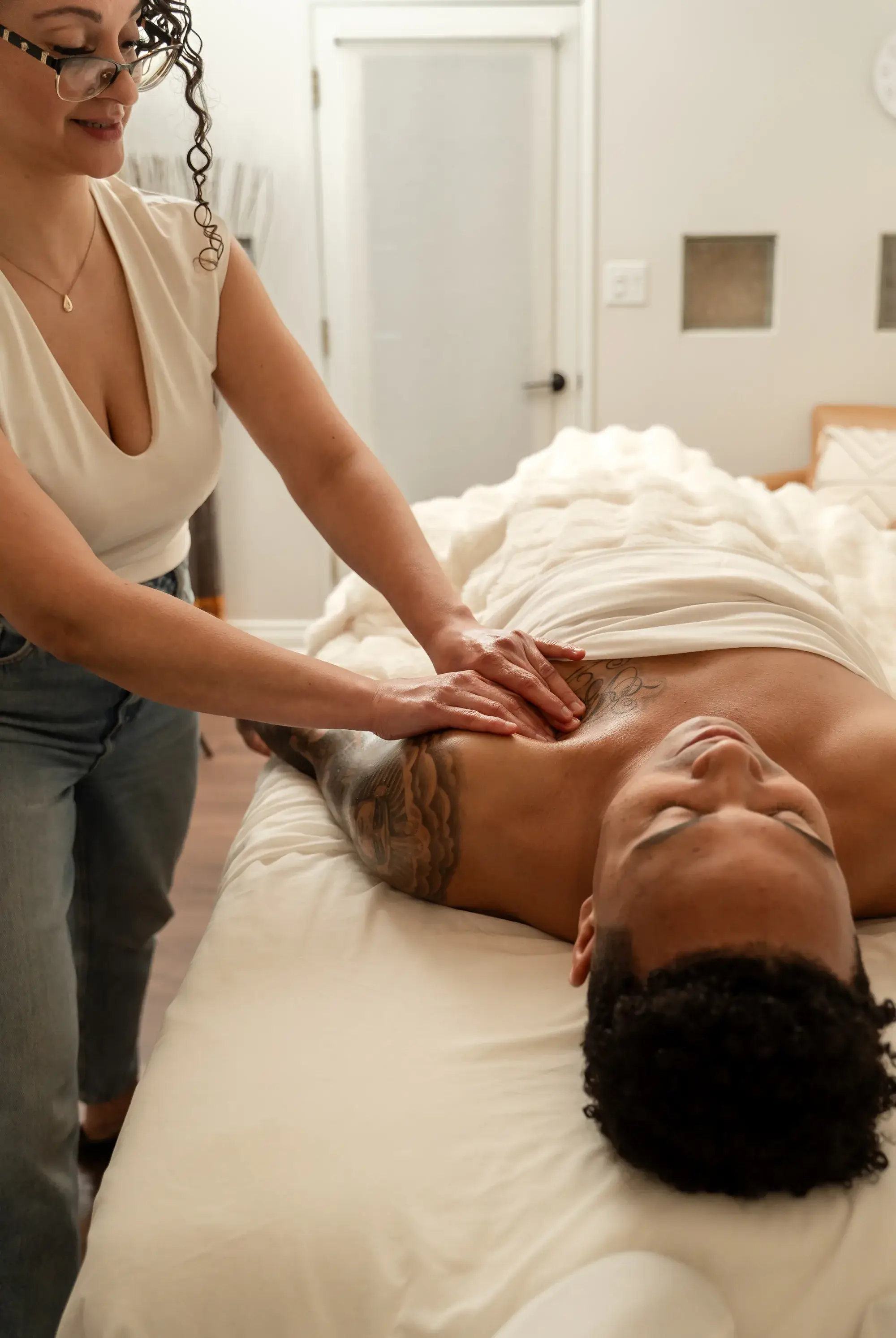
Renu does not offer osteopathy. Our hands-on care is massage therapy and lymphatic work by Registered Massage Therapists, with Meeghan Mackenzie, our founder, a Certified Lymphedema Therapist.
- Massage, 60 minutes, $120, covering a health history, assessment and focused treatment. Other lengths and our therapists are on the massage therapy page.
- Lymphatic drainage massage for swelling and post-surgical recovery is described on our lymphatic drainage massage page.
Booking is online through Jane, seven days a week. You will find us at 19 Street NW in West Hillhurst, with free street parking along 19 Street.
When a doctor should come first
Any hands-on practitioner, osteopathic or massage, should be your second stop if pain followed a fall or accident, if you have numbness, tingling or weakness in a limb, if symptoms are worsening, or if you feel generally unwell. Those situations call for a medical diagnosis first.
Questions people ask
Is an osteopath a doctor in Canada?
Only if they are an osteopathic physician. The Canadian Osteopathic Association explains that an osteopathic physician completes the same medical education as an MD plus training in biomechanical assessment, then a residency and licensing exams with a provincial college. Non-physician osteopathic practitioners are not doctors.
Do osteopaths do lymphatic drainage?
Some manual practitioners include lymphatic techniques, but training varies widely because manual osteopathy is unregulated. If swelling is your concern, look for specific lymphatic training such as manual lymphatic drainage certification or, for lymphedema, a Certified Lymphedema Therapist.
Will my benefits cover a manual osteopath?
That is a question only your plan can answer. Ask whether it lists osteopathy, what credentials it requires, and whether a practitioner who is also an RMT would bill under massage instead.
How do I check an osteopath's credentials?
Ask directly whether they are a physician. If they are, the College of Physicians and Surgeons of Alberta regulates them; if they are not, ask which association they belong to and what other professional registration they hold.
Sources
- Government of Alberta: Regulated health professions
- Canadian Osteopathic Association
- Ontario Association of Osteopathy: Regulation
- ALIS: Massage therapist occupation profile
- BMC Musculoskeletal Disorders (2005): Osteopathic manipulative treatment for low back pain, a systematic review and meta-analysis
- Cochrane (2013): Interventions for preventing and treating pelvic and back pain in pregnancy
Page reviewed October 5, 2026. This page is education, not a diagnosis. For your own situation, talk to your doctor, surgeon or care team, or ask us.
Keep reading
Related pages