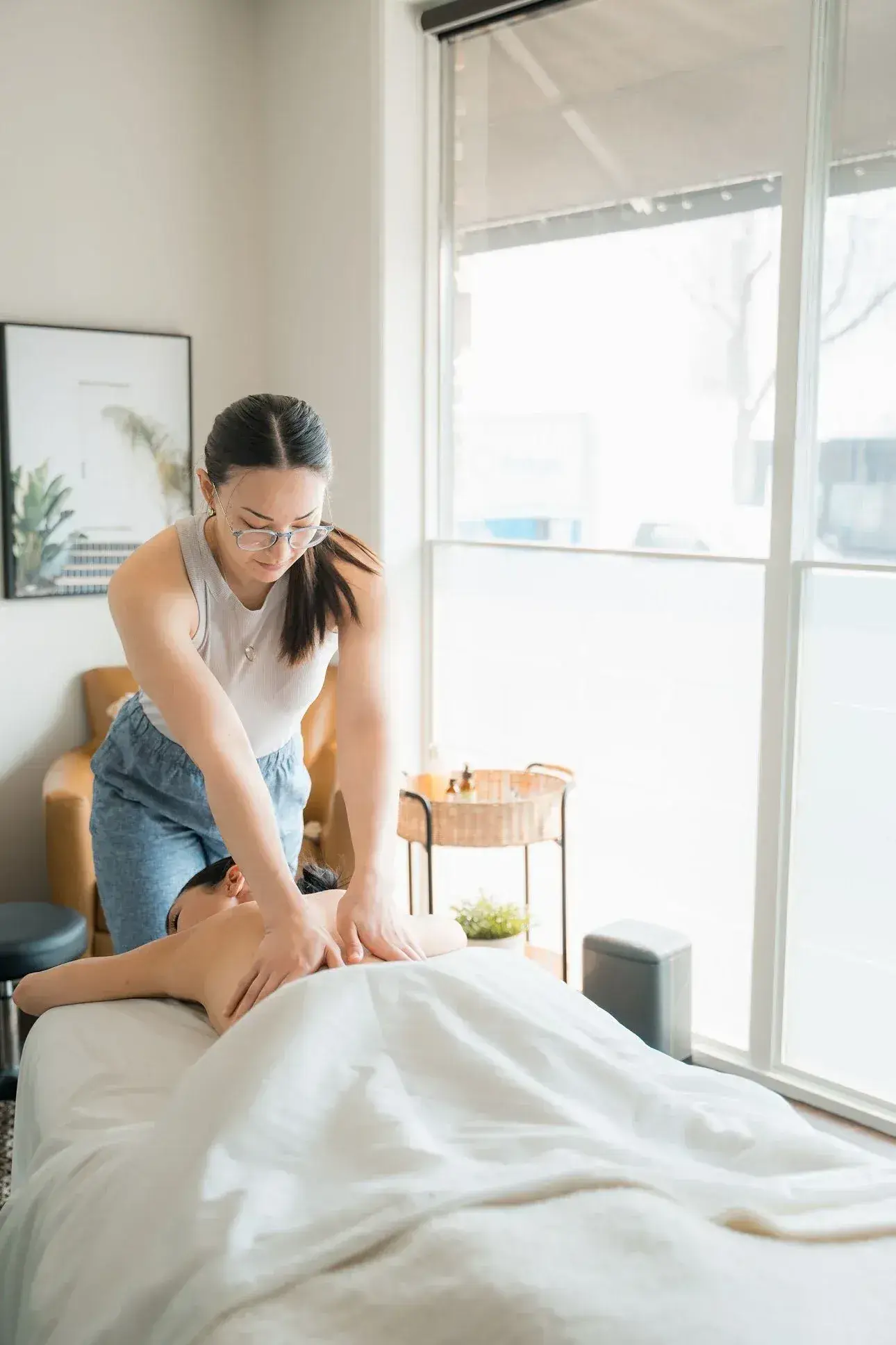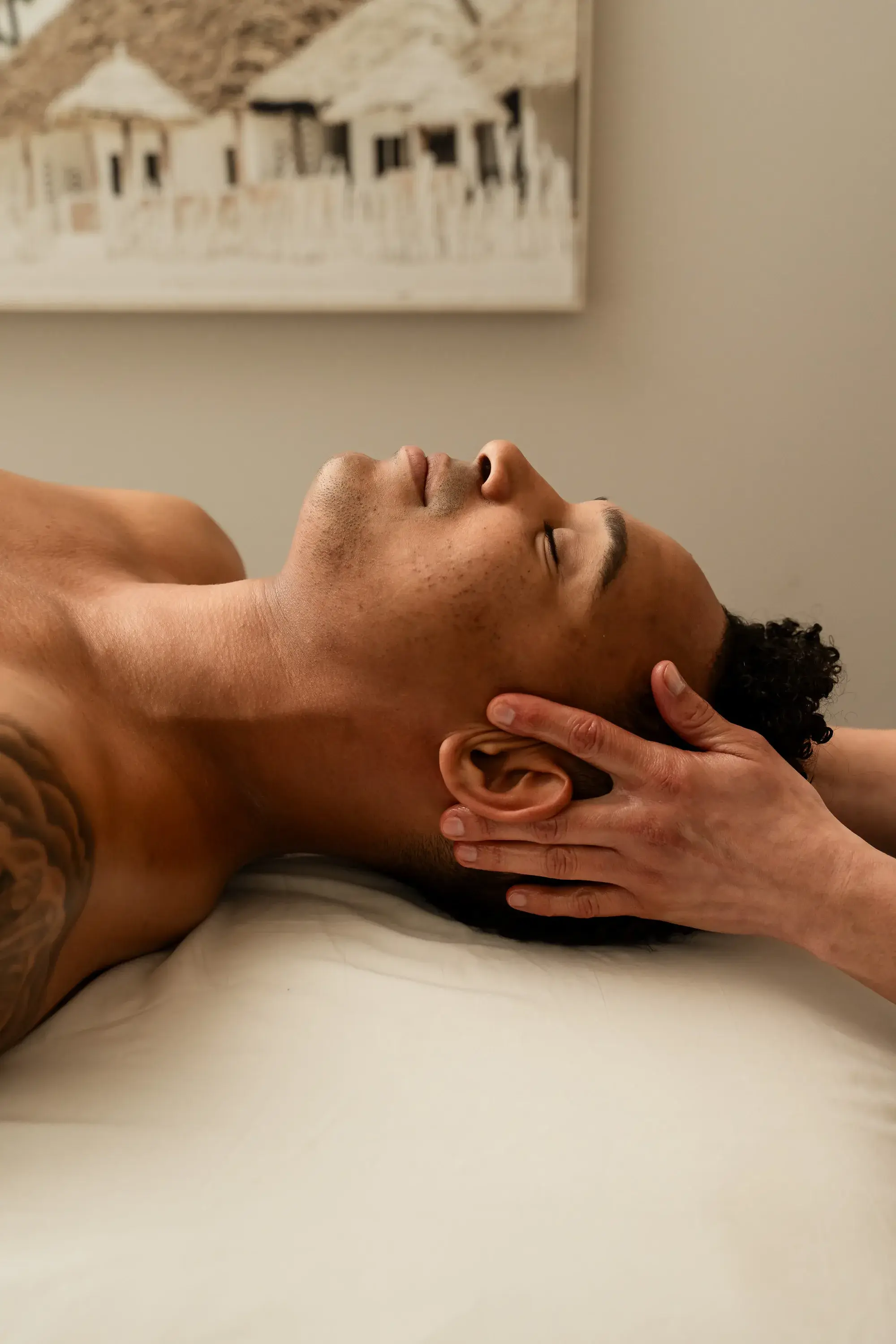

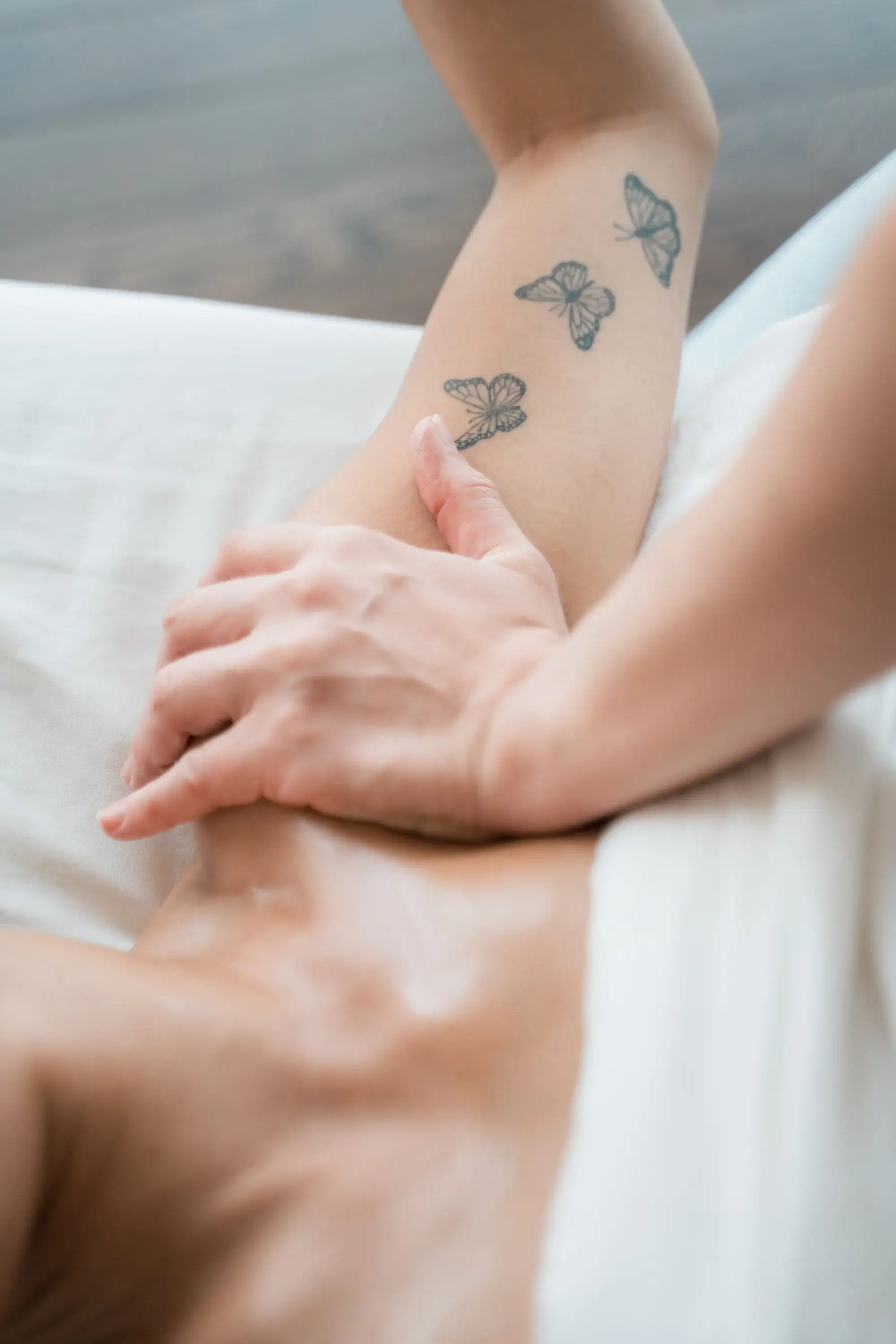
Massage for seniors in Calgary
Massage for seniors in Calgary: is it safe, what changes for thin skin, balance and medications, what small trials found, and how a session is adapted.
By The Renu lymphatic and massage team · 5 min read
Massage is safe and useful for most older adults when it is adapted: lighter, slower pressure on fragile skin, careful positioning, and an unhurried start and finish on the table. Small trials in healthy older adults found that massage improved balance measures and lowered blood pressure for a time afterwards. If you take blood thinners, have osteoporosis or have had a recent fall, tell your therapist, and check with your doctor first if anything is new or unexplained.
Is massage safe as you get older?
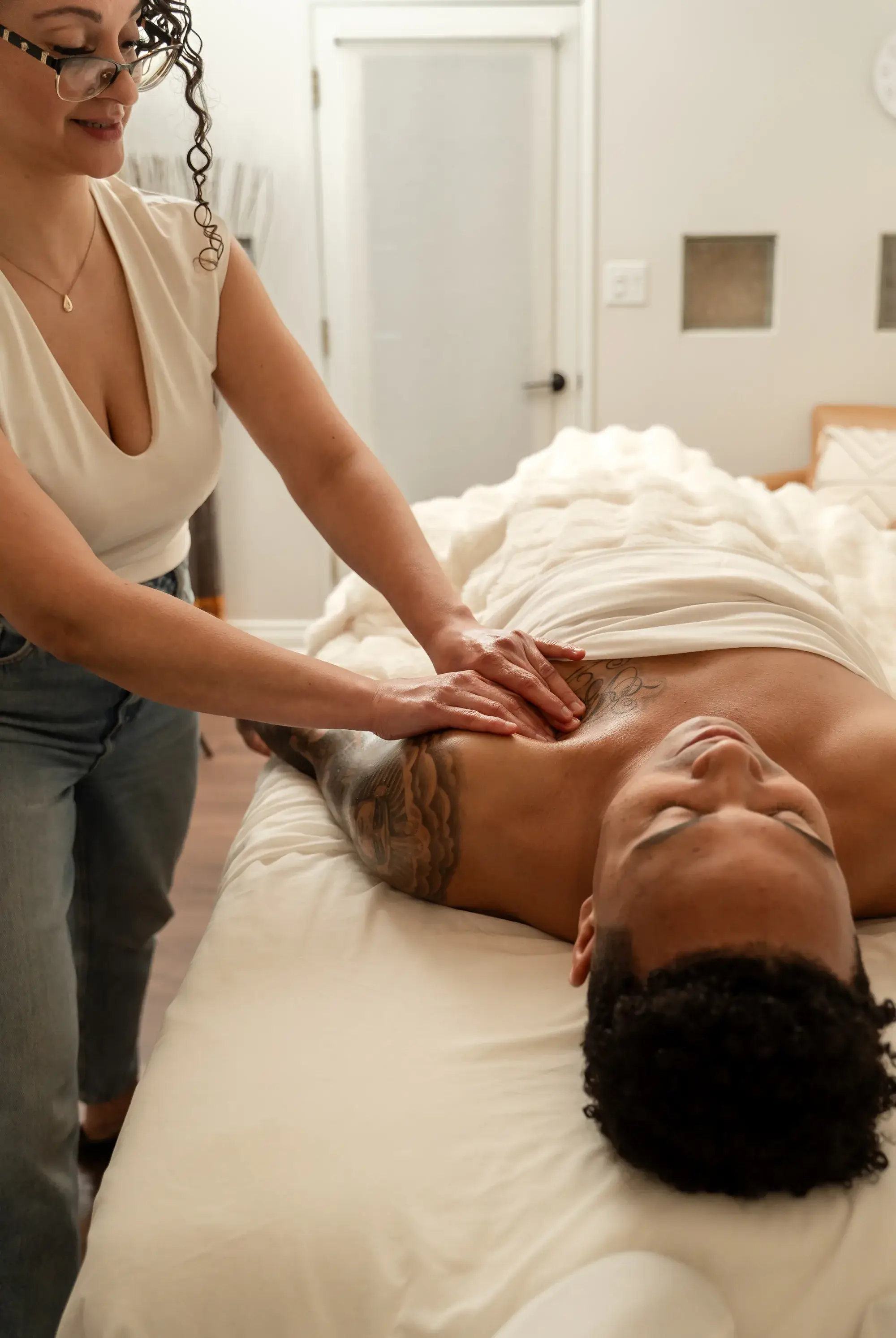
For most people in their sixties, seventies and beyond, massage is safe when it is adapted to the body in front of us. Age itself is not the issue. What matters is skin that tears or bruises more easily, bones that may be thinner, medications that change bleeding or blood pressure, and getting on and off a table without a wobble. A therapist who asks about all of those and adjusts for them makes the difference.
Many older adults book for stiffness in the neck, shoulders, back and hips, for aching joints, or simply because touch and an hour of calm feel good. Families often book for a parent who is less steady than they used to be. Both are good reasons, and the adaptations below apply to both.
What massage may do for balance and blood pressure
There is a little research on massage and balance in older adults, and it is encouraging but small. In a laboratory trial, 35 healthy volunteers with an average age of 62.9 had either a 60-minute full-body massage or quiet rest. A single massage improved measures of both standing balance and single-leg balance for a time, along with changes in heart rate and blood pressure.
The same researchers then gave six weekly 60-minute massages. Compared with a relaxation control, the massage group showed improvements in postural stability and lower blood pressure, and some of the difference was still there a week after the last session.
Keep those findings in proportion. The participants were healthy and in their early sixties, the tests were done in a lab, and no one measured falls. Massage is not a falls-prevention programme. It may help you feel looser and steadier, which can make it easier to stay active, and staying active is what protects you.
Falls are worth taking seriously. Between 20% and 30% of Canadian seniors fall each year. Falls account for about 85% of injury hospitalizations among seniors, and research suggests falls directly cause about 95% of hip fractures. In Alberta, Finding Balance, a falls-prevention initiative from the Injury Prevention Centre at the University of Alberta, notes that over half of falls happen at home and that most can be prevented. Its home safety checklist is a good place to start.
Fragile skin changes the technique
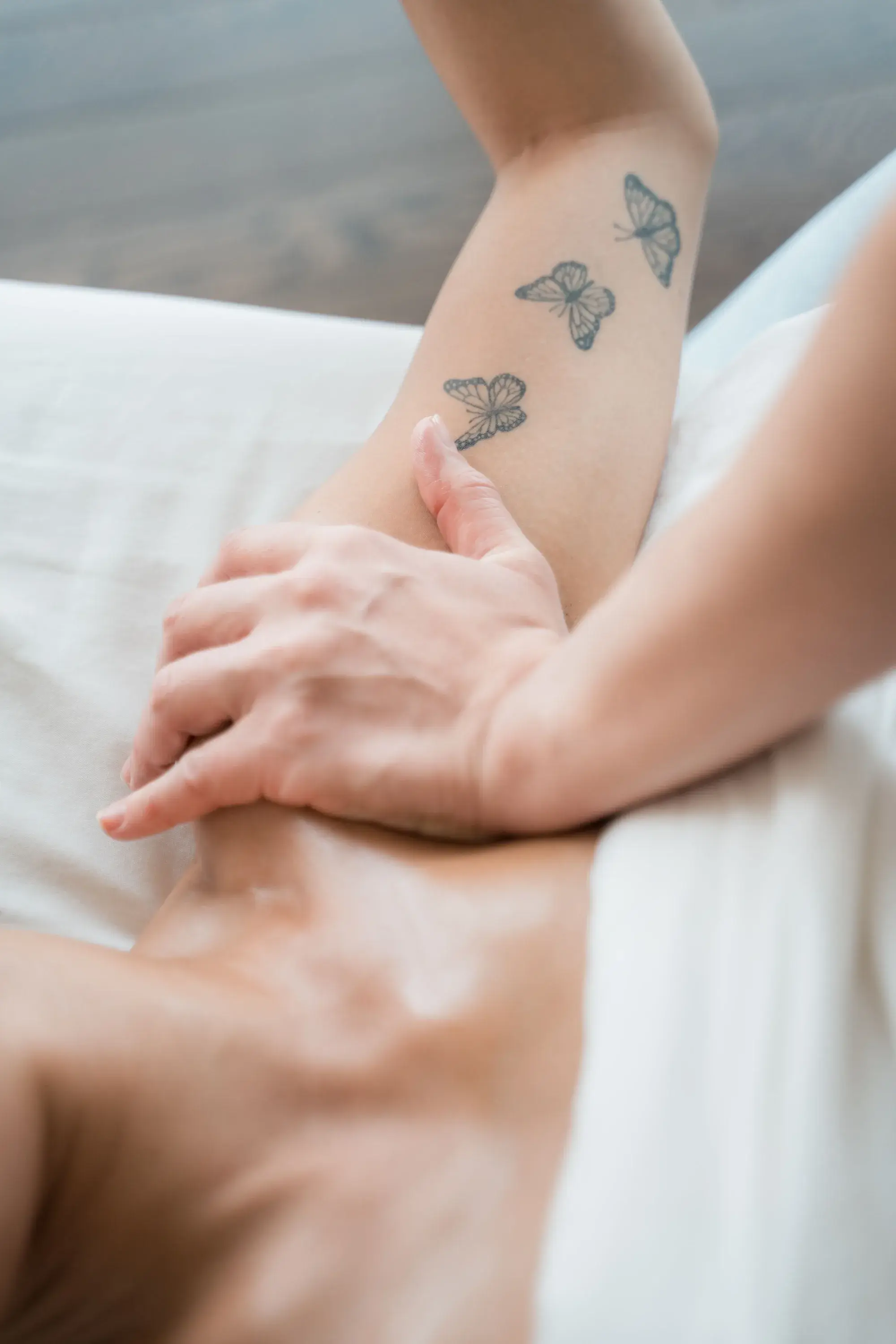
Skin thins with age, and in some people it becomes truly fragile. Dermatologists call this dermatoporosis: a chronic skin fragility syndrome increasingly seen from about age 70, with reported prevalence from 22% in women to 38% in men, and higher in people on long-term steroid medicines. It is linked with skin tears and easy bruising.
Skin tears are caused by mechanical forces such as pulling off adhesive tape or handling. In a study of hospitalized adults aged 65 and older, 9.6% had a skin tear, most often on the arms and hands. That tells us exactly where to be careful.
On fragile skin, your therapist will:
- use more lotion and less friction, so hands glide rather than drag
- keep pressure slow and moderate, especially on the forearms, hands and shins
- avoid any area with a healing tear, a bruise or a recent injection site
- skip tape and any technique that pulls on the skin, such as cupping
Medications, bones and getting on the table
A few health details change how we work, so please tell us about them:
| Situation | What changes |
|---|---|
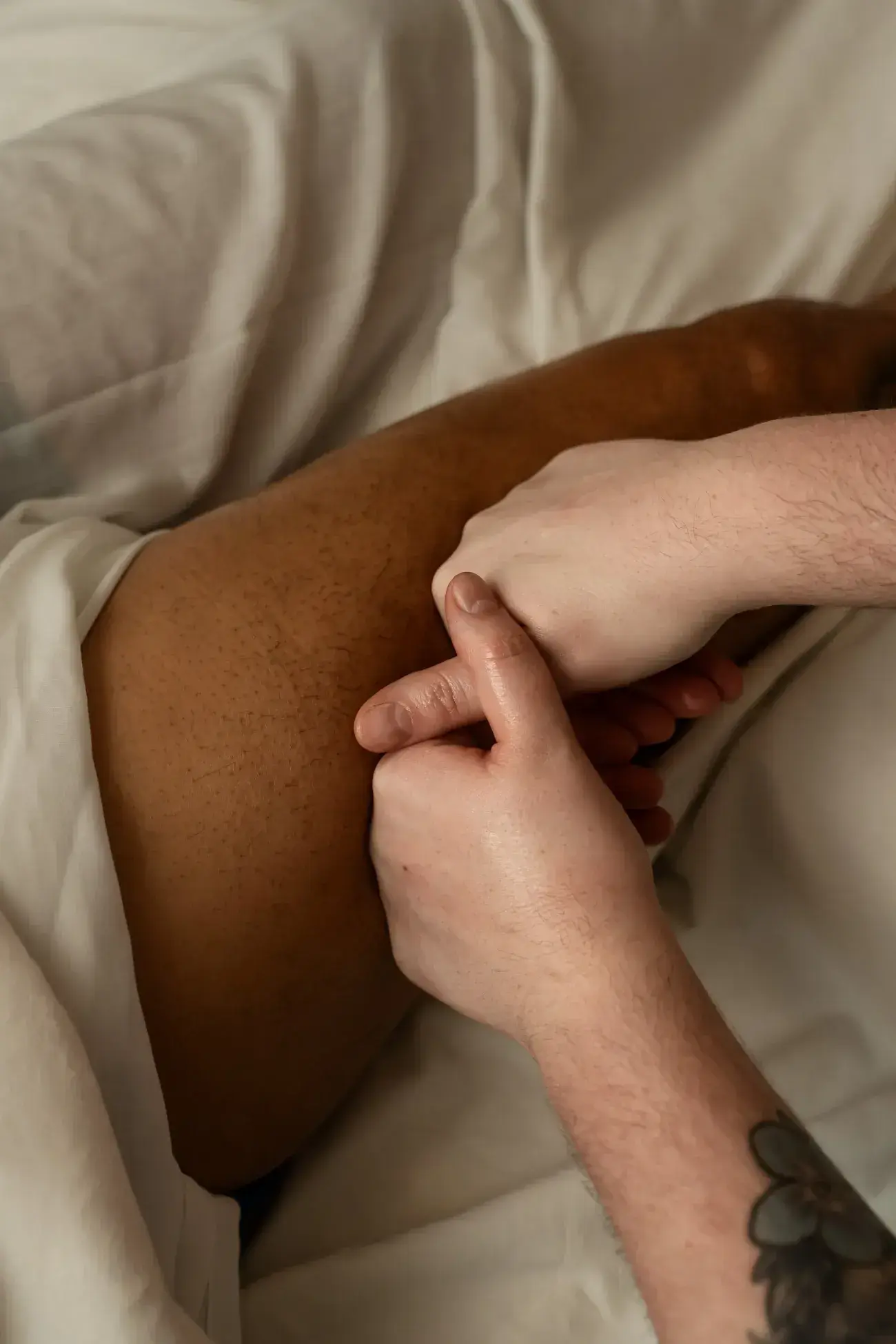
| Blood thinners | Lighter pressure, watch for bruising; see massage on blood thinners |
| Osteoporosis or a past fracture | No firm pressure over bone; see massage with osteoporosis |
| High blood pressure or medications that lower it | Slow transitions and time to sit before standing; see massage with high blood pressure |
| Arthritis | Gentle joint work, pillows for comfort; see massage with arthritis |
Because a massage can leave you relaxed and lower your blood pressure for a while, the end of the session matters. Sit on the edge of the table for a minute before you stand, and let your therapist help with steps or shoes if you need it. You can lie on your back or side, or sit, rather than face down.
When to check with your doctor first
Talk to your doctor before booking if you have:
- a recent fall, especially if you hit your head or are now more unsteady
- a swollen, warm or painful calf on one side, which can be a clot
- new numbness, weakness or confusion
- a skin tear or wound that is not healing
- unexplained bruising, or bruising that has increased since a medication change
Booking at Renu
At Renu, massage for older adults is booked like any other massage, with the adaptations above built in. Many people start with 30 or 45 minutes and move to 60 once they know how they feel lying on the table.
| Length | Price |
|---|---|
| 30 min | $80 |
| 45 min | $100 |
| 60 min | $120 |
We are open seven days a week, including 10:00 am to 5:00 pm on weekends when family may be free to drive, and there is free street parking on 19 Street NW. Ask about access and anything you need when you book, by phone at 403-270-2111 or online through Jane. If you are wondering whether your benefits help, our page on Alberta’s Coverage for Seniors and massage therapy explains what it does and does not include. Everything else is on our massage therapy page.
Questions people ask
Do I have to lie face down for a massage?
No. Many older adults are more comfortable on their back or side, or sitting, with pillows for support. Your therapist will help you find a position that suits your neck, shoulders and hips.
I bruise very easily. Can I still have a massage?
Usually yes, with lighter pressure and less friction. Tell your therapist about easy bruising and any blood thinners, and show them any areas where your skin has torn before so those can be avoided.
Can a family member come with me?
Ask us when you book. A family member can often help with forms, getting to the room and getting dressed afterwards, and it helps to know ahead of time.
Is a shorter massage better for seniors?
Not necessarily, but a 30 or 45 minute session is a gentle way to start, especially if lying still for long is uncomfortable. The balance research used 60-minute sessions, so many people build up to that.
Sources
- Public Health Agency of Canada: Seniors' falls in Canada, second report
- Finding Balance Alberta, Injury Prevention Centre, University of Alberta
- Sefton, Yarar and Berry, 2012: Six weeks of massage therapy produces changes in balance, neurological and cardiovascular measures in older persons
- Sefton, Yarar and Berry, 2012: Massage therapy produces short-term improvements in balance, neurological and cardiovascular measures in older persons
- Karakioulaki, 2024: Skin aging and dermatoporosis, the chronic skin fragility syndrome
- Koca et al., 2026: Prevalence and associated factors of skin tears among hospitalized older adults
Page reviewed October 5, 2026. This page is education, not a diagnosis. For your own situation, talk to your doctor, surgeon or care team, or ask us.
Keep reading
Related pages