
Massage for rock climbers in Calgary
Massage for rock climbers in Calgary: forearm, shoulder and upper-back work for tired climbing muscles, and why a sudden finger pop needs a scan first.
By The Renu lymphatic and massage team · 5 min read
For rock climbers, massage is most useful for the forearm flexors, shoulders and upper back that do the pulling, and it can ease soreness and help flexibility a little. It is not the right first step for a finger injury: pulley injuries are the most common climbing injury and need ultrasound or MRI to grade them. At Renu, a 60-minute massage is $120, and Monica's upper-body RAPID sessions are $85 for 30 minutes or $110 for 45.
Climbing is one of the few sports where your fingers carry your whole body. That gives climbers a very particular set of complaints: forearms that feel pumped and tight for days, shoulders that ache after steep sessions, and fingers that occasionally go pop. Massage is well suited to the first two. The third is a reason to see a doctor, and knowing the difference protects your climbing.
Where climbers actually get hurt
A sports medicine clinic in Bamberg, Germany, followed 911 climbing injuries over four years, and the pattern is clear:
- 833 of the 911 injuries were in the arms and hands, and only 58 in the legs.
- Finger injuries made up 52% of all injuries, and the shoulder was the second most common location.
- 531 injuries were overstrain injuries rather than acute accidents, and older, more experienced climbers had more of them.
- Pulley injuries were the most common finger injury, and injuries to the A4 pulley had become more common than the A2.
- Of 20 injured climbers under 15, 14 had a fracture through a finger growth plate.
The authors also noted that shoulder injuries were becoming more common. For a massage therapist, that means most of the useful work for climbers sits between the elbow and the shoulder blade.
Finger pops come first, massage second
The pulleys are bands that hold the finger tendons close to the bone, and climbing loads them in a way everyday life rarely does. A review in the Journal of Hand Surgery describes these closed pulley ruptures as rare in the general population but more common in climbers. Ultrasound or MRI is used to tell a strain from a partial rupture, a complete rupture or several ruptures at once.
How they are treated depends on that grade:
| Grade | What it is | Usual management |
|---|---|---|
| I | Strain | Conservative: initial immobilization, then early functional therapy with the pulley protected |
| II | Partial rupture | Conservative, as above |
| III | Single complete rupture | Conservative, as above |
| IV | Multiple ruptures | Surgical repair |
The point for you is that a finger that popped, swelled or now hurts to crimp needs to be graded before anyone massages it. Massage cannot tell a grade III from a grade IV, and the treatment is very different.
What massage can do for a climber’s body
Climbing performance leans on more than fingers. In a study of 28 advanced male sport climbers, endurance in the elbow flexors and shoulder girdle predicted climbing ability about as strongly as finger flexor endurance did. Those are the same muscles that get tight and sore after a hard week on the wall.
The evidence on massage for any sport is modest and consistent. A 2020 meta-analysis of 29 randomized studies with 1,012 participants found small improvements in flexibility and delayed onset muscle soreness, and no effect on strength or endurance. So massage will not add a grade, but it can make your recovery days more comfortable.
A climber’s session at Renu usually covers:
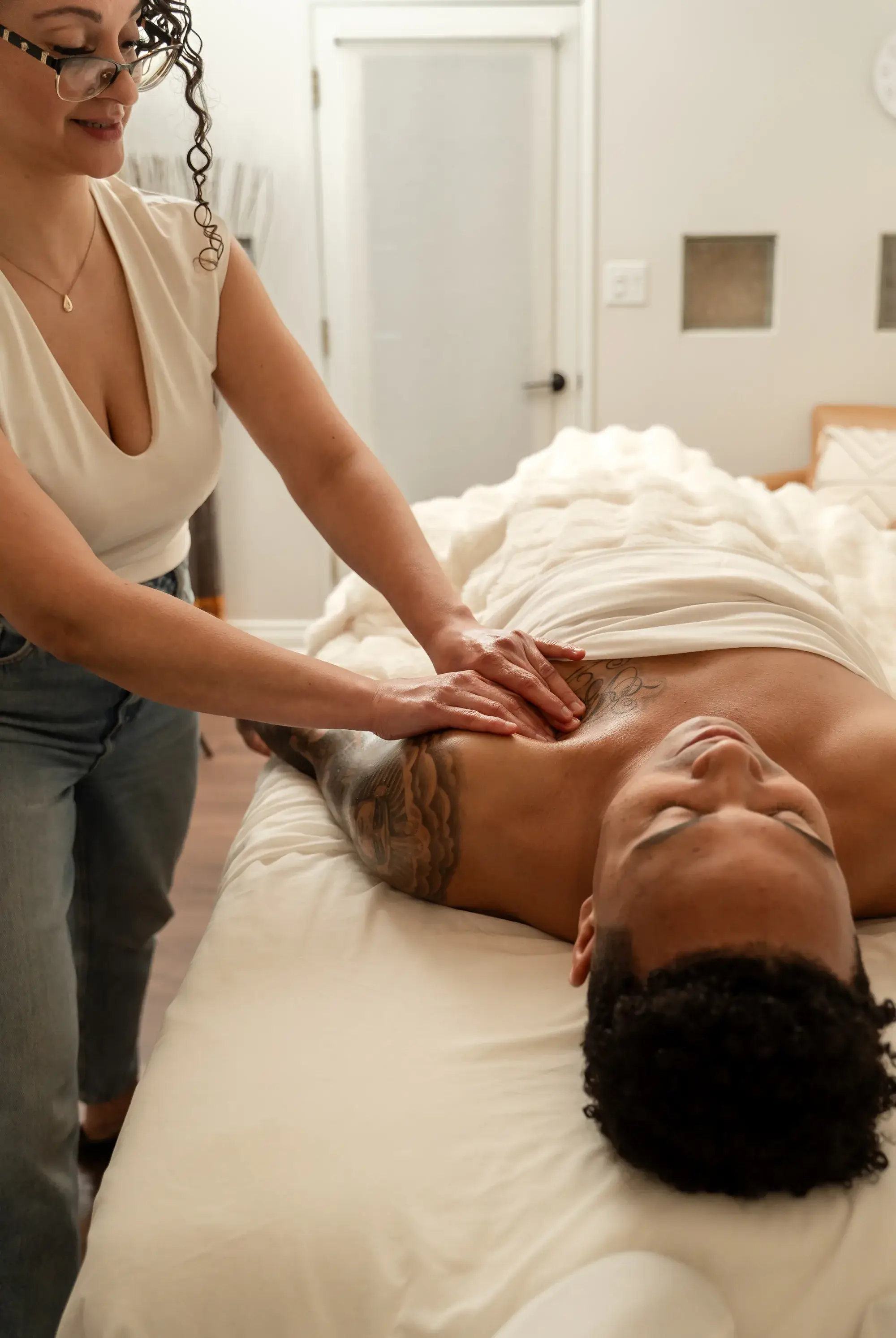
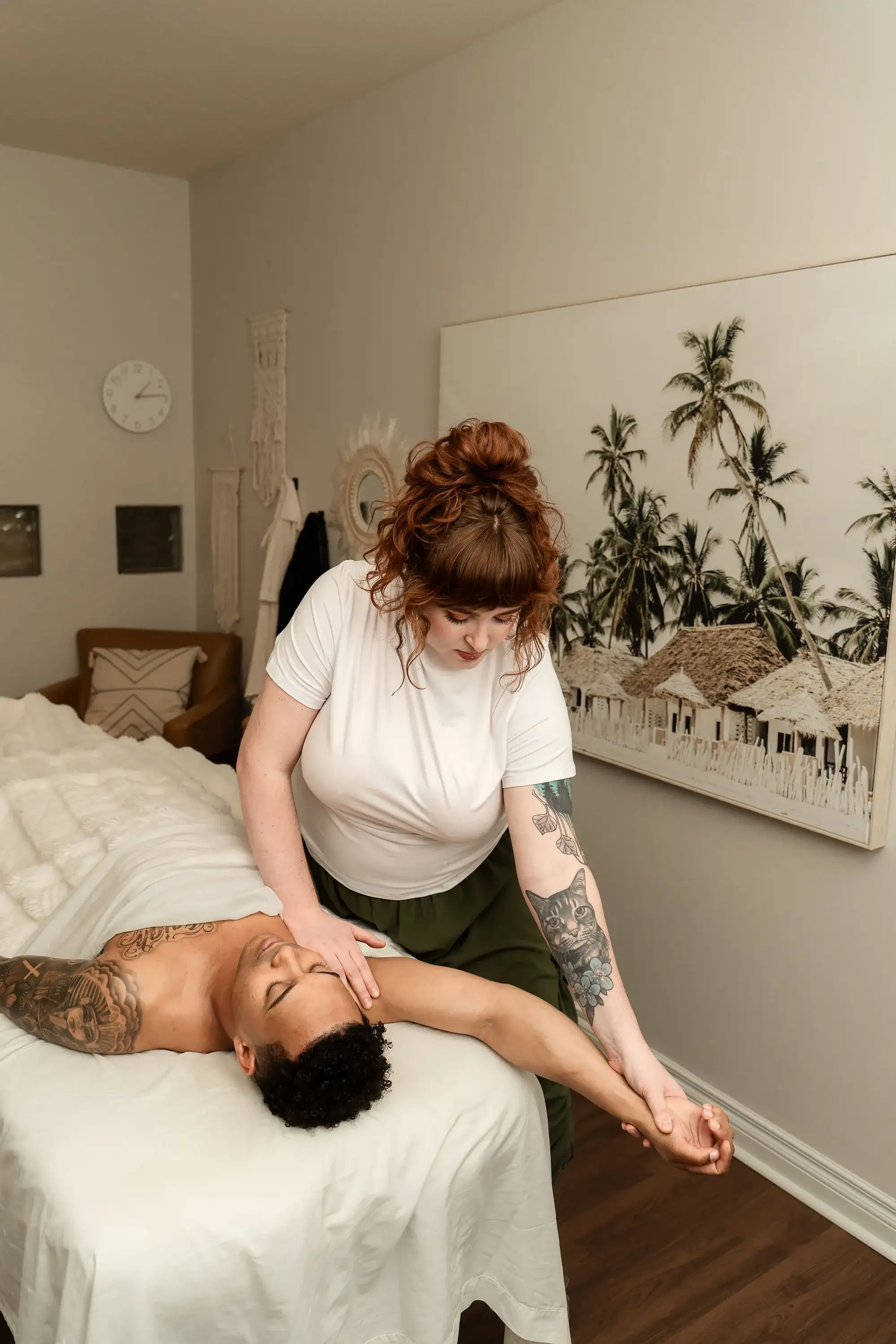
- Forearms: the flexors on the palm side and the extensors on the back of the forearm.
- Elbows: the attachments on the inner and outer elbow, which link to our pages on golfer’s elbow and tennis elbow.
- Shoulders and upper back: the muscles around the shoulder blade, the lats and the neck, relevant if you are dealing with shoulder impingement.
It also helps to plan around the type of injury climbers tend to get with experience. In the Bamberg series, older and more experienced climbers had significantly more overstrain injuries than acute ones. Those build slowly over weeks of hard training, which is where regular recovery work, rest days and honest attention to early aches can make a difference.
When you book, tell us which discipline you mostly do, how many days a week you climb, any finger or shoulder injury in the past year, and whether you are in a hard training block or a rest phase.
Injured fingers are left alone until they are cleared, and a finger that catches or locks when it bends is a separate problem covered on our trigger finger page.
RAPID for forearm and shoulder complaints
For a specific problem rather than general tightness, some climbers prefer RAPID NeuroFascial Reset with Monica Von Gaza. It combines the therapist’s pressure with movement from you, in a shorter upper-body session: 30 minutes for $85 or 45 minutes for $110. Our answer on what RAPID can treat in the arms, wrists and hands explains where it fits. A 60-minute massage ($120) is the better choice when you want forearms, shoulders and back covered in one visit.
We are open until 8:30 pm on weekdays and on weekend afternoons, so a session can follow a climbing day. Book through Jane and mention climbing in your notes.
When to see a doctor first
Book a medical assessment rather than a massage if:
- you felt or heard a pop in a finger, especially on a small crimp;
- a finger is swollen or bruised, or you cannot grip or bend it normally;
- a young climber has finger joint pain, given how often growth plate fractures show up in climbers under 15;
- a shoulder is very painful or getting worse, or you cannot use the arm normally after a fall or a hard move.
The NHS advises emergency care if you heard a crack at the time of an injury or the injured part has changed shape or points at an odd angle.
Questions people ask
Can massage help a pulley injury heal faster?
There is no good evidence that it does. Pulley injuries are graded by ultrasound or MRI, and grades I to III are managed with initial immobilization and then functional therapy with the pulley protected. Massage of the forearm and hand can help with general stiffness once whoever is managing the injury says it is safe.
My teenager climbs and has a sore finger joint. Is it just overuse?
It may not be. In a large German series, 14 of 20 injured climbers under 15 had a growth plate fracture in the finger. A young climber with finger pain should see a doctor before training through it or booking massage.
Should I get a massage before a hard climbing day or after?
After is usually better. The main proven benefits of massage are less soreness and a little more flexibility, not more strength or endurance, so it fits recovery days rather than the morning of a project.
What is RAPID and why would a climber choose it?
RAPID NeuroFascial Reset combines pressure from the therapist with movement from you, and at Renu it is offered as a short upper-body session. Climbers often book it for a specific forearm, elbow or shoulder complaint rather than a full-body massage.
Sources
- Wilderness and Environmental Medicine (2015): Injury trends in rock climbers, a case series of 911 injuries between 2009 and 2012
- Journal of Hand Surgery (2006): Injuries to the finger flexor pulley system in rock climbers, current concepts
- Frontiers in Sports and Active Living (2024): Importance of shoulder girdle and finger flexor muscle endurance in advanced male climbers
- BMJ Open Sport and Exercise Medicine (2020): Effect of sports massage on performance and recovery
- NHS: Sprains and strains
Page reviewed October 5, 2026. This page is education, not a diagnosis. For your own situation, talk to your doctor, surgeon or care team, or ask us.
Keep reading
Related pages