
Massage for PTSD
Massage for PTSD can be a calm, body-based support alongside trauma-focused therapy. What small studies show, and how a trauma-informed session works.
By The Renu lymphatic and massage team · 5 min read
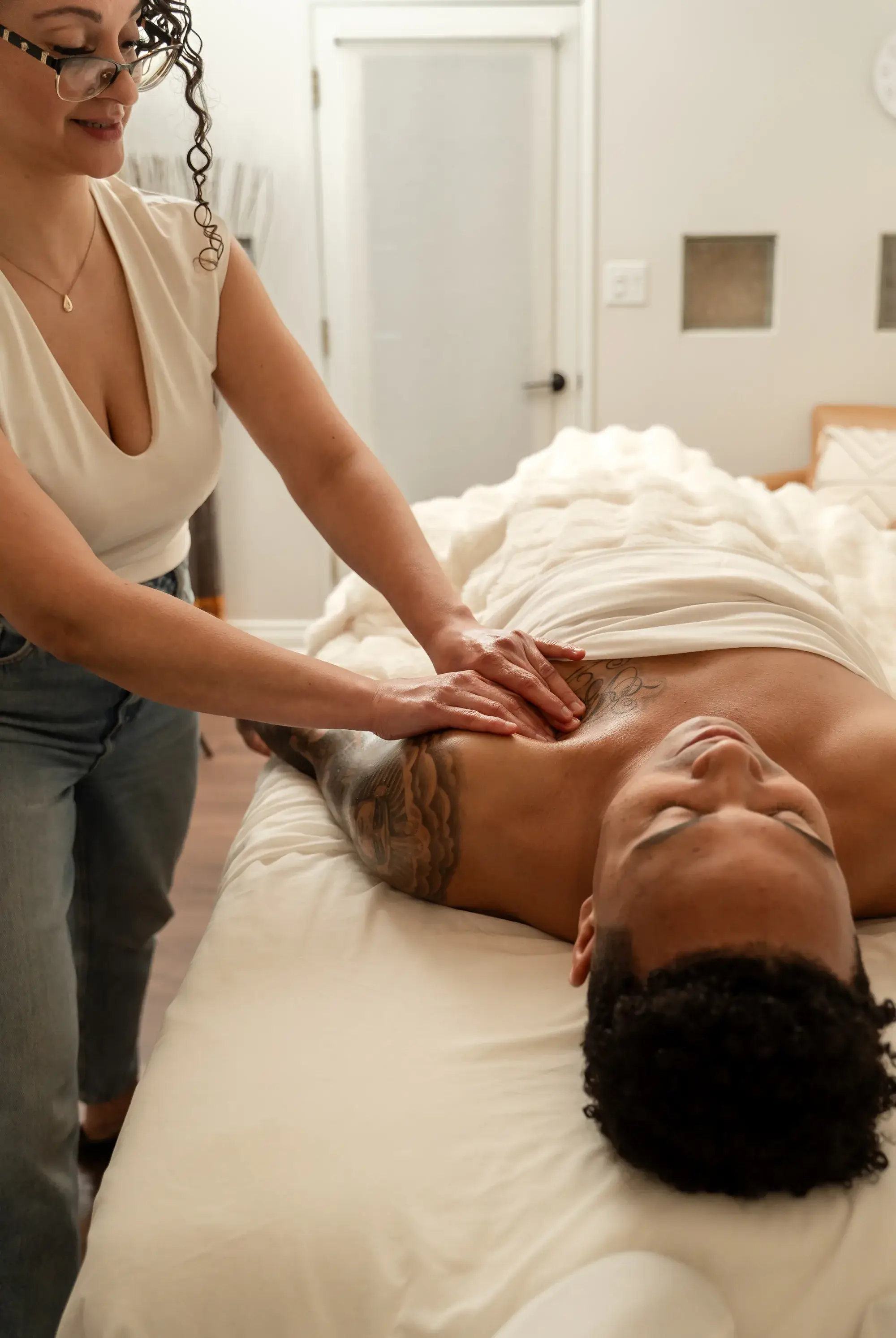
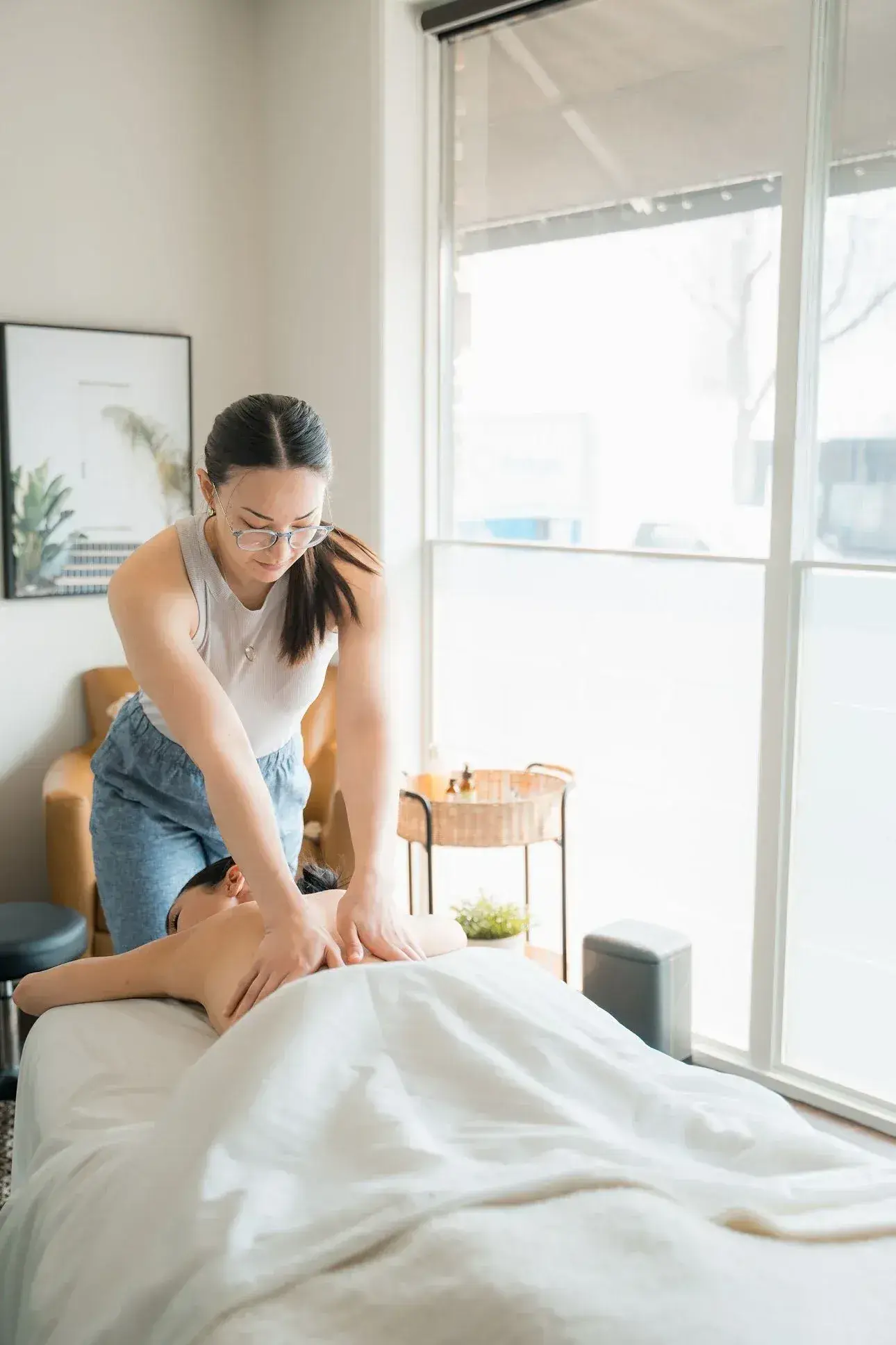
Massage for PTSD is a support that sits beside trauma-focused therapy, never a replacement for it. The research is limited to case reports and small case series: some people felt less anxious or less dissociated after a course of sessions, while a Canadian series found no predictable change in sleep. What matters most is how the session is run, so a trauma-informed massage puts you in charge of clothing, position, which areas are touched, and when to pause or stop.
Massage for PTSD can be a calm, body-based support, but it is an adjunct to trauma-focused therapy, not a treatment for the disorder itself. The published evidence is a handful of case reports and a small case series, with mixed results. What we can offer with confidence is a session run on trauma-informed principles, where you make the decisions and nothing happens without you knowing first.
If you are in crisis or thinking about harming yourself, call or text 9-8-8 at any time, day or night. Call 911 if your safety is at immediate risk.
How PTSD can show up on a massage table
PTSD affects the body as well as memory, which is why lying on a table can feel very different for someone who has lived through trauma. The NHS lists symptoms that include flashbacks, nightmares and intrusive images, avoiding reminders, feeling disconnected from yourself and the world around you (dissociation), difficulty controlling emotions, poor sleep, and feeling very anxious and on the lookout for danger all the time (hypervigilance). It also describes repeated headaches, stomach problems and body pain with no clear physical cause. Symptoms can begin straight after an event or months, even years, later.
In a treatment room, that might look like:
- finding it hard to close your eyes or lie face down
- startling when touch begins or moves to a new area
- drifting away or going numb partway through
- tension that will not let go, especially in the jaw, neck or belly
- strong emotion arriving without warning
None of these is a problem to apologise for. They are information that helps us adjust.
What the evidence says, honestly
The main treatments for PTSD are trauma-focused therapies, such as trauma-focused cognitive behavioural therapy (CBT) and eye movement desensitisation and reprocessing (EMDR), and medicine, usually an antidepressant, according to the NHS. Massage research is far less developed:
| Study | What it involved | What it found |
|---|---|---|
| Sumpton and Baskwill, 2019 (Ontario) | 10-week plans by Registered Massage Therapists for three people with PTSD, light to moderate pressure, focused on sleep | Sleep improved and worsened inconsistently; massage did not predictably change sleep quality, though it was well tolerated with no harm |
| Hanus and Fogarty, 2025 | Six sessions for one woman with PTSD-related anxiety | Anxiety fell by a clinically meaningful amount; she preferred craniosacral work and hot stones |
| Fraser, 2025 | Ten sessions over 12 weeks plus home exercises for one woman with persistent dissociation | Dissociation scores fell by about half and body awareness improved; the author called massage a low-risk adjunct and recommended working with psychiatry |
The Ontario authors noted that PTSD affects about 2.4 percent of Canadians. Case reports cannot tell us whether massage itself caused a change, so treat these as reasons to try carefully, not as proof.
Trauma-informed care, turned into practical choices
SAMHSA describes a trauma-informed approach as one that realises how widespread trauma is, recognises its signs, responds by building that knowledge into practice, and actively avoids retraumatising people. It rests on principles including safety, trustworthiness and transparency, collaboration, and empowerment, voice and choice. Here is how those principles shape a massage with us:
- Safety. You decide where your belongings go and how the door is set. You can keep your phone within reach.
- Transparency. We explain each step before it happens, including when we will step out while you settle under the sheet and when we will knock to come back in.
- Choice of clothing. You undress only as far as you are comfortable; staying fully clothed is fine. See undressing for a massage.
- Choice of position. Face up or side-lying instead of face down, sitting up between areas, eyes open if you prefer.
- Choice of areas. You name anywhere that is off-limits, and we will not drift into it.
- A stop signal. Agree on a word or gesture. When you use it, hands come off at once; our answer on asking your therapist to stop explains why that is always welcome.
- Collaboration. You can ask for less talk or more, and we will check in at points you choose.
How this works at Renu
Start small. A 30-minute session of massage therapy ($80) on just the back and shoulders, or hands and feet, is a gentle first step; 45 minutes is $100 and 60 minutes is $120. You can book online through Jane, or call 403-270-2111 if you would like to talk through your preferences before you book. If you would feel safer with a therapist of a particular gender, say so when you call. Weekend and evening appointments are available, as we are open seven days.
If a session brings up something difficult, bring it to your next therapy appointment. Massage can open feelings; your therapist is the right person to help you work with them. People working in emergency services may also find our page on massage for first responders useful, and our pages on anxiety and insomnia cover two symptoms that often travel with PTSD.
When to speak to your doctor or therapist first
See your doctor if you think you might have PTSD, or if your current treatment is not helping, as the NHS advises. Talk to your therapist or psychiatrist before starting massage if:
- you dissociate often or for long stretches
- touch has been part of your trauma and you are unsure how you will react
- you are going through an intense phase of trauma processing
Call or text 9-8-8 if you are struggling to stay safe, and call 911 in an emergency.
Questions people ask
Do I need to tell my massage therapist about my trauma?
No. You never need to share what happened. It helps to tell us what to avoid and what helps you feel settled, for example no work on the neck, the door left a certain way, or a heads-up before we move to a new area.
What if I have a flashback or panic during the massage?
We stop, take our hands away and give you space. You can sit up, get dressed or end the session, and nothing needs explaining. Use whatever grounding plan you have practised with your therapist, and let them know afterwards.
Should I tell my therapist or psychiatrist that I am getting massage?
Yes, it is a good idea. A 2025 case report on massage for dissociation in PTSD recommended collaboration with psychiatry, and your therapist can help you make sense of anything a session brings up.
Is a shorter massage better for a first visit?
Often, yes. A 30-minute session, perhaps just the back, shoulders or feet, lets you see how being on the table feels with less to commit to. You can lengthen sessions as trust builds.
Sources
- NHS: Post-traumatic stress disorder (PTSD) overview
- NHS: Treatment for post-traumatic stress disorder (PTSD)
- SAMHSA: Trauma-informed approaches and programs
- Sumpton B, Baskwill A, International Journal of Therapeutic Massage and Bodywork 2019: A series of case reports regarding the use of massage therapy to improve sleep quality in individuals with PTSD
- Hanus A, Fogarty S, International Journal of Therapeutic Massage and Bodywork 2025: The effects of massage therapy on post-traumatic stress disorder, a case report
- Fraser A, International Journal of Therapeutic Massage and Bodywork 2025: Therapeutic massage and homecare to reduce dissociation in PTSD, a case report
- 9-8-8 Suicide Crisis Helpline
Page reviewed October 5, 2026. This page is education, not a diagnosis. For your own situation, talk to your doctor, surgeon or care team, or ask us.
Keep reading
Related pages