
Massage for patellar tendinopathy
Massage for patellar tendinopathy eases the thigh and calf so loading exercise is easier, but exercise is the treatment. What the research shows.
By The Renu lymphatic and massage team · 5 min read
Massage for patellar tendinopathy (jumper's knee) is a helper, not the treatment: in a head-to-head trial an exercise program beat friction massage, and reviews have not found clear benefit from deep friction on tendons. What massage can do is ease the quadriceps, hamstrings and calves so the loading exercises that do work feel more manageable. A knee that locks, gives way, cannot straighten or is hot and swollen needs a doctor first.
Where jumper’s knee hurts and who gets it
Patellar tendinopathy is pain in the tendon that runs from the bottom of the kneecap to the top of the shin. The NHS describes knee pain between the kneecap and shin, often brought on by repetitive running or jumping, as typical of tendon trouble. It tends to bite when you jump, land, climb stairs or squat.
This is not the same as pain around or behind the kneecap, which is usually patellofemoral pain, and it is different again from the wear-related pain of knee osteoarthritis.
A systematic review of risk factors found no strong evidence for any single cause. It did find limited evidence for nine:
- body weight, body mass index and waist-to-hip ratio
- a difference in leg length
- the height of the foot arch
- flexibility of the quadriceps and hamstrings
- quadriceps strength
- vertical jump performance
The authors suggested that reducing body weight, improving upper-leg flexibility and quadriceps strength, and using orthotics may help, while stressing how thin the evidence is. For a massage therapist, the flexibility items are the ones we can most directly support.
Exercise beat friction massage head to head
The clearest comparison is a small randomized trial of 30 people with chronic patellar tendinopathy. Each group had three sessions a week for four weeks of one treatment: an exercise program, pulsed ultrasound or transverse friction massage. The exercise group had significantly less pain than the other two at the end of treatment, one month later and three months later. The authors called for larger studies, but the direction was clear.
Deep transverse friction, the cross-fibre rubbing of a tendon popularised by James Cyriax in the 1930s, has also been reviewed by Cochrane. That review covered tennis elbow and the outer-knee iliotibial band problem rather than the patellar tendon, and found too little evidence to say whether friction massage helps pain, grip or function. It found no clinically important benefit in the two small trials it included. Our cross-fibre friction massage page explains the technique itself.
That is why a massage for jumper’s knee should not centre on grinding friction over the tendon.
Loading is the treatment
Tendons respond to load, and the evidence favours exercise that loads the tendon progressively:
- Isometric holds for in-season pain. In a crossover study of six volleyball players with patellar tendinopathy, a single session of isometric quadriceps contractions (holding a fixed position against resistance) cut pain on a single-leg decline squat from about 7 out of 10 to near zero. The relief lasted at least 45 minutes, quadriceps strength rose by about 19 percent, and the holds could be done without pain. Moving contractions helped less. Six players is a small sample, but it explains why isometrics are popular during a competitive season.
- Eccentric decline-board training. A review of seven trials with 162 patients found eccentric programs generally helpful, most often done at home twice a day for 12 weeks, usually on a decline board, with some discomfort allowed and time away from sport. The authors could not recommend one protocol over another.
- Heavy, slow loading. A 2013 systematic review found greater evidence for heavy slow resistance loading than for eccentric-only work in the patellar tendon, and suggested clinicians consider combined eccentric-concentric loading alongside or instead of eccentric-only programs.
A physiotherapist or sports physician is the right person to set and progress that program.
What massage adds around the loading
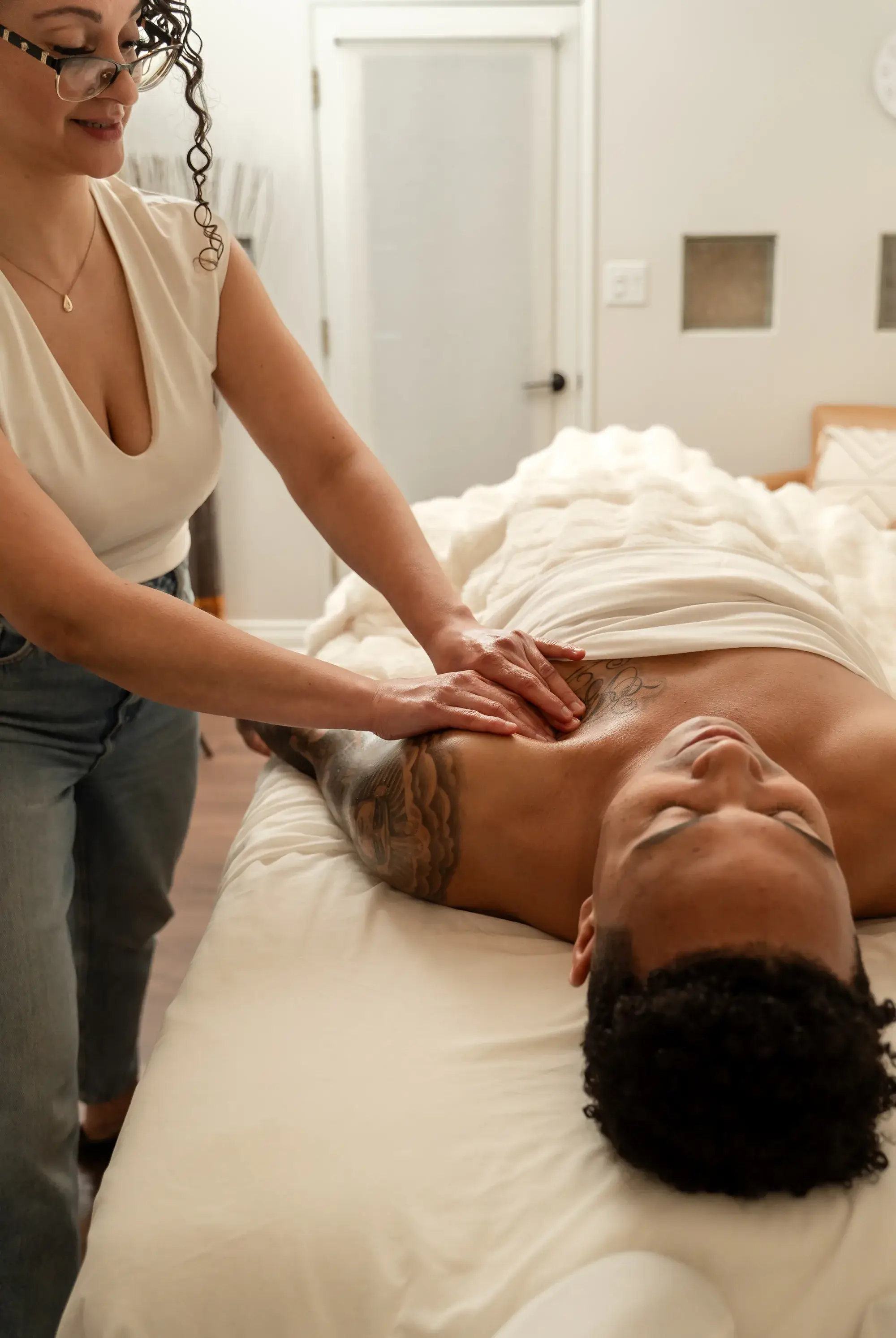
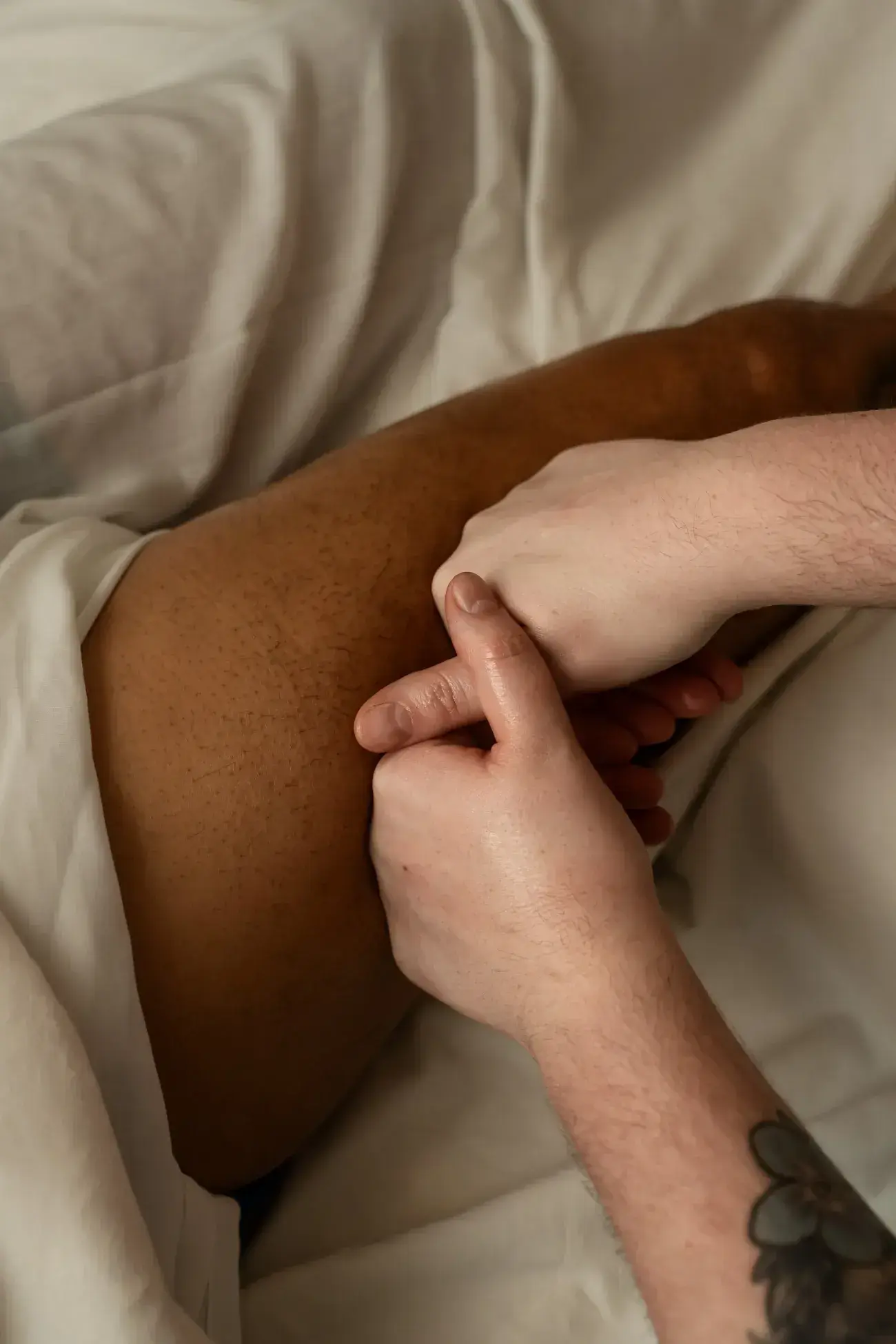
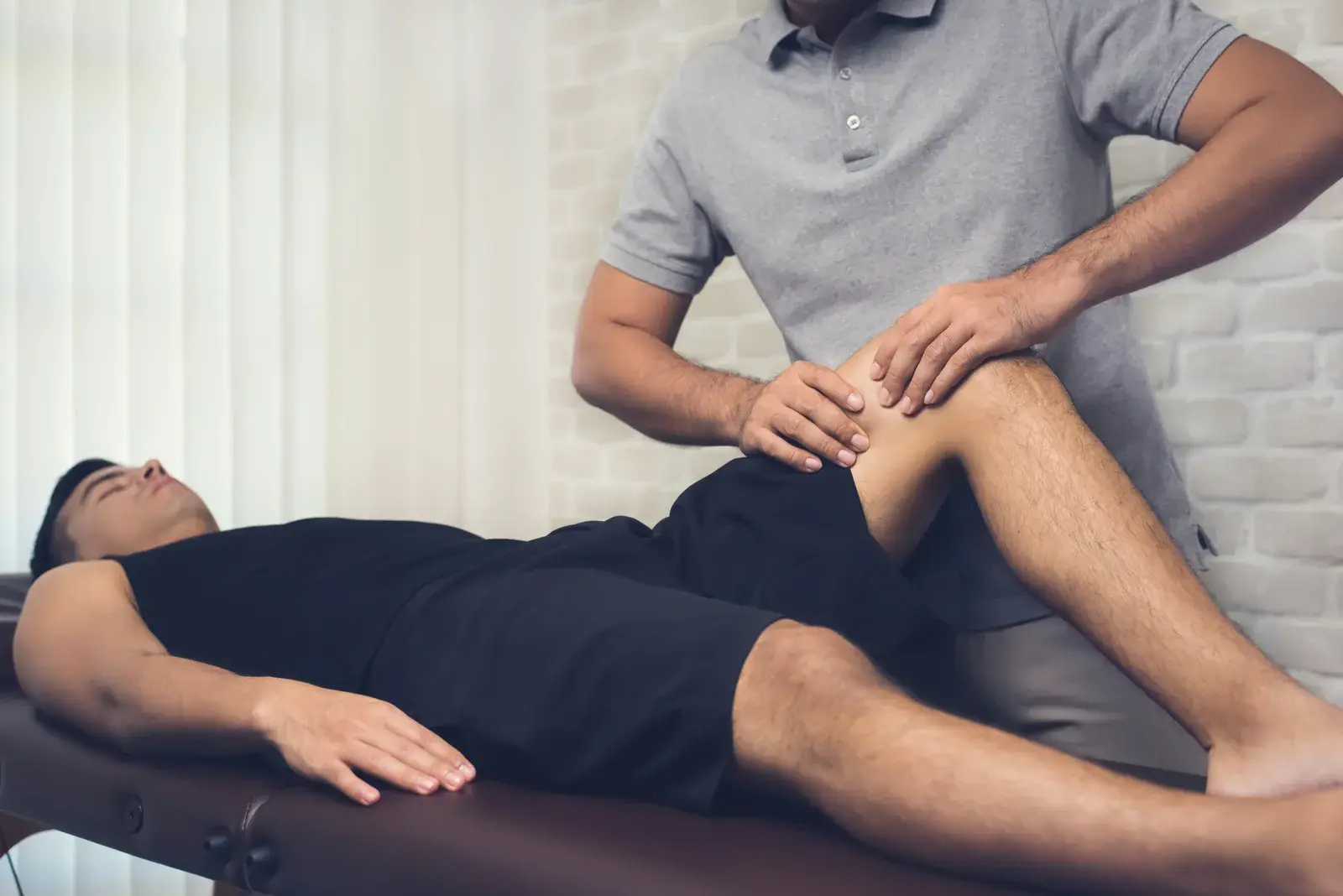
Massage supports the program rather than competing with it. A session for jumper’s knee usually focuses on:
- Quadriceps and hamstrings, since upper-leg flexibility appears among the possible risk factors
- Calves and hips, which share the work of jumping and landing
- Light, comfortable work near the tendon, never aggressive friction on the sore spot
- Timing around training, for example after a heavy week of volleyball, basketball or early ski days rather than right before a game
The aim is that your legs feel looser and your loading sessions feel more manageable. If pain under the kneecap sharpens during a session, tell your therapist so they can change the approach.
Booking at Renu for jumper’s knee
A 45-minute massage ($100) covers both legs from hip to ankle; 60 minutes ($120) adds the low back and upper body for athletes in a heavy training block. Myofascial cupping (60 minutes, $120) is an option for the thighs if you prefer gliding work. Bring your loading program and note which movements hurt when you book through Jane.
Our Registered Massage Therapists work in West Hillhurst, open seven days. Our sports massage page explains how to time sessions around competition.
When to see your doctor first
The NHS advises getting urgent advice if your knee:
- cannot move or bear weight
- is badly swollen or has changed shape
- locks, gives way or clicks painfully (painless clicking is normal)
- is hot and red with a high temperature or shivers, which can signal infection
- is very painful
A knee that gave way with a pop during a landing, or now feels unstable and will not straighten, may have a torn ligament, tendon or meniscus rather than tendinopathy; our meniscus tear page covers that injury. See your doctor too if the pain has not improved within a few weeks of easing your training, or if teenagers have pain and swelling just below the kneecap, which the NHS links with Osgood-Schlatter disease.
Questions people ask
What is the difference between patellar tendinopathy and runner's knee?
Patellar tendinopathy hurts in the tendon just below the kneecap, typically with jumping. Runner's knee (patellofemoral pain) is pain around or behind the kneecap itself. The two are managed differently, so it helps to know which one you have.
Do knee straps help jumper's knee?
The studies on this page do not test straps, so we cannot tell you whether they work. Many athletes try one for comfort; ask your physiotherapist whether it suits your knee and do not let it replace the loading program.
How long does jumper's knee take to get better?
The studies on this page do not give one timeline, and it depends on how long you have had it. Most of the eccentric training programs in the 2007 review ran for 12 weeks, which gives a sense of the commitment involved.
Should massage on my knee hurt?
No. Work near the tendon should be light and comfortable. Sharp pain under the kneecap during a session is a signal to change the technique, not to push through.
Sources
- Stasinopoulos and Stasinopoulos (2004), Clinical Rehabilitation: Exercise programme, pulsed ultrasound and transverse friction in chronic patellar tendinopathy
- Loew et al. (2014), Cochrane Database of Systematic Reviews: Deep transverse friction massage for treating lateral elbow or lateral knee tendinitis
- Rio et al. (2015), British Journal of Sports Medicine: Isometric exercise induces analgesia and reduces inhibition in patellar tendinopathy
- Visnes and Bahr (2007), British Journal of Sports Medicine: The evolution of eccentric training as treatment for patellar tendinopathy
- Malliaras et al. (2013), Sports Medicine: Achilles and patellar tendinopathy loading programmes, a systematic review
- van der Worp et al. (2011), British Journal of Sports Medicine: Risk factors for patellar tendinopathy, a systematic review
- NHS: Knee pain
Page reviewed October 5, 2026. This page is education, not a diagnosis. For your own situation, talk to your doctor, surgeon or care team, or ask us.
Keep reading
Related pages