
Massage for golfers in Calgary
Massage for golfers in Calgary: help for the low back, hips, elbows and shoulders through a short season, plus the warm-up and swing habits that matter more.
By The Renu lymphatic and massage team · 5 min read
For golfers, massage is most useful for the low back, hips, shoulders and elbows that the swing loads over and over, and it can ease stiffness after a round. The low back is golf's most common injury, and it is linked to stiff lead-hip rotation and lumbar extension, which massage and mobility work can address. A warm-up of at least 10 minutes and a well-coached swing matter too. At Renu, a 60-minute massage is $120.
Golf looks gentle from the clubhouse, but every full swing asks the low back, hips and shoulders to rotate hard and fast, and a round asks for that dozens of times. Add a Calgary winter with the clubs in the garage, and spring is when many golfers find out what has stiffened up. Massage can help a lot with that stiffness. It works best alongside a decent warm-up and a swing that is not fighting your body.
A short season and a fast start
Calgary’s golf season starts once the snow allows. In one past season the City planned to open its Shaganappi Point course on April 1 and Maple Ridge on April 4. For a golfer who has not swung a club since last fall, that can mean going from months off to a full 18 holes in a single weekend.
That jump is worth planning around. A golf injury study of 703 players found that 82.6% of reported injuries came from overuse rather than a single traumatic event. Overuse injuries grow from doing a lot of something your body is not ready for, which is a fair description of the first warm weekend in April.
Where golfers get hurt
The research is consistent about the main sites.
- Low back. A review of golf injuries names the low back as the most common golf injury, with the swing itself a major contributor. Amateur injuries tend to follow an incorrect swing.
- Elbow, back and shoulder. In the 703-golfer study, amateurs reported many elbow, back and shoulder injuries, while professionals were injured most in the back, wrist and shoulder.
- Neck and shoulder. The same review notes that overuse injuries of the back, neck and shoulder are more common than being hit by a club or a ball, which is rare.
Most golf injuries are not dramatic. In the same study, 51.5% were minor, 26.8% moderate and 21.7% major, and professional golfers were injured more often than amateurs. The authors concluded that golf is a fairly benign activity if overuse can be avoided, and that it can cause serious chronic problems if it cannot.
Two habits stood out in the 703-golfer study. Carrying your own bag proved hazardous to the low back, shoulder and ankle. And warm-up routines had a protective effect, but only when they lasted at least 10 minutes.
For the first few weeks of the season, it is worth easing in rather than playing 36 holes on the first warm weekend. Range sessions, nine-hole rounds, a cart instead of carrying, and a warm-up of at least 10 minutes each time give your back and shoulders a chance to catch up with your enthusiasm. If you know stiffness is coming, a massage early in that first month can make the transition more comfortable.
Why the lead hip matters for your back
One finding is especially useful for massage. In a study of 42 professional male golfers, a third had a history of low back pain. Those golfers had less internal rotation in their lead hip (the left hip for a right-handed golfer) and less lumbar extension than golfers without back pain.
The reasoning is simple. If the lead hip cannot rotate, the low back has to rotate more to finish the swing. Massage of the hip rotators, glutes and low back, combined with mobility work, is aimed at exactly those restrictions.
Rehabilitation research points in a similar direction. A review of low back pain in golf found that randomized studies support focusing physical therapy on the deep core muscles, the transversus abdominis and multifidus, and that coaching a classic swing and improving trunk flexibility may add benefit. That work belongs with a physiotherapist or golf professional. Massage can make it easier to move well while you do it.
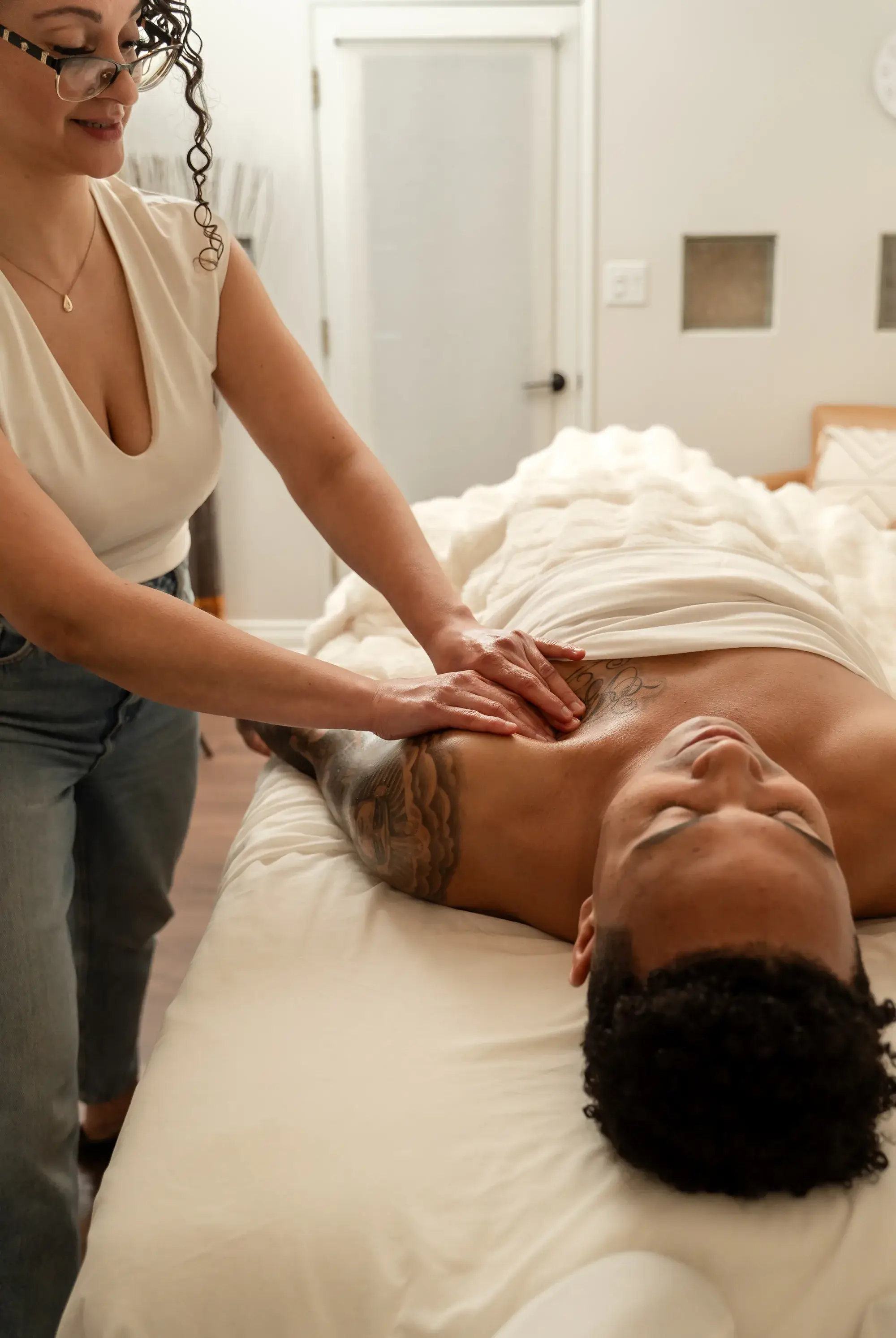
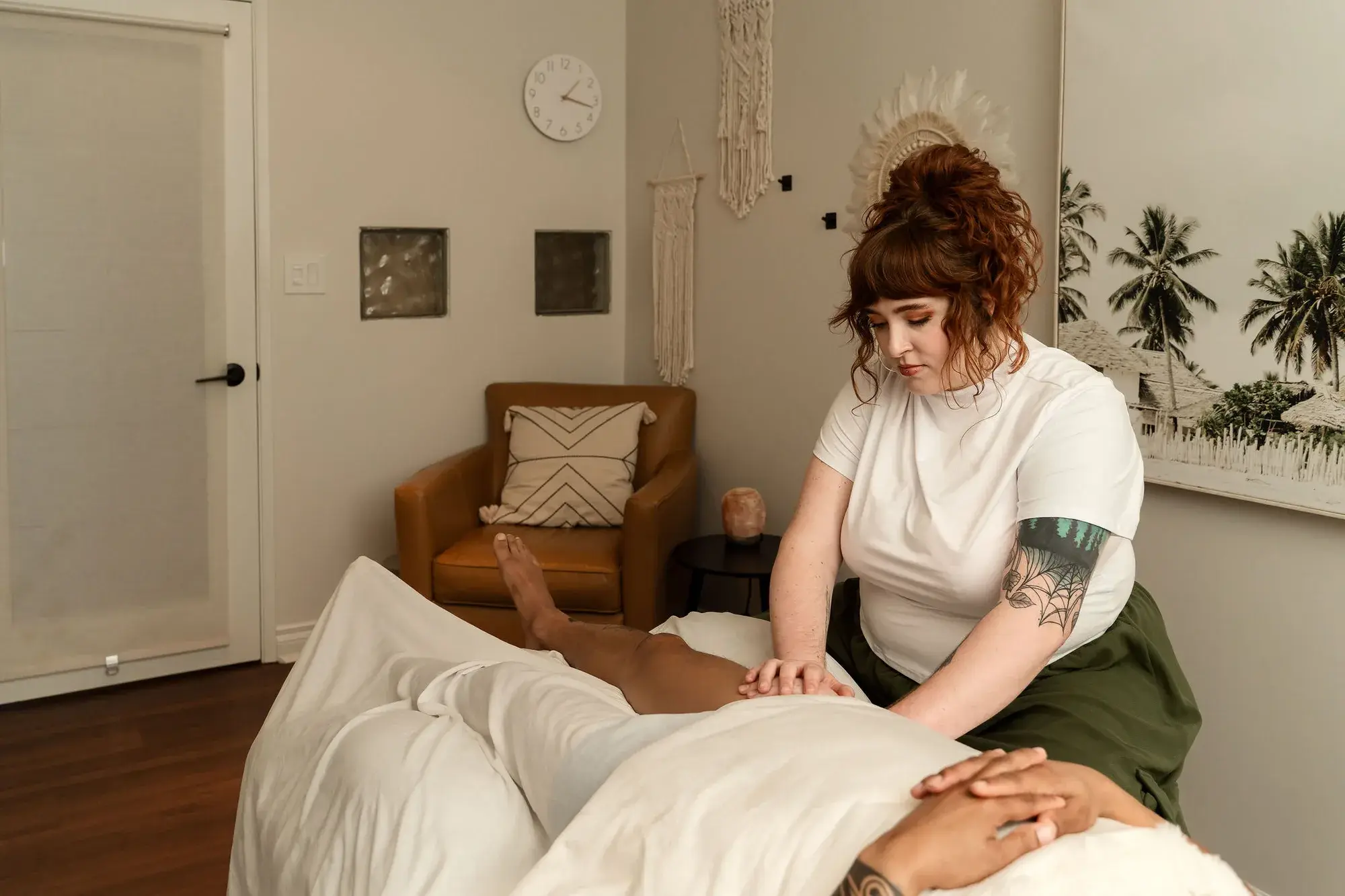
Massage for golfers at Renu
A Registered Massage Therapist will ask your lead side, how often you play and where it hurts after a round. Then a session typically covers:
- the low back and the muscles around the lead hip, checking rotation as they go;
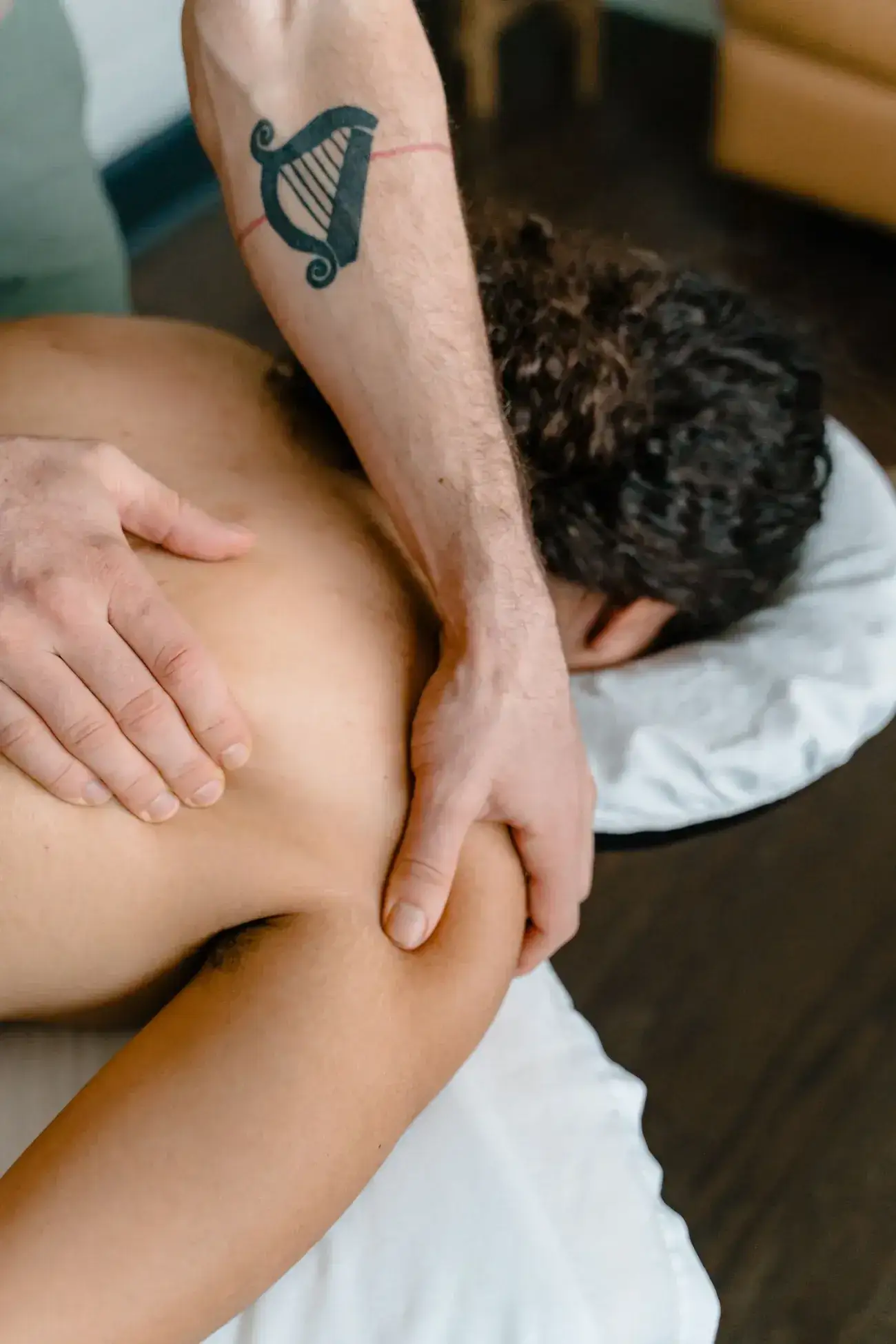
- the upper back and shoulders, especially the lead shoulder;
- the forearms and the inner or outer elbow, if you have golfer’s elbow or tennis elbow.
A 60-minute massage ($120) covers back, hips and shoulders. A 75-minute session ($141) gives time to add the forearms and neck. If a single shoulder, elbow or upper-back problem is the issue, a 30-minute RAPID NeuroFascial Reset session with Monica Von Gaza ($85) is a focused option. We are in West Hillhurst, open until 8:30 pm on weekdays and on weekend afternoons, so an evening session after a round is easy to book through Jane.
If your hip pain is in the joint rather than the muscles, our hip osteoarthritis page explains how massage fits.
When to see a doctor first
Most golf stiffness is safe to treat with massage. The NHS advises seeing a doctor if back pain:
- does not improve after a few weeks of home care, or stops you doing daily activities;
- is worse at night, or comes with unexplained weight loss or a lump or swelling;
- starts suddenly and severely, or comes with feeling generally unwell.
It treats pain, tingling or numbness in both legs, loss of feeling around the genitals or anus, changes in bladder or bowel control, or chest pain as emergencies. Chest pain on the course is a reason to stop playing and call 911, not to book a massage. Our low back pain page covers ongoing back pain in more detail.
Questions people ask
Should I get a massage before my first round of the season?
It can help if you are already stiff, but the bigger protection is a proper warm-up. In a study of 703 golfers, warm-ups of at least 10 minutes had a protective effect, while shorter ones did not.
Is carrying my golf bag bad for my back?
It can be. A study of 703 golfers found carrying your own bag was hazardous to the low back, shoulder and ankle. A push cart or a power cart takes that load off.
Can massage help golfer's elbow?
Massage of the forearm and elbow can ease the tightness around it, alongside whatever exercise program your physiotherapist or doctor sets. Our golfer's elbow page explains what the evidence supports.
How often should a golfer get a massage?
There is no fixed schedule. Many golfers book more in the spring, when they go from a winter off to playing often, and then every few weeks through the season if the back or shoulder is a recurring problem.
Sources
- American Journal of Sports Medicine (2003): Injuries and overuse syndromes in golf
- Sports Medicine (2006): Golf injuries, a review of the literature
- American Journal of Sports Medicine (2004): Low back pain in professional golfers, the role of associated hip and low back range-of-motion deficits
- Spine Journal (2008): The lumbar spine and low back pain in golf, a literature review of swing biomechanics and injury prevention
- City of Calgary Newsroom: Shaganappi Point and Maple Ridge golf course openings
- NHS: Back pain
Page reviewed October 5, 2026. This page is education, not a diagnosis. For your own situation, talk to your doctor, surgeon or care team, or ask us.
Keep reading
Related pages