
Massage for adults with cerebral palsy
Massage for adults with cerebral palsy can ease pain and muscle tone when positioning, pace and pressure are adapted. The evidence, and how a session works.
By The Renu lymphatic and massage team · 5 min read
Massage can help adults with cerebral palsy with the muscle pain, stiffness and tiredness that build up over the years, as one part of care alongside physiotherapy and your doctor. Trials in children show reduced spasticity after 6 to 12 weeks of massage added to exercise, though adult trials are still missing. A good session is adapted: supported side-lying or seated positions, planned transfers, slow strokes and clear consent, with a support person in the room if you want one.
Cerebral palsy is usually talked about as a childhood condition, but most children with CP grow into adults, and adult life brings its own set of aches. Muscles that have worked against high tone for decades get sore, joints carry uneven loads, and sleep can suffer. Massage is one of the gentler ways to address that, provided the session is shaped around your body rather than the other way round.
Cerebral palsy in adulthood
The NHS describes cerebral palsy as a group of lifelong conditions affecting movement and co-ordination, caused by a problem with the brain that develops before, during or soon after birth. Two points matter for adults:
- The original brain problem does not get worse over time. CP is not a progressive disease.
- The body still changes. The NHS notes that the condition can put a lot of strain on the body and cause problems such as painful joints in later life, and that the daily challenges can lead to depression for some people.
Treatment in adulthood usually continues with physiotherapy, occupational therapy, speech therapy where needed, and medicine for muscle stiffness, with surgery in some cases. Massage sits alongside those, not instead of them.
Pain is common, and often under-reported
Pain is one of the most important issues for adults with CP, and research has only recently put numbers to it.
| Study | Who | Key finding |
|---|---|---|
| Meta-analysis of individual data, 15 studies | 1,243 adults, average age 34 | 70% had pain; women more often than men; most pain in the legs |
| Swedish follow-up program | 1,591 adults aged 16 to 76 | About two-thirds had pain; severe pain carried a roughly sixfold risk of interfering with work, daily activities and sleep |
Among adults with pain in the meta-analysis, 76% reported it in the legs, with an average severity of 3.7 out of 10. The authors concluded that adults with CP should be routinely screened for pain and treated.
The Swedish study found that pain was reported less often when someone else answered on the person’s behalf (62.4%) than when people reported for themselves (69.9%). The authors suggest pain is likely under-reported in people who do not communicate easily or rely on proxy reports. In a massage session, that means we need agreed ways for you to tell us about discomfort, whether that is words, a hand signal, a communication device or a support person who knows you well.
What the evidence says about massage and spasticity
The trial evidence comes from children, and it is worth being clear about that.
- A randomised trial of 86 children aged 2 to 10 with spastic diplegia added traditional massage to daily physiotherapy for three months. Spasticity scores fell in all four limbs at 6 and 12 weeks compared with physiotherapy alone, with no harmful effects. Gross motor function did not change more than in the control group.
- A second trial of 68 children aged 4 to 12 added caregiver-delivered massage to a home exercise program. Spasticity fell more than with exercise alone at 6 and 12 weeks.
- A systematic review of 11 studies with 297 children found muscle tone decreased with massage and recommended it as an adjunct to traditional therapies for spastic CP, while calling for better studies.
We did not find trials of massage in adults with CP. The reasonable reading is that massage may help ease muscle tone and the pain that comes with it, as an add-on to exercise and physiotherapy, and that it will not change motor function on its own.
How a session is adapted
The adaptations matter more than the technique. Here is what we plan for:
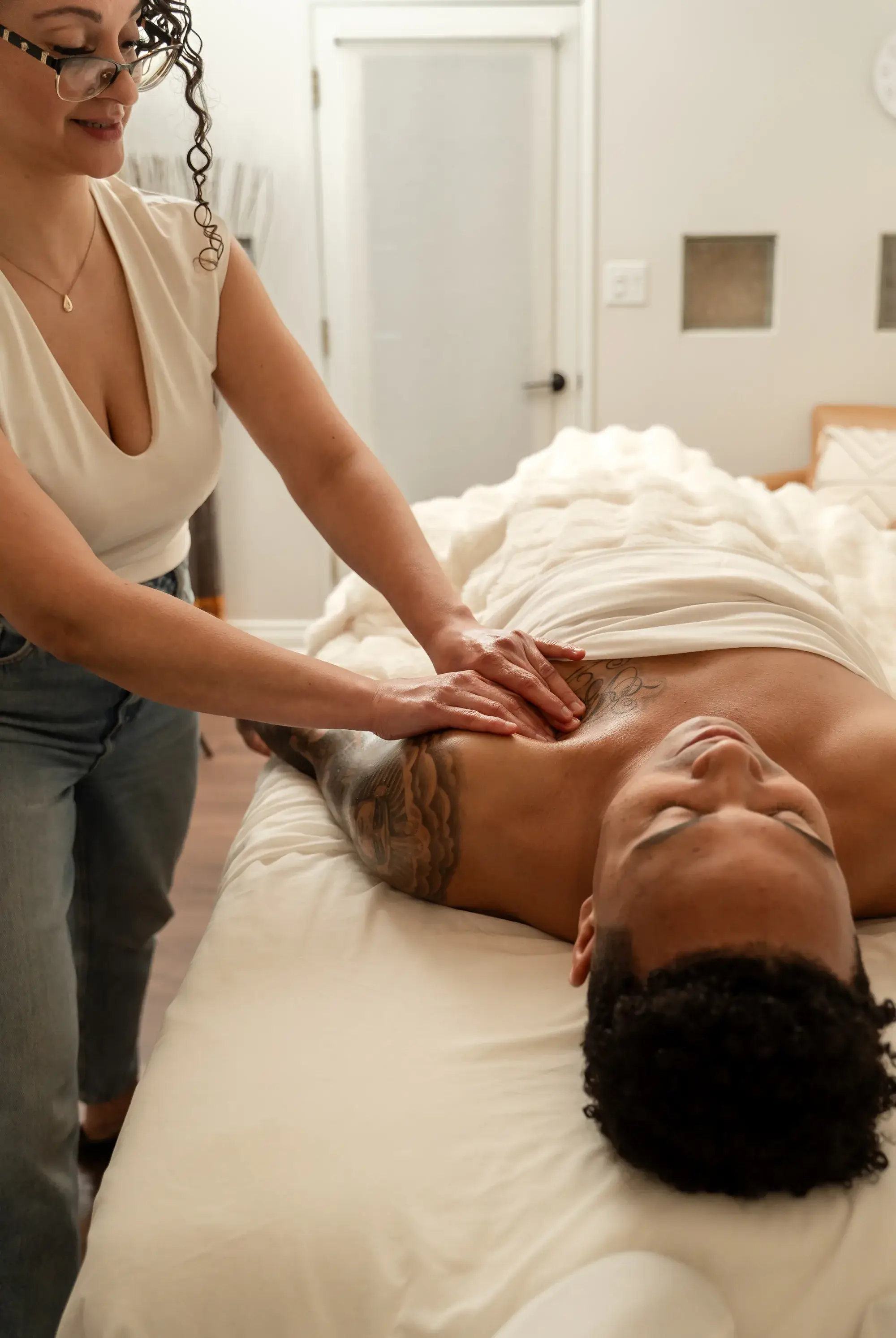
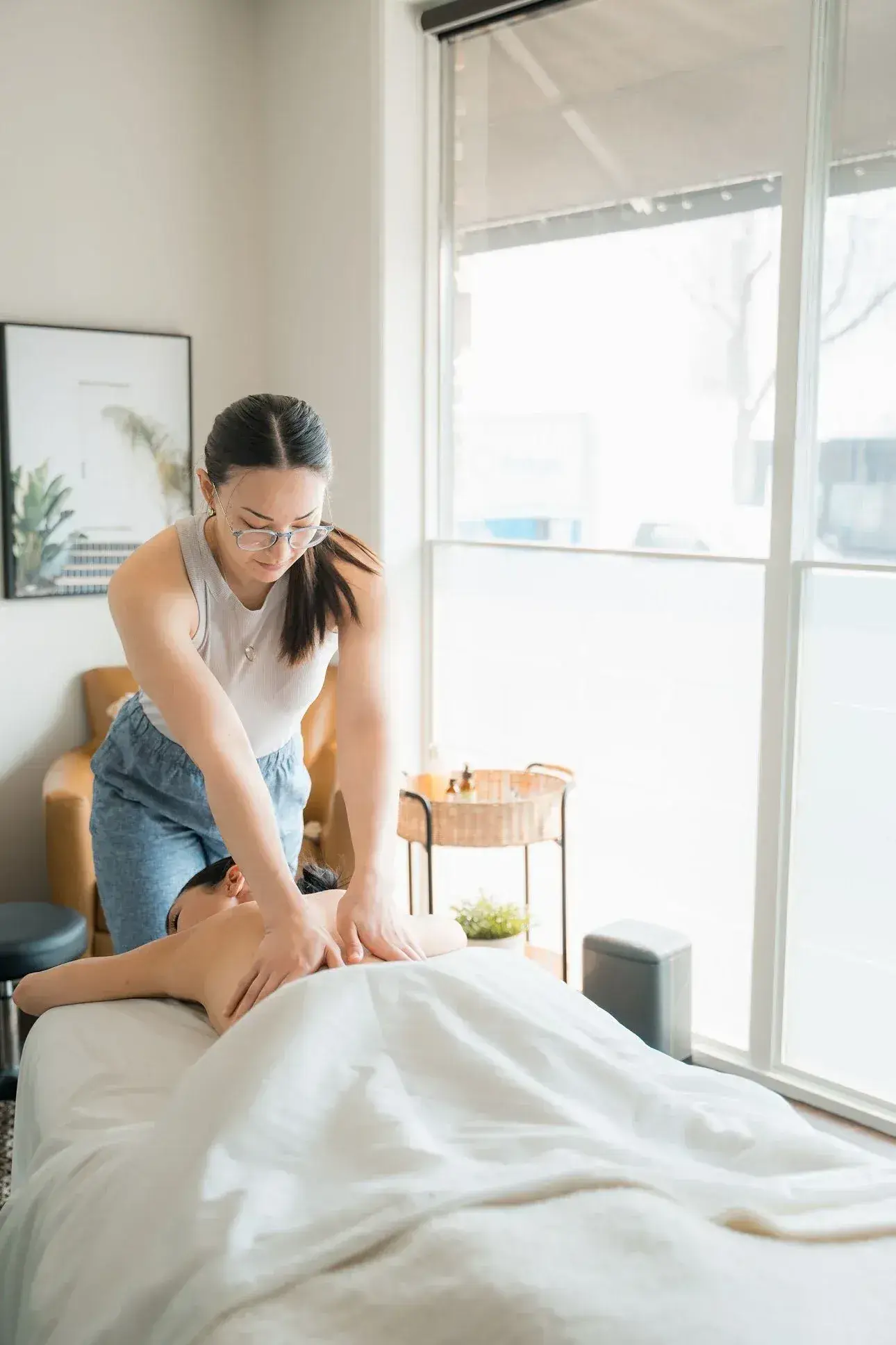
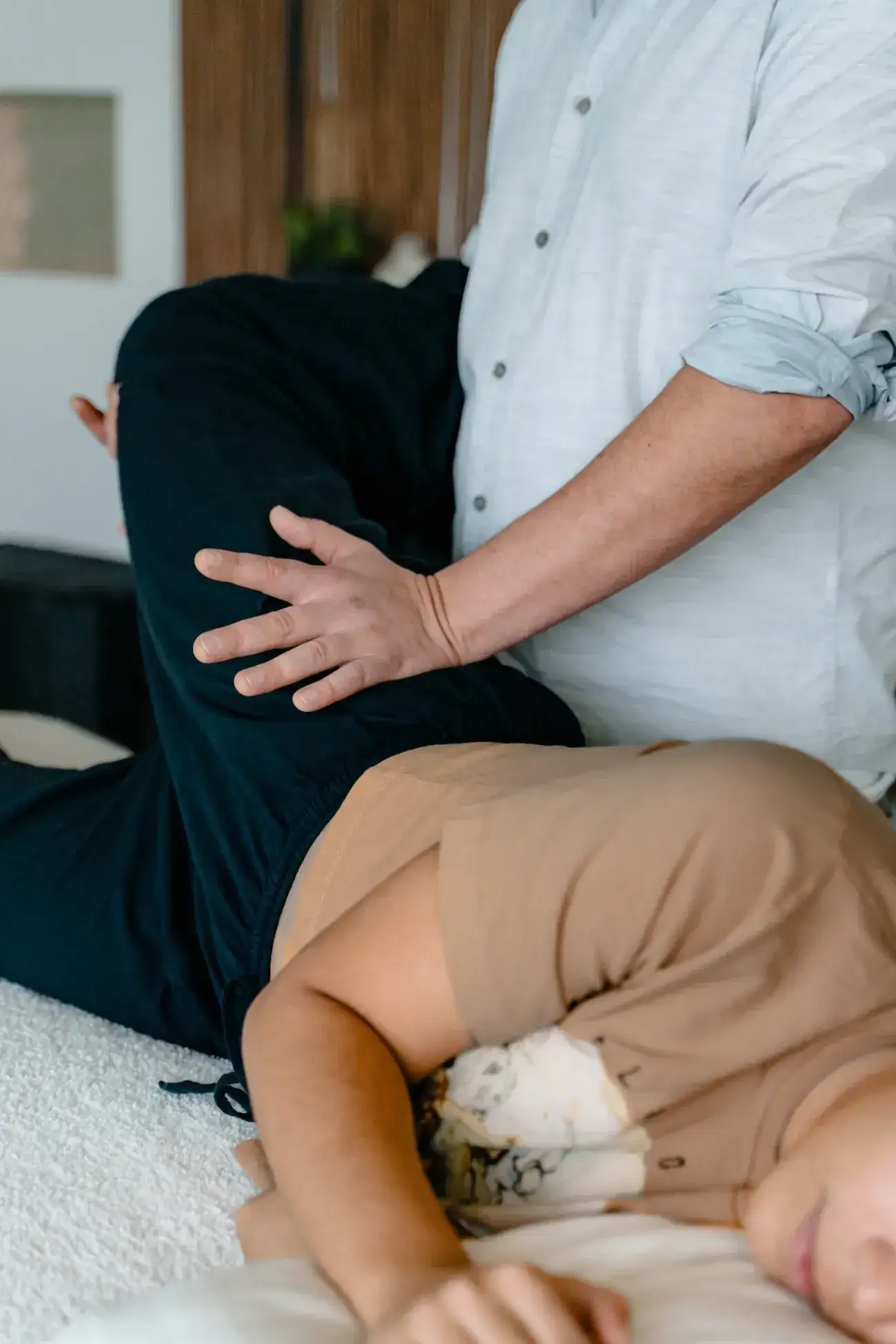
- Positioning. Lying flat on the stomach is often uncomfortable with tight hips or a curved spine. Side-lying with pillows between the knees and under the top arm, lying on your back with the knees supported, or a seated session can all work.
- Transfers. Talk through how you move from a wheelchair or walker to the table, and whether you need a support person to help. If a transfer is not safe, the session can be done seated.
- Pace. Cleveland Clinic explains that in spasticity, more rapid movement triggers a stronger involuntary contraction or catch. Slow, sustained strokes and slow passive movement are calmer for the nervous system than brisk ones.
- Pressure. Moderate pressure is usually the right starting point. Our guide on how much pressure a massage should have helps you describe what you like.
- Communication and consent. Agree on a stop signal before you start. You can ask your therapist to stop or change the treatment at any time, and our page on consent for sensitive areas explains how consent works before any sensitive area is treated.
- Time. Positioning and transfers take time, which is why a longer appointment often suits.
If sleep is part of the picture, the Swedish study’s link between severe pain and disrupted sleep is one more reason to treat pain seriously. Our insomnia page covers what massage can and cannot do for sleep.
When to talk to your doctor or physiotherapist
Massage does not replace a medical review. Check with your doctor or physiotherapist if:
- your spasticity is getting worse, happening more often or interfering with everyday tasks, which Cleveland Clinic lists as a reason to see your provider;
- you have new or worsening pain in a joint, especially a hip, knee or the spine;
- you notice a loss of function, such as walking less far or transferring less safely;
- your mood has been low for weeks, since the NHS notes that depression can affect people living with CP;
- you have recently changed medicines for muscle stiffness or had surgery or injections.
How this works at Renu
Book massage therapy through Jane with any of our Registered Massage Therapists. A 45-minute session ($100) works for a focused area such as the calves and hips. A 60-minute session ($120) or 75-minute session ($141) leaves room for positioning, transfers and a full-body treatment without rushing.
Before your first visit, call us at 403-270-2111 to talk through access, transfers and positioning, so we can tell you honestly whether our space suits your needs. Bring your support person if you would like one in the room, and let us know about any equipment you use. If you receive AISH, our page on AISH and massage therapy explains what may be covered.
Questions people ask
Is the research on massage for cerebral palsy done in adults?
Mostly not. The randomised trials we found were in children aged 2 to 12 with spastic diplegia, and a review of 11 studies covered children too. The adult studies describe how common and disruptive pain is rather than testing massage, so expectations for adults are based on reasonable extrapolation.
Will massage improve my walking or motor function?
In the children's trials, massage reduced muscle tone but did not change gross motor function scores on its own. The authors said better movement needs massage combined with physiotherapy and task practice. Treat massage as support for that work.
Can my support worker or a family member stay in the room?
Yes, if that is what you want. Having someone who knows how you communicate, transfer and show discomfort can make the session safer and more comfortable. You can also ask them to step out for part of it.
Can massage make spasticity worse?
Quick, jerky movement can set off a stronger involuntary catch in spastic muscles, so pace matters. Slow, steady strokes and slow passive movements are the usual approach. If muscles tighten or spasm, tell your therapist so they can slow down or change position.
Sources
- NHS: Cerebral palsy
- van der Slot et al., Annals of Physical and Rehabilitation Medicine (2021): Pain in adults with cerebral palsy, individual participant data meta-analysis
- Rodby-Bousquet et al., Developmental Medicine and Child Neurology (2021): Pain and interference with daily activities and sleep in adults with cerebral palsy
- Mahmood et al., Pakistan Journal of Medical Sciences (2019): Traditional massage on spasticity and gross motor function in spastic cerebral palsy, an RCT
- Mahmood et al., Journal of Pediatric Rehabilitation Medicine (2024): Home exercise programs with paediatric massage in spastic cerebral palsy, an RCT
- Güçhan Topcu and Tomaç, Advances in Mind-Body Medicine (2020): Effectiveness of massage for children with cerebral palsy, a systematic review
- Cleveland Clinic: Spasticity
Page reviewed October 5, 2026. This page is education, not a diagnosis. For your own situation, talk to your doctor, surgeon or care team, or ask us.
Keep reading
Related pages