
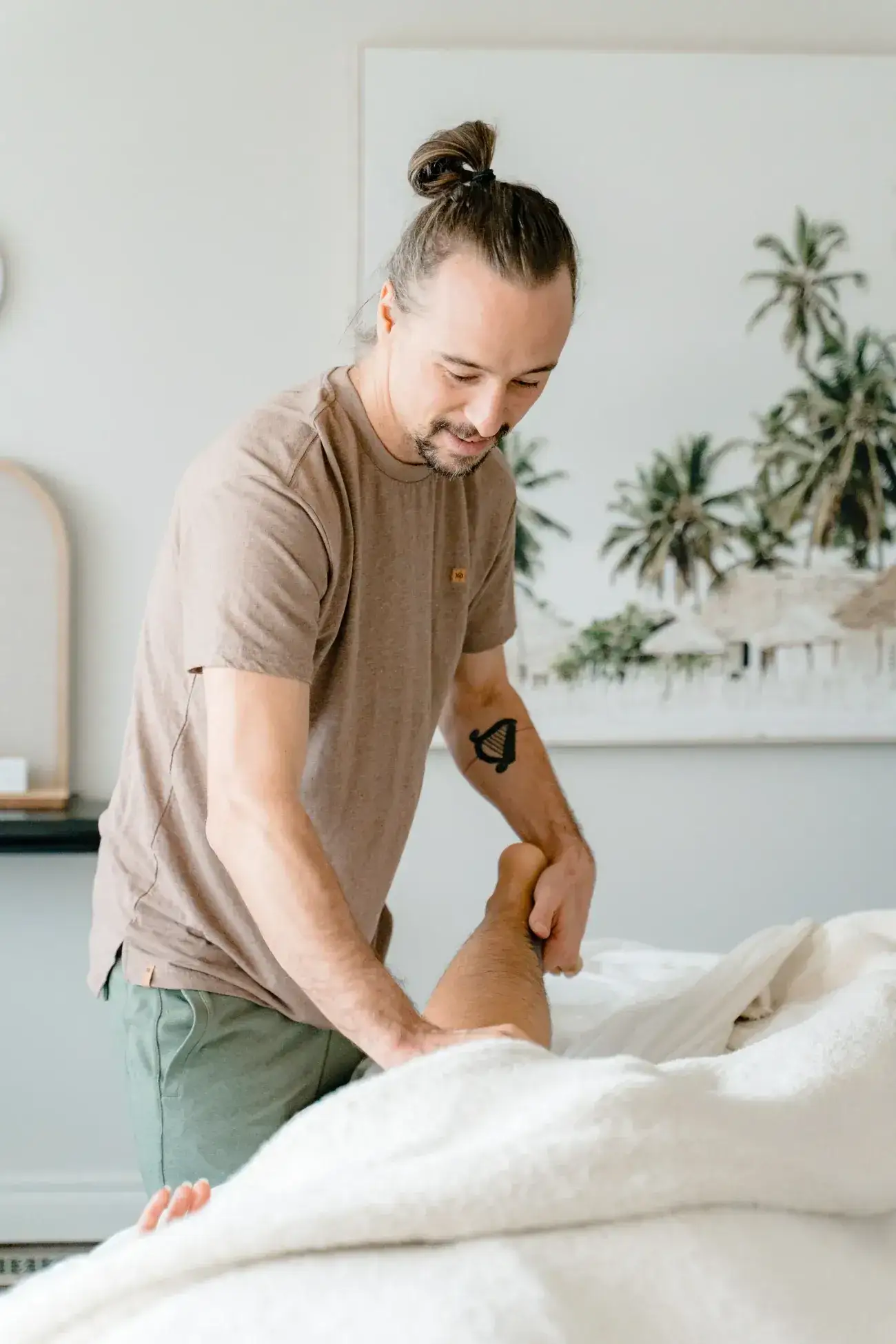
Massage after a spinal cord injury
Massage after a spinal cord injury can ease overused shoulders, spasm and a sluggish bowel when adapted for skin, positioning and autonomic dysreflexia.
By The Renu lymphatic and massage team · 5 min read
Massage after a spinal cord injury does not repair the cord, but it can be adapted to help with shoulder overuse, muscle spasm, neuropathic pain and a sluggish bowel. Small studies show abdominal massage added to a bowel program increased bowel movements, and massage eased how much pain interfered with daily life during a six-week course. Safe sessions depend on three things: knowing the signs of autonomic dysreflexia, never working over a possible pressure injury, and planning positioning and transfers with you.
Massage after a spinal cord injury is an adapted treatment, not a repair. It can ease the shoulders that do the work of pushing and transferring, take the edge off spasm and neuropathic pain for a while, and, as abdominal massage, support a bowel program. What makes it safe is planning: knowing your injury level, recognising autonomic dysreflexia, protecting skin you may not be able to feel, and agreeing on positioning and transfers before you get on the table.
Our role here is to adapt and support. Your rehabilitation team, physiatrist and family doctor lead your care; we fit around their plan.
What the research shows
The evidence is small but useful, and it points to comfort and function rather than recovery of the cord.
| Study | Who took part | What happened |
|---|---|---|
| Ayaş and colleagues, 2006 | 24 people on a standard bowel program, then with abdominal massage added | Bowel movements rose from about 3.8 to 4.6 a week; colonic transit time fell from about 91 to 72 hours; bloating and faecal incontinence became less common |
| Norrbrink and Lundeberg, 2011 | 30 people with neuropathic pain, massage or acupuncture twice a week for six weeks | Massage improved how much pain interfered with daily life by the end of treatment; the gains had faded two months later |
| Goldberg and colleagues, 1994 | 10 people with spinal cord injury | Kneading the calf lowered a reflex measure of muscle excitability by 27 percent on average during the massage, with large individual differences |
| Chase and colleagues, 2013 | 40 adults in acute rehabilitation | Broad compression massage given by rehabilitation nurses was safe and well tolerated, though its effect on pain was hard to judge |
The bowel study had no separate control group, and the pain study was exploratory, so read these as encouraging rather than settled. Neuropathic pain after spinal cord injury often responds only partly to any treatment, and the authors said as much.
Autonomic dysreflexia: what we watch for
Autonomic dysreflexia is an abnormal over-reaction of the involuntary nervous system to something happening below the injury. The Model Systems Knowledge Translation Center says people with injuries at or above T6 are at risk, and that it happens only rarely below that level. MedlinePlus lists the common triggers as an overfull bladder, a blocked catheter, constipation and other bowel problems, and skin injuries, sores or irritants.
The signs to know:
- a throbbing or pounding headache
- flushed skin, goosebumps and heavy sweating above the level of injury
- blurry vision or a stuffy nose
- a slow, fast or irregular pulse
- a sharp rise in blood pressure, which can happen even without obvious symptoms
A sudden severe rise in blood pressure can cause a stroke, so this is never something to push through. If it starts during a session, we stop the massage, help you sit up with your head raised, loosen anything tight such as a waistband or abdominal binder, and help you check the usual triggers: your catheter for kinks, your bladder, your bowel and your skin. If you carry your own blood pressure monitor or medication, use them as your physician has taught you. If the cause cannot be found or your blood pressure does not settle, call 911.
Protecting skin you cannot feel
Reduced sensation means you may not notice a pressure injury forming, and the NHS names it as a risk factor. Early pressure ulcers show up as discoloured patches that do not change colour when pressed, or skin that feels warm, spongy or hard, most often over heels, hips, elbows and the tailbone.
How that shapes the session:
- We look before we work, and we never massage a red, warm or hard spot over a bone.
- Pressure stays moderate on areas without normal feeling, because you cannot tell us when it is too much.
- We avoid heat packs on skin that cannot sense temperature.
- If we see a patch that worries us, we tell you so you can show your nurse or doctor. Hot, swollen or red skin with pus, a fever or spreading pain needs prompt medical care.
How this works at Renu
A session is built around your body and your routine, and most of the planning happens before you arrive.
- Before you book. Please call 403-270-2111 to talk through access, how you transfer, and who usually helps you. Tell us your injury level and whether you are at risk of autonomic dysreflexia.
- Before you come in. Empty your bladder or check your catheter, and keep to your usual bowel program on the day.
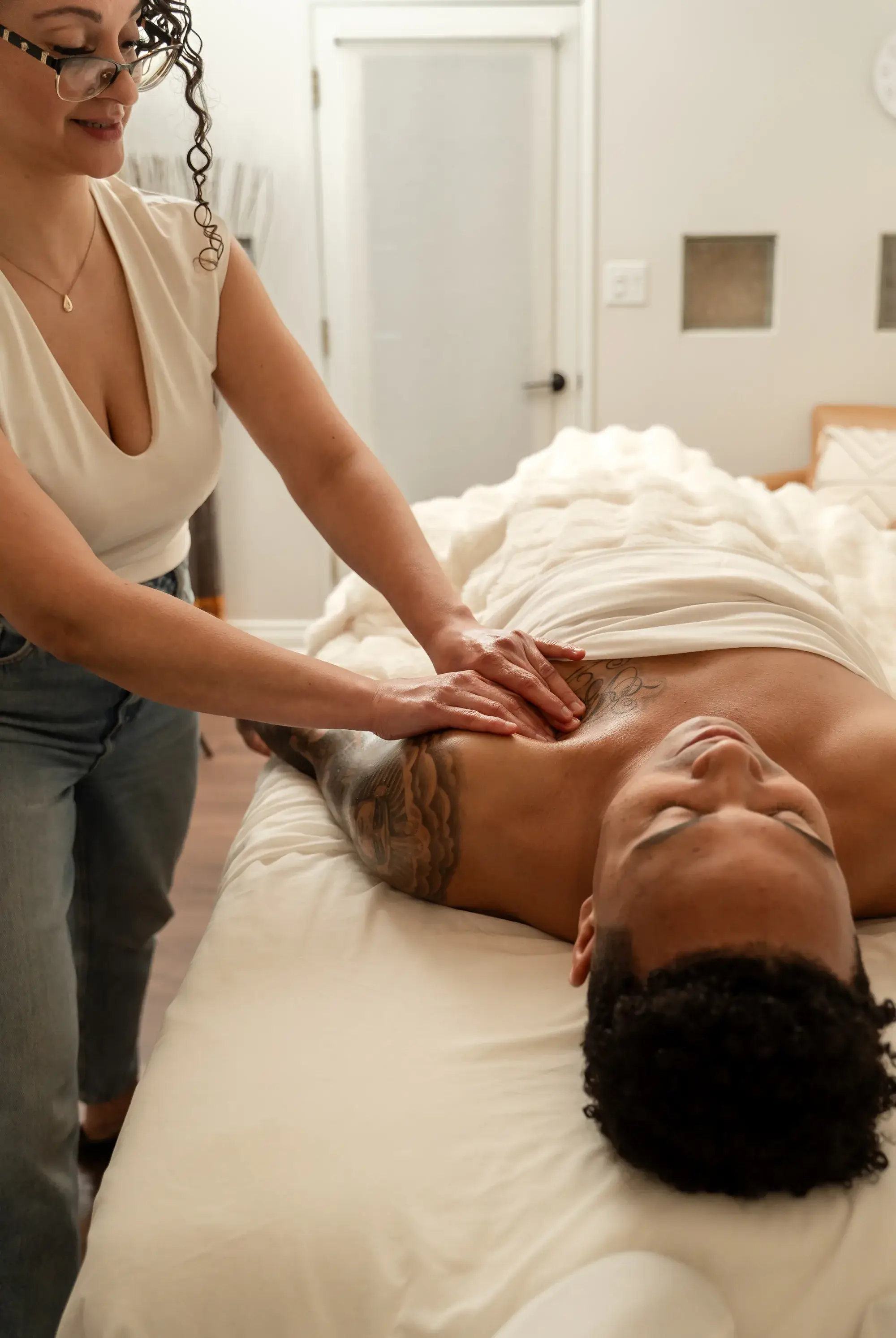
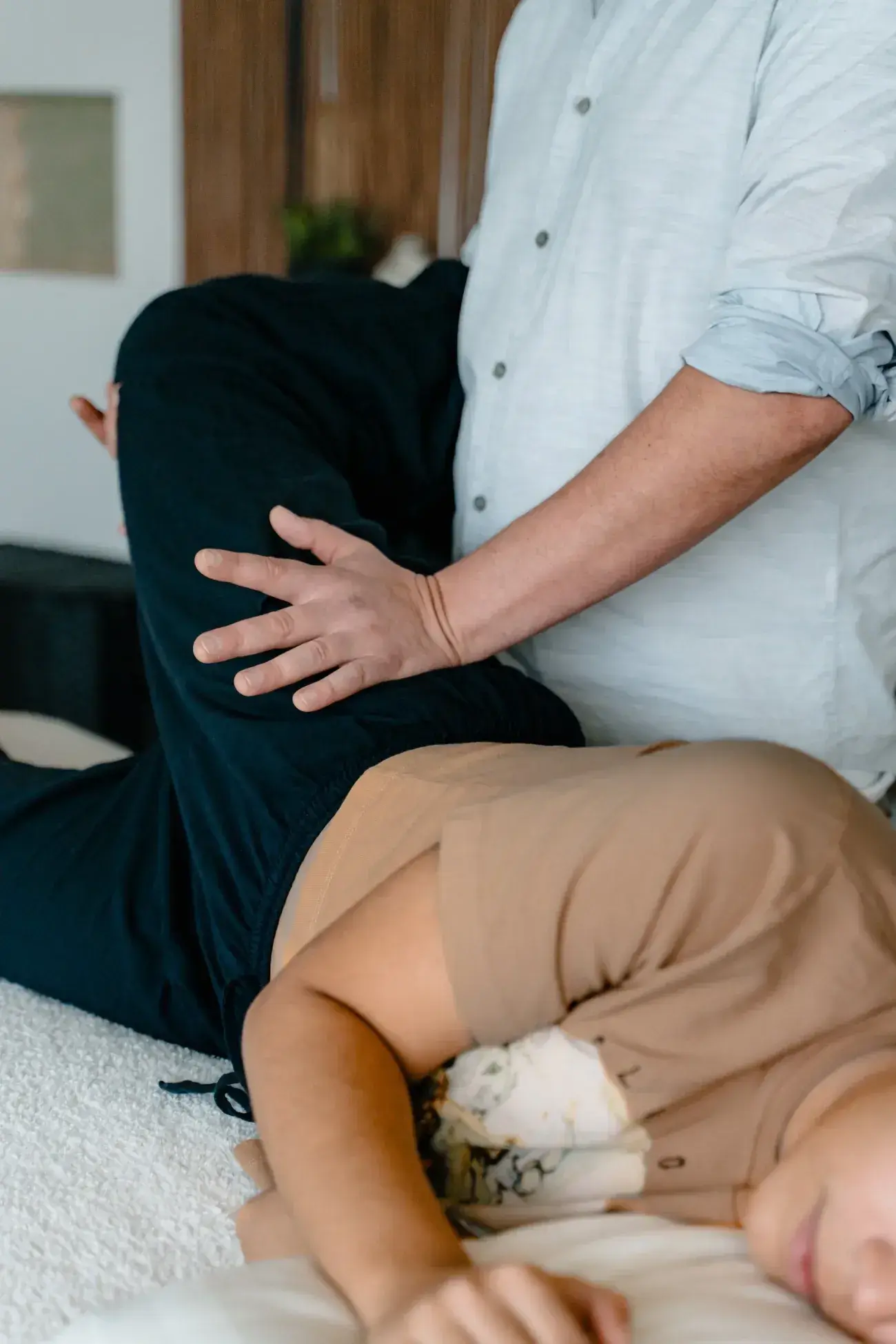
- Positioning. Face up or side-lying with pillows is usually easier than lying face down; the 1994 study tested its participants on their backs because lying prone was considered unsuitable. If a transfer is not practical, ask whether seated work through the neck, shoulders and arms would suit you.
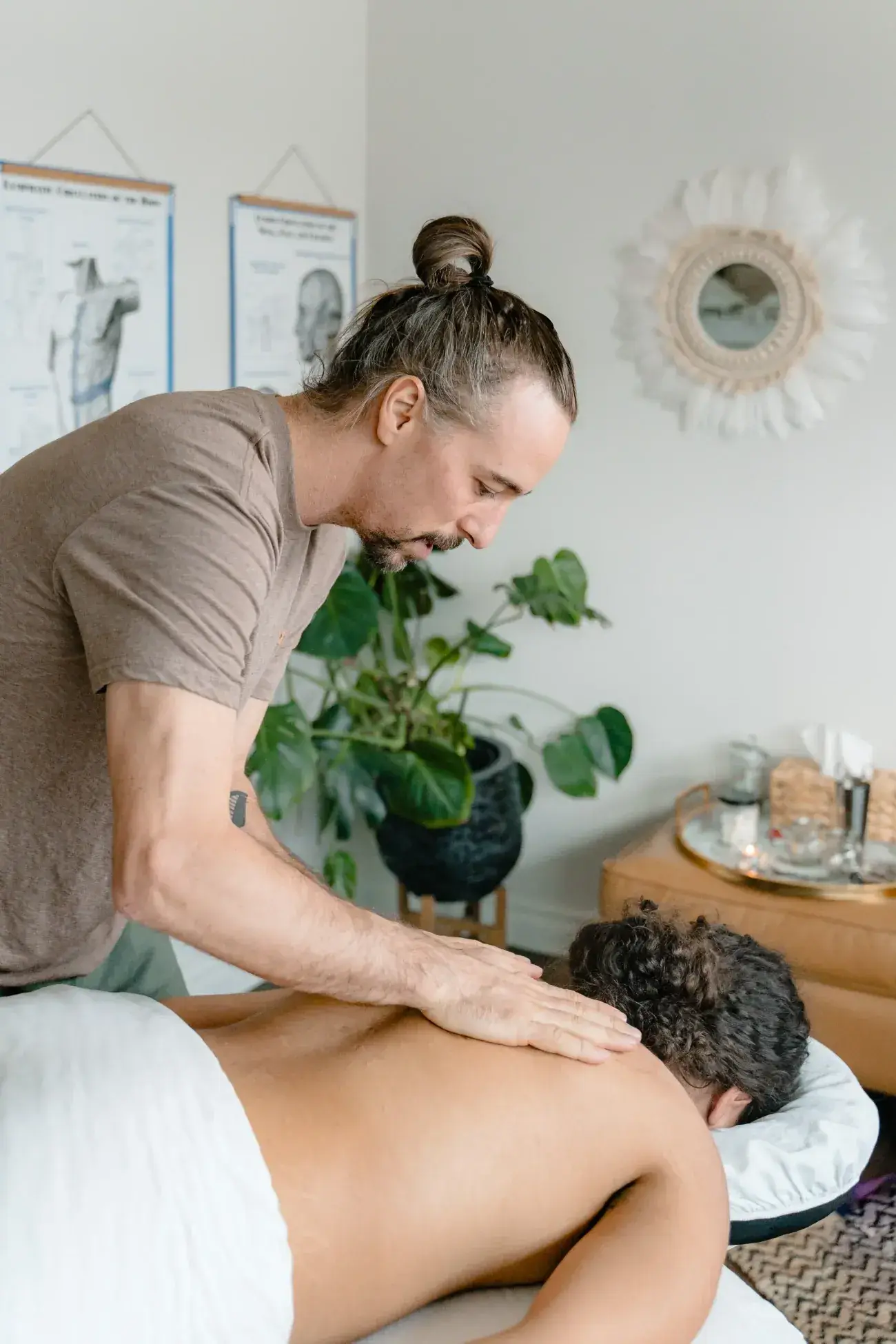
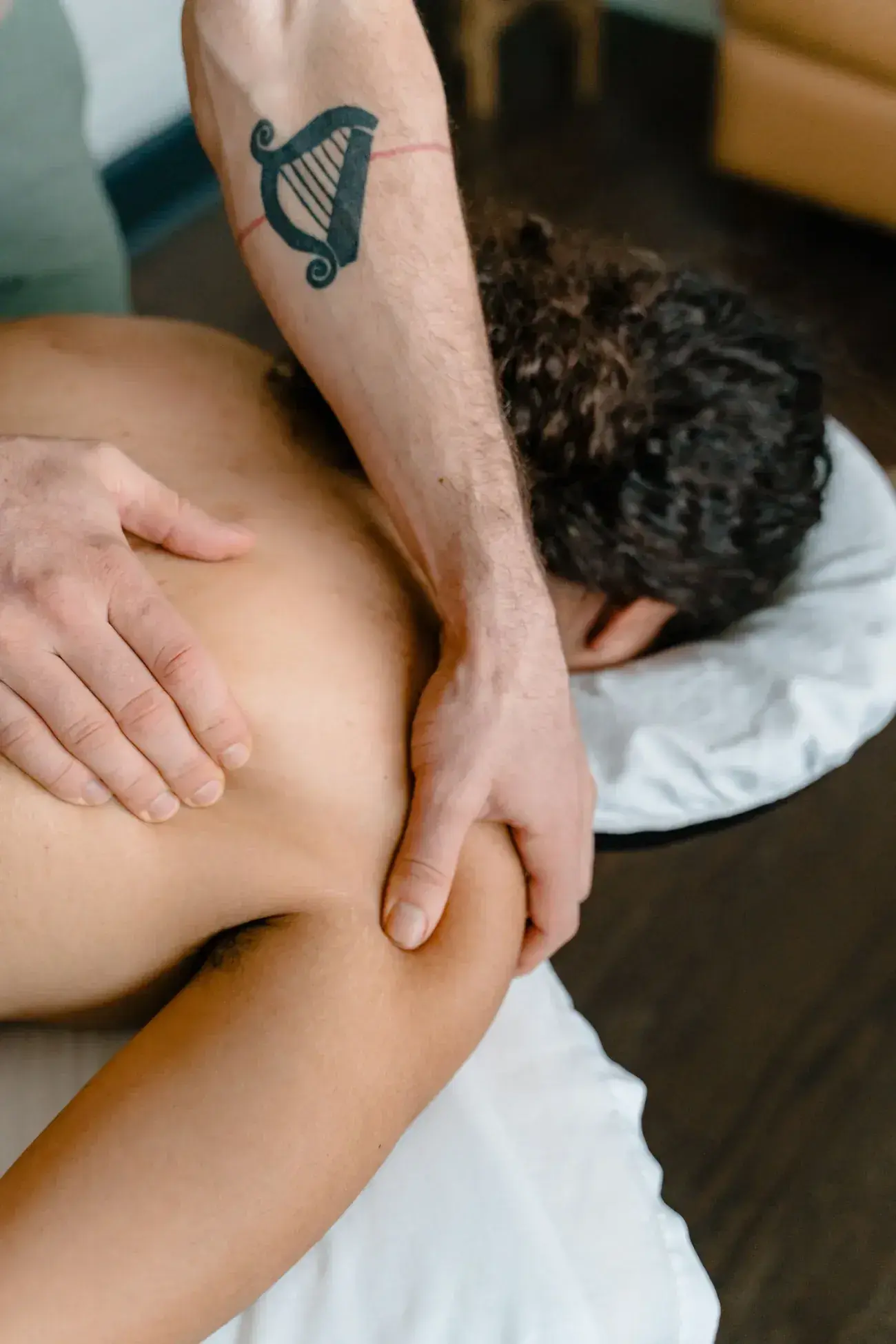
- What we focus on. Shoulders, chest and upper back that carry the load of wheeling and transfers; neck tension; areas of spasm; and, if you want it, gentle abdominal massage that follows the path of the colon.
- Length and price. Massage therapy with one of our Registered Massage Therapists is $100 for 45 minutes, $120 for 60 and $141 for 75. A longer booking leaves time for positioning without rushing the massage itself. Book through Jane or by phone; we are open seven days a week.
You can pause, change the plan or stop at any point, and we would rather you did. Our answer on asking your therapist to stop or change the treatment explains why that matters.
When to check with your doctor first
Talk to your physiatrist, rehabilitation team or family doctor before starting if:
- your injury is recent and you are still in acute rehabilitation
- you have had autonomic dysreflexia episodes that were hard to control
- you have an open or healing pressure injury anywhere on your body
- your bowel program is new or being adjusted, before adding abdominal massage for constipation
Call 911 for autonomic dysreflexia that does not settle or a blood pressure you cannot bring down, because of the stroke risk MedlinePlus describes.
Questions people ask
Can massage cause autonomic dysreflexia?
It can be a trigger in people who are at risk, because any strong stimulus below the injury can set it off, and MedlinePlus lists skin irritants among the usual causes. That is why we keep pressure moderate, check your bladder and bowel plan before we start, and stop at the first sign of a pounding headache or flushing.
Will massage reduce my spasticity?
Probably not for long. In a small 1994 study of ten people with spinal cord injury, kneading the calf reduced a reflex measure of muscle excitability by an average of 27 percent while the massage was happening, with wide differences between people. It can make a session more comfortable, but it is not a substitute for the spasticity plan from your physiatrist or physiotherapist.
Can I stay in my wheelchair for a massage?
Ask when you book. Work through the neck, shoulders and arms can be done seated, which avoids a transfer on days when one is tiring. Sessions that include the back, legs or abdomen need a table.
Is abdominal massage safe if I have a suprapubic catheter or a stoma?
We work around any tube, stoma or recent surgical site and never press over them. If your bowel program is set by a continence nurse or physician, ask them first whether abdominal massage suits your plan.
Sources
- MedlinePlus: Autonomic dysreflexia
- Model Systems Knowledge Translation Center (MSKTC): Autonomic dysreflexia factsheet
- NHS: Pressure ulcers (pressure sores)
- Ayaş S et al., American Journal of Physical Medicine and Rehabilitation 2006: The effect of abdominal massage on bowel function in patients with spinal cord injury
- Norrbrink C, Lundeberg T, Acupuncture in Medicine 2011: Acupuncture and massage therapy for neuropathic pain following spinal cord injury, an exploratory study
- Goldberg J et al., Physical Therapy 1994: The effect of therapeutic massage on H-reflex amplitude in persons with a spinal cord injury
- Chase T et al., Spinal Cord 2013: A pilot feasibility study of massage to reduce pain in people with spinal cord injury during acute rehabilitation
Page reviewed October 5, 2026. This page is education, not a diagnosis. For your own situation, talk to your doctor, surgeon or care team, or ask us.
Keep reading
Related pages