
Massage after a long-haul flight in Calgary
Massage after a long-haul flight in Calgary: easing stiffness and puffy legs after a trip from Europe or Japan, and the clot warning signs to check first.
By The Renu lymphatic and massage team · 5 min read
A massage after a long-haul flight can ease a stiff back, neck and legs, and gives you a calm reason to stay up until a sensible local bedtime while jet lag wears off. Before anyone works on your legs, rule out a blood clot: one leg that is swollen, painful, warm or red after a flight needs a doctor first, and chest pain or breathlessness needs emergency care. For the swelling itself, compression stockings worn during the flight have the stronger evidence.
Coming home to Calgary from Europe or Japan means a long day in a narrow seat, a time difference to absorb, and often a body that feels stiff, puffy and out of sorts. A massage is a pleasant way to land. It is also worth knowing where massage stops being the right answer, because long flights carry one risk that no therapist should work through.
Long-haul from YYC, and why the length matters
Several routes out of Calgary International Airport are long enough to count. YYC’s destination list includes non-stop service to Amsterdam on KLM and to London on Air Canada and WestJet year-round, Paris on WestJet year-round, Frankfurt on Eurowings Discover year-round and Air Canada in summer, and Tokyo Narita on WestJet in summer. Seasonal routes such as Dublin, Edinburgh, Rome and Barcelona add more.
Length matters because the CDC says anyone travelling more than four hours by air, car, bus or train can be at increased risk of blood clots, and the longer you sit still, the higher the risk. A transatlantic flight is well past that mark, and the drive home from the airport adds to it.
Check for a clot before anyone works on your legs
Massage of a leg with a deep vein thrombosis (DVT) is a hard no, so this check comes first. The CDC lists these DVT signs in the affected limb:
- swelling
- pain or tenderness you cannot explain
- skin that is warm to the touch
- redness
About half of people with a DVT have no symptoms at all, so a clear leg is reassuring but not proof. A clot that travels to the lungs, a pulmonary embolism, can cause difficulty breathing, an irregular heartbeat, chest pain, coughing (sometimes with blood) or fainting. Those symptoms need emergency care right away.
The CDC’s risk factors that add to travel include age over 40, obesity, and surgery or injury within the past three months. Others are estrogen-based birth control or hormone therapy, pregnancy or the first three months after birth, a previous clot or a family history of clots, and cancer or recent cancer treatment. If any apply, tell us when you book. Our page on deep vein thrombosis explains more, and if you have had a clot before, read lymphatic drainage after a blood clot.
What actually reduces swelling on a flight
Compression stockings during the flight help with swelling. A Cochrane review of 12 trials (2,918 passengers) looked at flights of more than five hours. Among the 2,637 passengers with follow-up data, 3 of those wearing stockings developed a symptomless DVT, against 47 of those without. Stockings also reduced leg swelling. No serious side effects were reported.
The CDC adds simple habits: move your legs often, take breaks to stretch them, and flex your ankles in your seat. For why feet swell in the air in the first place, see why your feet swell on a plane. If you already live with lymphedema, our flying with lymphedema checklist is the better guide.
What a massage offers after you land
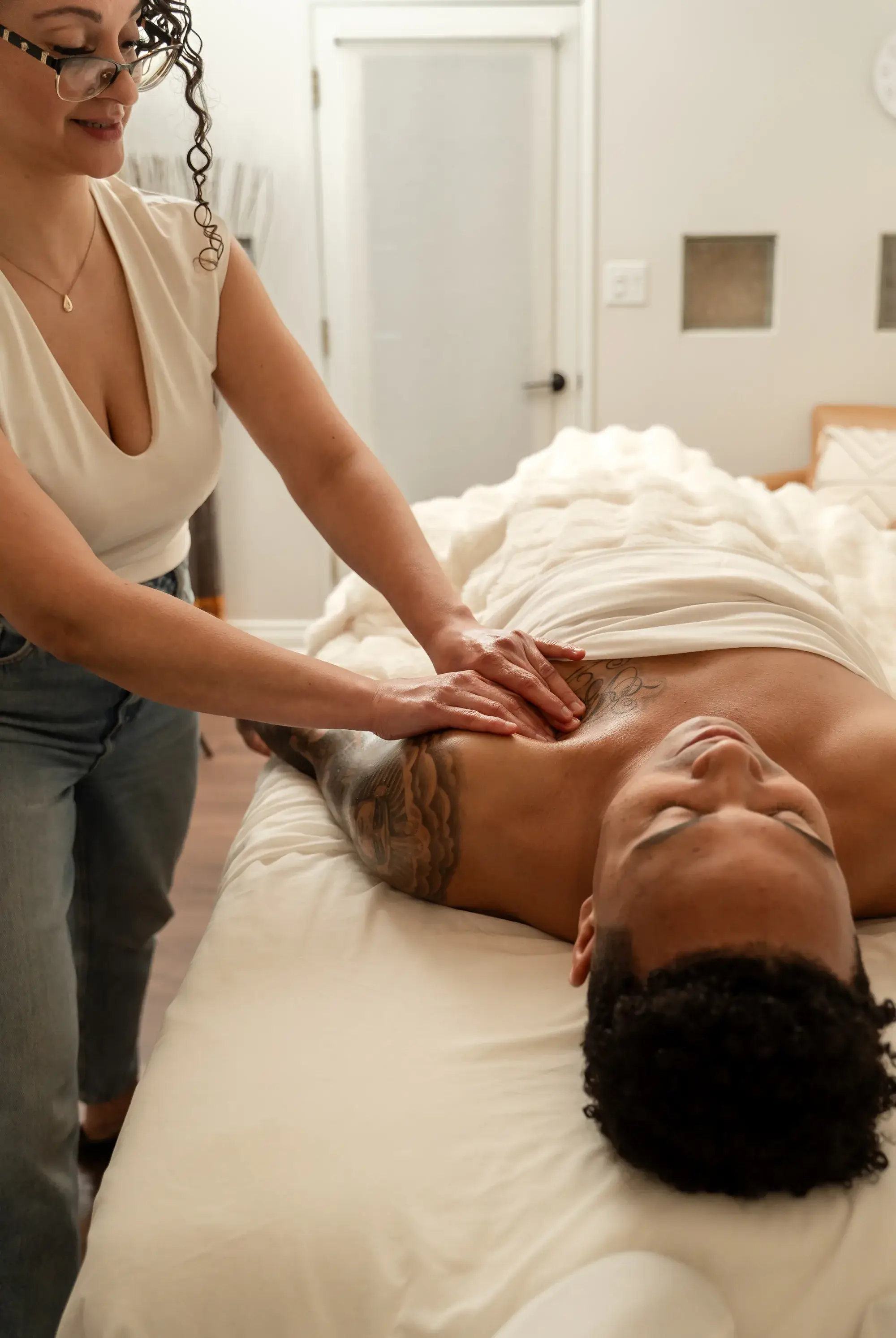
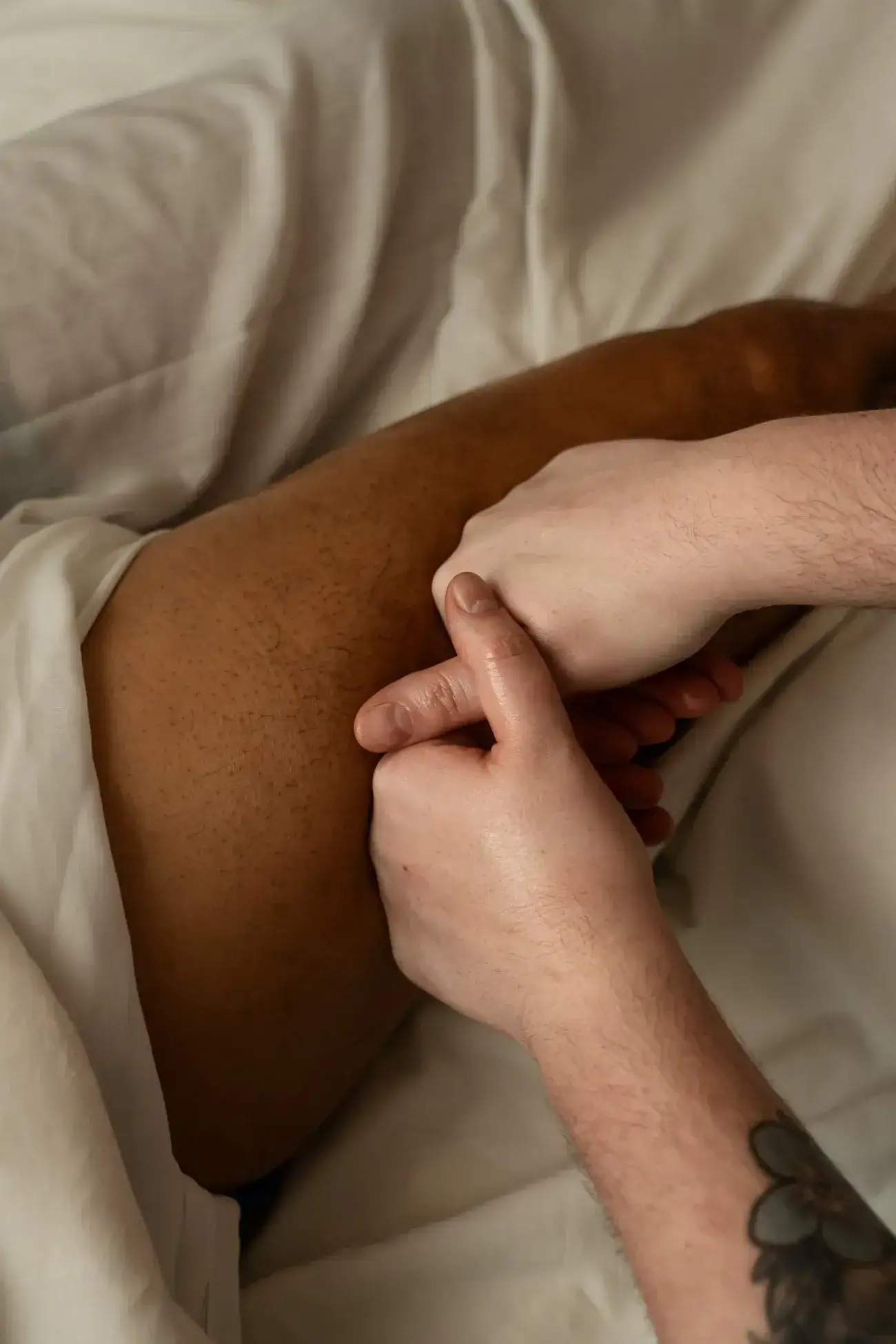
Massage after a flight is about comfort, not clot prevention. It eases a stiff neck and back from hours of sitting, loosens hips that have been bent at 90 degrees since boarding, and helps legs that feel heavy. NCCIH describes the risk of harm from massage as low, with rare serious problems such as a blood clot mostly linked to vigorous deep tissue work, which is another reason we keep post-flight leg work gentle.
It can also help with jet lag in a practical way. The NHS says jet lag usually improves within a few days as the body clock adjusts, and suggests natural daylight, sleeping only at night at your destination, and not overdoing caffeine or alcohol. A late-afternoon or early-evening appointment on arrival day gives you a reason to stay up rather than nap. Get outside in daylight before or after.
A simple plan for arrival day
Put the pieces together and landing day looks something like this:
- On the plane. Compression stockings if they suit you, water, regular walks up the aisle, and calf stretches in your seat.
- On the way home. If the drive is long, stop and stretch your legs.
- At home. Check both legs. Even, mild puffiness in both is one thing; one leg that is swollen, sore, warm or red is a call to your doctor, not to us.
- Afternoon or early evening. Daylight outside, then a massage if you want one, booked for the hours when you would otherwise be tempted to nap.
- Night. Bed at a normal local time, light on the caffeine and alcohol.
If you are travelling again soon, the same habits apply on the way out.
Booking after a trip at Renu
At Renu, massage sessions are with a Registered Massage Therapist. Tell them about the flight, your legs and any risk factors before starting. Common choices:
- Massage, 60 minutes ($120) for back, neck, hips and legs
- Massage and lymphatic combination, 60 minutes ($130) when your legs feel heavy and puffy as well as stiff
- Classic lymphatic drainage massage, 45 minutes ($105), gentle drainage work if you want only that; see our lymphatic drainage massage page
We are open seven days, until 8:30 pm on weekdays, so an evening slot on landing day is often realistic. Book through Jane online, or see our massage therapy page.
Questions people ask
How soon after landing can I have a massage?
As soon as you feel up to it, provided neither leg shows signs of a clot. Many travellers book for the late afternoon or early evening on arrival day, which also helps them stay awake until local bedtime. If you are too exhausted to enjoy it, the next day works just as well.
Will a massage stop jet lag?
No. The NHS says jet lag usually improves within a few days as your body clock adjusts, helped by daylight, sleeping only at night and limiting caffeine and alcohol. A massage can make arrival day more comfortable and help you stay awake, but daylight does the real resetting.
My ankles are puffy after every flight. Is that normal?
Some puffiness in both ankles after hours in a seat is common, and walking around helps the calf muscles move fluid along. Swelling in only one leg, or swelling with pain, warmth or redness, is different and should be checked by a doctor. If swelling lingers after every trip, mention it to your doctor.
Should I wear compression socks on the flight home?
For many travellers they are worth considering. A Cochrane review found compression stockings on flights of five hours or more greatly reduced symptomless clots and reduced leg swelling. If you have higher clot risk, ask your doctor which type and strength to use.
Sources
Page reviewed October 5, 2026. This page is education, not a diagnosis. For your own situation, talk to your doctor, surgeon or care team, or ask us.
Keep reading
Related pages