
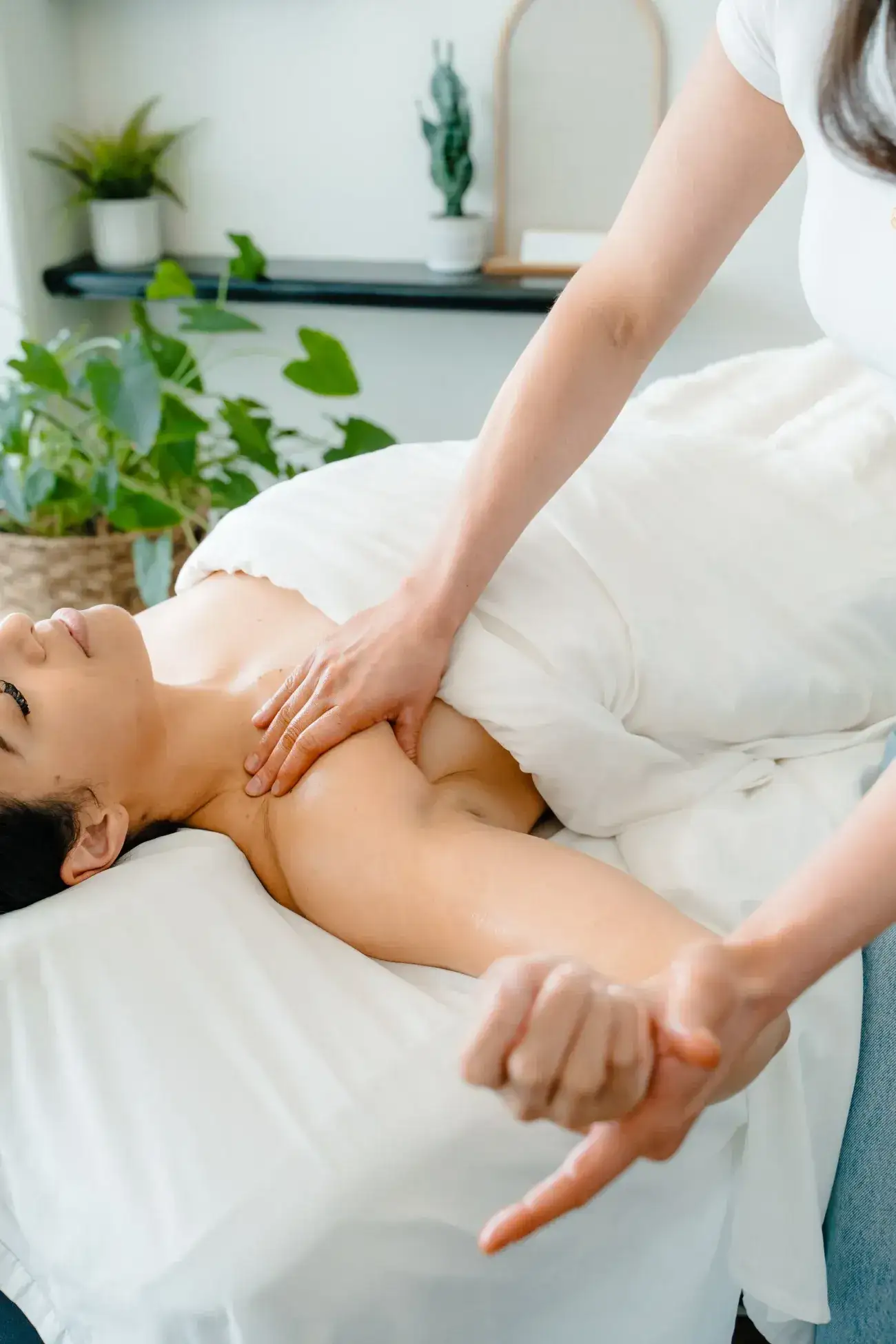
Lymphatic drainage for breast engorgement
Lymphatic drainage for breast engorgement: breastfeeding guidance favours light skin strokes over deep massage. Home care, technique and mastitis signs.
By The Renu lymphatic and massage team · 5 min read
Gentle lymphatic drainage can help breast engorgement, and it is now the style of breast massage that breastfeeding medicine prefers. The Academy of Breastfeeding Medicine's 2022 protocol advises against deep massage, which can worsen swelling and injure tissue, and describes light sweeping strokes that approximate manual lymphatic drainage, with ice and anti-inflammatories. It supports, not replaces, your midwife, lactation consultant or doctor, and signs of mastitis need medical care first.
Engorged breasts in the first days of feeding can feel rock hard, hot and sore, and it is natural to want to rub the swelling out. The current medical advice is the opposite of rubbing hard. Breastfeeding specialists now recommend light, skin-level strokes that move fluid toward the lymph nodes, which is essentially manual lymphatic drainage, combined with ice, pain relief and feeding your baby on demand.
Our role is supportive. Your midwife, lactation consultant, public health nurse or doctor leads on feeding and on anything that might be mastitis. We can offer gentle lymphatic sessions and teach you the strokes, once infection has been ruled out.
Why engorgement is mostly swelling, not trapped milk
The 2022 Academy of Breastfeeding Medicine (ABM) protocol reframed how clinicians think about engorgement and blocked ducts. Early engorgement, when milk comes in, is mostly fluid in the tissue between the milk glands (interstitial edema) and extra blood flow, not milk that needs to be squeezed out. It usually affects both breasts, typically between days 3 and 5 after birth.
The same protocol explains that ducts in the breast are tiny and interlacing, and that what people call a “plug” is usually inflammation and narrowing rather than a single blocked tube. That is why pushing harder does not clear it. Deep massage, the ABM says, increases inflammation, tissue swelling and damage to small blood vessels, and aggressive breast massage can push things toward a phlegmon or abscess.
What gentle drainage looks like
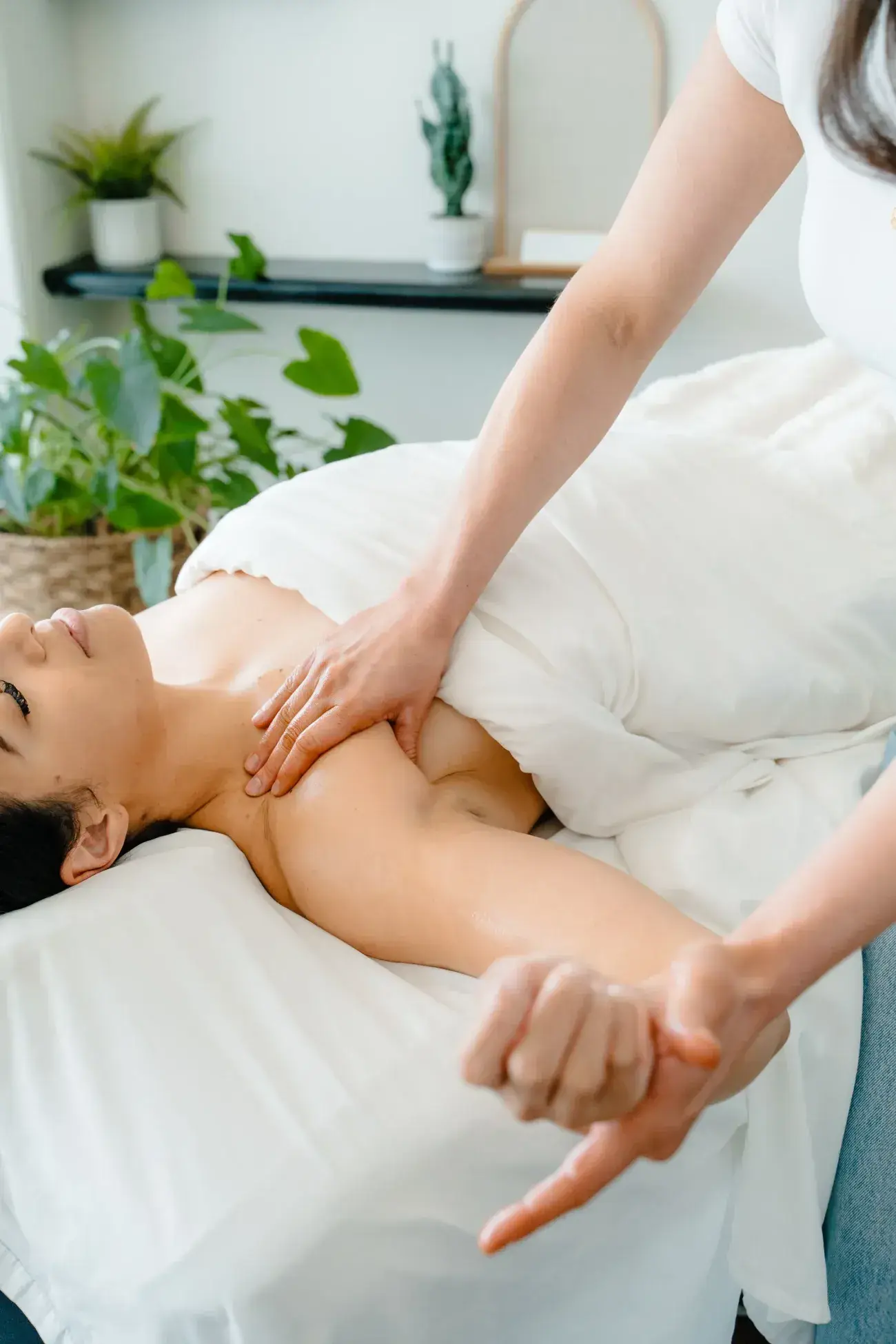
The ABM’s recommendation is clear: the most successful technique approximates manual lymphatic drainage, with light sweeping of the skin rather than deep tissue massage. It also suggests considering lymphatic drainage to relieve the swelling of early engorgement, and notes that swelling may settle faster with ice and lymphatic drainage together.
In practice that means:
- Start at the neck and collarbone with slow, light strokes.
- Then the armpit, on the same side as the sore breast.
- Then the breast skin, stroking very lightly toward the armpit and collarbone, with just enough pressure to move the skin, not to dent the breast.
- No vibration, no kneading, and nothing that hurts.
The wider evidence on breast massage is limited. A 2019 systematic review found that every included study reported less pain, whatever technique was used, but the studies were small and varied too much to pool. An outpatient series of 42 parents found breast pain fell from 6.4 to 2.8 out of 10 after therapeutic breast massage, and most found the techniques useful at home later. A 2010 Cochrane review of engorgement treatments found nothing with enough evidence for widespread use, and noted that symptoms tend to improve over time anyway.
What to do at home
Most engorgement is handled at home. Combining the ABM protocol with the NHS mastitis advice:
| Do | Avoid |
|---|---|
| Feed on demand; offer a feed when breasts feel uncomfortably full | Over-pumping or expressing more than your baby needs |
| Hand express or use reverse pressure softening around the areola so baby can latch | Nipple shields |
| Ice or a cold compress, often (the NHS suggests 10 minutes every hour) | Firm pressure on the breast |
| Ibuprofen or paracetamol for pain and swelling, as your care provider advises | Saline soaks, castor oil and other oils or creams |
| A comfortable, well-fitting supportive bra | Tight bras or clothing, vibrating devices, aspirin |
The ABM notes that heat widens blood vessels and may worsen swelling, though some people still find it comforting.
How this works at Renu
At Renu, gentle lymphatic work is booked as a classic lymphatic drainage massage: 30 minutes ($95), 45 minutes ($105) or 60 minutes ($130). For engorgement, a shorter session may be enough, and you can feed or express just before you come.
Sasha Bernard’s credentials include prenatal and postnatal care and lymphatic drainage therapy, and Leah Buschau holds Vodder Level One training in manual lymphatic drainage. Tell your therapist what you are comfortable with. The neck, collarbone and armpit work does not involve touching the breast at all, and the light breast strokes are simple enough to learn and repeat yourself between feeds.
If you are wondering about bringing your newborn, see our note on bringing your baby to a postpartum massage. For comfort-focused massage once feeding is established, see massage while breastfeeding or our postpartum massage page. Sore shoulders from feeding positions are covered in postpartum posture for feeding and carrying.
When it is mastitis: see a doctor first
Engorgement usually affects both breasts gradually. Mastitis, by contrast, usually affects one breast and comes on quickly. Do not book lymphatic drainage, and contact your doctor, midwife or Health Link at 811, if you notice:
- a hot, painful, swollen area on one breast, which may look red (harder to see on brown or black skin)
- a wedge-shaped lump or hard area, or burning pain
- fever, chills, aches or feeling flu-like; the ABM advises medical evaluation if fever or a fast heart rate lasts more than 24 hours
- nipple discharge that is new, or streaked with blood
The NHS advises seeing a doctor if symptoms are no better 12 to 24 hours after home care, or 48 hours after starting antibiotics. A lump that keeps growing firmer after mastitis can be a phlegmon or abscess; the ABM estimates 3 to 11 percent of people with acute mastitis develop an abscess, which needs drainage.
Feeding problems are hard, and the ABM notes that perinatal mood and anxiety disorders are more common in anyone dealing with them. If you feel defeated, withdrawn or very anxious, tell your care provider. In Alberta, the New Parent and Newborn Line (1-833-805-2229) answers questions about babies under two months, around the clock, and 811 connects you with nurses and mental health support.
Questions people ask
When does breast engorgement usually start?
The Academy of Breastfeeding Medicine describes early engorgement as both breasts becoming painful, firm and swollen, usually between days 3 and 5 after birth, when milk production ramps up. It can start as late as days 9 or 10, which is less common in people who have breastfed before. Managed well, it should not progress to mastitis.
Should I pump more to relieve engorgement?
Usually not. The ABM explains that overstimulating milk production can narrow the ducts and push things toward inflammatory mastitis. Feed your baby on demand, express only enough for comfort or to help a latch, and if you pump, aim for the volume your baby actually takes.
Do cabbage leaves help engorged breasts?
A Cochrane review of engorgement treatments found no single option, cabbage leaves included, with enough evidence to recommend widely. The ABM notes studies have not shown cabbage to work better than ice, which suggests the cooling is what helps. Symptoms also tend to ease over time whatever you do.
Is it safe to use an electric toothbrush or massager on a blocked duct?
The ABM protocol specifically advises avoiding electric toothbrushes and other vibrating or massaging devices on the lactating breast, along with deep massage. Light, skin-level strokes toward the armpit are the safer approach.
Sources
- Mitchell KB et al., Academy of Breastfeeding Medicine Clinical Protocol #36: The mastitis spectrum, revised 2022 (full text)
- Mitchell KB et al., Breastfeeding Medicine 2022: ABM Clinical Protocol #36 (PubMed record)
- NHS: Mastitis
- Mangesi L, Dowswell T, Cochrane 2010: Treatments for breast engorgement during lactation
- Witt AM et al., Journal of Human Lactation 2016: Therapeutic breast massage in lactation for engorgement, plugged ducts and mastitis
- Anderson L et al., JBI Database of Systematic Reviews 2019: Effectiveness of breast massage for women with breastfeeding problems
- Alberta Health Services: Health Link 811 and the New Parent and Newborn Line
Page reviewed October 5, 2026. This page is education, not a diagnosis. For your own situation, talk to your doctor, surgeon or care team, or ask us.
Keep reading
Related pages