
Salt room vs infrared sauna
Salt room vs infrared sauna: a salt room is about breathing fine dry salt; an infrared sauna is a heat session. What each does, the evidence, how to choose.
By The Renu lymphatic and massage team · 5 min read
A salt room and an infrared sauna are different experiences sold side by side. A salt room is built around breathing: a halogenerator disperses fine dry salt into the air of a room made to resemble a salt cave, and it is marketed mainly for the airways. An infrared sauna is a heat session at roughly 43 to 57 C, used for warmth, sweat and relaxation. Evidence for salt rooms is thin and treats them at most as an add-on to standard care, so if breathing is your goal, start with your doctor; if relaxation or muscle warmth is the goal, choose heat.
Salt rooms and infrared saunas often appear on the same wellness menus, so it is easy to think of them as two versions of one thing. They are not. A salt room is about what you breathe. An infrared sauna is about heat. Before choosing, it helps to be clear about which of those you are after, because the evidence, the cautions and the experience are completely different.
Two different goals
A salt room is the setting for halotherapy, defined in a 2014 review as the inhalation of micronized dry salt within a chamber that mimics a salt cave environment. In the salt rooms used in research, a device called a halogenerator disperses the salt into the air while you sit and breathe. The practice traces back to observations in 1843 that salt miners seemed to have fewer breathing problems than other miners. Salt rooms are promoted mostly for the lungs and sinuses.
An infrared sauna warms you with radiant heat that your skin absorbs, rather than by heating the air first. Cleveland Clinic gives an operating range of about 43 to 57 C. People use it for warmth, sweating, muscle comfort and unwinding.
| Salt room | Infrared sauna | |
|---|---|---|
| What you are there for | Breathing fine dry salt particles | Heat and sweat |
| How it works | A halogenerator disperses salt into the air | Radiant infrared warms the skin directly |
| Main claimed use | Airways and sinuses | Relaxation, muscle warmth, recovery |
| Strength of evidence | Few, small studies, mostly in lung disease | Short-term effects on blood pressure; studies on muscle recovery and chronic pain |
| Main cautions | Asthma and sensitive airways | Heart conditions, pregnancy, MS, dehydration |
What the salt room research shows
The evidence for halotherapy is small, and almost all of it is about lung conditions.
- COPD: a 2014 review screened 151 articles and found only one randomised controlled trial good enough to include, too few for a meta-analysis. The authors said halotherapy could not be recommended for COPD until better studies exist.
- Childhood asthma: a 2017 double-blind pilot trial randomised 55 children aged 5 to 13 with mild asthma to a salt room with or without a working halogenerator, for 14 sessions over 7 weeks. Airway over-reactivity improved in the treatment group, but lung function on spirometry and airway inflammation did not.
- Asthma reviews: a 2021 review found no reported adverse events in the studies it included but stressed small sample sizes and the need for larger studies. A 2022 review of 13 papers on chronic respiratory disease suggested halotherapy be considered only as an add-on to standard care.
An American Lung Association spokesperson has speculated that inhaled salt might thin mucus in obstructive lung disease, while describing that as unproven. Our page on the evidence for halotherapy looks at each condition, and salt therapy for sinus congestion and allergies covers a closely related question.
What infrared heat does and does not do
For infrared saunas, the effects most often measured are a fall in blood pressure and a rise in heart rate during and shortly after a session, and these appear short-term. Cleveland Clinic points to studies on muscle recovery and chronic pain. Your liver and kidneys clear waste from the body.
Practical guidance from Cleveland Clinic: start around 43 C for 5 to 10 minutes, build up gradually, keep sessions under 30 minutes, and use it no more than three or four times a week. Dehydration is the main risk; leave if you feel dizzy or nauseated. Our answer on infrared and muscle recovery goes further on the recovery question.
Who should check first
Before a salt room: if you have asthma or another lung condition, talk to your doctor first. The 2021 asthma review explains that concentrated salt aerosols are used deliberately in bronchial challenge tests to provoke airway narrowing, and that the small studies so far cannot rule out an unexpected bronchospasm. Bring your reliever inhaler, and never use salt therapy in place of prescribed medication.
Before an infrared sauna: Cleveland Clinic advises against infrared saunas in pregnancy and when trying to conceive, says people with multiple sclerosis generally should not use saunas because of heat intolerance, and recommends waiting until you have recovered from any illness. If you have a heart condition or take blood pressure medication, ask your doctor.
Stop either one straight away and seek help if you develop wheezing or chest tightness that does not settle with your reliever, or if you feel faint.
How to choose
- Your goal is easier breathing, fewer chest infections or less congestion: start with your doctor or pharmacist. If you then try a salt room, treat it as an extra on top of your treatment, not a replacement.
- Your goal is relaxation, warmth or loosening stiff muscles: choose heat.
- You have asthma and want to try both: talk to your doctor about each separately; the cautions are different.
- Heat does not agree with you, or you are pregnant: a heat session is not the right choice; ask your doctor what is.
Infrared at Renu
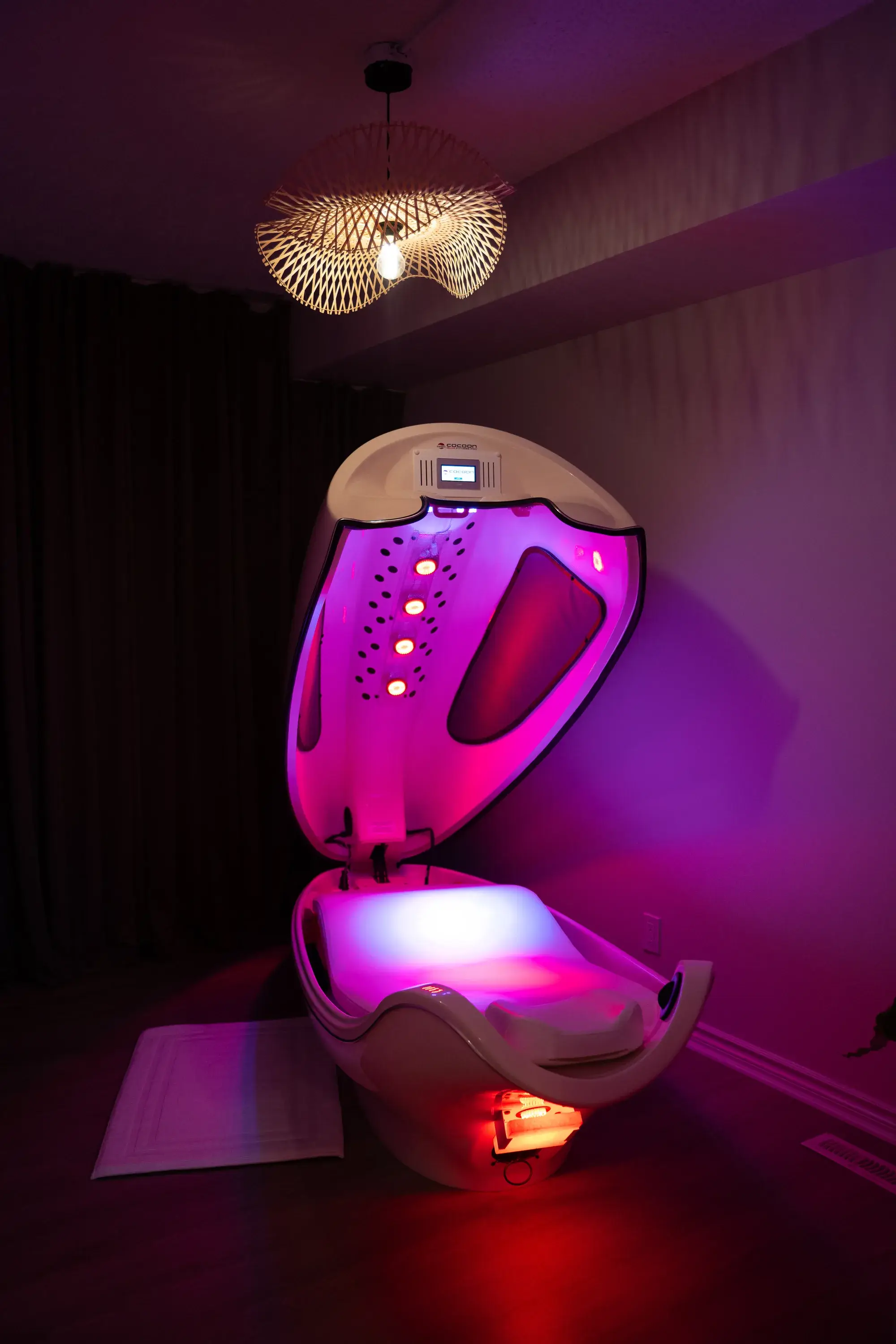
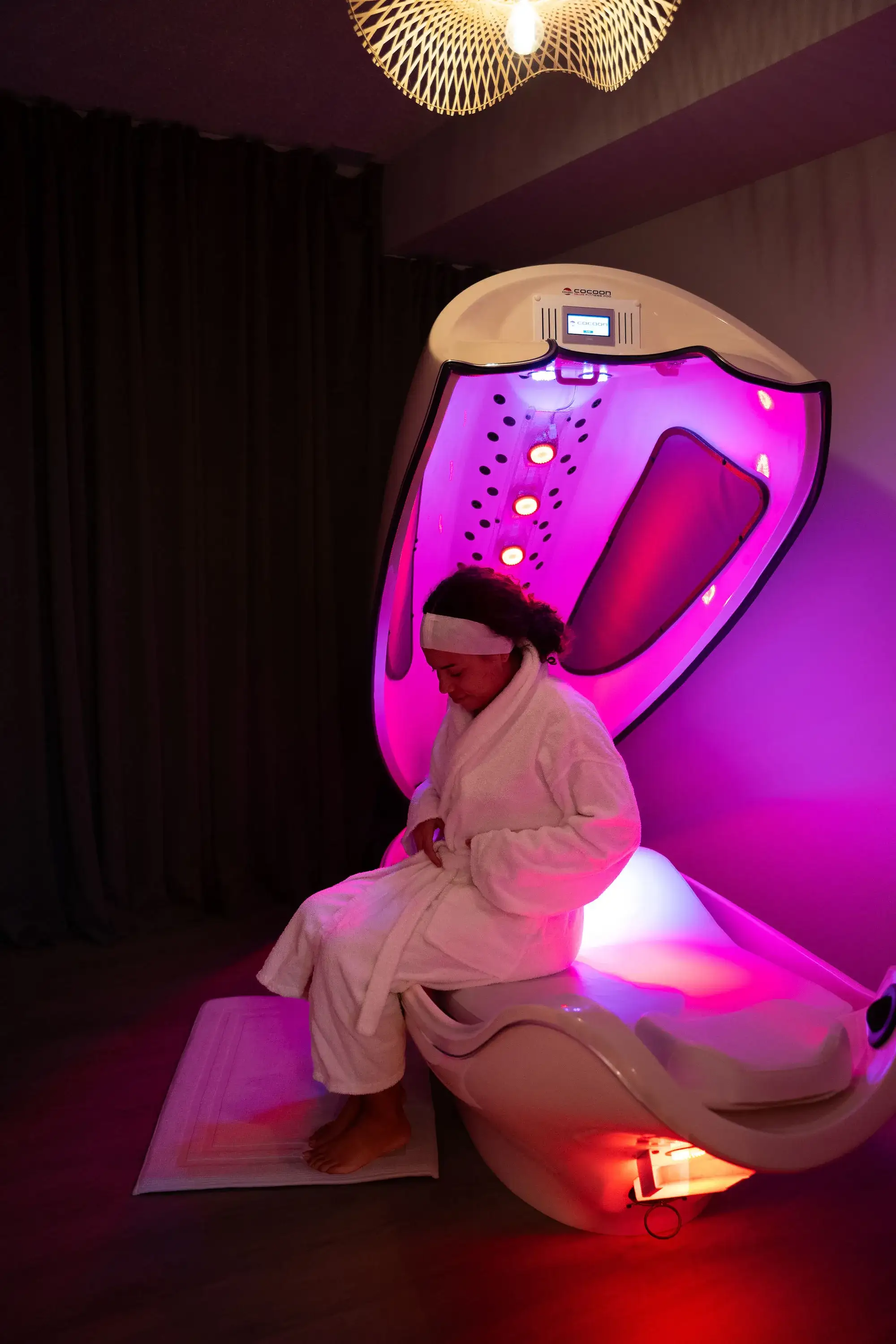
We do not have a salt room or salt cave. Our infrared cocoon pod at BodyTox by Renu is a heat session in a private room inside our West Hillhurst clinic. A 20 minute session on its own is $25. The monthly pod membership is $129 plus GST and includes 40 minute member sessions, which run past Cleveland Clinic’s under-30-minute advice, so build up to them. Our page on how often you can use the pod helps you plan around Cleveland Clinic’s three to four sessions a week. If you have asthma, tell us when you book through Jane and bring your inhaler.
Questions people ask
Can a salt room replace my asthma inhaler?
No. Reviewers describe salt therapy at most as a possible add-on to standard care, and a 2022 review notes that no official guidelines exist for salt rooms. Keep taking your medication as prescribed and bring your reliever inhaler to any session.
Do I sweat in a salt room?
Sweating is not the point of a salt room; the research describes it as a room for breathing fine dry salt particles. If sweating and warmth are what you want, a heat session such as an infrared sauna is the right category.
Is a salt room or an infrared sauna better for relaxation?
Either can be restful. Choose by what feels good: quiet sitting and breathing in a salt room, or warmth and sweat in infrared. If you have a heart condition, are pregnant or have MS, check about heat first.
Does Renu have a salt room?
No. We have a private infrared cocoon pod at BodyTox by Renu, booked for 20 minutes at $25, or as 40 minute sessions with the $129 plus GST monthly membership.
Sources
- Rashleigh R, Smith SM, Roberts NJ. A review of halotherapy for chronic obstructive pulmonary disease. Int J Chron Obstruct Pulmon Dis, 2014 (Europe PMC)
- Bar-Yoseph R et al. Halotherapy as asthma treatment in children: a randomized, controlled, prospective pilot study. Pediatr Pulmonol, 2017 (Europe PMC)
- Crisan-Dabija R et al. Halotherapy, an ancient natural ally in the management of asthma: a comprehensive review. Healthcare, 2021 (PMC)
- Barber D et al. Halotherapy for chronic respiratory disorders: from the cave to the clinical. Altern Ther Health Med, 2022 (Europe PMC)
- Wikipedia: Halotherapy
- Cleveland Clinic: Infrared sauna benefits
- Wikipedia: Infrared sauna
Page reviewed October 5, 2026. This page is education, not a diagnosis. For your own situation, talk to your doctor, surgeon or care team, or ask us.
Keep reading
Related pages