
Your first lymphatic drainage massage in Calgary: what to expect
Your first lymphatic drainage massage in Calgary: health questions first, light no-oil strokes that start at the neck, and how to choose 30, 45 or 60 minutes.
By The Renu lymphatic and massage team · 6 min read
Your first lymphatic drainage massage starts with a short health history, because heart, kidney, clotting and infection problems change whether the work is safe. The hands-on part begins at your neck and the main lymph node areas before moving to the puffy or swollen part, using very light, rhythmic strokes on bare skin with no oil. At Renu you choose 30, 45 or 60 minutes, and most people leave relaxed, a little sleepy and needing the washroom more over the next day.
The visit at a glance
A first lymphatic drainage massage has four parts: a health conversation, a few minutes at your neck and the main node areas, the slow work on the area that bothers you, and a short wind-down before you get dressed. Nothing about it is rushed, and nothing about it should hurt.
Here is the order most first visits follow at Renu:
- Your therapist goes through a health history with you before any hands-on work.
- You undress to the level you are comfortable with and lie under a sheet.
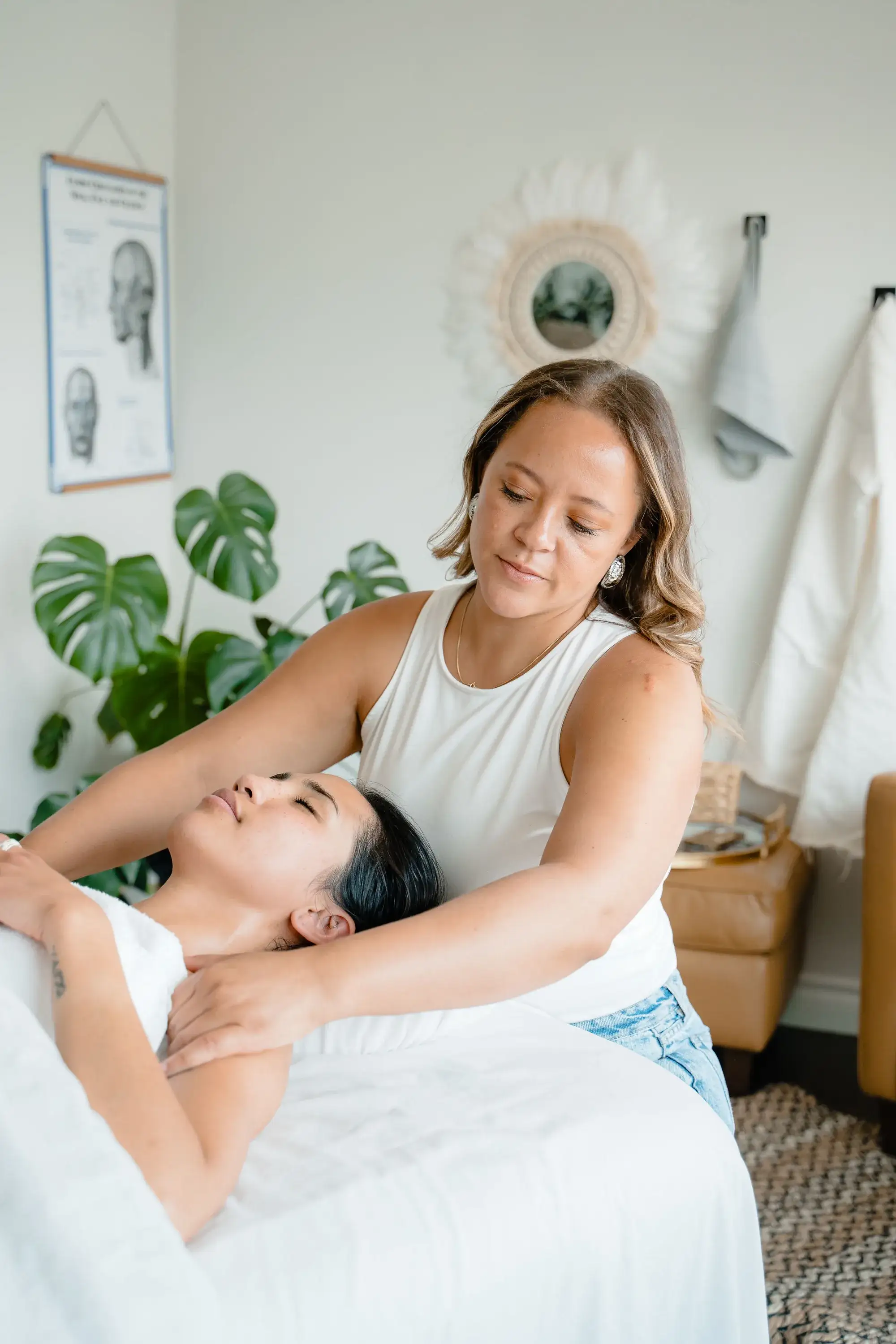
- Your therapist starts at the neck and collarbones, then the armpits or belly, depending on where the swelling is.
- The strokes move to the face, legs, arms or abdomen, guiding fluid toward the areas already cleared.
- You rest for a moment, sit up slowly, and talk through what to do over the next day.
Why the health questions come first
The questions are not paperwork for its own sake; they decide whether lymphatic drainage is right for you today. Moving fluid back toward the heart puts a small extra load on the circulation, and some conditions make that a bad idea.
The Cleveland Clinic advises avoiding lymphatic drainage if you have blood clots or deep vein thrombosis, cellulitis or another infection, a fever, heart disease, kidney failure or a history of stroke. The National Lymphedema Network names acute infection, decompensated congestive heart failure and acute deep vein thrombosis as contraindications, and Cedars-Sinai notes the technique is not recommended for people with a heart condition, kidney problems or cellulitis. The Cleveland Clinic also notes that providers will not work directly over cancerous tissue or skin damaged by radiation.
So expect to be asked about:
- Heart or kidney conditions and any medication for them
- A history of blood clots, or a calf that has been painful or swollen on one side
- Any current infection, fever or red, hot skin
- Recent surgery, cancer treatment or radiation
- Pregnancy
- Compression garments you have been prescribed
If any answer raises a question, your therapist may suggest checking with your doctor first. That is a careful answer, not a refusal. The full list sits on our page about who should not have lymphatic drainage massage.
Why the session starts at your neck
Your therapist begins away from the swelling on purpose. Cedars-Sinai explains that the technique follows a set sequence, starting with the main drains of the body at the neck, armpits and groin, so that congested fluid has somewhere to go once the swollen area is worked. The Cleveland Clinic describes the same opening, noting that the groin is only treated with your consent.
The National Lymphedema Network describes the same principle in clinical terms: the sequence begins near the trunk and progresses outward, moving lymph from stagnant areas into pathways that are working. In practice that means a session for heavy ankles spends real time at your collarbones and belly before it reaches your calves. It can feel indirect. It is the method.
What the strokes feel like on the table
The pressure is light enough that many first-timers wonder whether anything is happening. Cedars-Sinai explains why: the lymphatic system sits just beneath the skin, so light pressure is what reaches it. The National Lymphedema Network describes the technique as a working phase of gentle pressure and skin stretching, then a relaxation phase that lets the lymph vessels refill.
A few practical details:
- No oil or lotion. Cedars-Sinai advises avoiding products because the technique acts on the skin itself. Skip body lotion on the day.
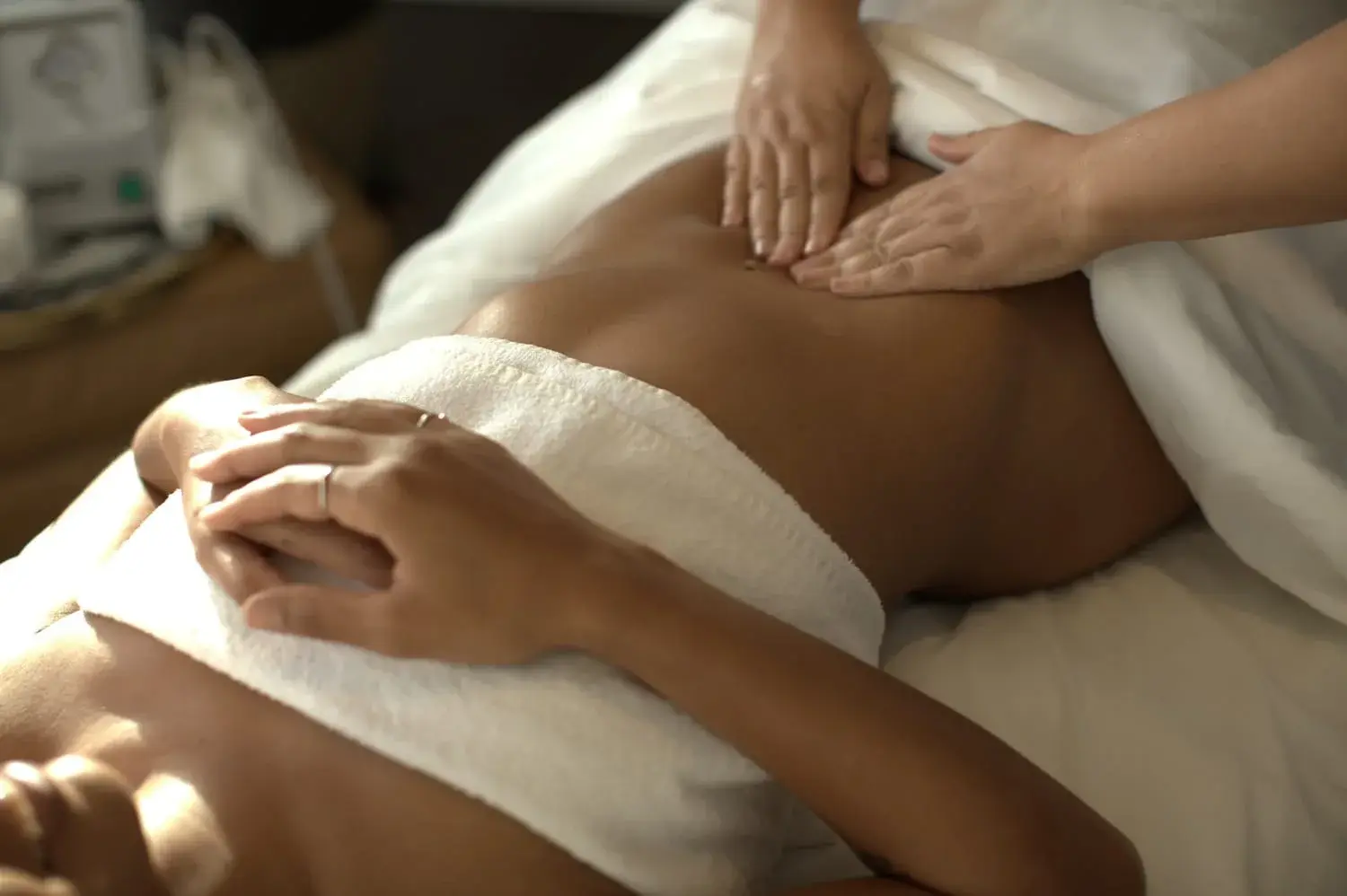
- Skin on skin. The area being treated is uncovered; the rest of you stays under the sheet.
- Slow and repetitive. The same small movement repeats several times before the hands move on.
Many people drift off. If you would like a fuller description of the sensation, read what lymphatic drainage massage feels like.
Choosing 30, 45 or 60 minutes
The right length depends on how many areas you want treated, not on how serious the problem is. Classic lymphatic drainage massage at Renu is booked as:
| Session | Price | Suits |
|---|---|---|
| 30 min | $95 | One area, such as face and neck, or both lower legs |
| 45 min | $105 | Legs and abdomen, or arms and upper body |
| 60 min | $130 | A full-body sequence, or a first visit with time to talk |
Because the neck and node areas are always treated first, a short session spends a larger share of its time on that opening. If your legs are the reason you are booking, 45 or 60 minutes gives the calves and thighs their full share.
Who does lymphatic work at Renu
Six of our practitioners offer lymphatic drainage, and you can book any of them in Jane. Meeghan Mackenzie, our founder, is a Registered Massage Therapist and our Certified Lymphedema Therapist, trained in the Vodder and Földi methods. Leah Buschau is an RMT with Vodder Level One MLD training. Sasha Bernard is an RMT who lists lymphatic drainage therapy among her credentials, and Monica Von Gaza is an RMT who offers lymphatic massage. Dallas Nizalik is an RMT and Lymphatic Therapist who has completed Levels 1 and 2 of Lymphatic Drainage Therapy through the Chikly Health Institute, and Yeni Soberanis is an RMT who blends lymphatic techniques with therapeutic massage. If you have a diagnosed lymphedema or lipedema, book with Meeghan; for puffiness, heavy legs or curiosity, any of them is a good fit. You can read about each on our team page.
We are on 19 Street NW in West Hillhurst, just up from Memorial Drive, with free street parking, and we are open seven days a week, including weekday evenings until 8:30 pm.
The next 24 hours
Most people feel relaxed and a little sleepy afterward, and many need the washroom more often that evening. The Cleveland Clinic notes that a few people develop fatigue, headaches or nausea after lymphatic drainage and asks that you mention it to your provider if it happens. If you wear compression garments, the Cleveland Clinic advises you keep wearing them alongside massage.
We cover each of these in their own pages rather than repeating them here: what to do after lymphatic drainage, why you feel tired after lymphatic drainage and why you pee more afterward.
When to see your doctor before booking
Lymphatic drainage treats swelling; it does not diagnose it. The US National Center for Complementary and Integrative Health puts it simply: massage should not delay a visit to a health care provider about a medical problem. Please see a doctor first, and do not book, if swelling:
- Came on suddenly, or is in one leg or arm only
- Comes with pain, warmth or redness in the calf or skin
- Comes with a fever or feeling unwell
- Comes with shortness of breath, which the NHS treats as an emergency when a clot is possible
Once a doctor has ruled those out, a first session is a gentle, low-risk place to start. You can see all session options on our lymphatic drainage massage page.
Questions people ask
Should I book 30, 45 or 60 minutes for my first lymphatic drainage massage?
Choose 30 minutes if one area bothers you, such as a puffy face and neck or tired ankles. Choose 45 or 60 minutes if both legs feel heavy or you want the whole body worked in order. If you are unsure, the 60-minute session leaves time for the health history without shortening the treatment.
What should I wear to a lymphatic drainage appointment?
Wear something easy to take off and put back on, because the strokes are done on bare skin. You stay draped except for the part being treated, so underwear is fine. If you have a compression garment, bring it so it can go back on before you leave.
Can I have lymphatic drainage if I have a cold or a fever?
Not with a fever. The Cleveland Clinic lists fever, infection and cellulitis among the reasons to avoid lymphatic drainage, so rebook once you are well. Call us to move the appointment.
Will I see a difference after one session?
Some people notice lighter legs or a less puffy face the next morning, and some notice very little. The Cleveland Clinic notes that results may not be immediate, and that people without lymphedema may not see meaningful change beyond relaxation.
Sources
Page reviewed October 5, 2026. This page is education, not a diagnosis. For your own situation, talk to your doctor, surgeon or care team, or ask us.
Keep reading
Related pages