Your first cupping session in Calgary: what to expect
Your first cupping session in Calgary: screening questions, cups that glide or stay put, a strong but painless pull, and marks that fade in one to two weeks.
By The Renu lymphatic and massage team · 6 min read
Your first cupping session starts with a few screening questions about blood thinners, bleeding problems, pregnancy and your skin, then cups are placed on the tight area, usually the back, neck or shoulders. With myofascial cupping the cups glide over oiled skin as part of a massage; with fire cupping, glass cups warmed by a flame stay in place for several minutes. It should feel like a strong pull rather than pain, and the round marks it leaves usually fade within one to two weeks.
Your first cupping appointment in five steps
A first cupping appointment is mostly a massage with a short, focused stretch of cup work in the middle. You talk first, the therapist warms up the muscles by hand, the cups go on, and the session ends with hands-on work to settle the area.
- Screening. A few questions about medication, bleeding, pregnancy, skin and anything coming up in your calendar.
- Getting comfortable. You undress to your comfort level and lie under a sheet, usually face down for back, neck and shoulder work.
- Warm-up massage. Your therapist works the area by hand so they can feel where the tightness sits.
- Cup work. Cups are glided or placed, depending on the style.
- Settling. The cups come off, the area is massaged again, and you hear what to expect over the next two weeks.
Myofascial cupping and fire cupping are two different experiences
The style changes both what you feel and how the cups are used. The Cleveland Clinic describes “running” cupping, where oil or lotion goes on the skin first and the cups are then moved gently in different directions. That is close to what myofascial cupping looks like at Renu: soft silicone cups that the therapist squeezes, sets on oiled skin and slides along the muscle, folded into a massage.
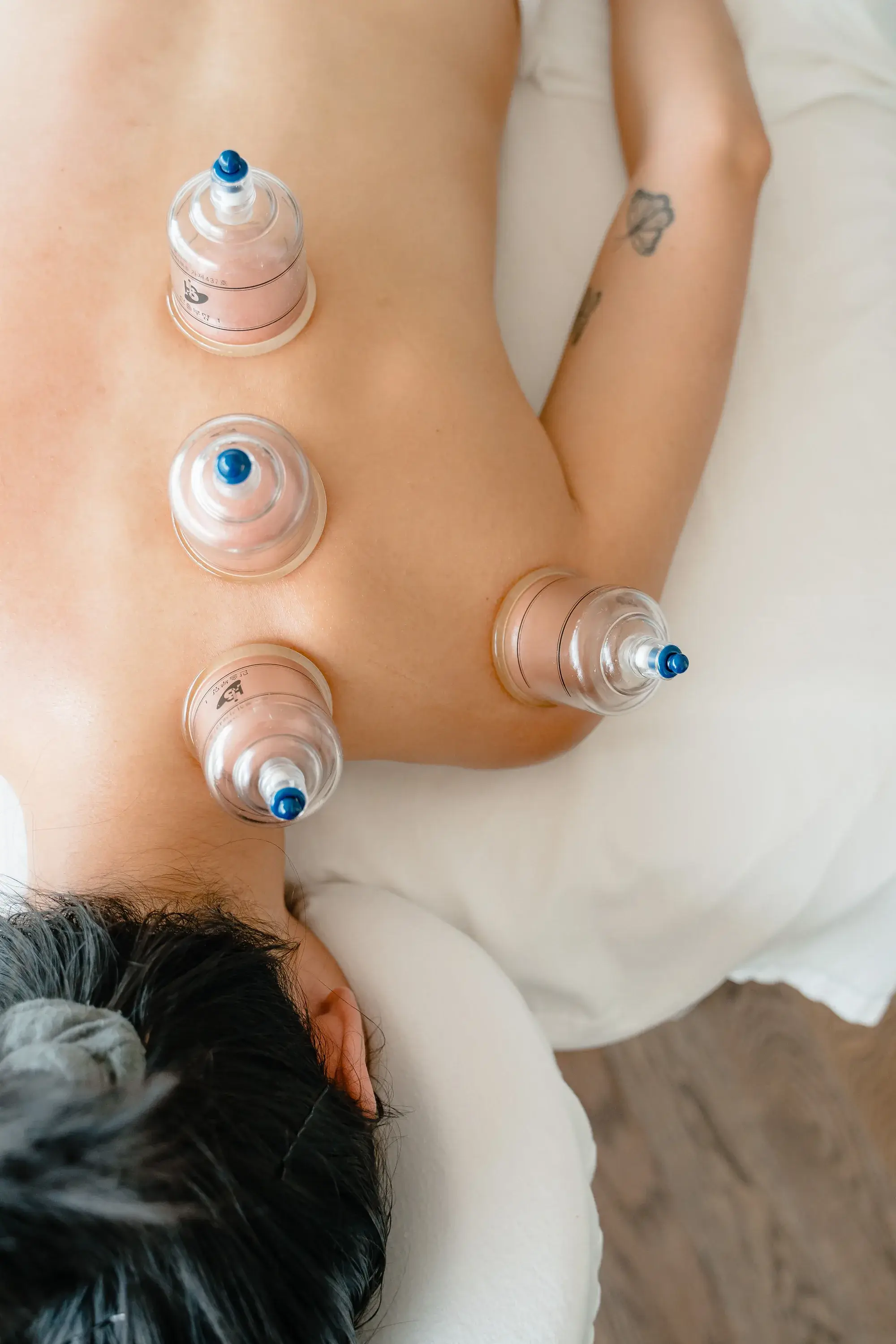
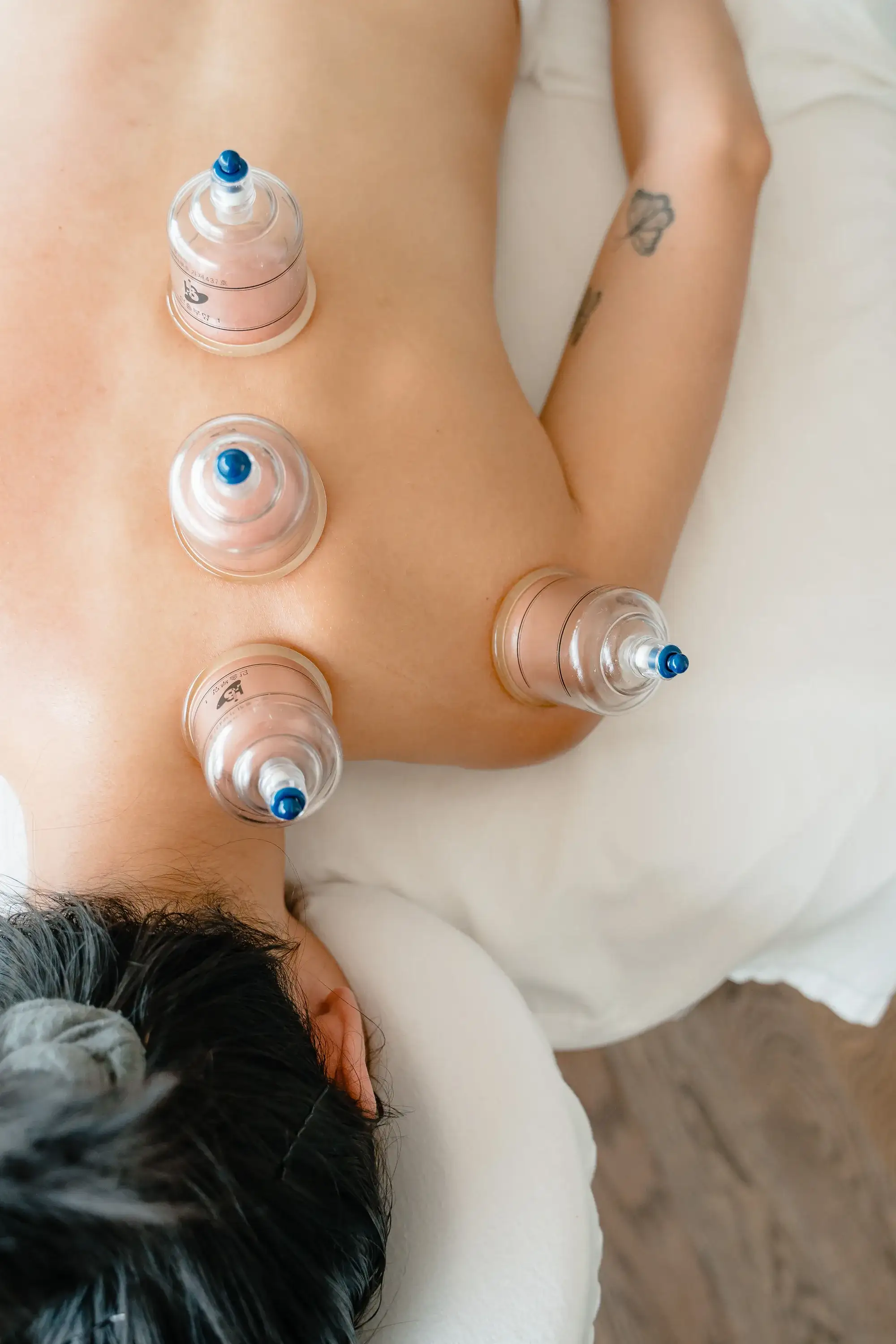
Fire cupping uses glass. NCCIH explains that suction is created either by briefly applying a flame to remove oxygen from the cup before it touches the skin, or with a suction device. The cup cools as it seals, draws the skin up, and usually stays put for a few minutes. Dr. Will Tanner, one of our Registered Massage Therapists, lists fire cupping among his credentials; Monica Von Gaza lists myofascial cupping. If you have a preference, mention it when you book or call the clinic.
| Myofascial cupping | Fire cupping | |
|---|---|---|
| Cups | Silicone, squeezed to create suction | Glass, warmed briefly with a flame |
| Movement | Glided along oiled skin | Usually left in place |
| Feel | A rolling pull that travels with the cup | A steady draw on one spot |
| At Renu | Booked as a 60 or 90 minute session | Ask about it with Dr. Will Tanner |
For a closer comparison, see myofascial cupping versus fire cupping.
What suction actually feels like
Cupping should feel like a firm lifting pull, not pain. The Cleveland Clinic says it should not hurt, though the skin can feel tight while the cups are on, and you may feel bruised and slightly sore afterward without severe discomfort.
With gliding cups, the sensation moves: a wave of tension rolling down the muscle, a little stronger over the spots that already felt knotted. With static cups, it is a concentrated pull that usually eases after the first minute as the skin adapts. The Cleveland Clinic notes cups are typically left on for several minutes, and our page on how long cups are left on covers timing in more detail.
Speak up if the pull feels sharp or burning. CRMTA standards ask therapists to work within your pain threshold and to stop if you withdraw consent, so asking for lighter suction, or for the cups to come off, is always fine.
The marks, and how to plan around them
Round marks are normal after cupping and usually fade within one to two weeks. Both the Cleveland Clinic and Henry Ford Health give that one to two week window. The Cleveland Clinic adds that these circles are not true bruises that injure muscle fibres, even though they can look like them.
What that means for your calendar:
- Events and photos. If you will be in a strapless dress, a swimsuit or a sleeveless top within two weeks, either book after the event or ask for cups only where clothing will cover.
- Medical appointments. NCCIH suggests mentioning the marks to any health care provider who sees them, so they are not mistaken for an injury.
- Colour. Marks range from faint pink to deep purple. What the shades mean is explained on our page about cupping mark colours.
Gliding cups tend to leave broader, paler streaks than static cups, but this varies from person to person and is not something we can promise either way.
Who should skip cupping, or check first
Cupping is not for everyone, which is why the screening comes first. The Cleveland Clinic advises avoiding it if you are pregnant or have anemia, a pacemaker, a bleeding disorder, cardiovascular disease, a skin condition such as eczema or psoriasis, or a seizure disorder. Henry Ford Health adds blood clots, open wounds, active skin flare-ups, thin or sensitive skin, and organ failure, and asks people who take blood thinners, are menstruating, have neuropathy or peripheral vascular disease, or gave blood in the last two months to talk with their physician first.
So tell your therapist about:
- Any blood thinner, including daily aspirin (our page on massage, cupping or acupuncture on blood thinners goes further)
- Easy bruising or a bleeding or clotting problem
- Pregnancy, or trying to conceive (see cupping while pregnant)
- A pacemaker or heart condition
- Eczema, psoriasis, a rash or broken skin where the cups would go (see cupping with eczema or psoriasis)
If one of these applies, your therapist may adapt the plan or suggest massage without cups. That is the careful answer, not a refusal.
Side effects to know about
Most people leave with marks and some tenderness, and nothing more. The Cleveland Clinic lists bruising, burns from heated cups, fatigue, headaches, muscle soreness, nausea and skin infections as possible side effects, with fainting in rare cases. NCCIH adds persistent skin discolouration, scars and the worsening of existing skin conditions.
Henry Ford Health suggests keeping cupped areas clean, dry and covered and drinking water after treatment. If you are planning a swim, a hot tub or a hard workout the same day, read showering, swimming or sauna after cupping and exercising after cupping first.
What the evidence says
Cupping is popular, but the research behind it is thin. NCCIH says most cupping research is of low quality, and that cupping may help reduce pain although the evidence for this is not very strong. We offer myofascial cupping as one tool within massage for tight backs, necks and shoulders, not as a fix for everything, and your therapist will tell you honestly whether hands alone might suit you just as well.
Booking your first session at Renu
Myofascial cupping at Renu is $120 for 60 minutes or $157 for 90 minutes, booked online in Jane under myofascial cupping. We are on 19 Street NW in West Hillhurst, open seven days a week with weekday evening appointments, which suits people who want to be cupped after work and go straight home to rest.
When to see a doctor instead
Cupping is for muscle tightness, not a way to put off a diagnosis. NCCIH advises against using massage therapy to postpone seeing a health care provider about a medical problem, so see your doctor first if the pain followed a fall or accident, keeps getting worse, or comes with fever or feeling unwell. After a session, burns and skin infections are the side effects to watch for: call your doctor if a mark blisters, weeps, or turns hot and increasingly red instead of slowly fading.
Questions people ask
Should I book 60 or 90 minutes for my first cupping appointment?
Sixty minutes suits one region, such as the upper back and shoulders, with massage before and after the cups. Ninety minutes gives room for two regions, say the back and the hips, without rushing either. If this is your very first time, 60 minutes is a sensible way to see how your skin responds.
How many cups will my therapist use?
The Cleveland Clinic says providers typically use three to five cups and rarely more than seven in one treatment. With gliding cupping the number matters less, because one or two cups are moved along the muscle rather than left in a row.
Is it a problem if I have a holiday or wedding in the next two weeks?
Only if visible marks would bother you. Marks usually fade over one to two weeks, so book cupping at least two weeks before a swimsuit trip or an event with bare shoulders, or ask your therapist to keep the cups to areas your clothes will cover.
Can I still have cupping if I take a daily aspirin?
Tell your therapist before the session starts. Henry Ford Health lists blood thinner use among the situations where cupping should only go ahead after talking with your physician, and your therapist may lighten the suction or suggest massage without cups.
Sources
Page reviewed October 5, 2026. This page is education, not a diagnosis. For your own situation, talk to your doctor, surgeon or care team, or ask us.
Keep reading
Related pages