
Cupping vs deep tissue massage
Cupping vs deep tissue massage: cups lift tissue with suction and leave round marks; deep tissue presses into muscle. The evidence, and who suits each.
By The Renu lymphatic and massage team · 5 min read
Cupping uses suction to lift skin and the tissue beneath it, while deep tissue massage uses firm pressure to press into muscles and tendons. Cupping tends to leave round red or purple marks that fade over a week or two; deep tissue is more likely to leave tenderness than marks. The evidence for both is modest, so choose by feel and circumstance: cupping if you dislike heavy pressure or want a broad gliding release, deep tissue for precise work on one knot or when you cannot have visible marks, or a session that combines the two.
Cupping and deep tissue massage are both booked for tight, sore muscles, and both can feel strong. The mechanical difference is simple. A cup pulls tissue up and away from what lies beneath it. A thumb, forearm or elbow pushes tissue down and against it. That difference shapes how each feels, what it leaves behind on your skin, and who should avoid it.
Suction versus pressure
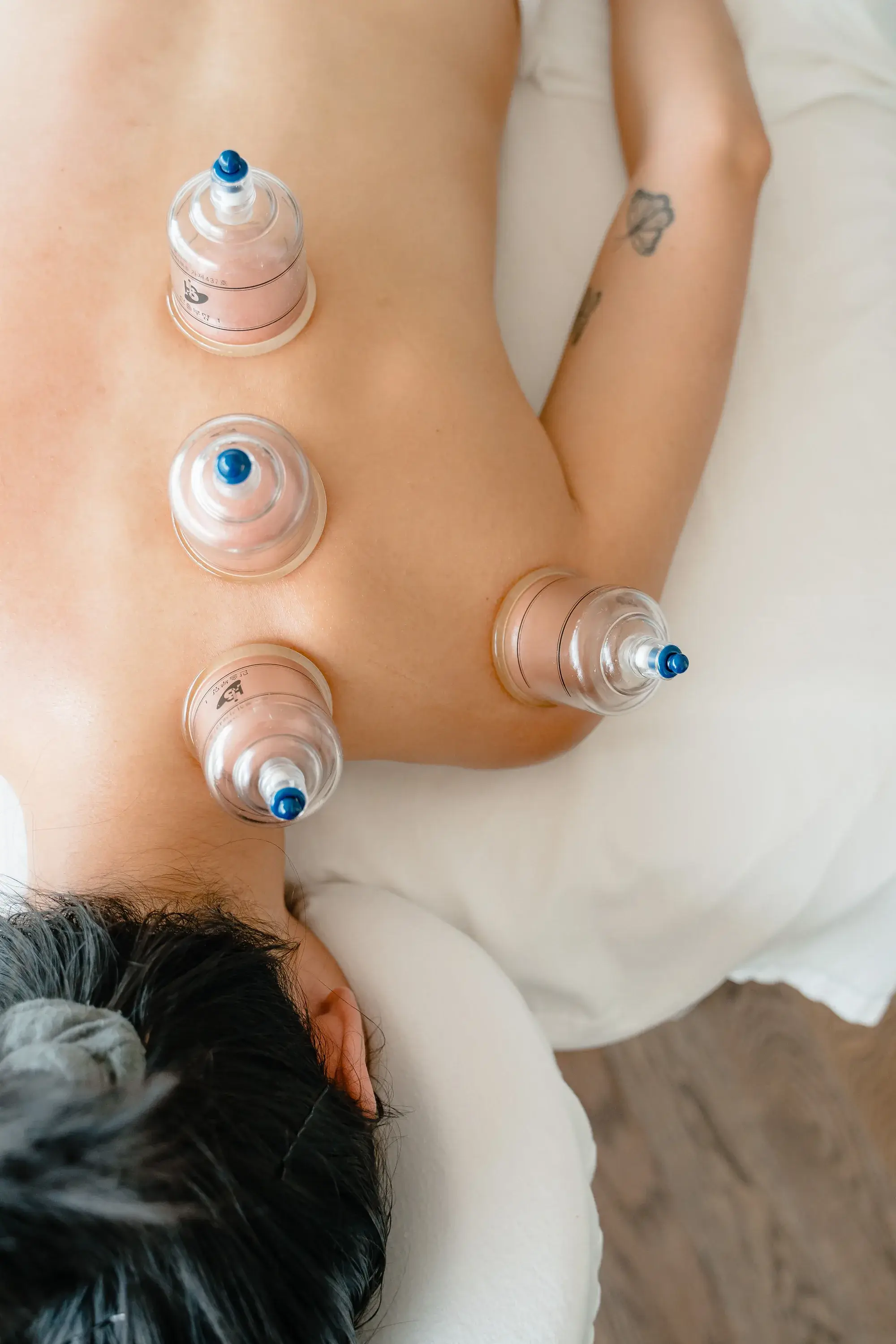
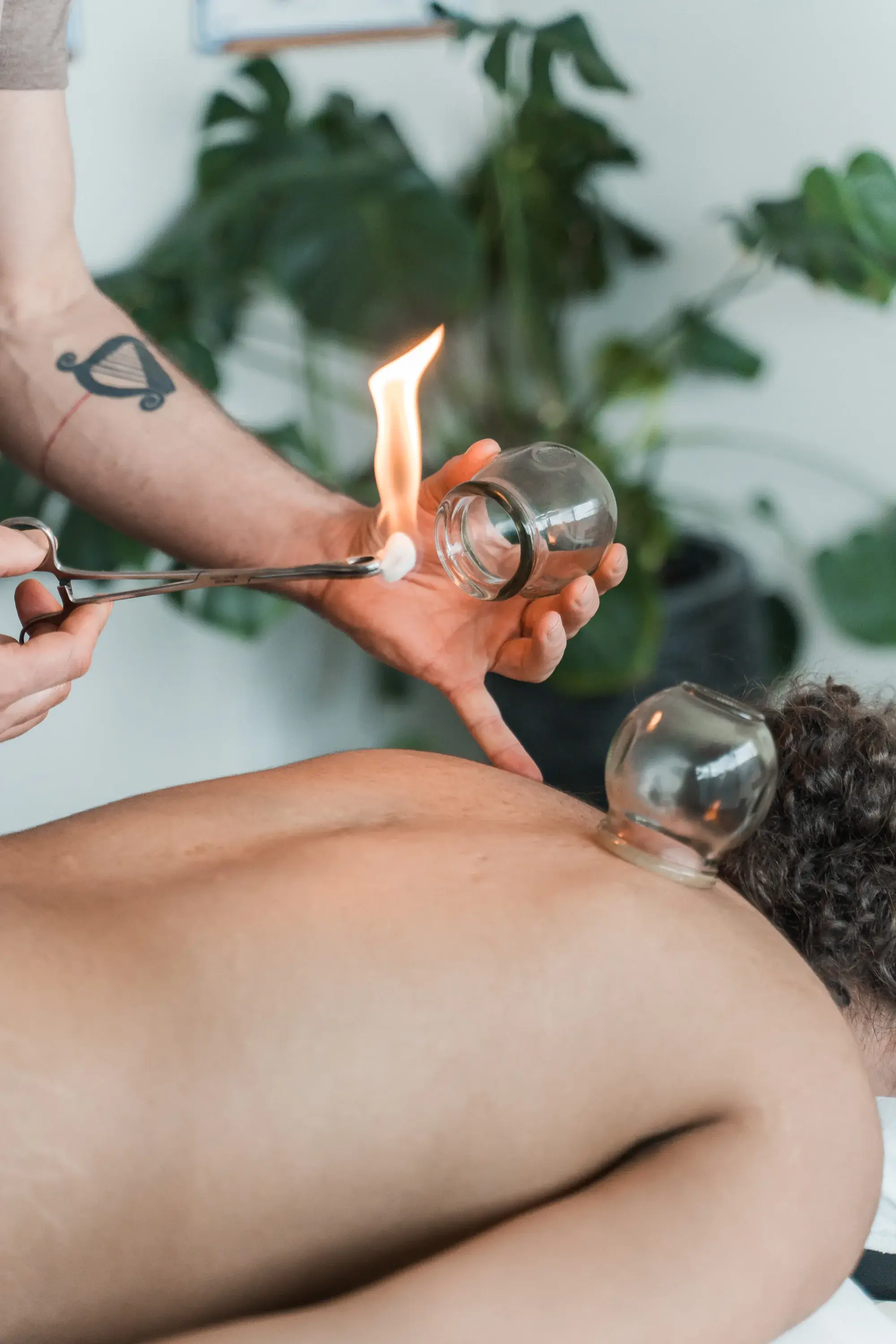
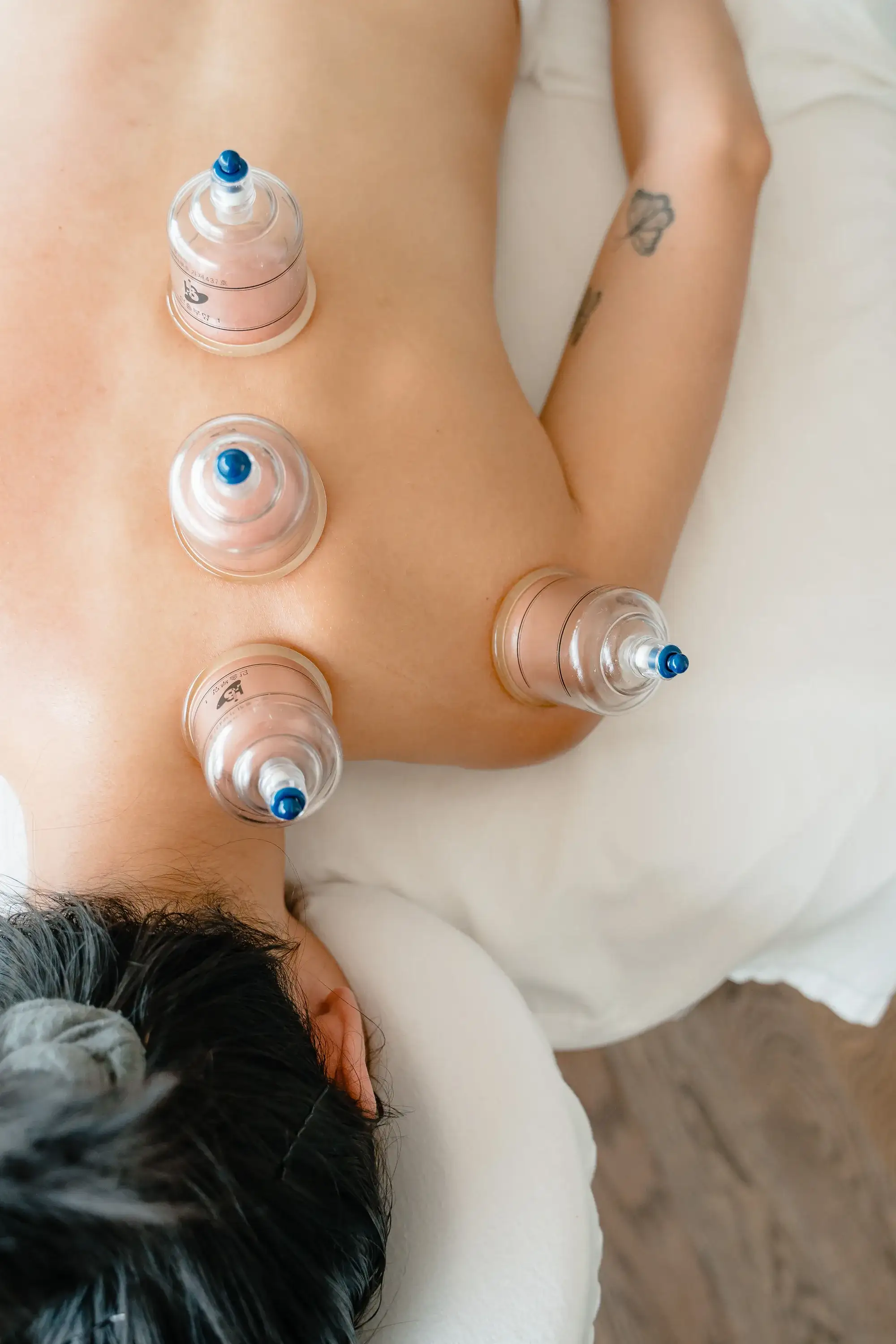
Cupping uses glass, ceramic, bamboo or plastic cups to create suction on the skin, either by heating the air inside or with a pump. Dry cupping does not break the skin. In running cupping, Cleveland Clinic explains, the provider first applies oil or lotion so the cups can be moved across the skin rather than left in one place. Myofascial cupping, which we offer, works this way with silicone cups and blends cupping with hands-on massage.
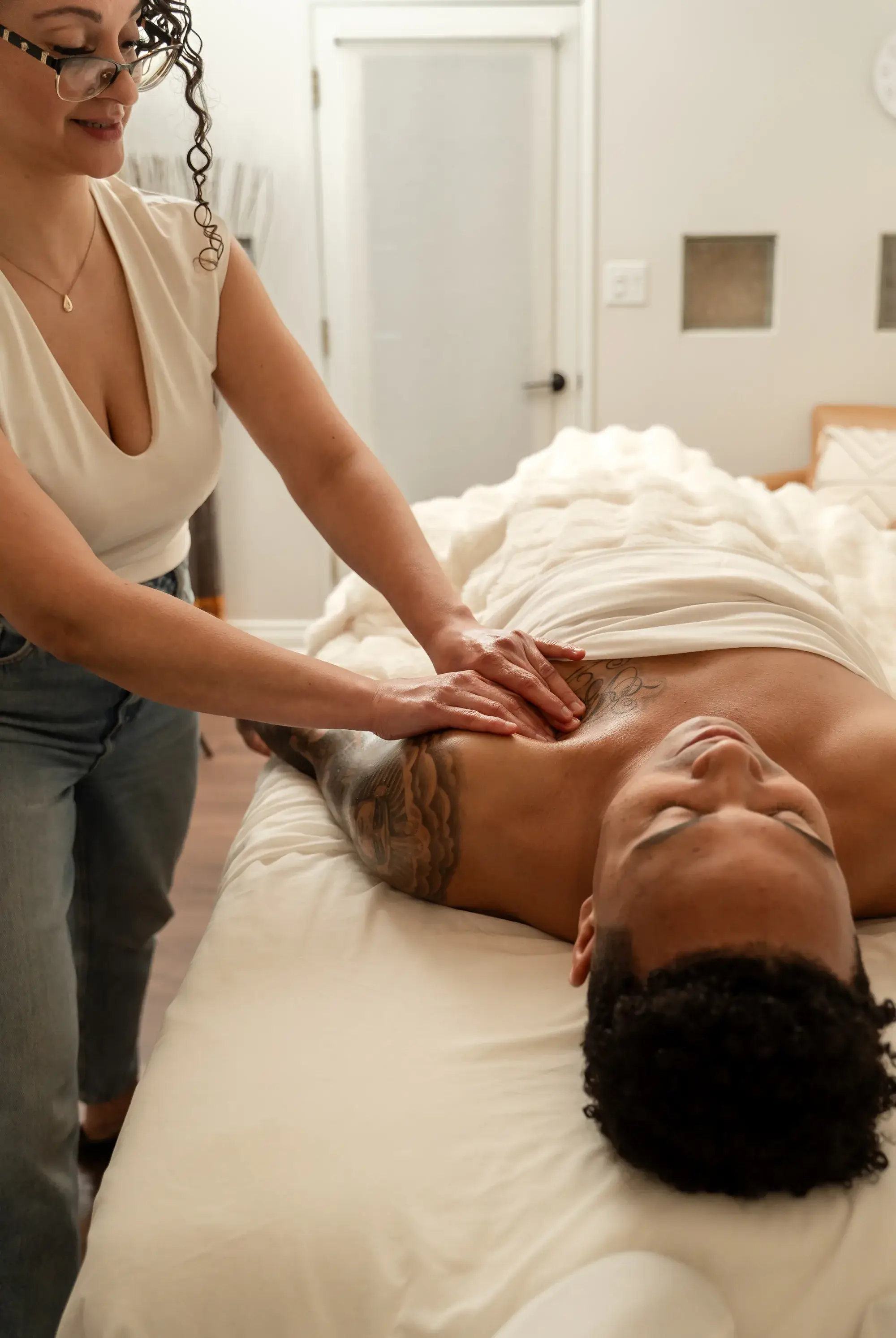
Deep tissue massage, in Cleveland Clinic’s words, gets into your muscles and tendons to release tightness, and suits people with injuries and chronic muscle pain. The therapist can stay on one spot, change angle and adjust pressure second by second.
| Cupping | Deep tissue massage | |
|---|---|---|
| Force | Suction lifts tissue | Pressure compresses tissue |
| Coverage | Broad; cups can glide over large areas | Targeted to specific muscles and tendons |
| Typical skin effect | Round red or purple marks | Usually none; occasional bruising |
| Common aftereffects | Soreness, fatigue, headache, nausea | Tenderness in the worked area |
| Feels like | Pulling, drawing, warmth | Deep pressing, sometimes tender |
Marks, soreness and other side effects
Cupping leaves temporary marks on the skin; NCCIH says so plainly, and Cleveland Clinic says they should fade in a week or two. Cleveland Clinic also lists bruising, burns from heated cups, fatigue, headaches, muscle soreness, nausea and skin infection or scarring as possible side effects. NCCIH adds that cupping can worsen eczema or psoriasis and warns that reused equipment that is not properly cleaned can spread bloodborne infection. Our page on how long cupping marks last goes further into what to expect.
Deep tissue massage is low risk but not risk free. NCCIH notes rare reports of serious effects, such as a blood clot, nerve injury or bone fracture, mostly with vigorous techniques like deep tissue massage and particularly in older people.
What the research says
Cupping has had a burst of new reviews, and they point in different directions.
- A 2026 meta-analysis of nine randomised trials with 401 people with chronic neck pain found cupping reduced pain and improved disability, with the evidence stronger for function than for pain, and no serious adverse events.
- A 2026 review comparing dry cupping with placebo cupping in five trials with 281 people with musculoskeletal pain rated the evidence very low certainty at every time point, and the authors suggested trying treatments with stronger evidence first.
- A 2013 randomised trial of 61 people with chronic neck pain found 12 weeks of partner-delivered cupping massage was no more effective than progressive muscle relaxation for pain, though both groups improved and cupping did better on wellbeing and pressure sensitivity.
For massage generally, NCCIH reports weak and mixed evidence for low back pain and short-term benefit for neck and shoulder pain. NCCIH sums up cupping in similar terms: it may help reduce pain, but the evidence is not very strong.
The fair reading is that both can help some people feel better in the short term, and neither has shown a clear advantage over the other.
Who should avoid cupping, and who should avoid deep tissue
Cleveland Clinic says to avoid cupping if you:
- are pregnant
- have anemia
- use a pacemaker
- have a bleeding disorder or blood clotting problem
- have cardiovascular disease
- have a skin condition such as eczema or psoriasis
- have epilepsy
Deep tissue massage needs care with blood clots, blood thinners, osteoporosis and recent surgery or injury, and anyone with a medical condition should check with their doctor and therapist first. If eczema or psoriasis is part of your picture, see cupping with eczema or psoriasis.
How to choose
- Heavy pressure makes you tense up: cupping offers a strong sensation without pushing down into the tissue.
- You want a broad area released, such as the whole upper back: gliding cups cover a lot of ground.
- One defined knot or tendon is the problem: deep tissue reaches it more precisely.
- You have an event, a swim meet or a photo shoot within two weeks: choose deep tissue, or ask for cups only where clothing covers.
- You are on the list above: skip cupping and choose hands-on massage after checking with your doctor.
- You cannot decide: many people combine them in one session.
Cupping and deep tissue at Renu
Our myofascial cupping sessions blend silicone cups with hands-on massage, so you are not choosing one or the other: your therapist can glide cups across the back and then work into a stubborn spot by hand. Monica Von Gaza’s credentials include myofascial cupping. Sessions are 60 minutes for $120 or 90 minutes for $157, the same as massage therapy, which is the booking to choose if you want deep tissue without cups. Dr. Will Tanner offers traditional fire cupping, and our page on myofascial vs fire cupping explains the difference. Booking is online through Jane, and we are in West Hillhurst, open seven days a week.
Questions people ask
Is cupping better than deep tissue massage for knots?
Neither has been shown to beat the other in trials. Cupping lifts and drags a broad area, which some people find releases tightness without heavy pressure. Deep tissue lets the therapist press directly into one spot, which suits a single, well-defined knot.
Will cupping leave marks before my event?
Probably. Cleveland Clinic says cupping marks should fade in a week or two, so book at least two weeks ahead of a wedding, photo shoot or beach holiday, or ask for a session without cups on visible areas.
Can I have cupping and deep tissue in the same session?
Yes. Myofascial cupping at Renu is a massage session that uses cups alongside hands-on work, so your therapist can cup a broad area and then work into a specific spot by hand.
Does cupping cost more than massage at Renu?
No. Myofascial cupping is $120 for 60 minutes and $157 for 90 minutes, the same as massage therapy of the same length.
Sources
- NCCIH: Cupping
- Cleveland Clinic: Cupping therapy
- Torad AA et al. Effect of cupping therapy on chronic neck pain: a systematic review and meta-analysis of randomized controlled trials. J Back Musculoskelet Rehabil, 2026 (Europe PMC)
- Jenkins LC et al. The efficacy of dry cupping compared to placebo cupping for people with musculoskeletal complaints: a systematic review with meta-analysis. JOSPT Open, 2026 (Europe PMC)
- Lauche R et al. Effectiveness of home-based cupping massage compared to progressive muscle relaxation in patients with chronic neck pain: a randomized controlled trial. PLoS One, 2013 (Europe PMC)
- Cleveland Clinic: Benefits of massage
- NCCIH: Massage therapy, what you need to know
Page reviewed October 5, 2026. This page is education, not a diagnosis. For your own situation, talk to your doctor, surgeon or care team, or ask us.
Keep reading
Related pages