
Does cupping help lower back pain?
Does cupping help lower back pain? It can ease pain for a few weeks, but the effect fades and dry cupping has not beaten sham. How to use it well.
By The Renu lymphatic and massage team · 5 min read
Cupping can ease lower back pain in the short term: a 2024 review of 11 trials found less pain at two to eight weeks, but no lasting benefit at one month or three to six months. Dry cupping on its own, the kind most massage clinics use, did not significantly improve pain in that analysis, and a 2021 trial found it no better than sham cupping. It is best used as a short window of relief to support movement, exercise and massage rather than as a treatment on its own.
Cupping can take the edge off lower back pain for a few weeks, but the research does not show that the relief lasts, and the dry cupping most clinics use has not clearly beaten a sham version. That makes it a reasonable add-on and a poor stand-alone plan. If your back has been sore for months, the most useful thing cupping can do is make it easier to move while you work on the things that change back pain over time.
What the low back pain research shows
The studies agree that any benefit is short-lived and that the quality of evidence is middling.
| Study | What was tested | What it found |
|---|---|---|
| Zhang et al., 2024 meta-analysis | 11 randomized trials, 921 adults with low back pain | Less pain at the 2 to 8 week mark; no continued improvement at 1 month or at 3 to 6 months |
| Almeida Silva et al., 2021 trial | 90 people with non-specific chronic low back pain; cups along both sides of the lower spine, weekly for 8 weeks | Dry cupping no better than sham for pain, function, mobility or quality of life |
| Mohamed et al., 2023 review | 22 studies of cupping in musculoskeletal and sports care | Evidence for easing low back or neck pain rated low to moderate; adverse events very rare |
| NCCIH | Summary of the research to date | Cupping may help reduce pain, but most research is low quality |
The Zhang review also flagged wide differences between studies in how cupping was done, how often and on whom, which the authors said limits how certain anyone can be. When the authors looked only at chronic non-specific low back pain, the most common kind of long-term back ache, cupping did not significantly reduce pain at the end of treatment.
Dry and wet cupping are not the same evidence
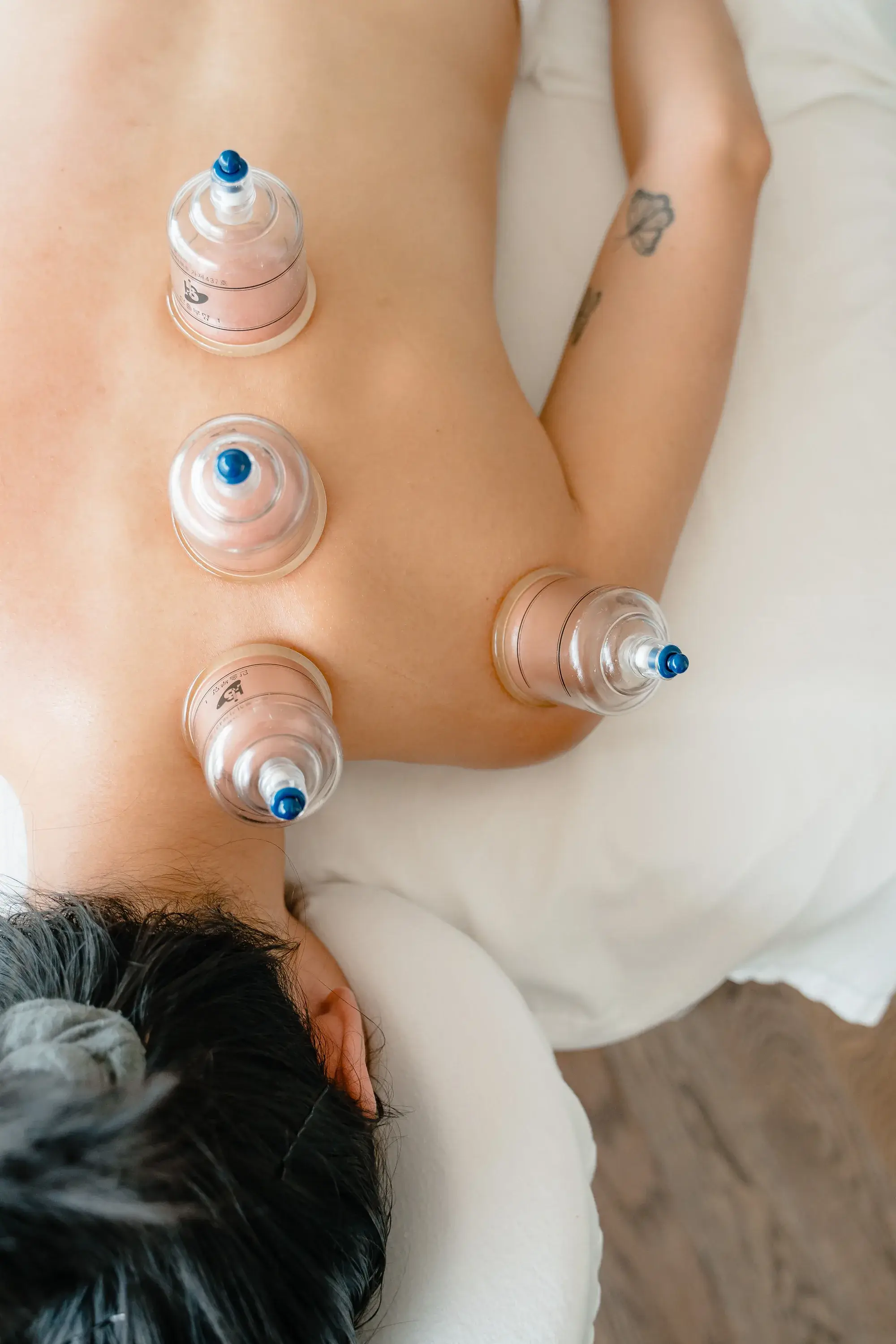
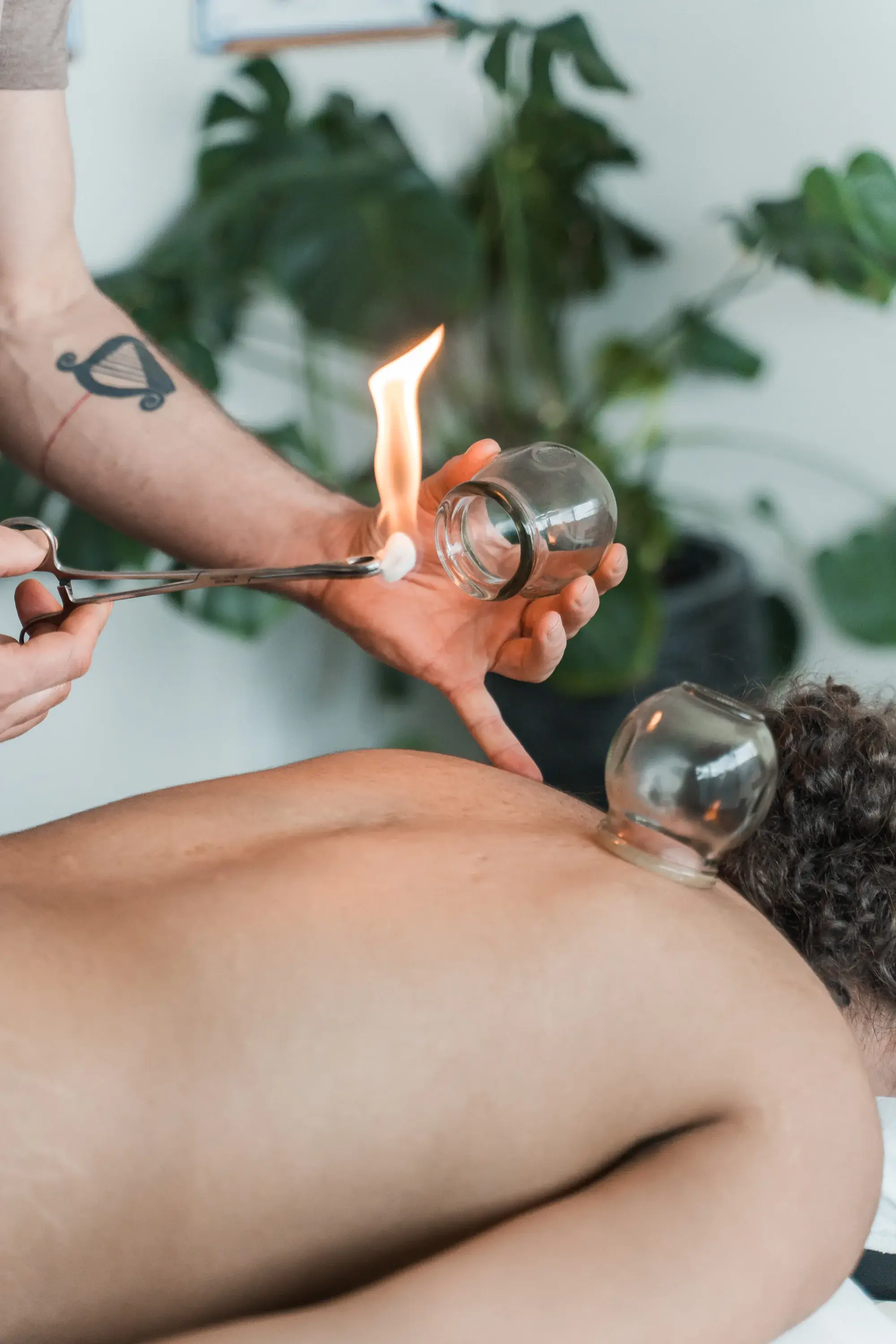
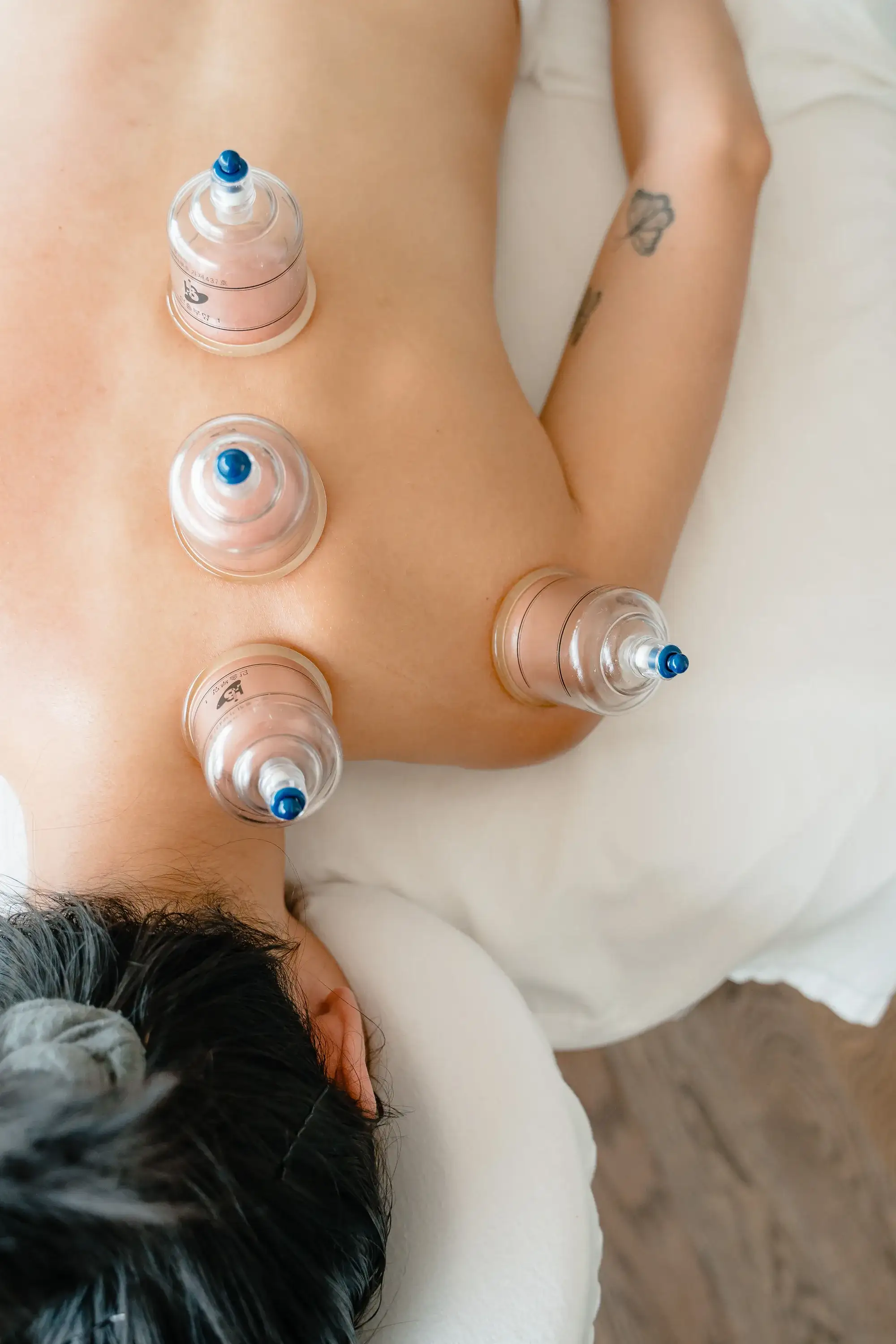
The type of cupping changes the picture. In the 2024 meta-analysis, wet cupping, where the skin is pricked before the cup goes on, improved pain at the end of treatment, while dry cupping on its own did not reach significance. Both styles we offer at Renu are dry: myofascial cupping, with silicone or plastic cups that can be glided over oiled skin, and fire cupping, where a flame warms the air in a glass cup. Nothing is punctured.
We mention this because it would be easy to quote the headline result of that review and imply it applies to every kind of cupping. It does not. The trial that tested dry cupping directly against sham, with cups placed beside the lower spine every week for two months, found no worthwhile difference.
Where cupping fits in a back pain plan
Cupping works best as a helper for the treatments with stronger evidence. The American College of Physicians guideline recommends, for acute and subacute low back pain, superficial heat, massage, acupuncture or spinal manipulation first, noting that most people improve over time whatever they do. For chronic low back pain, it recommends starting with exercise, multidisciplinary rehabilitation, acupuncture or mindfulness-based stress reduction, then options such as tai chi, yoga, motor control exercise and progressive relaxation. Cupping is not on either list.
The NHS gives the everyday version of the same advice: stay active and keep up your normal activities, use a heat pack for stiffness or spasm, and do exercises and stretches. Walking, swimming, yoga and Pilates may also help.
So a sensible way to use cupping:
- Book it inside a massage, so the cups work on the tightest areas while the rest of the session covers the back, hips and glutes.
- Move in the days afterwards. If the back feels looser, that is the time for the walk, the stretches or the exercises from your physiotherapist.
- Review after a few sessions. If pain and movement are no better, change the plan rather than adding more cups.
Who should not have cupping on the back
Cupping is low risk for most adults, but it is not for everyone. Cleveland Clinic advises against it for people who are pregnant, or who have anemia, a pacemaker, a bleeding disorder such as hemophilia, blood clotting problems, cardiovascular disease, seizures, or eczema or psoriasis. Henry Ford Health adds blood thinners, neuropathy, peripheral vascular disease and giving blood in the past two months to the list of reasons to talk to a physician first. NCCIH notes that cupping can leave persistent discolouration, scars, burns or infections, and can worsen eczema and psoriasis.
If you take a blood thinner, read our page on massage, cupping or acupuncture on blood thinners before booking. And if a big event is coming up, how long cupping marks last will help you time it.
Cupping for your back at Renu
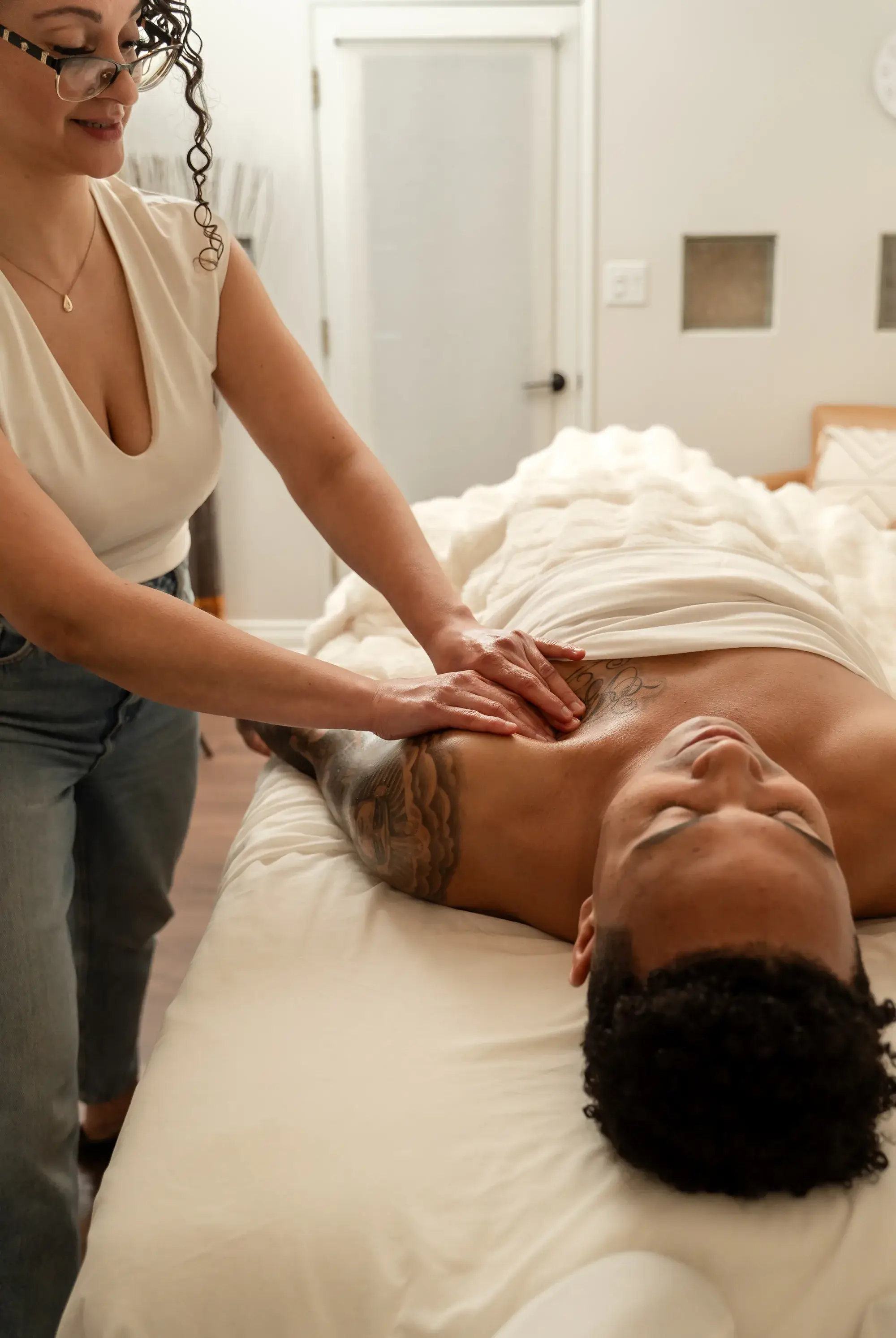
At Renu, myofascial cupping is a 60-minute session for $120 or a 90-minute session for $157, and our Registered Massage Therapists usually weave the cups into hands-on massage rather than leaving you with cups alone. Dr. Will Tanner also offers fire cupping alongside acupuncture. If you would rather start with the approaches that have stronger evidence, a 60-minute massage is the same $120, and our page comparing acupuncture and massage for back pain sets out what each has shown.
Tell your therapist how long your back has hurt, what makes it worse, and what you have already tried. After a weekend of snow shovelling or a long drive back from the mountains, a session may simply help you move again; for pain that has lasted months, we will talk with you about pairing treatment with exercise. Booking is through Jane, seven days a week.
When back pain needs a doctor, not cups
Most back pain is not serious, but some signs need medical help before any hands-on treatment. The NHS advises:
- Call 911 or go to emergency if you have pain, tingling, weakness or numbness in both legs, loss of feeling around your genitals or anus, or changes in bladder or bowel control.
- Get urgent medical advice if you feel hot, cold, shivery or generally unwell, or if severe pain starts suddenly or is getting worse quickly.
- See your doctor if the pain has not improved after a few weeks of home care or is stopping you from doing everyday things.
Questions people ask
How many cupping sessions does it take for back pain?
No trial has settled on a number. The 2021 sham-controlled trial used one session a week for eight weeks and found dry cupping did no better than sham, while the pooled studies showed relief only in the two-to-eight-week window. A few sessions with a clear check-in is more sensible than a long open-ended course.
Is cupping or massage better for a sore lower back?
Massage has the stronger standing: the American College of Physicians lists it among first options for acute and subacute low back pain, and cupping does not appear in that guideline. Many people have both in one appointment, with cupping used on the tightest areas inside a massage.
Can cupping help sciatica that runs down my leg?
The trials here studied low back pain, mostly the non-specific chronic kind, not nerve pain travelling down the leg. Leg pain with numbness or weakness deserves a medical assessment first, and weakness or numbness in both legs is an emergency.
Why do athletes use cupping if the evidence is weak?
Many athletes report that it feels good and loosens tight areas before or after training, and the risk is low. A review of cupping in sports and musculoskeletal rehabilitation rated the evidence for back and neck pain as low to moderate, which supports trying it, not relying on it.
Sources
- Zhang Z et al. The effectiveness of cupping therapy on low back pain: a systematic review and meta-analysis of randomized control trials (Complement Ther Med, 2024)
- Almeida Silva HJ et al. Dry cupping therapy is not superior to sham cupping in non-specific chronic low back pain: a randomised trial (J Physiother, 2021)
- Mohamed AA et al. Evidence-based and adverse-effects analyses of cupping therapy in musculoskeletal and sports rehabilitation (J Back Musculoskelet Rehabil, 2023)
- Qaseem A et al. Noninvasive treatments for acute, subacute, and chronic low back pain: a clinical practice guideline from the American College of Physicians (Ann Intern Med, 2017)
- NCCIH: Cupping
- Cleveland Clinic: Cupping therapy
- NHS: Back pain
Page reviewed October 5, 2026. This page is education, not a diagnosis. For your own situation, talk to your doctor, surgeon or care team, or ask us.
Keep reading
Related pages